
What if the most decadent culinary journey through the Levant required no meat at all? For many, the search for authentic vegetarian middle eastern food often ends in the disappointment of repetitive side dishes or a lonely plate of falafel. Since 2009, Beirut Grill has welcomed guests to historic Bussorah Street to challenge this notion, proving that plant-based dining is a sophisticated, award-winning affair. You likely agree that a meal should be an immersive experience rather than a compromise, yet finding traditional dishes that are naturally meat-free often feels like a gamble.
This guide promises to transform your perspective by revealing the hidden depths of Lebanese heritage through silken mezze and charcoal-grilled halloumi. We’ll explore how to orchestrate a divine multi-course feast that pairs perfectly with a 2017 Chateau Musar from the Beqaa Valley. You’ll gain the confidence to order with authority, moving beyond generic options to embrace a world of mouth-watering textures and ancient cultural pairings. With the majestic Sultan Mosque as your backdrop, your next meat-free indulgence is finally within reach.
Key Takeaways
- Discover the sun-drenched heritage of the Levant and how the traditional mezza culture naturally elevates plant-based dining into a shared art form.
- Learn to identify the “Holy Trinity” of silken dips and the secrets behind crafting the perfect, protein-rich falafel for an authentic vegetarian middle eastern food experience.
- Explore how to satisfy every craving with hearty, texture-rich mainstays like charcoal-grilled halloumi and the bold, spicy profiles of traditional Batata Harra.
- Elevate your palate by discovering the sophisticated world of heritage wine pairings from the Beqaa Valley and the traditional etiquette of enjoying Lebanese Arak.
- Find out where to enjoy an award-winning, immersive dining experience that has been transporting guests from Singapore to the heart of Beirut since 2009.
The Vibrant Heritage of Vegetarian Middle Eastern Cuisine
Rooted in the ancient soils of the Levant, the tradition of vegetarian middle eastern food represents a centuries-old celebration of sun-drenched produce. It’s a culinary heritage where the bounty of the earth takes center stage, reflecting a deep respect for the land’s natural cycles. While many global cuisines treat vegetables as an afterthought, Lebanese kitchens have prioritized seasonal harvests since the dawn of civilization. In 2026, this time-honored approach has become the global gold standard for the plant-based Mediterranean diet, offering a nutritional profile that’s as vibrant as its flavor palette. While exploring the nuances of Middle Eastern cuisine, one discovers that the meat-free tradition is a deliberate choice of lifestyle and heritage rather than a modern dietary restriction.
The Philosophy of the Lebanese Table
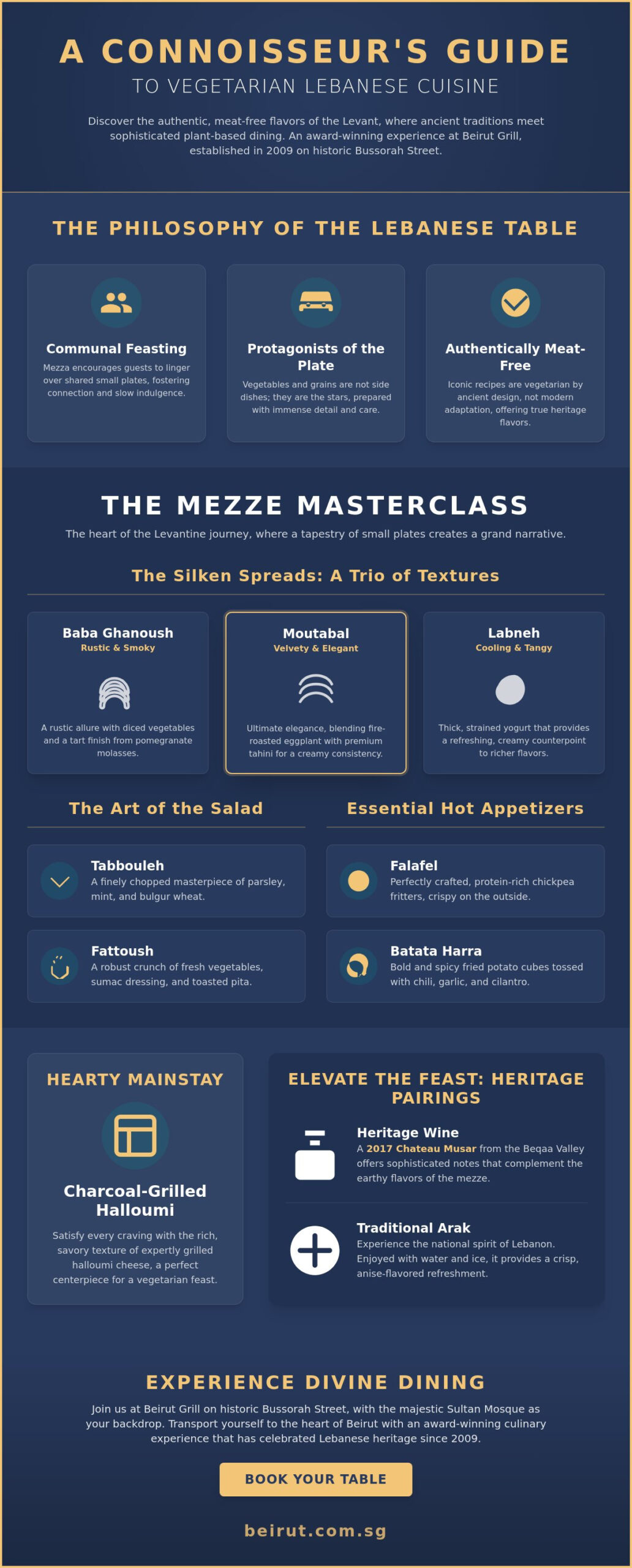
At the heart of our culture lies a family-style approach that elevates the humble vegetable to a position of prestige. We don’t view greens or grains as mere accompaniments; they’re the protagonists of the plate, prepared with a level of detail usually reserved for festive meats. This incredible depth is achieved through the artful use of cold-pressed olive oil, protein-rich legumes like chickpeas and lentils, and mountains of hand-picked fresh herbs. Mezza is a mosaic of flavors designed for slow indulgence. This communal dining style encourages guests to linger over small plates, fostering a connection that transcends the meal itself. By focusing on the purity of ingredients, the Lebanese table offers a sophisticated dining experience that rewards the curious palate.
Naturally Meat-Free: Authenticity Without Compromise
A common misconception suggests that the region’s culinary identity revolves entirely around charcoal-grilled skewers. In reality, many of the most iconic dishes are accidentally vegetarian by ancient design, born from the fertile lands of the Beqaa Valley and the coastal plains. These recipes haven’t been modified to fit modern trends; they remain exactly as they were enjoyed generations ago. For those exploring Middle Eastern food in Singapore, the authenticity of these meat-free options provides a divine dining experience that requires no compromise on flavor or cultural integrity. Since 2009, Beirut Grill has remained a dedicated custodian of these traditions on historic Bussorah Street, ensuring every bite tells a story of heritage and pride. This commitment to authenticity ensures that plant-based diners enjoy the same complexity and satisfaction as any connoisseur of fine dining.
The Mezze Masterclass: Essential Cold and Hot Appetizers
Since 2009, Beirut Grill has stood as a culinary landmark on historic Bussorah Street, inviting guests to experience the true essence of Levantine hospitality. The mezze table is the heart of this journey, offering a tapestry of flavors that makes vegetarian middle eastern food a world-class dining choice. It’s a communal ritual where small plates create a grand narrative of heritage and health. From the hand-rolled precision of Warak Enab (stuffed grape leaves) to the zesty brightness of a traditional Tabbouleh, every dish tells a story of the Beqaa Valley.
The art of the Lebanese salad lies in the balance of acidity and texture. Tabbouleh isn’t merely a salad; it’s a finely chopped masterpiece of flat-leaf parsley, mint, and cracked bulgur. In contrast, the Fattoush provides a robust crunch, featuring garden-fresh vegetables tossed in a tangy sumac dressing and topped with toasted pita chips. Scientific perspectives support this lifestyle, as a vegetarian diet is equally good for health when compared to traditional meat-heavy regimens, particularly when it includes these nutrient-dense, plant-based staples.
The Silken Spreads: Beyond the Basic Hummus
While many are familiar with hummus, the true connoisseur seeks the nuanced differences between our signature eggplants. Baba Ghanoush offers a rustic, smoky allure, often prepared with diced vegetables and pomegranate molasses for a tart finish. Moutabal, however, focuses on a velvety elegance, blending fire-roasted eggplant with premium tahini and lemon juice to achieve a creamy consistency. To complete the spread, a dollop of Labneh provides a cooling, strained yogurt element that balances the warmth of traditional spices. You can explore these authentic textures by visiting Beirut Grill for a curated tasting platter.
Golden Bites: The Hot Mezze Selection
The transition to hot mezze introduces a sensory experience of heat and crunch. Our Falafel is a protein-packed masterpiece, crafted from chickpeas soaked for exactly 24 hours and seasoned with a proprietary blend of coriander and cumin. These golden spheres are fried to perfection, remaining light and airy on the inside. Other essential bites include:
- Spinach Fatayer: Delicate, triangular pastry parcels filled with a tangy mixture of spinach, onions, and sumac.
- Cheese Sambousek: A crispy, crescent-shaped pastry that reveals a molten, savory cheese filling upon the first bite.
- Warak Enab: Served warm or cold, these tender vine leaves are stuffed with a savory rice and herb mixture, representing a true labor of love in the kitchen.
Each of these selections demonstrates why vegetarian middle eastern food is far from a compromise. It’s a sophisticated celebration of ingredients that has defined our award-winning menu for over 15 years.
Hearty Mainstays: Halloumi, Batata Harra, and More
Nestled on historic Bussorah Street since 2009, Beirut Grill has long championed the idea that vegetarian middle eastern food is a feast of substance and heritage. A common misconception persists that a meat-free meal lacks the “heaviness” required for a satisfying dinner. We dispel this myth through a focus on protein-dense ingredients like artisanal cheeses and legumes. These staples provide a satiety level that rivals any traditional grill, ensuring that every guest leaves feeling fully indulged.
The Squeak of Quality: Authentic Grilled Halloumi
We treat our halloumi with the same reverence as a prime cut of lamb. Our chefs utilize a traditional charcoal-grilling process that imparts a smoky, divine aroma, creating what many connoisseurs call the ultimate meat-free kebab. This isn’t a standard supermarket variety; we prioritize premium imported halloumi to achieve the perfect balance of a golden, charred exterior and a firm, squeaky interior. For a classic Lebanese experience, we suggest pairing the warm cheese with fresh mint and sun-ripened tomatoes. This combination highlights the salty profile of the cheese while adding a refreshing botanical lift.
Bold Spices and Comforting Textures
Texture and spice are the cornerstones of our hearty vegetarian offerings. Batata Harra, or Lebanese spicy potatoes, serves as a masterclass in flavor layering. We toss crispy potato cubes in a vibrant infusion of garlic, fresh coriander, and a hint of chili to create a profile that’s both bold and comforting. For those seeking deep, earthy nourishment, lentil-based dishes like Mujadara provide a complex protein profile. Lentils are a powerhouse in this cuisine, often containing about 25% protein by weight, which explains why they’ve been a dietary staple in the Levant for centuries. You can see how these ingredients form the backbone of the region’s diet by exploring The Guardian’s top Middle Eastern recipes, which frequently feature these nutrient-dense legumes.
We encourage our guests to look beyond side dishes and explore the Vegetarian Kebab as a curated charcoal-grilled feast. This dish isn’t a simple substitute; it’s a sophisticated arrangement of marinated vegetables and proteins designed to capture the essence of the grill. By utilizing the same high-heat techniques we’ve perfected over the last 15 years, we ensure that our vegetarian middle eastern food delivers the same charred, savory satisfaction as our signature meats. It’s a divine dining experience that rewards the visitor’s curiosity with every bite.
- Protein Density: Halloumi and lentils provide a high-satiety alternative to meat.
- Charcoal Mastery: We use authentic grilling methods to create deep, smoky flavor profiles.
- Imported Excellence: Our ingredients are sourced to maintain the “award-winning” authority of our kitchen.
Elevating the Feast: Heritage Pairings and Beverage Etiquette
Framed by the majestic Sultan Mosque, a meal at Beirut Grill is an invitation to slow down and savor a heritage that spans centuries. To fully appreciate the nuances of vegetarian middle eastern food, one must look to the ancient vineyards and traditional brewing rituals that have defined Levantine hospitality since we opened our doors in 2009. The right pairing doesn’t just complement the dish; it heightens the aromatic spices and textures of the mezze, turning a simple dinner into a divine dining experience.
Lebanese Wine: A 6,000-Year-Old Tradition
Lebanon’s winemaking legacy is among the oldest in the world, with a history stretching back 6,000 years to the Phoenicians. The high-status markers of Lebanese viticulture, such as the critically acclaimed Chateau Musar or the elegant Chateau Kefraya, bring a layer of prestige to any table. These wines are cultivated in the Beqaa Valley, a fertile plateau where the high altitude and sunny climate produce grapes of exceptional character. A Lebanese Rosé or a light-bodied Red, often featuring Cinsault or Grenache, pairs beautifully with earthy dips like hummus or baba ghanoush by cutting through the creaminess of the tahini.
For those seeking a white wine, the Beqaa Valley offers selections with a crisp acidity and flinty mineral notes. These whites are essential when navigating a spread of vegetarian middle eastern food, as they provide a refreshing counterpoint to fried elements like falafel or halloumi. The structure of these wines ensures they aren’t overshadowed by the bold garlic and lemon profiles common in Lebanese cuisine.
Arak and Tea: The Authentic Refreshments
Beyond the vine, the ritual of Arak, known as ‘Lion’s Milk,’ is a cornerstone of the mezze experience. This potent, anise-flavored spirit is never consumed neat. Instead, it’s diluted with two parts water and served over ice, a process that transforms the clear liquid into an opaque, milky white elixir. This traditional refreshment acts as a superb palate cleanser between diverse small plates, its licorice notes harmonizing with fresh herbs like parsley and mint.
- Arak Ritual: Always pour the Arak first, followed by the water, and finally the ice to prevent a thin film from forming on the surface.
- Moroccan Mint Tea: This fragrant brew isn’t just a drink but a digestive aid. The combination of green tea and fresh nana mint provides a sensory delight that settles the stomach after a diverse feast.
- Lebanese Coffee: Served thick and often scented with cardamom, this bold coffee is the perfect end to a rich meal. It’s a final gesture of hospitality that lingers on the tongue.
To master the art of pairing at home or in a restaurant, remember that acidic salads like Tabbouleh or Fattoush require a wine with equal vibrancy. A dry, citrus-forward white wine ensures the lemon dressing doesn’t flatten the drink’s flavor. This balance of acidity and fruit is what makes the Lebanese dining tradition so enduringly sophisticated.
Discover the perfect pairing for your next meat-free indulgence by visiting our hidden gem on historic Bussorah Street at Beirut Grill.
Experiencing Divine Vegetarian Dining at Beirut Grill
Nestled along the vibrant and historic Bussorah Street, Beirut Grill has stood as a sanctuary for authentic Lebanese flavors since 2009. It’s a boutique destination that rewards the curious diner with a sensory journey through the Levant. For over 15 years, we’ve curated a space where heritage meets sophistication, making it a premier location for anyone seeking high-quality vegetarian middle eastern food in Singapore.
The atmosphere is designed to be fully immersive, pulling you away from the modern city and into the soulful heart of Beirut. As the scent of toasted spices and fresh herbs fills the air, you’ll find yourself surrounded by an environment that’s both evocative and warm. It’s a place where every meal feels like a celebration of culture. Our award-winning menu is entirely pork-free, ensuring an inclusive environment where every guest can indulge with total peace of mind.
A Legacy of Hospitality Since 2009
With the majestic Sultan Mosque providing a breathtaking scenic backdrop, our establishment offers a dining experience that feels both historic and timeless. Since 2009, we’ve remained committed to traditional techniques, importing key ingredients to maintain the integrity of our recipes. This dedication to authenticity has earned us a reputation for excellence, particularly regarding our critically acclaimed mezza selection. These small plates are the stars of our vegetarian offerings, providing a diverse palette of textures and tastes.
- Signature Hummus: A silky blend of premium chickpeas and tahini, drizzled with virgin olive oil.
- Mouth-watering Baba Ghanoush: Charred eggplant that delivers a deep, smoky profile.
- Hand-rolled Warak Enab: Tender vine leaves stuffed with a savory mixture of rice and aromatic herbs.
Our kitchen team treats every plate as a canvas, balancing the bright acidity of lemon with the earthy depth of cumin and sumac. It’s this attention to detail that defines our longevity in the competitive Singaporean culinary scene. We don’t just serve food; we share a piece of Lebanese history with every guest who walks through our doors.
The Sweet Conclusion: Vegetarian Desserts
A meal at Beirut Grill isn’t finished until you’ve experienced our traditional sweets. Our vegetarian-friendly desserts are the ultimate indulgence, crafted to provide a harmonious balance to the savory courses that came before. The Baklava is a masterpiece of flaky filo pastry and crushed nuts, while our Kunefe offers a warm, cheese-filled center that’s simply divine. If you’re curious about the history of these treats, you can explore this ultimate guide to Kunafa to discover why it’s the most iconic dessert in the region.
Whether you’re a lifelong herbivore or a connoisseur of fine dining, we invite you to experience the finest vegetarian middle eastern food in a setting that’s truly one of a kind. The combination of our seasoned expertise and the evocative charm of Bussorah Street creates a dining event you won’t soon forget. Book your table today and let us take you on an authentic Middle Eastern journey that satisfies the soul.
Begin Your Lebanese Culinary Odyssey
Nestled on historic Bussorah Street with the majestic Sultan Mosque as your backdrop, your exploration of authentic Lebanese culture awaits. You’ve discovered how the art of the mezza and the golden spice of batata harra define a cuisine that celebrates the earth’s bounty without compromise. This journey through vegetarian middle eastern food is more than just a meal; it’s a sensory immersion into a heritage where every dish reflects the sun-drenched landscapes of the Beqaa Valley. From the complex textures of halloumi to the intricate spice blends of our signature mains, the depth of meat-free dining is truly limitless.
Since 2009, Beirut Grill has shared this vibrant legacy through award-winning mezze and critically acclaimed heritage wines. Our strictly pork-free and Halal-friendly menu ensures every guest finds a seat at our table. Whether you’re seeking a hidden gem for an intimate dinner or a lively space to soak up the ambiance, our refined hospitality provides a sanctuary for the curious epicurean. It’s time to step away from the ordinary and indulge in a space where tradition meets divine flavor. Book your divine vegetarian feast at Beirut Grill today and experience the soul of Lebanon in the heart of Singapore.
Frequently Asked Questions
Is Middle Eastern food usually vegetarian-friendly?
Middle Eastern food is exceptionally vegetarian-friendly, as the region’s culinary heritage prioritizes legumes, grains, and sun-ripened vegetables. Since 2009, Beirut Grill has demonstrated that roughly 60 percent of a traditional Lebanese menu is naturally meat-free. You’ll find an abundance of vegetarian middle eastern food ranging from protein-rich lentil stews to vibrant, vegetable-based mezza that celebrate the agricultural abundance of the Beqaa Valley.
What is the best vegetarian substitute for meat in Lebanese cuisine?
Halloumi cheese and hearty legumes like chickpeas or lentils are the premier substitutes for meat in Lebanese cooking. Grilled halloumi provides a salty, robust texture that satisfies the palate, while the earthy depth of chickpeas anchors many iconic dishes. At our boutique restaurant on historic Bussorah Street, these ingredients are treated with the same reverence as fine meats to create a truly divine dining experience.
Are Hummus and Falafel considered healthy vegetarian options?
Hummus and falafel are healthy choices that provide essential vitamins, minerals, and plant-based protein. A standard 100-gram serving of hummus delivers approximately 8 grams of protein and 6 grams of dietary fiber. These staples utilize heart-healthy monounsaturated fats from olive oil and tahini, which have been linked to improved heart health in numerous Mediterranean diet studies. They’re perfect for a nutritious, meat-free meal.
Can I find vegan options at an authentic Lebanese restaurant?
You’ll find an extensive selection of vegan options at any authentic Lebanese restaurant because many traditional mezza items contain no animal products. Dishes like stuffed vine leaves, smoky Baba Ghanoush, and spicy Batata Harra are naturally vegan by design. These offerings highlight the pure, vibrant flavors of Mediterranean produce, ensuring a mouth-watering experience for those following a strictly plant-based diet.
What is the difference between Tabbouleh and Fattoush salads?
The primary difference lies in their base ingredients; Tabbouleh is a parsley-based herb salad, whereas Fattoush is a vegetable-heavy bread salad. Tabbouleh features finely minced parsley, mint, and a small amount of bulgur wheat for texture. Fattoush includes larger chunks of seasonal vegetables and crispy pieces of toasted pita bread, all tossed in a bright dressing made with tangy sumac and fresh lemon juice.
Is Lebanese wine suitable for pairing with vegetarian food?
Lebanese wine is a magnificent companion for vegetarian middle eastern food because of its historic complexity and refined acidity. A vibrant white from Chateau Kefraya cuts through the richness of tahini-based sauces beautifully. For more robust, earthy vegetable dishes, the world-renowned reds from Chateau Musar offer a sophisticated pairing that elevates the meal into a critically acclaimed culinary journey.
What should a first-timer order for a vegetarian Middle Eastern feast?
A first-timer should order a diverse selection of mezza to fully appreciate the spectrum of flavors in Lebanese cuisine. Start with a platter featuring Hummus, Moutabal, and Falafel to experience the essential textures of the region. Adding a fresh Tabbouleh and a side of spicy potatoes provides a balanced, sensory-rich feast that has defined our award-winning hospitality on historic Bussorah Street since 2009.