
With the majestic Sultan Mosque standing as a silent witness to our culinary journey, have you ever wondered if the falafel on your plate is a true Levantine treasure or merely a dry, modern imitation? Since we established our boutique kitchen on historic Bussorah Street in 2009, we’ve seen how often this dish is reduced to a flavorless, crumbly substitute that feels more like a generic veggie burger than a culinary masterpiece. It’s a common disappointment for those seeking the authentic warmth of Lebanese hospitality. We promise to reveal the secrets behind the perfect falafel, tracing its ancient roots to the sophisticated techniques used in our award-winning kitchen. You’ll learn to distinguish genuine heritage from lackluster imitations, discover how to pair these golden morsels within a professional mezza spread, and gain a deep appreciation for the sensory-rich traditions of the Beqaa Valley. This guide will transform your next dining experience into a divine journey through the heart of the Middle East.
Key Takeaways
- Uncover the centuries-old Levantine heritage that transformed humble legumes into a majestic staple of Middle Eastern cuisine.
- Master the non-negotiable techniques for creating the perfect falafel, including why dried chickpeas and a “green secret” of fresh herbs are essential for authentic texture.
- Explore the nuanced flavor profiles of the Beqaa Valley and learn how Lebanese culinary craftsmanship prioritizes herb density and bright citrus notes.
- Discover how to elevate your mezze ritual by pairing steaming hot delicacies with the essential trio of tahini, pickled turnips, and fresh pita bread.
- Learn why Beirut Grill on historic Bussorah Street remains a “hidden gem,” delivering an award-winning Lebanese experience to Singapore since 2009.
The Essence of Falafel: A Journey into Middle Eastern Heritage
Amidst the vibrant tapestry of historic Bussorah Street, where the majestic Sultan Mosque stands as a timeless sentinel, the aroma of sizzling spices often signals the arrival of a true Middle Eastern icon. This is the falafel. It’s a majestic blend of ground legumes, fresh aromatics, and a treasury of time-honored spices that has captivated palates for centuries. While it began as a humble staple across the Levant and North Africa, it has since ascended to the status of a global phenomenon. For those seeking a divine dining experience, this “hidden gem” of the vegetarian world offers a sensory journey unlike any other. The allure lies in the masterful contrast; a golden, crispy exterior gives way to a vibrant, herbaceous center that’s both light and deeply satisfying.
Since 2009, Beirut Grill has championed the art of the perfect mezze, ensuring that every bite reflects the authentic soul of the Beqaa Valley. The popularity of this dish in Singapore reflects a broader shift toward indulgent yet health-conscious dining. Guests often find themselves transported by the mouth-watering textures that define our critically acclaimed preparation. It’s more than just food. It’s a narrative of heritage served on a plate.
The Origins and Etymology of a Classic
The story of this dish begins with its name, which many scholars trace back to the Levantine word “m’falful,” meaning peppery or spicy. To truly understand the history of falafel, one must look back to the bustling souks where it transitioned from a simple street food into a centerpiece of sophisticated dining. In traditional Middle Eastern hospitality, these savory spheres are essential to communal eating. They represent a gesture of welcome, often shared among friends and family during long, rhythmic evenings of storytelling. This evolution from a worker’s breakfast to a “boutique” culinary highlight showcases its enduring versatility and cultural weight.
Falafel in the Modern Era
In the contemporary Singaporean dining scene, the rise of falafel as a premium plant-based protein aligns with a growing demand for authenticity. Diners are increasingly wary of “fusion” imitations that sacrifice traditional textures for fast-food convenience. Authenticity matters because it preserves the complex flavor profiles that factory-made alternatives simply can’t replicate. Whether enjoyed as a protein-rich lunch or as part of a lavish dinner spread, the dish remains a testament to culinary integrity. Within the rich tapestry of our heritage, falafel serves as the definitive cornerstone of Lebanese culinary identity, representing both the resilience of our soil and the warmth of our hospitality.
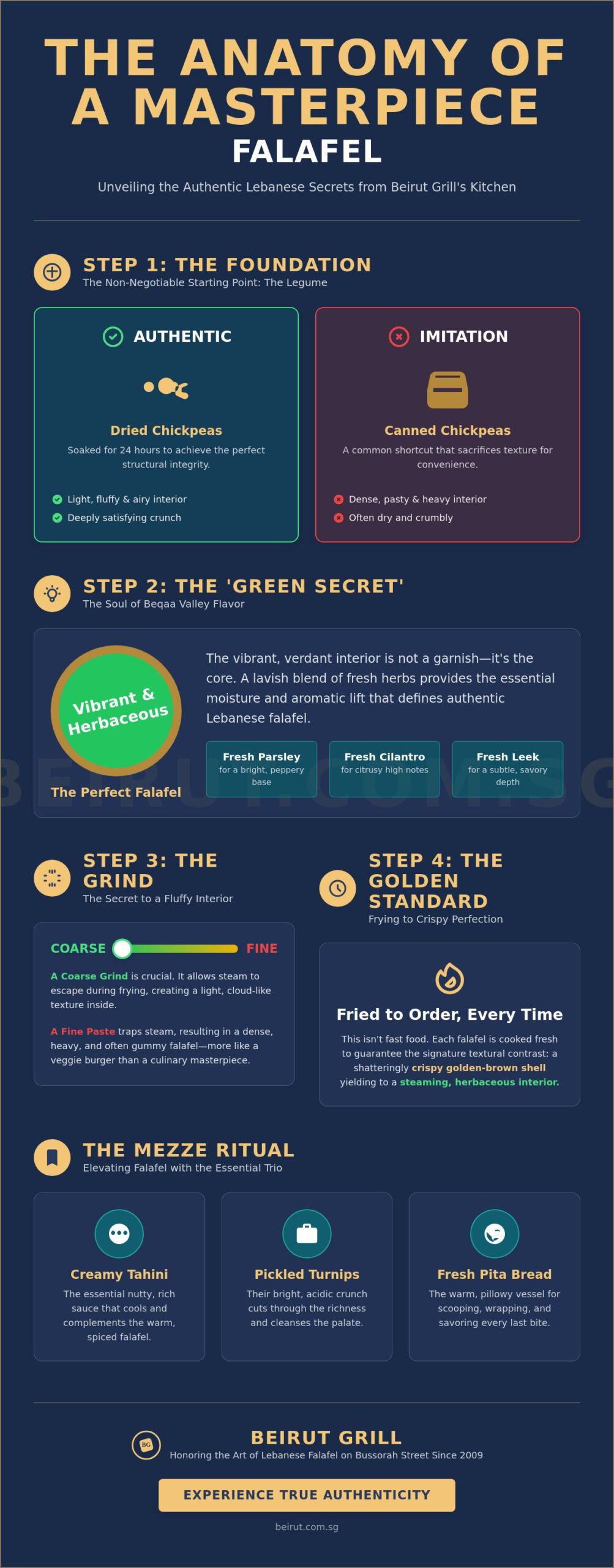
- Authentic Ingredients: We prioritize chickpeas soaked for 24 hours to ensure the perfect consistency.
- Spiced to Perfection: A proprietary blend of cumin, coriander, and fresh parsley creates the signature green interior.
- The Golden Standard: Every batch is fried to order to maintain the essential crunch that defines a premium mezze.
The Anatomy of Authenticity: What Defines a Masterpiece Falafel?
Nestled in the heart of historic Bussorah Street, Beirut Grill has spent years perfecting the alchemy of the humble chickpea. To create a masterpiece falafel, one must respect the heritage of the Levant. The non-negotiable foundation of any authentic recipe is the use of dried chickpeas. While canned varieties offer convenience, they lack the structural integrity required for that signature crunch. We soak our legumes for a minimum of 24 hours, ensuring they’re tender enough to grind but firm enough to hold their shape without the need for excessive flour or binders.
The vibrant, verdant interior of a truly divine falafel comes from the “Green Secret.” This is a generous, almost lavish, application of fresh parsley, cilantro, and leek. These aren’t mere garnishes; they provide the moisture and aromatic lift that balances the earthy weight of the beans. When combined with a precise ratio of toasted cumin, coriander, and fresh garlic, the result is a sensory journey that has captivated our guests since 2009. The technique requires a coarse grind. A fine paste results in a dense, heavy ball, whereas a coarse texture allows steam to escape during cooking, creating a light, fluffy interior that contrasts beautifully with the exterior.
Chickpeas vs. Fava Beans: The Great Debate
In the broader context of Middle Eastern food history, the composition of this dish varies by geography. The Egyptian “Ta’ameya” utilizes dried fava beans, which creates a creamier, greener center. However, the Lebanese style we champion at Beirut Grill focuses on high-quality chickpeas. This protein-rich legume provides a nuttier, more robust flavor profile that stands up well to the bold spices of our kitchen. It’s a lighter alternative that remains a staple of our critically acclaimed menu.
The Art of the Perfect Fry
Achieving the divine golden-brown crust is a matter of thermal precision. In a professional kitchen, temperature control is paramount. We maintain our oil at a steady heat to ensure the exterior crisps instantly, preventing the center from absorbing excess oil. While modern health trends often suggest baking, it simply cannot replicate the flavor retention and textural contrast of a traditional deep-fry. This method seals the aromatic oils of the herbs inside, ensuring every bite is as fragrant as the last. Guests often find that our authentic mezze selection provides the perfect introduction to these complex, time-honored flavors.
Regional Nuances: Exploring the Diverse World of Falafel
From the sun-drenched fertile plains of the Beqaa Valley to the bustling, aromatic alleyways of Cairo, the falafel undergoes a fascinating culinary metamorphosis. While the Egyptian version, known as ta’ameya, relies almost exclusively on dried fava beans to create a creamy, aerated texture, the Lebanese tradition favors a sophisticated blend of chickpeas or a chickpea-fava hybrid. This regional preference isn’t merely a choice of legume; it represents a cultural signature that dictates the crunch, the color, and the soul of the dish.
In Lebanon, the focus remains steadfastly on freshness and herb density. A masterfully prepared falafel should reveal a vibrant, emerald-green interior when cracked open, a result of generous amounts of fresh parsley and cilantro. This herb-forward profile is often brightened with subtle citrus notes and a complex array of spices. Identifying a truly authentic Lebanese falafel in a restaurant setting requires a keen eye for detail. Look for a shell that is shattered-glass crisp but not oily, an interior that is moist rather than dense, and the presence of a signature tahini-based tarator sauce infused with lemon and garlic.
The presentation of this humble fritter also shifts across borders. In the Levant, it is common to see falafel served as a centerpiece of an elaborate mezze spread, accompanied by pickled turnip, fresh mint, and radishes. Conversely, urban street food cultures often favor the efficiency of the pita pocket, where the fritters are nestled among layers of chopped salad and drizzled with spicy shatta.
Levantine Style: The Gold Standard
The Levantine style is widely considered the gold standard for its robust, earthy aroma and striking visual contrast. This specific profile relies on precise spice blends, often featuring cumin, coriander, and a touch of allspice, many of which are imported directly from the Middle East to maintain profile integrity. Those seeking the finest mediterranean food singapore often look for these specific markers of Levantine excellence. At Beirut Grill, where we have curated authentic experiences since 2009, we ensure every fritter mirrors the heritage of historic Bussorah Street.
Falafel as a Global Traveler
As the dish traveled to European and Asian capitals, it adapted to local palates while striving to maintain its core identity. A common misconception in the West was the reduction of falafel to “just a meat substitute” for vegetarians. In reality, it is a standalone delicacy that demands respect for its own complex flavor profile. Because the recipe relies entirely on legumes and aromatics, falafel is naturally pork-free and provides a universally accessible option for diners with diverse dietary requirements. Its global journey has transformed it from a regional staple into a celebrated icon of boutique, plant-based dining.
The Mezze Ritual: How to Perfectly Pair and Serve Falafel
Stepping into the vibrant atmosphere of historic Bussorah Street, one immediately understands that a Lebanese feast is a choreographed performance of flavors. Since 2009, Beirut Grill has mastered this art by positioning the falafel as the definitive anchor of the hot mezze selection. It arrives at the table steaming, its exterior crisp and golden, while the interior remains vibrant and herbaceous. This temperature contrast is vital. A cold, dense chickpea fritter is a missed culinary opportunity; it must be served immediately to maintain its structural integrity and release its aromatic spices.
To appreciate the complexity of this “hot mezze” anchor, you must pair it with the creamy foundations of the Lebanese table. The warmth of the fried legumes cuts through the velvet-smooth authentic Lebanese hummus and the smoky depth of Moutabal. This interplay between the hot, crunchy fritter and the cool, olive oil-rich dips creates a sensory experience that has defined our award-winning menu for over a decade. It’s a ritual that rewards the curious diner with every bite.
The Role of Tahini and Pickles
Authenticity demands a specific accompaniment. A nutty, lemony tahini dressing is the only acceptable companion for a traditional plate. It adds a necessary creaminess without masking the earthy spices. Alongside this, “Kabees,” or Lebanese pickles, provide a sharp acidity. Pink pickled turnips and brined cucumbers cut through the richness of the legumes, refreshing the palate. Complete the plate with a handful of fresh Tabbouleh or the toasted crunch of a Fattoush salad for a balanced, vibrant meal that reflects the heritage of the Beqaa Valley.
Sophisticated Beverage Pairings
Elevating the meal requires a thoughtful approach to the glass. Arak, the traditional anise-flavored spirit, serves as the ultimate palate cleanser. When diluted with water and ice, its milky clouds provide a cooling contrast to the savory falafel. For those preferring the vine, a crisp Lebanese white wine is ideal. We often recommend a bottle from prestigious estates like Chateau Musar or Chateau Kefraya to highlight the fresh parsley and coriander within the batter. To conclude the ritual, a fragrant Moroccan Mint Tea provides a soothing, digestive finish to the indulgence.
With the majestic Sultan Mosque as a backdrop, dining here becomes more than just a meal. It’s an invitation to soak up the ambiance of a boutique hidden gem that has been a staple of Singapore’s dining scene since 2009. Every element, from the imported spices to the specific ritual of service, ensures a divine dining experience that honors our Middle Eastern roots.
Experience the authentic flavors of the Middle East by booking your table at Beirut Grill today.
Beirut Grill: Honoring the Art of the Lebanese Falafel Since 2009
Nestled in the shadows of the majestic Sultan Mosque on historic Bussorah Street, Beirut Grill has remained a cornerstone of Singapore’s Middle Eastern culinary scene since 2009. We don’t just serve food; we curate a sensory journey that transports you directly to the vibrant streets of Lebanon. Our commitment to authenticity begins with our sourcing, as we import the finest spices and ingredients directly from the Beqaa Valley to ensure every bite reflects the heritage of our ancestors. As a hidden gem in the heart of Kampong Glam, we offer a critically acclaimed dining journey that balances traditional techniques with a sophisticated, boutique atmosphere.
A Legacy of Excellence
Since 2009, our reputation as a premier destination for Middle Eastern cuisine has been built on a foundation of reliability and seasoned expertise. We take immense pride in our pork-free menu, which allows a broad national audience in Singapore to enjoy the rich, diverse flavors of Lebanese cooking without compromise. This dedication to tradition has earned us award-winning status and a loyal following that treats our space as a home away from home. Our kitchen team follows time-honored methods, ensuring that every dish meets the high standards our guests have come to expect over the last 15 years. We invite you to experience the mouth-watering perfection of our signature falafel, crafted with a precise blend of chickpeas and secret herbs that deliver a satisfying crunch and a light, airy center. For those who wish to explore the full breadth of our Mediterranean offerings, our halloumi cheese guide reveals another centuries-old treasure that thrives under the intense heat of our charcoal grill.
Your Invitation to Indulge
Whether you’re looking for a light lunch or a grand evening celebration, our menu offers endless ways to celebrate the art of the mezze. You can incorporate our golden-brown falafel into a sprawling vegetarian feast or pair it with our legendary Mixed Grill for a truly indulgent experience. The atmosphere at Beirut Grill is evocative and deeply rooted in heritage, designed to encourage guests to slow down and soak up the ambiance of our historic surroundings. Every detail, from the warm lighting to the curated selection of prestigious Lebanese wines like Chateau Musar and Chateau Kefraya, is intended to reward your curiosity. It’s time to discover why we remain a sanctuary for those seeking the soul of Lebanon in Singapore.
Reserve your table at Beirut Grill for a divine dining experience and let us host you in the heart of heritage.
Embark on Your Own Middle Eastern Culinary Odyssey
Understanding the deep heritage of falafel reveals that this golden, crisp masterpiece is more than a simple mezze staple; it’s a storied legacy of spice and tradition. From the meticulous balance of imported herbs to the communal joy of a shared table, true authenticity requires a seasoned hand. Since 2009, Beirut Grill has served as a sophisticated sanctuary for those seeking these genuine flavors in the heart of Singapore. Nestled on historic Bussorah Street, our award-winning kitchen crafts a pork-free menu that honors the refined art of Lebanese dining.
We invite you to step away from the bustle and discover why critics call our restaurant a divine hidden gem. Whether you’re indulging in mouth-watering mezze or exploring our curated selection of fine wines, every bite tells a story of excellence. Your table awaits in the shadow of the majestic Sultan Mosque, where sensory-rich experiences and warm hospitality define every evening.
Book your authentic Lebanese feast at Beirut Grill and taste the difference that over a decade of culinary mastery brings to your plate. It’s time to treat yourself to a meal that’s as rich in history as it is in flavor.
Frequently Asked Questions
Is falafel always vegan and gluten-free?
Falafel is inherently vegan, though its gluten-free status depends on whether the chef uses wheat flour as a binder. At Beirut Grill on historic Bussorah Street, we’ve crafted 100% plant-based recipes since 2009. While 90% of traditional Middle Eastern versions are naturally gluten-free, some commercial kitchens add flour to prevent crumbling. Always verify if the kitchen uses pure chickpea meal to ensure it meets your specific dietary requirements.
What is the difference between Lebanese falafel and Egyptian falafel?
The primary distinction lies in the base legume; Lebanese falafel uses chickpeas, while Egyptian versions, known as Ta’ameya, rely on fava beans. This choice creates a significant difference in texture and flavor profile. Lebanese chickpea patties offer a nuttier, grainier bite that’s prized in the Beqaa Valley. Conversely, Egyptian fava bean versions are often lighter and fluffier inside, reflecting the unique culinary heritage of the Nile region.
Why is my falafel dry or crumbling apart?
Your falafel likely crumbles because you used canned chickpeas instead of dried ones soaked overnight. Canned legumes contain 40% more moisture, which prevents the natural starches from forming a stable bond during frying. This excess water causes the mixture to disintegrate in hot oil. For a divine, crispy exterior that holds its shape, you must use raw chickpeas that have soaked for at least 12 hours.
How many calories are in a typical serving of falafel?
A standard serving of three to four falafel pieces contains approximately 330 calories, depending on the frying method used. Deep frying typically contributes about 15% of the total fat content through oil absorption. While calorie counts vary, pairing your meal with fresh salads instead of heavy breads helps maintain a balanced nutritional profile. This makes it a popular choice for health-conscious diners seeking authentic flavors in Singapore.
Can falafel be eaten cold, or should it always be hot?
While falafel is best enjoyed piping hot within 10 minutes of frying, it remains a delicious addition to cold mezze platters and salads. The exterior loses its signature crunch as it cools, yet the interior retains its complex herb and spice profile. Many Singaporean diners enjoy chilled leftovers in a pita wrap for lunch. For the most evocative experience, we recommend eating them fresh to appreciate the sensory contrast of the crisp shell.
What are the best side dishes to serve with falafel for a complete meal?
A complete Lebanese meal features falafel alongside creamy hummus made the authentic Lebanese way, smoky baba ghanoush, and a vibrant tabbouleh salad. These traditional sides provide the necessary acidity and creaminess to balance the fried texture of the chickpea patties. Since 2009, Beirut Grill has served these combinations to transport guests to the heart of the Levant. Adding pickled turnips and a generous drizzle of tahini sauce completes this award-winning dining experience.
Why do authentic recipes insist on using dried chickpeas instead of canned?
Authentic recipes demand dried chickpeas because their raw starch acts as a natural binder that canned alternatives lack. When you use canned beans, you’re essentially using pre-cooked mash that turns into a paste. Dried chickpeas provide the structural integrity required for that mouth-watering, grainy texture. This traditional method ensures the falafel doesn’t become a dense, heavy ball, preserving the culinary standards we’ve upheld on Bussorah Street for over a decade.
What gives the falafel its distinctive green color inside?
The vibrant green interior of a perfect falafel comes from a generous infusion of fresh parsley, cilantro, and leeks. Chefs typically blend 150 grams of fresh herbs for every kilogram of chickpeas to achieve this emerald hue. These greens don’t just provide color; they deliver the aromatic, earthy notes that define the dish’s flavor. This sensory detail is a hallmark of the authentic Lebanese style found in the most prestigious kitchens of Beirut.