
What if the vibrant green dish you’ve been calling tabbouleh all these years is actually a grain-heavy imposter? Since 2009, our guests at Beirut Grill on historic Bussorah Street have often shared their surprise when they first taste our version, which prioritizes a lush forest of hand-chopped parsley over the dry mounds of bulgur wheat found in many commercial kitchens. You likely crave that refreshing, zesty bite that defines a true Mediterranean feast, yet it’s easy to feel frustrated when a dish is misrepresented as a heavy starch rather than a light, herb-centric masterpiece.
In this guide, we’ll reveal the secrets of authentic Lebanese tabbouleh, from its ancient origins in the Beqaa Valley to the specific techniques that make it a vegan-friendly powerhouse of health. You’ll learn to distinguish high-quality mezza with the eye of a connoisseur and discover how to pair these flavors with a prestigious Lebanese wine like Chateau Musar. We’re taking you on a sensory journey through the heart of our award-winning menu to ensure every bite you take is as divine as a sunset over the Mediterranean.
Key Takeaways
- Learn why authentic tabbouleh is defined by its vibrant parsley base rather than grains, honoring the traditional Levantine “seasoning” origins.
- Understand the essential role of fine bulgur wheat as a texture enhancer and why a meticulous hand-chop is vital for a true culinary masterpiece.
- Distinguish between the two titans of the Lebanese salad world by comparing the zesty crunch of Fattoush with the herb-centric elegance of mezza.
- Discover the connoisseur’s secret to the perfect bite, from the ideal chilled serving temperature to using romaine lettuce as a traditional scoop.
- Explore the legacy of Beirut Grill on historic Bussorah Street, where traditional techniques have defined our award-winning hospitality since 2009.
Defining Authentic Tabbouleh: More Than Just a Salad
Against the majestic backdrop of the Sultan Mosque on historic Bussorah Street, the sharp, clean scent of hand-chopped parsley often signals the arrival of a true Lebanese feast. Since 2009, Beirut Grill has served as a sanctuary for those seeking this level of culinary precision. At the heart of our mezza selection sits tabbouleh, a dish that is frequently misunderstood by the global palate. While many international cafes serve a grain-heavy mixture, the authentic Levantine version is a vibrant herb salad where parsley is the undisputed protagonist. The very name finds its roots in the Arabic word “tabbil,” which translates to seasoning or spicing, reflecting its role as a flavor enhancer for the entire meal.
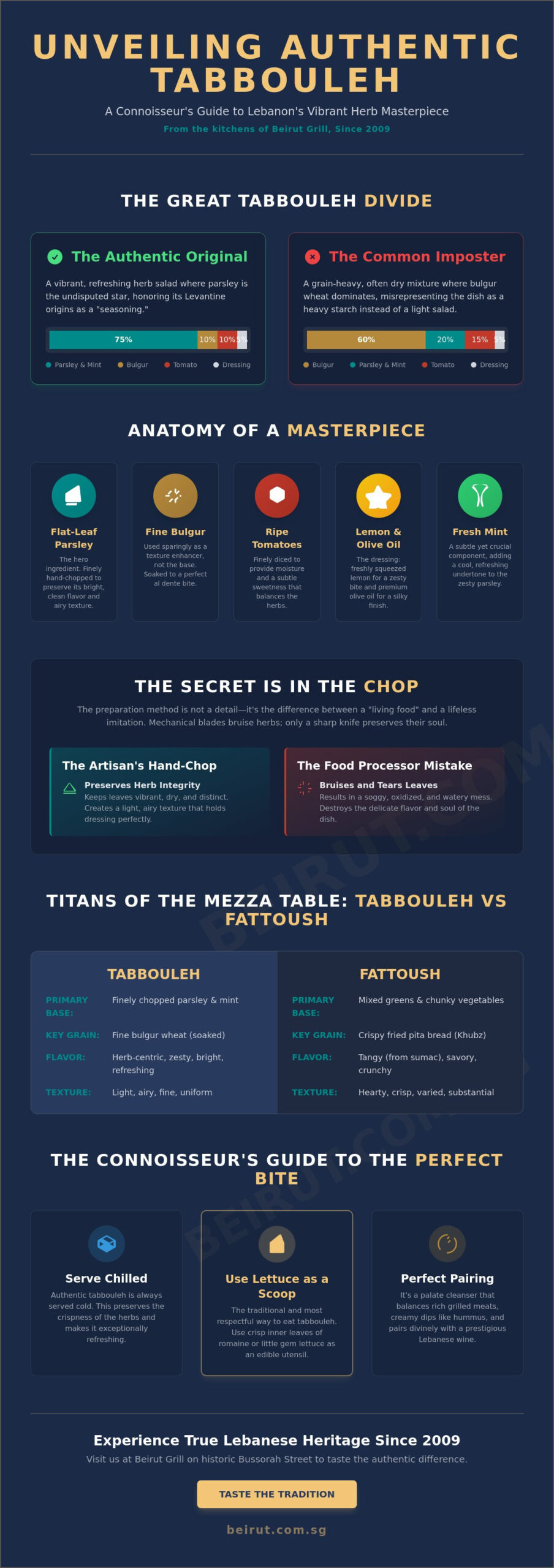
For those exploring the historical roots of this dish, the Tabbouleh – Wikipedia entry details how it has evolved from a humble mountain staple into a global icon of health. In Lebanon, it’s considered the crown jewel of the mezza table. It’s not a side dish to be ignored; it’s a palate cleanser and a nutritional powerhouse that balances the richness of grilled meats and creamy dips. The ratio is critical. A traditional bowl features a sea of finely minced flat-leaf parsley dotted with tiny specks of soaked bulgur wheat, rather than a pile of grain flavored with herbs.
The Cultural Significance of Tabbouleh
This salad originated in the rugged mountains of Lebanon and Syria, where fresh herbs were abundant and cherished. It represents the height of Middle Eastern hospitality. Serving a bowl of perfectly green, crisp herbs is a sign of respect for the guest. By 2026, food industry analysts project that this dish will be recognized as a premier global superfood, driven by its high concentration of antioxidants and vitamins. At Beirut Grill, we honor this heritage by sourcing ingredients that mirror the freshness found in the Beqaa Valley, ensuring every bite transports you to the Levant.
Why Freshness is the Only Metric That Matters
In the world of Lebanese cuisine, tabbouleh is regarded as “living food.” This means it cannot be mass-produced or pre-packaged without losing its soul. Once the parsley is cut, the clock begins to tick. The sensory experience relies on the immediate reaction between three key elements:
- Hand-Chopped Herbs: Using a food processor bruises the leaves; only a sharp knife preserves the structural integrity and bright flavor.
- Freshly Squeezed Lemon: This provides a sharp, citrusy bite that cuts through the earthy tones of the herbs.
- Premium Olive Oil: A high-quality oil binds the ingredients and adds a silky, luxurious mouthfeel.
In Singapore’s humid climate, the vitality of these ingredients is even more vital. If the salad sits for too long, the lemon juice causes the parsley to wilt and the bulgur to become unpleasantly soggy. We prepare our salad with a focus on timing, ensuring the textures remain crisp and the flavors remain explosive. It’s a labor-intensive process that rewards the diner with a refreshing clarity that no pre-made alternative can replicate.
The Anatomy of a Masterpiece: Ingredients and the Art of the Hand-Chop
Within the sun-drenched kitchens of Beirut Grill on historic Bussorah Street, the preparation of Tabbouleh | Britannica is treated as a sacred ritual rather than a mere recipe. It begins with the rhythmic percussion of a sharp knife against wood. We never use a food processor. Mechanical blades tear and bruise the delicate membranes of the herbs, resulting in a soggy, oxidized mess that lacks the soul of true Lebanese cuisine. Instead, our chefs practice the patient art of the hand-chop, ensuring each leaf of parsley remains vibrant, dry, and bursting with its essential oils. This meticulous technique creates a salad that’s airy and light, allowing the four pillars of Lebanese seasoning, salt, spice, sour, and oil, to coat every fragment without drowning the plate.
Achieving this balance requires a disciplined hand. The salt must draw out the sweetness of the tomatoes, while the spice provides a subtle hum of heat. The sourness comes from freshly squeezed lemons, and the oil must be a premium extra virgin olive oil that lends a silky mouthfeel. It’s this harmony of elements that has defined our award-winning approach to mezza since 2009.
The Hero Ingredients: Parsley and Mint
Authenticity starts with the choice of greens. While curly parsley might decorate a plate elsewhere, Lebanese tradition demands Italian flat-leaf parsley for its robust, peppery depth and superior texture. In the humid, tropical air of Singapore, we find that a generous addition of fresh mint provides a necessary cooling counterpoint that refreshes the palate between bites of rich grilled meats. The ideal herb-to-bulgur ratio is roughly 10:1, ensuring the grains act as tiny jewels of texture rather than a heavy base. This ratio preserves the salad’s identity as a herb-forward masterpiece that cleanses the senses.
The Secret of Fine Bulgur and Spices
The soul of the dish lies in the grade of the grain. We use exclusively #1 fine bulgur, which is far more delicate than the coarse varieties found in common supermarket aisles. These tiny grains shouldn’t be boiled; they’re hydrated naturally by the juices of the hand-diced tomatoes and lemon, retaining a slight, satisfying bite. To elevate the flavour, we incorporate Lebanese seven spice for a whisper of aromatic warmth. While lemon juice provides the primary acidity, a dusting of deep red sumac adds a secondary layer of complex, earthy tartness. If you’re wandering through the Kampong Glam precinct, you can experience this mastery firsthand at our divine dining space, where every bowl of tabbouleh reflects centuries of Levantine heritage.
Tabbouleh vs. Fattoush: Choosing the Perfect Lebanese Salad
Within the vibrant atmosphere of historic Bussorah Street, diners at Beirut Grill often find themselves debating between the two crown jewels of our mezza menu. While both salads celebrate the freshness of Levantine produce, they offer distinct sensory profiles that cater to different moods and palates. Understanding their unique “vibes” is the first step toward a truly divine dining experience that honors Lebanese heritage.
Texture and Composition Differences
Tabbouleh is an intricate masterpiece of precision. It demands finely chopped parsley, mint, and tomatoes, bound together by a modest amount of soaked bulgur wheat. The history of tabbouleh reveals its origins as a herb-based dish where the grain is secondary, providing a subtle chew rather than bulk. Its dressing is sharp and clean, relying on premium olive oil and a heavy hand of fresh lemon juice to create a refreshing, uniform texture.
Fattoush presents a more rustic, exuberant character. It’s a “bread salad” featuring larger, chunky pieces of cucumber, radish, and bell peppers. The defining element is the inclusion of fried or toasted pita chips, which absorb a tangy dressing enriched with sumac and sweet-tart pomegranate molasses. While tabbouleh feels like a refreshing herb garden, Fattoush is a robust vegetable medley with a satisfying, earthy crunch.
When to Order Which Salad
Choosing between these two depends heavily on your main course selection. We recommend pairing the zesty acidity of tabbouleh with richer, fatty meats. The high chlorophyll content and citrus notes act as a superb palate cleanser alongside our signature Lamb Kofta or Grilled Lamb Chops. It cuts through the richness of the meat, ensuring every bite tastes as vibrant as the first.
If you’re seeking a more substantial side that can stand alone as a light lunch, Fattoush is your ideal companion. Its varied textures make it a favorite for those who enjoy a complex mouthfeel and a hint of sweetness from the molasses. For the ultimate Middle Eastern food Singapore experience, most of our regulars since 2009 choose to order both. This allows for a harmonious balance between the sharp, herbaceous notes of the parsley and the savory, spiced crunch of the Fattoush.
Nutritionally, both are powerhouses that reflect the healthy Mediterranean lifestyle. Tabbouleh offers a concentrated dose of Vitamin K and antioxidants from the massive amount of parsley used in each bowl. Fattoush provides a wider range of fiber and water-rich hydration from its diverse vegetable base. Whether you’re dining under the shadow of the Sultan Mosque or enjoying a quiet evening in our boutique space, these salads remain the essential foundation of an authentic Lebanese feast. For a deeper understanding of the broader culinary traditions that frame these dishes, our guide to mediterranean food in Singapore explores the rich flavours and heritage behind every element of a true Levantine spread.
The Connoisseur’s Guide to Pairing and Enjoying Tabbouleh
Set against the historic backdrop of Bussorah Street, enjoying a meal at Beirut Grill involves more than just a fork and plate. To truly appreciate tabbouleh, you must embrace the traditional Lebanese method: using crisp heart of romaine lettuce leaves as natural, edible scoops. This technique adds a refreshing crunch that balances the tender parsley and bulgur. Temperature plays a critical role in this sensory experience. We ensure our salad is served chilled, ideally between 4 and 6 degrees Celsius; this preserves the vibrant green of the herbs without dulling the citrus notes with ice-cold temperatures.
A proper mezza spread follows a deliberate flow designed to awaken the senses. Since 2009, our guests have learned that this salad acts as the bright, acidic anchor of the table. It sits perfectly between the creamy textures of authentic Lebanese hummus and the warm, savory notes of grilled appetizers. Following this traditional sequence ensures the palate remains refreshed throughout the multi-course journey.
Pairing with Charcoal-Grilled Meats
The sharp acidity of tabbouleh serves as a vital palate cleanser when paired with our signature charcoal-grilled dishes. When you enjoy it alongside Shish Taouk, the lemon juice in the salad amplifies the garlic marinade of the chicken. For richer cuts like our Beef Kebab, the high concentration of parsley cuts through the savory fat. The fresh mint leaves provide a cooling finish that contrasts beautifully with the smoky aroma rising from our traditional grills, creating a balanced bite every time. For an equally spectacular grilled companion on your mezza table, the golden crust of halloumi cheese seared over charcoal offers a savory, satisfying contrast to the bright, herb-forward notes of tabbouleh.
Lebanese Wine and Arak Pairings
Elevating your meal requires a beverage that can stand up to the bold lemon and herb profile. A crisp white wine from Lebanon’s Beqaa Valley, such as those from the world-renowned Chateau Musar (established in 1930), offers the necessary minerality to match the salad. For a truly authentic experience, choose Arak. This traditional anise-flavored spirit creates a stunning synergy with the fresh mint. The licorice notes of the Arak cleanse the tongue, making every bite of the mezza feel as vibrant as the first.
Experience the perfect balance of flavors and traditions at our award-winning restaurant. Book your authentic Lebanese dining experience at Beirut Grill today.
Experience the Heritage: Tabbouleh at Beirut Grill Since 2009
Since 2009, Beirut Grill has stood as a guardian of Levantine tradition on historic Bussorah Street. We believe authenticity isn’t a suggestion; it’s a foundation. Our kitchen operates on a zero-compromise philosophy where every bunch of flat-leaf parsley is hand-chopped daily by our skilled chefs. We refuse to use food processors because the mechanical blades bruise the delicate herbs, stripping away the essential oils that define a true tabbouleh. This painstaking technique ensures each bite remains crisp, vibrant, and deeply aromatic, exactly as you would find it in the mountain villages of Lebanon.
Our commitment to heritage extends beyond the plate to the very atmosphere we’ve cultivated for over 15 years. We provide a pork-free, award-winning environment that rewards the curiosity of every guest who walks through our doors. By maintaining these strict standards of preparation, we invite you to experience an immersive culinary journey right here in the heart of Singapore. It’s a space where the legacy of the Middle East meets the cosmopolitan energy of Kampong Glam.
The Beirut Grill Signature Style
Our chefs masterfully blend premium spices imported directly from the Middle East with the freshest produce sourced from local markets. It’s this marriage of global heritage and local quality that has solidified our reputation as a hidden gem for authentic Lebanese dining. Every mezza platter we serve is an aesthetic masterpiece, designed to be shared and celebrated. We focus on the tiny details, from the precise ratio of lemon juice to the specific grade of olive oil, ensuring our tabbouleh remains the gold standard in the city. Complement your mezza experience by exploring our authentic falafel history and the perfect mezze pairing guide to discover how these golden Levantine morsels complete a traditional Lebanese spread.
Plan Your Divine Dining Experience
Stepping into Beirut Grill feels like leaving the humidity of Singapore for the cool, breezy evenings of the Mediterranean. With the majestic Sultan Mosque as a backdrop, the ambiance transports you straight to the heart of Beirut, surrounded by rich textures and the evocative scents of our charcoal grill. The communication of our heritage is felt in every corner of our boutique space, making every meal feel like a private celebration.
Whether you’re a connoisseur of Levantine cuisine or a first-time explorer seeking a “divine dining experience,” our mezza selection offers a sensory journey through flavor. Don’t leave your seat to chance at this critically acclaimed destination. We encourage you to book your table at Beirut Grill today to secure your place for a traditional Lebanese feast that honors centuries of culinary history.
Savor the Timeless Tradition of Lebanon on Bussorah Street
Authentic tabbouleh is far more than a simple salad; it’s a culinary masterpiece defined by the precision of the hand-chop and the vibrant freshness of its herbs. You’ve discovered how the delicate balance of flat-leaf parsley and cracked bulgur distinguishes this mezza from the toasted crunch of Fattoush. Since 2009, Beirut Grill has remained a hidden gem in Singapore, dedicated to preserving these ancient techniques under the shadow of the majestic Sultan Mosque. Our chefs prepare every mezza daily to ensure each bite transports you directly to the Beqaa Valley.
We invite you to indulge in our award-winning Lebanese cuisine, where every dish tells a story of heritage and pride. Pair your greens with a curated selection of Lebanese Wines or a glass of traditional Arak for the ultimate sensory journey. Whether you’re a long-time connoisseur or a curious newcomer, the authentic flavors of our kitchen await your arrival. Complete your Levantine education by discovering the rich history and authentic preparation of falafel as a cornerstone of the traditional Lebanese mezze, and learn how these crispy, herb-filled morsels pair beautifully with our tabbouleh. Experience the finest authentic Tabbouleh at Beirut Grill and discover why we’ve been a critically acclaimed destination for over a decade. We look forward to welcoming you to our table for a divine dining experience soon.
Frequently Asked Questions
Is tabbouleh gluten-free?
Traditional tabbouleh isn’t gluten-free because it relies on fine bulgur wheat, which is a derivative of durum wheat. While the 100% authentic recipe uses this grain, modern diners in Singapore often swap it for quinoa or cauliflower rice to accommodate the 1% of the population with celiac disease. If you’re dining with us on historic Bussorah Street, always check for these contemporary grain alternatives to ensure a safe experience.
What is the difference between tabbouleh and tabouli?
Tabbouleh and tabouli are simply different English transliterations of the same beloved Arabic word, “tabbūla.” Whether you see it listed on our menu as one or the other, the recipe remains a vibrant mix of parsley, mint, and lemon. It’s a linguistic variation rather than a culinary one, rooted in how different regions translate the Levantine dialect into the Latin alphabet.
Can I eat tabbouleh if I am on a vegan diet?
Yes, this iconic dish is naturally vegan and aligns perfectly with a plant-based lifestyle. Since we opened our doors in 2009, we’ve served this refreshing mezza crafted solely from fresh herbs, vegetables, and extra virgin olive oil. It contains zero animal products, making it a staple for the 7% of Singaporeans who identify as vegetarian or vegan.
Why is my tabbouleh soggy?
Soggy tabbouleh usually results from excess moisture in the tomatoes or parsley after washing. To achieve our award-winning texture, you must dry the parsley completely and remove the seeds from the tomatoes before dicing. At Beirut Grill, our chefs ensure the salad stays crisp by adding the lemon juice and salt dressing only moments before it reaches your table.
What is the best way to serve tabbouleh at a party?
For a sophisticated presentation, serve the salad in chilled ceramic bowls or tucked into crisp romaine lettuce hearts. This traditional “scoop” method allows guests to enjoy the textures without cutlery. Pairing it with a glass of Lebanese wine from the Beqaa Valley, like a 2017 Chateau Musar, elevates the experience into a truly divine garden party.
Is tabbouleh considered a main dish or a side dish?
Tabbouleh is traditionally served as a cornerstone of the Lebanese mezza, acting as a refreshing palate cleanser between heavier courses. In a typical 10-dish spread at our hidden gem in Singapore, it functions as a vibrant side. However, its nutrient density makes it a popular light lunch for those seeking a healthy, boutique dining experience.
How long does fresh tabbouleh stay good in the fridge?
Freshly prepared tabbouleh is best enjoyed within 24 hours to maintain the crispness of the parsley. While it remains safe to eat for up to 2 days when stored at 4 degrees Celsius, the lemon juice will eventually wilt the delicate herbs. For the most evocative flavors, we recommend preparing the salad fresh daily, just as we’ve done since 2009.
What are the main health benefits of eating tabbouleh?
This salad is a nutritional powerhouse, offering over 50% of your daily recommended Vitamin C intake in a single serving. The high concentration of parsley provides significant amounts of Vitamin K and antioxidants. Because it uses heart-healthy olive oil and fiber-rich bulgur, it supports digestion while delivering a mouth-watering burst of Mediterranean food sunshine.