
Have you ever wondered why the most storied culinary traditions of the Levant are so often reduced to a simple plate of appetizers? While many diners are familiar with the initial charm of a mezze spread, the true depth of authentic vegetarian lebanese dishes remains a well-kept secret for those seeking a more substantial, soul-stirring experience. You likely already appreciate the cooling freshness of a hand-chopped tabbouleh or the velvet texture of a premium labneh, yet there is a profound world of heritage cooking where vegetables and legumes take center stage with the authority of a main event.
In this guide, we promise to transport you beyond the basics to discover the sophisticated textures and ancient aromas that define a connoisseur’s meat-free feast. We will explore the intricate balance of traditional spice profiles and the specialized techniques used to elevate simple ingredients into prestigious culinary landmarks. From understanding the smoky complexity of moutabal to mastering the art of ordering a balanced, multi-course banquet, you will gain a deep appreciation for a heritage that rewards curiosity with unparalleled indulgence.
Key Takeaways
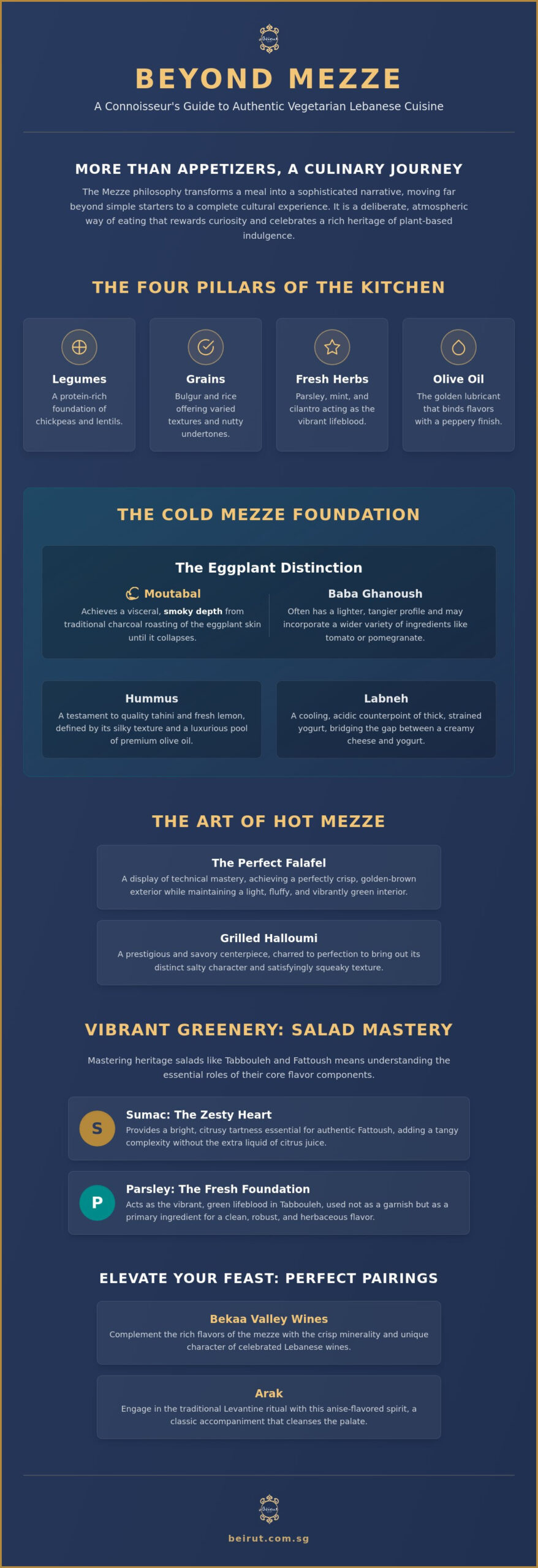
- Discover how the mezze philosophy transforms a meal into a sophisticated narrative, moving far beyond simple appetizers to a complete cultural journey.
- Learn to distinguish between the subtle, smoky nuances of Moutabal and Baba Ghanoush to better navigate the heritage of the cold mezze foundation.
- Explore the technical mastery required for the perfect falafel and why grilled halloumi remains a prestigious centerpiece among authentic vegetarian lebanese dishes.
- Master the traditional ratios of heritage salads, understanding the essential roles of sumac and fresh parsley in creating robust, vibrant flavor profiles.
- Elevate your dining experience by pairing your meat-free feast with the crisp minerality of Bekaa Valley wines or the traditional ritual of Arak.
The Sophistication of Vegetarian Lebanese Dishes
To understand the soul of Lebanese hospitality, one must first look to the earth. The culinary traditions of Lebanon are built upon a foundation of seasonal abundance, where the rhythm of the harvest dictates the menu. Authentic vegetarian lebanese dishes are not a modern concession to dietary trends; they are a centuries old expression of prestige and resourcefulness. This cuisine celebrates the purity of its ingredients, letting cold-pressed olive oil and hand-picked herbs lead the flavor profile. Traditional preservation techniques, such as the artful pickling of seasonal vegetables or the sun-drying of grains, add a fermented depth and complexity that meat alone cannot achieve.
The Mezze philosophy is central to this experience. Rather than a single, monolithic main course, the table is transformed into a vibrant mosaic of small plates. This creates a complex dining narrative where the guest moves from the silkiness of a premium hummus to the sharp, citrusy crunch of a salad. It is a deliberate, atmospheric way of eating that rewards curiosity and encourages a slower, more immersive appreciation of every texture.
The Cultural Roots of Plant-Based Living
Lebanon’s position as a historical crossroads for Mediterranean trade brought a wealth of spices and grains to its shores. This history fostered a sophisticated culinary lexicon where plant-based ingredients were never seen as secondary. In Lebanese hospitality, serving a diverse array of meat-free delicacies is a sign of a generous and knowledgeable host. This balance is maintained through the “Four Pillars” of the kitchen:
- Legumes: Chickpeas and lentils provide a sturdy, protein-rich foundation.
- Grains: Bulgur and rice offer varied textures and nutty undertones.
- Fresh Herbs: Parsley, mint, and cilantro act as the vibrant lifeblood of every dish.
- Olive Oil: The golden lubricant that binds flavors together with its peppery finish.
Beyond the Appetizer: Vegetarian as a Main Event
There’s a common misconception that vegetarian lebanese dishes are merely “starters” meant to precede a grilled meat course. In reality, the nutritional density of staples like chickpeas, lentils, and bulgur creates a meal that’s both indulgent and deeply satisfying. When you dine with intention, these ingredients provide a sophisticated hierarchy of flavors that stand firmly as the centerpiece of the evening. The Mezze tradition is a communal celebration of heritage and flavor that invites guests to linger over a mosaic of textures and aromas.
The Cold Mezze Foundation: Hummus, Baba Ghanoush, and Beyond
The cold mezze table acts as the opening act of a grand performance, setting the stage with a vibrant array of colors and textures that invite communal sharing. Within the tradition of vegetarian lebanese dishes, these chilled offerings provide the essential balance of acidity, creaminess, and smoke that prepares the palate for the feast to come. While casual observers might view these as simple dips, the connoisseur recognizes them as a meticulous display of culinary technique and ingredient purity. Every bowl served is a reflection of the kitchen’s standards, where the quality of the olive oil and the freshness of the produce are never compromised.
Take, for instance, a masterfully prepared Hummus. It is far more than a mere chickpea puree; it’s a delicate testament to the quality of the tahini sourced and the brightness of freshly squeezed lemons. Achieving that signature silkiness requires a precise understanding of temperature and timing. A generous pool of premium olive oil at the center isn’t just a garnish. It is a necessary component that adds a peppery, luxurious finish to every bite, ensuring the texture remains light yet indulgent.
The Holy Trinity of Dips: Texture and Technique
Understanding the distinction between Baba Ghanoush and Moutabal is a hallmark of the refined diner. While both celebrate the eggplant, Moutabal relies on the visceral, smoky depth achieved only through traditional charcoal roasting. The skin must be charred until it collapses, infusing the flesh with an aroma that mimics the hearths of ancient Levantine kitchens. In contrast, Labneh offers a cooling, acidic counterpoint. This strained yogurt, thick enough to hold its shape, bridges the gap between cheese and yogurt, providing a velvety canvas for dried za’atar or fresh mint.
Hand-Crafted Delicacies: Warak Enab and Pickles
Beyond the dips, the cold mezze includes intricate, hand-rolled treasures like Warak Enab. These grape leaves are stuffed with a fragrant mixture of rice, herbs, and spices, requiring a level of patience and dexterity that honors the heritage of Lebanese matriarchs. Each leaf must be tightly bound to ensure the flavors meld during the slow simmering process. To maintain the vibrancy of the meal, “Kabees” (traditional pickles) are served alongside. These fermented gems function as essential palate cleansers, their sharp crunch cutting through the richness of the tahini-based dishes. For those exploring Mediterranean food in Singapore, these nuances distinguish a truly authentic experience from a standard meal.
To truly appreciate these foundational flavors, one must experience them in an environment that honors their origins. You can discover the full depth of these authentic Lebanese offerings at our table, where every dish tells a story of heritage and hospitality.
From Charcoal to Table: The Art of Hot Vegetarian Mezze
As the meal progresses, the cooling influence of the cold table yields to the visceral warmth of the kitchen’s hearth. While the initial dips provide a silkiness to the palate, the collection of hot vegetarian lebanese dishes introduces a sophisticated hierarchy of crunch and smoke. These plates are defined by the transformative power of high-heat frying and the direct kiss of the charcoal flame, elevating humble legumes and garden vegetables into prestigious centerpieces. It’s an experience that rewards the diner’s curiosity with a spectrum of sensory delights, moving far beyond the expected to showcase the true versatility of plant-based heritage.
The Golden Crunch: Falafel and Fatayer
Authentic Falafel is a masterclass in texture, relying on a science that eschews boiling in favor of a long, cold soak for chickpeas and fava beans. This traditional method ensures the interior remains light and aerated rather than dense or pasty. As you break open the golden crust, a fragrant cloud of steam releases the earthy aroma of freshly ground cumin and coriander. Complementing this is the Spinach Fatayer, a triangular pastry that showcases a delicate architectural balance. The dough is folded to house a vibrant mixture of spinach and onions, sharpened by the distinct, citrusy tang of premium sumac. These hand-crafted parcels are baked until they achieve a gentle golden hue, offering a satisfying contrast between the soft dough and the robust, earthy filling.
Heat and Smoke: Halloumi and Veggie Kebabs
The introduction of fire brings a new dimension to the table, particularly through the preparation of Grilled Halloumi. This Cypriot-style cheese is prized for its high melting point, allowing it to achieve a deep, caramelized sear while retaining its signature squeaky resistance. For those seeking a more substantial experience, the Vegetarian Kebab utilizes the intense heat of the grill to transform peppers, onions, and zucchini into charred, succulent treasures. These smoky offerings are traditionally accompanied by Toum, a potent garlic sauce that acts as a bold, creamy bridge between the heat of the vegetables and the coolness of the palate. This garlic emulsion is a hallmark of Lebanese culinary expertise, requiring a patient hand to achieve its cloud-like stability.
No hot mezze spread is complete without the addictive allure of Batata Harra. These cubed potatoes are fried to a crisp and tossed in a vibrant emulsion of cilantro, garlic, and chili, providing a spicy, herbaceous punch that lingers long after the first bite. Every element of the hot mezze is designed to be indulgent, reflecting a long-standing presence in the industry that honors the longevity of Lebanese culinary roots. These vegetarian lebanese dishes aren’t just sides; they’re a testament to a culture that treats every ingredient with the respect of a master artisan.
The Vibrant Greenery: Tabbouleh, Fattoush, and Salad Mastery
Within the mosaic of a traditional feast, the greenery provides a vital, refreshing rhythm that cuts through the richness of the hot mezze. These are not mere side dishes; they are sophisticated vegetarian lebanese dishes that showcase a masterly command over acidity and texture. The success of a Lebanese salad relies entirely on the purity of its dressing. In our kitchen, we adhere to a strict philosophy where only freshly squeezed lemon juice and premium extra virgin olive oil are used. This simple emulsion allows the natural vibrancy of the produce to shine. The ripeness of the tomato is particularly critical, as its sweet, sun-drenched juices dictate the overall success and balance of the dish.
Tabbouleh: An Herbaceous Masterpiece
Perhaps the most misunderstood of all Levantine exports, an authentic Tabbouleh is defined as a parsley salad with a mere hint of bulgur, not a grain salad. The texture is achieved through the precision of the knife-cut. A food processor is never used, as it would bruise the delicate leaves and ruin the salad’s signature light, airy feel. This herbaceous masterpiece relies on the cooling influence of fresh mint and the subtle, sharp bite of green onion to create its complex profile. For those navigating the landscape of Middle Eastern food in Singapore, the ratio of greens to grain is the ultimate marker of authenticity and culinary respect.
Fattoush: The Crunch of the Earth
In contrast to the herb-forward Tabbouleh, Fattoush is a robust “peasant salad” that celebrates the bounty of the garden with a sophisticated crunch. The defining characteristic is the inclusion of “Khubz”, or toasted pita bread, which acts as a vessel to absorb the dressing while maintaining its structural integrity. The soul of this dish is Sumac. This deep red spice provides a signature tartness and a floral aroma that defines the Lebanese palate. To achieve a truly authentic bitterness, we incorporate seasonal radishes and purslane, ensuring every forkful offers a varied sensory experience. It is a dish that rewards the diner with a visceral connection to the earth and its seasons.
Experience the precision and heritage of these vibrant garden offerings by joining us for a meal that honors the true spirit of the Levant. You can reserve your table today to explore the full spectrum of our hand-crafted salads and heritage dishes.
Crafting the Perfect Meat-Free Feast at Beirut Grill
To truly honor the heritage of vegetarian lebanese dishes, one must look beyond the plate to the curated rituals that define a prestigious dining experience. A connoisseur understands that a feast is a symphony of sensory notes, where the beverage pairings and the physical environment are just as vital as the seasoning of the food. At Beirut Grill, we invite you to immerse yourself in an atmosphere that pays homage to Lebanese architectural roots, providing a backdrop of timeless elegance for your culinary journey. This is where the ancient flavors of the Levant meet a refined, modern hospitality that rewards the diner’s curiosity with every sip and every bite.
Beyond the culinary delights, music often plays a central role in these cultural traditions; for those planning an event, you can discover חגיגה ישראלית עם יואב חסיס to bring professional live singing and a festive atmosphere to your gathering.
Elevated Pairings: Wine and Arak
The Bekaa Valley, one of the oldest wine-producing regions in the world, offers a selection of labels that are uniquely suited to the Lebanese palate. When enjoying a meat-free spread, selecting a Lebanese Sauvignon Blanc or a crisp Rosé is essential. The distinct minerality of these high-altitude whites provides a sharp, clean finish that beautifully cuts through the nutty richness of tahini-based dips and the saltiness of grilled halloumi. For those who wish to follow traditional customs, the ritual of Arak is irreplaceable. Often referred to as “Lion’s Milk,” this potent, anise-scented spirit is served with a precise dilution of water and ice, creating a milky transformation. Its cooling effect acts as the perfect companion to the spicy heat of Batata Harra, resetting the palate between courses.
As the meal transitions toward its conclusion, the focus shifts to more soothing aromas. A pot of Moroccan Mint Tea, steeped with fresh leaves and served in delicate glassware, offers a fragrant, digestive pause. It provides a moment of reflection before the final indulgence, ensuring the transition from savory to sweet is as graceful as the service itself.
The Sweetest Ending: Kunefe and Baklava
No exploration of Lebanese heritage is complete without the arrival of the dessert course. Kunefe remains the ultimate indulgence for the vegetarian diner, featuring a sophisticated contrast between a base of warm, melted cheese and a crown of crispy, golden semolina. It is a dish that balances savory undertones with a floral syrup, creating a texture that is both comforting and prestigious. For more information on this masterpiece, you can explore The Ultimate Guide to Kunafa: Discovering the Middle East’s Most Iconic Dessert. Alongside this, we serve Baklava, where paper-thin layers of pastry tell a story of regional history, each piece filled with premium crushed pistachios and lightly scented with orange blossom water.
The final sensory note is delivered through a cup of traditional Lebanese Coffee. Dark, potent, and often infused with a hint of cardamom, it provides a bold conclusion to the delicate sweetness of the pastries. This deliberate progression from cold mezze to hot specialties, and finally to the heritage sweets, ensures that your experience with vegetarian lebanese dishes feels like a complete, indulgent narrative. It is a journey through time and culture, hosted with the seasoned expertise that has defined our presence in the industry for years.
Experience the Legacy of the Levant
The journey through the ancient flavors of the Mediterranean reveals that plant-based dining is a sophisticated art form. We’ve explored how the “Four Pillars” of grains, legumes, fresh herbs, and olive oil create a mosaic of textures that challenge the idea of meat-free food as a mere side dish. From the smoky depths of charcoal-roasted eggplant to the precise, hand-cut greenery of a traditional Tabbouleh, these vegetarian lebanese dishes represent a prestigious heritage that rewards those who dine with curiosity and intention. It’s a culinary narrative where every small plate contributes to a grand, communal celebration of the earth’s bounty.
Since 2009, we’ve served as a dedicated curator of these traditions within our prestigious heritage district. Our pork-free menu adheres strictly to the ancient techniques passed down through generations, ensuring every bite is a testament to authenticity and refined taste. We invite you to slow down and immerse yourself in an atmospheric setting that honors the architectural and culinary roots of Lebanon. Reserve your table at Beirut Grill for an authentic Lebanese feast and discover why the true soul of the Levant is best found in its shared, storied heritage. We look forward to hosting your next cultural journey.
Frequently Asked Questions
Is Lebanese food generally good for vegetarians?
Lebanese cuisine is exceptionally accommodating for vegetarians because it’s deeply rooted in the seasonal bounty of the Mediterranean earth. The foundation of the Levant’s culinary heritage relies heavily on the “Four Pillars”: legumes, grains, fresh herbs, and olive oil. This makes the vast majority of traditional mezze inherently meat-free, offering a sophisticated and nutritionally dense dining experience that never feels like a compromise for the guest.
What is the most iconic vegetarian Lebanese dish?
While many consider Hummus the global ambassador of the Levant, Falafel remains the most iconic centerpiece among hot vegetarian lebanese dishes. These golden, spiced fritters of ground chickpeas and fava beans are celebrated for their scientific balance of a crisp exterior and a light, herbaceous interior. When served alongside hand-crafted tahini and fresh pickles, they represent the pinnacle of traditional street food elevated to a prestigious dining staple.
How is Lebanese Hummus different from store-bought versions?
Authentic Lebanese Hummus is distinguished by its incomparable silkiness and the purity of its ingredients, whereas store-bought versions often rely on preservatives and lower-grade oils. In a traditional kitchen, the ratio of premium tahini to chickpeas is much higher, creating a luxurious, velvet texture. It is always finished with a generous pool of extra virgin olive oil and freshly squeezed lemon, ensuring a bright, peppery profile that mass-produced alternatives simply cannot replicate.
Can I find vegan options within Lebanese vegetarian dishes?
An abundance of Lebanese offerings are naturally vegan, as the cuisine traditionally prioritizes plant-based fats like olive oil over animal products. Staples such as Tabbouleh, Fattoush, and Warak Enab (stuffed grape leaves) are entirely free of dairy and eggs. While dishes like Labneh and Grilled Halloumi are vegetarian favorites, the variety of legume-based mezze ensures that those seeking a strictly plant-based feast will find a rich and indulgent narrative at the table.
What should I drink with a vegetarian Mezze spread?
To achieve a truly balanced feast, we recommend pairing your meal with the crisp minerality of a Bekaa Valley white wine or the traditional ritual of Arak. The anise-scented “Lion’s Milk” acts as a sophisticated palate cleanser, especially when enjoyed alongside savory dips and fried delicacies. For a non-alcoholic alternative, Moroccan Mint Tea or a potent Lebanese Coffee provides an aromatic conclusion that complements the complex spice profiles of the heritage dishes.
Is Halloumi cheese traditionally Lebanese?
While Halloumi finds its historical roots in Cyprus, it has been embraced as a prestigious staple within Lebanese culinary traditions for generations. This “squeaky” cheese is prized for its high melting point, which allows it to be seared over charcoal until caramelized while maintaining its firm, satisfying texture. In our kitchen, it serves as a robust meat substitute, offering a salty, indulgent element that bridges the gap between the garden and the grill.
What makes Lebanese Tabbouleh authentic?
Authenticity in Tabbouleh is defined by its herbaceous nature; it’s a parsley salad accented with a hint of bulgur, rather than a grain-heavy dish. The leaves must be meticulously hand-cut with a sharp blade to prevent bruising, ensuring the salad remains light and vibrant. This technique preserves the essential oils of the parsley and mint, creating a refreshing, citrusy profile that is vastly superior to the dense, processed versions often found elsewhere.
Are Lebanese vegetarian dishes usually spicy?
Most vegetarian lebanese dishes focus on aromatic complexity rather than intense heat, utilizing spices like sumac, cinnamon, and allspice for depth. While the flavor profiles are robust and sensory-rich, they are rarely “spicy” in the sense of chili-driven heat. The notable exception is Batata Harra, where cubed potatoes are tossed with garlic, cilantro, and chili to provide a vibrant, spicy punch that adds a lively contrast to the cooler mezze offerings.