
The milky cloud that swirls within your crystal glass is not a chemical error; it is the soul of the Levant revealing itself through a century-old ritual of hospitality. Many newcomers feel a sharp sting of hesitation when faced with this potent, anise-scented spirit, often deterred by its formidable alcohol volume or the mystery of the louche effect. Mastering how to drink arak is about more than just quenching thirst; it is an initiation into a prestigious tradition that rewards the patient and the curious. Whether you are dining in the heart of Singapore or the hills of Lebanon, this ritual demands a specific elegance.
It is natural to feel a sense of reverence for a drink nicknamed “Lion’s Milk,” especially when you wish to honor the heritage behind it with sophisticated confidence. This definitive guide promises to transform your uncertainty into expertise, teaching you the precise water-to-spirit ratios and the vital sequence of preparation that prevents the aniseed from crystallizing. We will explore the cultural significance of this storied spirit and reveal the perfect culinary companions, from creamy Moutabal to charred Lamb Kofta, ensuring your next encounter with Arak is an elevated sensory journey that respects both the palate and the past.
Key Takeaways
- Master the precise sequence of how to drink arak by diluting one part spirit with chilled water before adding ice to achieve the perfect, signature cloudiness.
- Identify the specific glassware and social etiquette required to host an authentic Lebanese table, including the tradition of using a fresh glass for every new pour.
- Learn how the bold anise profile of Arak serves as an exceptional palate cleanser when paired with rich charcoal-grilled meats and creamy mezze like Hummus.
- Gain confidence in selecting premium labels by understanding the traditional distillation process involving indigenous Lebanese grapes like Obeidi and Merweh.
- Discover where to experience a curated journey of the Levant in Singapore by exploring sophisticated Arak offerings at authentic Lebanese dining destinations.
Table of Contents
What is Arak? The Heritage of the Lion’s Milk
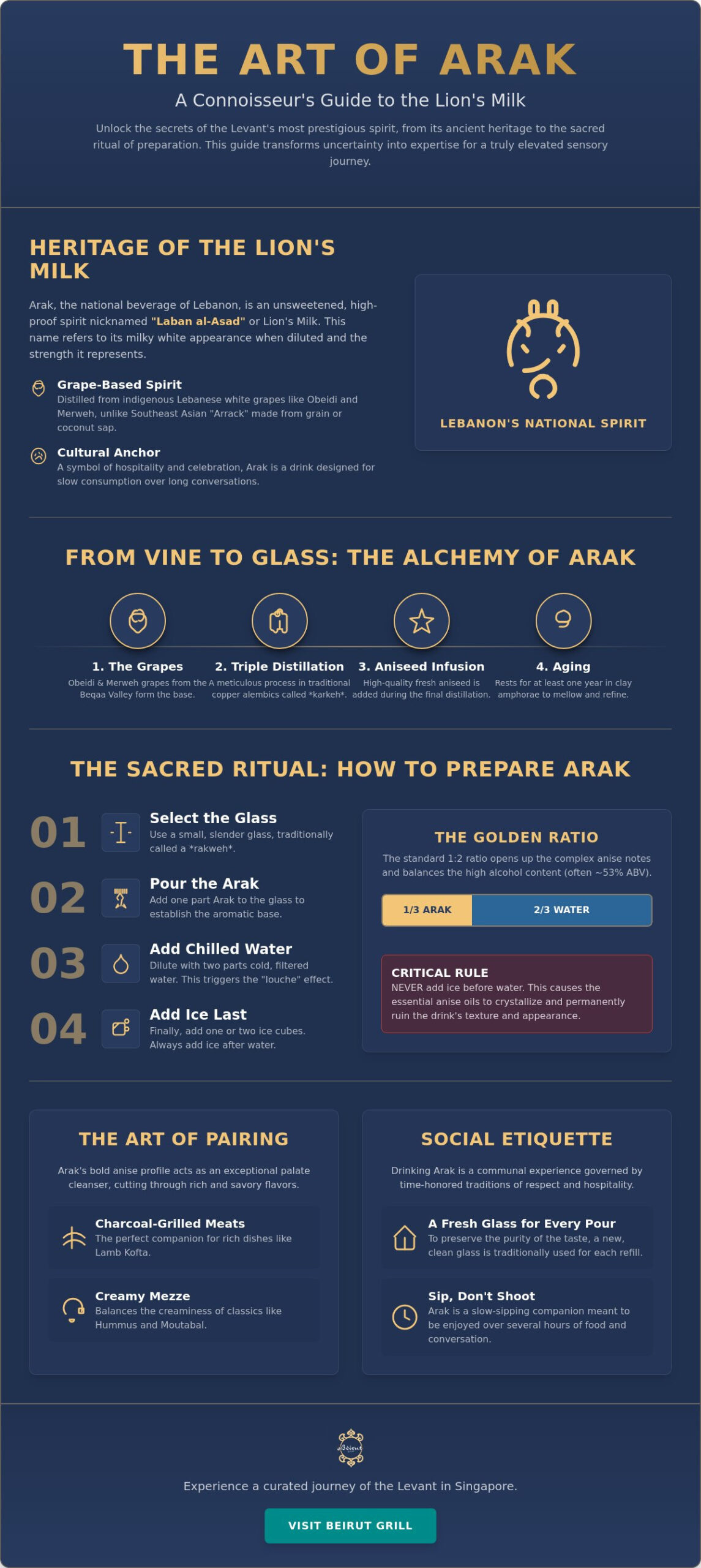
To understand the soul of the Levant, one must first understand Arak. This prestigious, unsweetened spirit is the national beverage of Lebanon, representing a legacy of craftsmanship that has survived for centuries. While many spirits are born of convenience, Arak is born of patience. It is a high-proof elixir distilled from indigenous white grapes, primarily the Obeidi and Merweh varieties, which thrive in the sun-drenched, high-altitude vineyards of the Beqaa Valley. For those curious about What is Arak?, it is essential to recognize it as a cultural anchor, a drink that commands respect at every table it graces.
In the Middle East, Arak is affectionately known as Laban al-Asad, or “Lion’s Milk.” This evocative moniker refers to the milky white appearance the liquid assumes when diluted, but it also speaks to the courage and strength associated with those who drink it. Mastering the nuances of how to drink arak begins with appreciating this heritage of power and hospitality. It is a drink designed for slow consumption, bridging the gap between a long day and a celebratory evening.
For our guests in Singapore, it’s vital to distinguish this Levantine treasure from the various spirits known as “Arrack” found across Southeast Asia. While those regional varieties are often distilled from fermented grain, sugarcane, or coconut sap, true Lebanese Arak remains strictly grape-based. This specific botanical lineage ensures a cleaner, more sophisticated profile that stands apart as a premium imported offering. The Mediterranean climate, with its cool nights and hot days, imbues the grapes with a high sugar content, providing the perfect foundation for the rigorous distillation process that follows.
The Alchemy of Triple Distillation
The journey from vine to glass involves a meticulous triple distillation process within traditional copper alembics, known as karkeh. During the final stage, the spirit is infused with the highest quality fresh aniseed, which imparts the signature aromatic profile that defines the drink. Following the final distillation, the spirit rests for at least one year within traditional clay amphorae to mellow its intensity and refine its complex character. This resting period allows the sharp edges of the alcohol to soften, ensuring a smooth finish that rewards the discerning palate.
The Louche Effect: Why Arak Turns Milky
The most captivating aspect of learning how to drink arak is witnessing the “louche” effect. This spontaneous emulsification occurs the moment water touches the clear spirit, causing the anise oils to suspend and transform the liquid into an opaque, cloudy white. This visual transition is not merely a spectacle; it’s a hallmark of quality and a signal that the drink is ready for enjoyment. If the spirit remains clear after water is added, it lacks the essential oils that characterize a true, prestigious Arak.
The Ritual of Preparation: How to Pour and Mix Arak Properly
The preparation of Arak is a deliberate performance that rewards the patient observer. Before the first drop is poured, one must select the appropriate vessel. Traditionally, a small, slender glass is used, often referred to as the “rakweh” of spirits. This delicate glassware is essential because it allows the drinker to appreciate the visual transformation and maintain the ideal temperature throughout a multi-course meal. Mastering how to drink arak begins with this physical foundation, ensuring the spirit is treated with the prestige it deserves.
The ritual follows a specific sequence that cannot be rushed. It starts with the pour: one part Arak is added to the glass to establish the aromatic base. Next comes the dilution, where two parts of cold, filtered water are added. This is the moment The Etiquette of the Lion’s Milk truly begins, as the clear liquid transforms into its signature milky white. Finally, ice is added only after the water has been mixed. Arak is a slow-sipping companion, intended to be enjoyed over hours of conversation rather than consumed as a quick shot.
The Golden Ratio: 1/3 Arak, 2/3 Water
While some seasoned drinkers prefer a stronger mix, the standard one-to-two ratio is the most effective way to balance the spirit’s high alcohol content, which often reaches 53% ABV. This dilution doesn’t weaken the drink; instead, it opens up the complex botanical notes of the aniseed. Using chilled, filtered water is non-negotiable for maintaining the spirit’s integrity. If you’re exploring how to drink arak for the first time, start with this ratio to appreciate the cooling sensation it brings to the palate, especially when paired with the vibrant flavors found at Beirut Grill.
The Cardinal Sin: Never Put Ice First
The most common error a novice can make is placing ice in the glass before the water. When neat Arak makes direct contact with ice, the sudden temperature drop causes the anise oils to crystallize instantly. This creates an unappealing, waxy film on the surface of the drink and ruins the silky mouthfeel. To avoid this “film effect,” always ensure the water has already triggered the louche before the ice is introduced. This simple rule preserves the texture and ensures the spirit remains crisp and refreshing throughout the evening.
The Art of Pairing: Elevating Mezze and Charcoal Grills
To truly master how to drink arak, one must look beyond the glass and toward the table. Arak is rarely a solitary indulgence; it is the rhythmic heartbeat of a Levantine feast, designed to bridge the gap between complex textures and bold, smoky flavors. The spirit’s cooling anise profile acts as a sophisticated palate cleanser, cutting through the richness of charcoal-grilled proteins and the creamy density of traditional dips. The Art of Pairing reveals that this is not merely a preference, but a gourmet ritual that has defined Middle Eastern hospitality for generations.
The sharp, botanical “zing” of the spirit provides a necessary counterpoint to the velvet-like consistency of Hummus and Baba Ghanoush. Without this interaction, the palate can become overwhelmed by the weight of tahini and olive oil. Similarly, the acidity found in vibrant salads like Tabbouleh and Fattoush finds a refreshing ally in the diluted spirit. The lemon juice and sumac in these dishes resonate with the anise, creating a bright, citrusy harmony that prepares the senses for the heavier courses to follow.
The Mezze Symphony
Arak facilitates the long, leisurely pace of an authentic Mediterranean food experience. It is a drink that demands small, frequent bites. Salty appetizers are particularly well-suited to this spirit; the briny snap of olives or the firm, charred exterior of Grilled Halloumi creates a savory foundation that anchors the high-proof liquid. Understanding how to drink arak alongside these starters is about embracing the communal nature of the meal. It is a social lubricant that encourages guests to linger over their plates, turning a simple dinner into a dedicated cultural event.
The Main Event: Grills and Arak
The true synergy of the Lion’s Milk is found when it meets the smoke of the charcoal grill. There is a specific interaction between the aniseed and the aromatic spices used in Shish Taouk and Lamb Kofta that elevates the meat’s natural sweetness. For the discerning diner, the pairing with Beirut Lamb Chops is a revelation, as the spirit’s potency stands up to the robust, gamey profile of the premium cut. Whether you are enjoying a Mixed Grill or individual skewers, the high proof of the spirit ensures that the delicate spices are never lost. The diluted spirit provides a crisp, refreshing finish that lifts the palate after the indulgence of a heavy protein course.
The Etiquette of the Lion’s Milk: Social Traditions
In the heart of a Lebanese home, the presence of Arak signifies more than just a meal; it represents a sacred social contract known as the Soba. This tradition of deep conversation and storytelling is fueled by the slow dilution of the spirit. To understand how to drink arak properly, one must recognize that the social etiquette is as vital as the liquid itself. It isn’t just a beverage. It is a symbol of peace and celebration that has anchored Levantine households through decades of history, fostering a sense of belonging that transcends the dining table.
A hallmark of sophisticated service is the ‘One Glass’ rule. Unlike wine or beer, where a single vessel may last the evening, a prestigious host often provides a fresh glass for every new pour. This practice prevents the residual anise oils from the previous glass from interfering with the crisp profile of the next serving. It ensures each sip remains as refreshing as the first, maintaining the high standards of hospitality that define the Lebanese experience. By avoiding oil buildup, the host preserves the delicate texture that makes the Lion’s Milk so distinctive.
The host also carries the silent burden of temperature. It’s their duty to ensure the water carafes are colder than the room and that the ice bucket is never empty. In the humid climate of Singapore, this attention to detail is particularly appreciated. A host who masters the ritual ensures that the communal spirit of the table remains uninterrupted, allowing guests to focus entirely on the flavors and the company. This meticulous care is what transforms a simple dinner into a prestigious destination experience.
Pouring for Others
Service begins with the guest of honor, a gesture of respect that is fundamental to Middle Eastern culture. When pouring, never fill the glass to the brim. Leaving ample space in the slender glass is essential to let the anise aromas breathe and circulate. This allows the drinker to fully experience the bouquet before the first sip. When glasses are raised, the traditional toast is Kassak, a spirited acknowledgment of health and friendship that bonds everyone at the table.
Transitioning to Dessert
As the charcoal grills are cleared, a debate often arises: does Arak belong with dessert? While some prefer to conclude with the savory, the anise notes can elegantly complement the honeyed layers of Baklava. The spirit’s sharp finish prepares the palate for the rich, cheese-filled indulgence of Kunafa, creating a sophisticated balance of sweet and herbal. Eventually, the Arak glasses are replaced by small cups of Lebanese Coffee, signaling the gentle conclusion of a storied evening.
Experience these timeless traditions firsthand by joining us for an authentic Levantine feast at Beirut Grill.
Arak at Beirut Grill: A Sophisticated Journey in Singapore
Nestled within the vibrant, historic architectural tapestry of Kampong Glam, Beirut Grill serves as a prestigious destination for those seeking an authentic cultural journey. Since our inception in 2009, we’ve positioned ourselves as more than just a restaurant; we’re curators of a heritage that spans centuries. Within our walls, the practice of how to drink arak is treated with the same reverence as the ancient cedars of Lebanon. It’s here, amidst the warm glow of our dining room and the evocative scent of the charcoal grill, that the Lion’s Milk finds its true home in Singapore.
We believe that a sophisticated spirit deserves a sophisticated setting. Our guests are invited to slow down and immerse themselves in a rhythm of hospitality that feels both exclusive and welcoming. The experience of enjoying Arak at our table is designed to transport you, bridging the geographic distance between the streets of Singapore and the sun-drenched vineyards of the Beqaa Valley. It is a sensory reward for the discerning visitor who values professional authority and a deep, rooted sense of place.
A Curated Collection of Heritage
Our cellar houses a meticulously selected array of premium labels, sourced directly from the most renowned producers in the Levant. We take immense pride in being a specialized host, ensuring that every bottle in our collection represents the pinnacle of triple-distilled quality. To maintain the spirit’s delicate integrity, we adhere to strict temperature controls, ensuring the aniseed oils remain stable until the moment of service. This commitment to sourcing and preservation is why our Arak service remains a high-status marker within the local culinary landscape, rewarding the curiosity of every guest.
Join Us at the Table
The ritual of the table is where our expertise truly shines. Our staff is trained in the precise ‘water-then-ice’ sequence, performing the preparation with a grace that honors the traditions of our ancestors. For corporate gatherings or celebratory dinners, this ritual provides a focal point for storytelling and connection, fueling the Soba that makes every meal memorable. We invite you to experience the full synergy of our offerings by pairing a chilled glass of Arak with our signature Mixed Grill or the robust, spice-crusted Beirut Lamb Chops. The spirit’s cooling finish is the perfect, refreshing conclusion to a rich and indulgent feast.
The Levant is closer than you think, waiting to be discovered through a single, perfectly poured glass. Book your table at Beirut Grill and master the art of Arak to experience a prestigious tradition that has defined our hospitality since 2009.
Master the Ritual at Our Table
Mastering the nuances of the Lion’s Milk is a rewarding initiation into the heart of Levantine culture. You now understand that the secret to the perfect louche lies in the patient dilution of the spirit before the ice ever touches the glass. By balancing the bold anise profile with the smoky intensity of charcoal-grilled meats and creamy mezze, you transform a simple meal into a prestigious celebration of heritage. This knowledge of how to drink arak ensures you can navigate any traditional table with the confidence and grace of a seasoned host.
Since 2009, we’ve been proud to serve as a cultural anchor in Singapore’s historic Kampong Glam district. We invite you to indulge in our curated selection of premium Lebanese labels and experience the authentic hospitality that has defined our journey for over a decade. Experience the authentic Lion’s Milk-Book your table at Beirut Grill today and let our experts guide you through this storied tradition. We look forward to welcoming you to a feast where every sip tells a story and every guest is treated like family.
Frequently Asked Questions
What is the correct ratio of water to Arak?
The gold standard for preparation is one part Arak to two parts water. This 1:2 ratio is essential for managing the high alcohol content while allowing the delicate anise aromas to bloom fully. While some veterans prefer a stronger 1:1 mix, beginners find the traditional dilution more approachable and refreshing. Always use chilled, filtered water to maintain the spirit’s prestigious character.
Why does Arak turn white when you add water?
Arak turns white due to the louche effect, which is the spontaneous emulsification of essential anise oils. These oils are soluble in high-proof alcohol but remain insoluble in water. When you add water, the oils separate into tiny droplets that scatter light, creating the signature milky appearance known as Lion’s Milk. This visual transition is a hallmark of quality and essential to the experience.
Can I drink Arak neat or on the rocks?
Drinking Arak neat is generally discouraged because its 53% alcohol volume is too intense for most palates. Similarly, you should never pour it directly over ice. The ritual of how to drink arak requires water first to prevent the spirit from losing its silky texture. Adding ice first ruins the mouthfeel and prevents the oils from emulsifying correctly.
Is Arak the same as Ouzo or Raki?
While they belong to the same anise-flavored family, Arak is distinct due to its grape-based spirit and triple distillation. Ouzo often contains added sugar and a lower alcohol content, whereas Lebanese Arak is unsweetened and significantly more potent. Raki is its closest cousin, but Arak’s specific use of Obeidi or Merweh grapes and clay-aged maturation gives it a more sophisticated profile.
Why shouldn’t I put ice in the glass before the water?
Adding ice before water causes the anise oils to crystallize instantly, creating an unappealing waxy film on the surface of your drink. This thermal shock ruins the smooth texture and prevents the spirit from turning milky. To ensure a prestigious service, always trigger the louche with water before introducing ice to the glass. This simple step preserves the integrity of the spirit.
What kind of food goes best with Arak?
Arak is the perfect partner for a traditional mezze spread and charcoal-grilled meats. It cuts through the creaminess of Hummus and Moutabal while standing up to the robust spices of Lamb Kofta or Shish Taouk. The spirit’s cooling properties make it a natural palate cleanser between savory, smoky bites. It’s a social drink designed to be enjoyed slowly over a multi-course Lebanese feast.
How strong is Arak compared to other spirits?
Arak is significantly stronger than standard spirits like vodka or gin, typically bottled at 53% ABV. Most commercial spirits in Singapore sit around 40% ABV. This higher potency is why the ritual of how to drink arak emphasizes slow dilution and leisurely sipping. Because of its strength, it’s a spirit meant for long afternoons of storytelling rather than quick consumption.
How should I store a bottle of Arak at home?
Store your bottle in a cool, dark place away from direct sunlight to preserve the delicate anise oils. Unlike wine, Arak doesn’t age further in the bottle and has an indefinite shelf life once opened. There’s no need to refrigerate the bottle itself; simply ensure your mixing water is ice-cold when you’re ready to serve. Keeping it at room temperature prevents the oils from prematurely thickening.