
What if the most prestigious and indulgent secrets of the Levantine table aren’t found in the smoke of the charcoal grill, but in the sun-drenched heritage of its earth-bound ingredients? You likely feel a sense of boredom with the generic, uninspired salad options that so often define meat-free dining in today’s busy culinary landscape. It’s time to move beyond the predictable and embrace a journey rooted in centuries of tradition. We’ll show you how to navigate a multi-course vegetarian feast with the confidence of a true connoisseur. You’ll learn the intricate details of traditional mezze and find the definitive answer to what is in a vegetarian kebab when prepared with our authentic, imported spices and premium produce. This guide explores the sensory-rich world of Lebanese heritage, ensuring your next visit to a premier destination like Beirut Grill is an experience of pure cultural indulgence. From the first pour of Lebanese wine to the final sip of Moroccan mint tea, you’ll discover a world of flavour that rewards your curiosity.
Key Takeaways
- Discover how the ancient tradition of Mouneh and a deep reverence for seasonal bounty transform simple vegetables into a prestigious culinary experience.
- Master the art of the Lebanese table by understanding the essential balance of citrus, premium olive oil, and silky textures found in authentic cold mezze.
- Uncover the secrets of the grill and learn exactly what is in a vegetarian kebab to achieve that signature smoky, Mediterranean depth of flavour.
- Elevate your dining choices by exploring the “kingly” heritage of protein-rich grain dishes like Mujaddara, which offer a sophisticated alternative to meat.
- Gain the confidence to curate a multi-course meat-free feast at Beirut Grill, where heritage techniques have been refined since 2009.
The Heritage of the Lebanese Garden: A Philosophy of the Earth
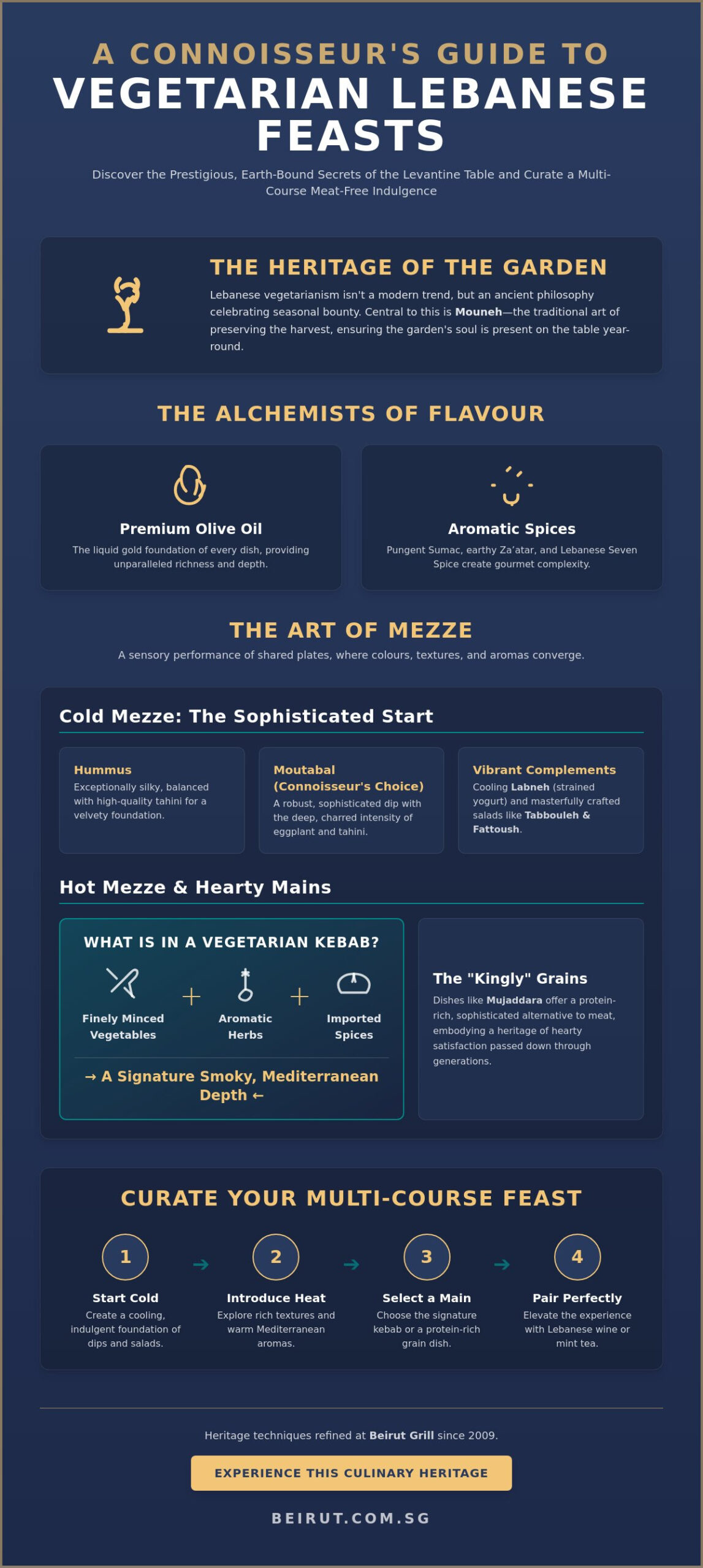
Deeply rooted in the sun-drenched terraces of the Levant, Lebanese vegetarianism represents a prestigious ancient heritage rather than a modern dietary trend. It’s a philosophy of the earth that celebrates seasonal bounty and the golden richness of premium olive oil. The landscape, defined by fertile valleys and rugged mountains, has naturally dictated a diet where legumes, grains, and fresh produce take centre stage. This connection to the land is best expressed through Lebanese culinary traditions, which elevate the humble chickpea or eggplant to a status of high-end indulgence. These plant-based offerings aren’t mere side dishes; they’re the soul of hospitality and communal dining, reflecting a culture that finds pride in the gifts of the soil.
Central to this heritage is the concept of Mouneh, the traditional art of preserving the harvest for the seasons ahead. In Lebanese households, the pantry is a curated collection of sun-dried herbs, pickled vegetables, and fermented grains. This ensures that even in the heart of winter, the table remains a vibrant display of the garden’s soul. It’s this dedication to preservation and quality that defines the authentic Lebanese experience. By focusing on the inherent flavours of the Mediterranean, the cuisine creates an allure that rewards the visitor’s curiosity through elevated textures and aromas.
The Mezze Tradition: A Symphony of Shared Plates
The cultural heart of any Lebanese gathering is the mezze, a curated selection of small plates designed for communal indulgence. This isn’t merely a meal; it’s a sensory performance where colours, textures, and aromas converge. A table laden with Hummus, Baba Ghanoush, and Warak Enab allows for a complete vegetarian exploration in a single sitting. Each dish tells a story of place and history, inviting guests to slow down and savour the deliberate rhythm of the meal. It’s a social ritual that fosters connection over shared, sensory-rich flavours.
Olive Oil and Spices: The Alchemists of Flavour
The foundation of every dish lies in the quality of its ingredients, particularly the premium extra virgin olive oil that flows like liquid gold. Spices act as the alchemists of flavour, transforming simple ingredients into gourmet delicacies. Pungent Sumac, earthy Za’atar, and the complex Lebanese Seven Spice provide a depth that rivals any meat-based dish. For those curious about the specifics of our grill, guests often ask what is in a vegetarian kebab to understand how we achieve such savoury complexity. It’s a meticulous blend of finely minced vegetables and aromatic herbs, grilled to capture the smoky essence of the Mediterranean. Knowing exactly what is in a vegetarian kebab highlights the sophisticated craftsmanship that goes into every plant-based offering.
Cold Mezze: The Sophisticated Art of Dips and Salads
The cold mezze course is where the true craftsmanship of the Lebanese kitchen is first revealed. These aren’t simple starters; they’re an intricate display of patience and precision. Achieving the perfect consistency in a dip requires a meticulous handmade approach that no machine can replicate. Whether it’s the velvety sweep of tahini-rich Hummus or the smoky complexity of eggplant, these dishes set the stage for a prestigious dining experience. While guests often arrive at Beirut Grill asking what is in a vegetarian kebab, it’s these cooling, indulgent textures that provide the essential foundation for the feast to come. The artistry lies in the balance of acidity and richness, creating an allure that transports the guest to the sun-soaked shores of the Mediterranean.
The Creamy Foundations: Hummus and Moutabal
The hallmark of a refined Lebanese table is a Hummus that is exceptionally silky, balanced with a high-quality tahini and served with a generous well of premium olive oil. While many are familiar with Baba Ghanoush, the true connoisseur seeks out Moutabal. Unlike its counterpart, Moutabal is characterized by the deep, charred intensity of eggplant blended with tahini for a more robust, sophisticated profile. For a tangy contrast, Labneh offers a cooling, strained yogurt experience that balances the warmth of Mediterranean spices. These dips are often served alongside a classic vegetarian Lebanese dish like Loubieh bi Ziet, showcasing the versatility of simple garden ingredients transformed through heritage techniques.
The Vibrant Greens: Tabbouleh and Fattoush
Lebanese salads are masterclasses in the use of fresh herbs and citrus. Tabbouleh is frequently misunderstood as a grain dish, but in its authentic form, it’s a parsley-forward celebration. The herb is finely chopped by hand to maintain its vibrant green hue and crisp texture, with only a whisper of bulgur. In contrast, Fattoush provides a satisfying crunch through toasted pita chips, dressed in a unique sumac-infused pomegranate molasses. These salads act as vital palate cleansers, their sharp acidity cutting through the richness of the dips and preparing the senses for the next course. They represent the refreshing essence of the Lebanese garden, served with a pride that reflects our long-standing presence on Bussorah Street since 2009.
Rounding out the cold selection is Warak Enab. These hand-rolled grape leaves are stuffed with a fragrant mixture of rice, tomatoes, and herbs, simmered until tender. They’re a refined delicacy that requires significant time and skill to prepare. If you’re seeking to explore these authentic flavours in Singapore, you can reserve a table at Beirut Grill to experience this heritage first-hand. Understanding the complexity of these cold plates makes the discovery of what is in a vegetarian kebab even more rewarding, as you see how the entire menu works in harmony to reward the visitor’s curiosity.
Hot Mezze: Textures and Aromas of the Mediterranean
Moving from the cooling whispers of the garden to the vibrant heat of our kitchen, the hot mezze course introduces a new layer of sensory indulgence. This stage of the meal is defined by an enticing contrast between crispy, golden exteriors and tender, spiced interiors. In the Lebanese tradition, the transition to hot plates is a celebratory moment, often centered around the communal joy of meze-style sharing. At Beirut Grill, we employ precise frying and charcoal grilling techniques to ensure every bite retains its structural integrity and aromatic depth. Whether it’s the sizzle of the grill or the fragrance of fresh dough rising, these dishes are designed to transport you to the heart of a bustling Beirut evening.
When guests inquire about what is in a vegetarian kebab, they’re often seeking a substantial, protein-rich centerpiece, yet the hot mezze provides the essential textural landscape that makes the feast complete. Batata Harra stands as the essential spicy potato dish that defines Levantine comfort, offering a punchy kick of garlic, fresh coriander, and chili. These golden cubes are sautéed until the edges are perfectly crisp, providing a rustic yet refined accompaniment to the more delicate pastries on the table. It’s a dish that rewards the curious diner with its bold, unapologetic flavours.
The Golden Standard: Falafel and Fatayer
The hallmark of authentic Falafel lies in its aromatic blend of chickpeas and a high concentration of fresh herbs, which give the interior its signature verdant hue. Unlike mass-produced versions, our Falafel is prepared to achieve a shattering crispness on the outside while remaining light and fluffy within. Similarly, the Spinach Fatayer showcases the delicate balance of tart sumac and earthy greens encased in a soft, hand-folded pastry. These savoury treasures must be served piping hot to preserve their intricate textures. This meticulous timing ensures that when you finally discover what is in a vegetarian kebab, your palate is already attuned to the high-status markers of Lebanese spice and craftsmanship.
Grilled Halloumi: The Mediterranean’s Favourite Cheese
Few ingredients capture the spirit of the Mediterranean quite like professionally grilled Halloumi. Known for its unique “squeak” and charred, salty flavour, this cheese is a substantial alternative to traditional meat-based skewers. We grill it until the surface is beautifully caramelized, creating a warm, resilient texture that holds its own against the boldest dips. For a truly sensory lift, we suggest pairing the Halloumi with a drizzle of honey or a scattering of fresh mint. It’s an indulgent addition that reinforces our commitment to providing a premium cultural journey right here on Bussorah Street, a tradition we’ve upheld since 2009.
Hearty Grains and Pairings: The Connoisseur’s Choice
As the deliberate rhythm of the meal progresses, the table transitions from the playful variety of mezze to the substantial heart of the Lebanese kitchen. This stage of the journey is defined by the protein-rich combinations of lentils, rice, and bulgur. These ancient grains have sustained the Levant for millennia, offering a nutritional density that is both satisfying and culturally significant. Moving from light, citrus-forward salads to these earthy mains requires a shift in the palate, moving toward deeper, more resonant flavours. At Beirut Grill, we take pride in presenting these staples with the same level of sophistication as our most prestigious grilled offerings, ensuring every guest experiences the full spectrum of our heritage.
The Art of the Lebanese Pilaf
Mujaddara stands as the humble yet kingly dish of the traditional table, a masterpiece of flavour achieved through patience rather than complexity. The secret lies in the slow caramelization of onions, which are cooked until they reach a deep, sweet mahogany hue that perfectly contrasts with the earthy lentils and rice. It’s a dish that rewards the visitor’s curiosity with its incredible depth. For those seeking a lighter accompaniment, our fragrant Vermicelli rice provides a delicate, buttery foundation for the bolder flavours of the meal. These grain combinations are a testament to the ingenuity of a culture that has always known how to transform the gifts of the earth into gourmet experiences.
While these traditional grains form the foundation, the modern connoisseur often looks toward the grill for a more contemporary centerpiece. This is where the Vegetarian Kebab shines as a masterclass in seasonal preparation. When guests inquire about what is in a vegetarian kebab, they find a meticulous assembly of premium vegetables, each chosen for its ability to hold the smoky essence of the charcoal. We season these skewers with a specialized blend of imported spices, ensuring that they deliver a savoury complexity that rivals any meat-based dish. Knowing what is in a vegetarian kebab allows you to appreciate the craftsmanship involved in elevating simple garden produce to a high-status culinary marker.
Pairing with Lebanese Wine and Arak
To truly elevate the dining experience, one must consider the beverage pairings that have defined Mediterranean hospitality for centuries. A crisp Lebanese Wine, specifically those from the high-altitude vineyards of the Bekaa Valley, provides the necessary acidity to cut through the richness of tahini and olive oil. If you’re seeking a more traditional cultural journey, we recommend Arak, the potent, anise-flavoured spirit known as “Lions Milk.” When diluted with water and ice, it turns a milky white and offers a refreshing, herbal finish that beautifully complements the garlic and fresh mint found in our vegetarian spread. You can explore our curated beverage list to find the perfect accompaniment for your next multi-course feast.
Experience the Finest Vegetarian Lebanese Cuisine at Beirut Grill
Situated along the vibrant architectural tapestry of Bussorah Street, Beirut Grill has stood as a prestigious destination for authentic Levantine culture since 2009. Our commitment to heritage techniques ensures that every guest enjoys a sensory-rich experience that transcends the ordinary. The atmosphere, defined by the soft glow of Mediterranean-inspired decor and the enticing aroma of imported spices, provides a sophisticated backdrop for a journey through the Lebanese garden. We source our premium ingredients directly from regional producers to maintain a true cultural authenticity that rewards your curiosity and sense of indulgence. It’s a place where the physical environment and the culinary offerings work in harmony to transport you to the heart of Beirut.
A Legacy of Excellence and Hospitality
Our long-standing presence in Singapore’s culinary scene is built on a foundation of reliability and seasoned expertise. As a pork-free establishment, we’ve carefully curated a welcoming space where all diners can explore the depth of our heritage without compromise. Our chefs are masters of the charcoal grill, a skill that is particularly evident in our vegetable preparations. We apply the same rigorous standards to our plant-based dishes as we do to our most celebrated meats, ensuring that every bite captures the smoky essence of the Mediterranean. This dedication to the craft has established Beirut Grill as a refined host for those seeking an authentic cultural journey in the heart of Kampong Glam.
Curating Your Meat-Free Feast
To help you navigate a multi-course vegetarian exploration, we recommend beginning with the cooling textures of our tahini-rich Hummus and the hand-chopped freshness of Tabbouleh. For the main course, the Vegetarian Kebab serves as a smoky, substantial centerpiece that captures the very soul of the grill. Guests often ask our knowledgeable staff what is in a vegetarian kebab to better understand the craftsmanship behind its savoury depth. They’ll discover a vibrant medley of seasonal vegetables, marinated in a specialized blend of Lebanese spices and grilled to perfection over open flames. Understanding what is in a vegetarian kebab is the key to appreciating how we elevate simple garden produce to the status of a gourmet delicacy.
No prestigious Lebanese feast is complete without a sweet final note to linger on the palate. We suggest ending your evening with our iconic Kunafa, a decadent, cheese-filled pastry drizzled with rose-infused syrup, or a selection of our crisp, nut-filled Baklava. These desserts provide the perfect conclusion to an immersive cultural and culinary journey. We invite you to book your table today and experience the unparalleled hospitality that has defined our legacy for over a decade. Let us guide you through a world of flavour where every dish tells a story of place, heritage, and pride.
Begin Your Journey into Levantine Heritage
The transition from curious diner to true connoisseur begins with an appreciation for the sun-drenched philosophy of the Lebanese garden. You’ve discovered how the ancient tradition of Mouneh and the meticulous art of the mezze table create a dining experience of unparalleled depth. By moving beyond generic options, you now understand the sophisticated craftsmanship required to balance the smoky allure of the grill with the bright acidity of the garden. Now that you’ve uncovered the secrets of our kitchen and exactly what is in a vegetarian kebab, the final step is to experience these flavours in their true architectural and cultural context.
Since 2009, Beirut Grill has remained a prestigious destination for those seeking authentic Lebanese recipes and warm, refined hospitality. Our sophisticated dining room on Bussorah Street serves as the perfect stage for a multi-course feast, complemented by an extensive selection of imported Lebanese wines and traditional spirits. We invite you to slow down, indulge your senses, and reward your curiosity with a meal that celebrates the enduring soul of the Levant. Reserve Your Table at Beirut Grill for an Authentic Lebanese Feast and let us transport you to the heart of our heritage.
Frequently Asked Questions
What are the most popular vegetarian Lebanese dishes for beginners?
Hummus, Falafel, and Tabbouleh represent the perfect introductory trio for those new to the Levantine table. These dishes offer an approachable balance of creamy tahini, aromatic chickpeas, and vibrant, citrus-forward parsley. They provide a foundational understanding of how Lebanese heritage transforms simple garden ingredients into prestigious, sensory-rich staples that have defined our hospitality since 2009.
Is Lebanese cuisine naturally vegetarian-friendly?
Lebanese cuisine is inherently rooted in a philosophy of the earth, making it exceptionally friendly to meat-free diners. Many of the most iconic heritage dishes rely on legumes, grains, and premium olive oil rather than animal proteins. This natural leaning toward plant-based ingredients ensures that a vegetarian feast feels indulgent and complete, never like a secondary dietary restriction.
What is the difference between Hummus and Baba Ghanoush?
The primary distinction lies in the base ingredient: Hummus is a velvety blend of chickpeas and tahini, while Baba Ghanoush is crafted from fire-roasted eggplant. While both share a tahini-rich profile, Baba Ghanoush offers a deeper, smoky complexity derived from the charred skin of the vegetable. Both are essential pillars of the mezze experience, providing a sophisticated contrast in flavour.
Can I find vegan options in a traditional Lebanese restaurant?
Traditional Lebanese menus are a haven for vegan diners, as many authentic mezze dishes are naturally free from animal products. Staples like Warak Enab, Falafel, and Batata Harra rely on herbs, spices, and olive oil for their richness. If you’re curious about what is in a vegetarian kebab at Beirut Grill, you’ll find a curated selection of charcoal-grilled vegetables that typically align with vegan requirements.
What is the best way to share mezze with a group?
The most authentic way to enjoy mezze is through a deliberate, communal progression from cold to hot plates. You should start with cooling dips and salads to awaken the palate before moving toward warm pastries and grilled items. This rhythmic flow encourages a slow, immersive experience that rewards the group’s curiosity and fosters a sense of shared cultural discovery.
What traditional Lebanese drinks pair well with vegetarian food?
Lebanese Wine from the Bekaa Valley and the anise-flavoured Arak are the most prestigious accompaniments for a vegetarian spread. The crisp acidity of the wine cuts through the richness of tahini, while Arak provides a refreshing, herbal finish that complements garlic and fresh mint. For a non-alcoholic alternative, Moroccan Mint Tea or Lebanese Coffee provides a fragrant, high-status conclusion to the feast.
Are Lebanese desserts like Baklava and Kunefe vegetarian?
Yes, iconic desserts such as Baklava and Kunefe are entirely vegetarian, though they’re rich in dairy and honey. Baklava consists of intricate layers of crisp filo pastry and nuts, while Kunefe is a warm, cheese-filled delicacy. These treats represent the pinnacle of Levantine indulgence, offering a sweet and sophisticated end to your cultural journey at our Bussorah Street destination.
How does Beirut Grill ensure the authenticity of its vegetarian dishes?
Beirut Grill maintains authenticity by employing time-honoured techniques and sourcing premium ingredients directly from regional producers. Since 2009, our chefs have focused on the precise art of charcoal-grilling and handmade preparation to preserve the soul of the Levant. We’re always proud to explain what is in a vegetarian kebab, as it highlights our commitment to the high-status markers of traditional Lebanese craftsmanship.