
Lebanese dining is a choreographed social ritual where the sequence of sharing holds as much weight as the sun-drenched ingredients themselves. It’s natural to feel a sense of hesitation when faced with an extensive menu of exotic mezze and charcoal-grilled meats, perhaps fearing you might miss a staple dish or overlook a silent rule of etiquette. If you’re interested in trying lebanese food for beginners, you’re embarking on a journey into a cuisine recently ranked as the best in the Arab world by TasteAtlas. We understand that the transition from curiosity to confidence requires a steady, knowledgeable hand to guide your choices.
We promise to demystify the Lebanese table, providing you with the cultural fluency to navigate every dip and skewer with the poise of a seasoned traveler. You’ll learn to appreciate the delicate interplay between a smoky Baba Ghanoush and the vibrant zest of a fresh Fattoush, while mastering the refined customs that elevate a simple meal into a prestigious event. This guide outlines the essential stages of a traditional feast, from the opening ritual of cold mezze to the final, aromatic sips of Lebanese Coffee, ensuring your next visit to our heritage-rich destination in Singapore is a masterclass in culinary indulgence.
Key Takeaways
- Embrace the spirit of Karam, the foundational philosophy of Lebanese hospitality that transforms every shared meal into a generous celebration of heritage.
- Master the sequence of the mezze ritual, a vital skill when trying lebanese food for beginners that guides you from cold, silk-textured dips to warm, golden pastries.
- Learn the secrets of the charcoal grill, where precise marination and the Seven Spices blend create the deep, smoky flavors that define authentic main courses.
- Discover the ritual of Arak and the legacy of Lebanese winemaking, ensuring your beverage pairings are as sophisticated as the cuisine itself.
- Gain the cultural fluency needed to dine with confidence, allowing you to immerse yourself fully in the atmospheric charm of a traditional Lebanese feast.
The Philosophy of the Lebanese Table: A Heritage of Generosity
To step into a Lebanese dining room is to be welcomed into an ancient tradition of abundance and warmth. The foundation of every meal is Karam, a deeply held value of hospitality where the host finds true pride in the guest’s satisfaction. Lebanese cuisine is a vibrant tapestry, woven from the sun-drenched freshness of the Mediterranean and the warming, aromatic depth of Middle Eastern spice. It’s an experience that rewards curiosity, especially for those trying lebanese food for beginners, as it transforms the simple act of eating into a collective celebration of culture and connection.
The kitchen relies on the rhythms of the seasons, ensuring that every plate is a testament to quality. Golden olive oil, bright lemon juice, and pungent garlic form the aromatic base of almost every creation. Fresh mint and parsley are used with such abundance they’re treated as primary ingredients rather than mere garnishes. Nothing is eaten in isolation. The table is a communal canvas designed for lingering conversations and the rhythmic passing of plates, ensuring that every guest feels the warmth of the home, even in the most prestigious setting. It’s a philosophy that prioritizes the group over the individual, making every dinner a shared memory.
A Melting Pot of Flavours
The Levant’s history as a sophisticated crossroads of civilizations has left a culinary legacy that is both complex and refined. This heritage prioritizes lean proteins, whole grains, and nutrient-dense vegetables, making it one of the most health-conscious diets in the world. For our guests in Singapore, it’s helpful to understand that authentic Lebanese menus are naturally pork-free. This focus allows the kitchen to highlight the succulence of premium lamb, beef, and poultry, often marinated for hours in traditional spice blends to achieve a perfect balance of zest and earthiness.
The Social Art of Sharing
Ordering family-style isn’t just a preference; it’s the only way to truly unlock the flavours of the region. The sensory environment is central to the experience. You’ll notice the distinct, smoky aroma of the charcoal grill mingling with the sharp, citrusy scent of freshly chopped salads. For those trying lebanese food for beginners, the visual appeal is equally striking as the table becomes a mosaic of textures and vibrant colours. A crucial tip for the uninitiated: pace yourself. It’s tempting to indulge heavily in the first silken dip or warm pastry that arrives, but the Lebanese feast is a deliberate progression. It rewards those who save room for the grilled masterpieces and sweet finales that define the later stages of the meal.
The Mezze Ritual: Navigating Cold and Hot Starters
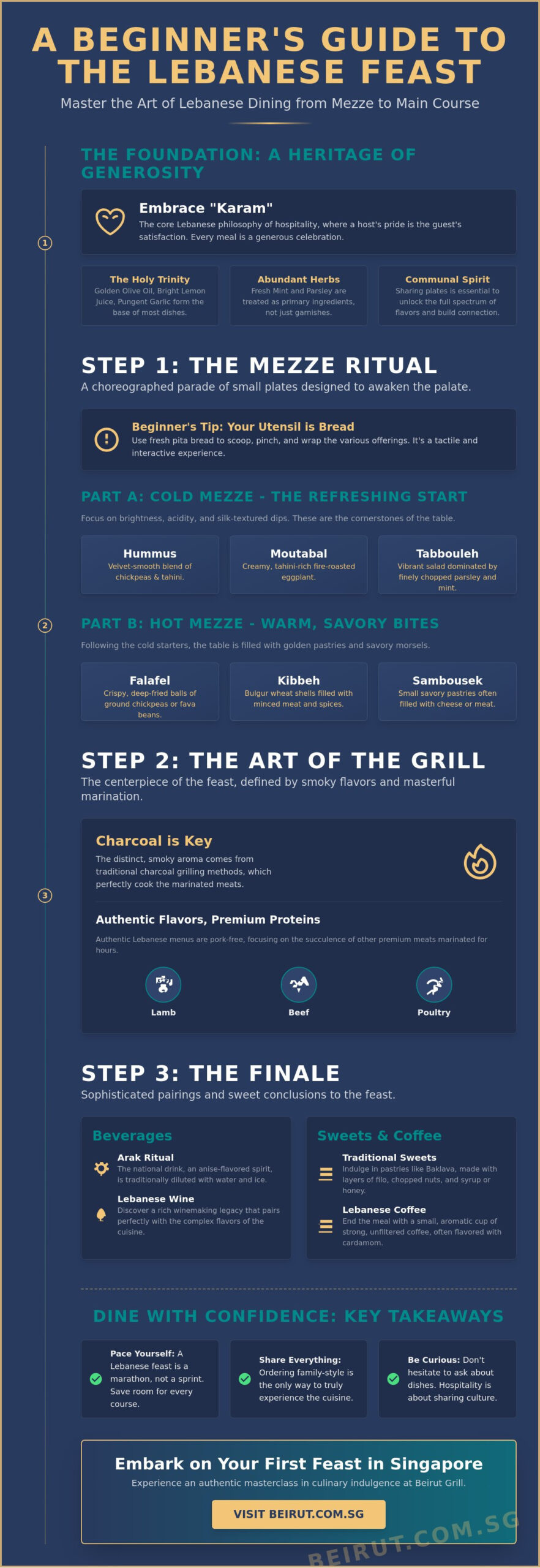
The Lebanese feast doesn’t simply begin; it unfolds. This sensory overture is known as the Mezze ritual, a choreographed parade of small plates that celebrates variety and the art of conversation. When trying lebanese food for beginners, it’s essential to understand the deliberate progression from cold, refreshing dips to warm, savory bites. This sequence isn’t merely a tradition but a culinary logic designed to awaken the palate before the arrival of heavier grilled meats. To truly appreciate the social nuances, one must observe traditional Lebanese dining etiquette, where the act of sharing from common plates signifies mutual respect and hospitality.
Central to this experience is the fresh pita bread, which serves as your primary utensil. It’s used to scoop, pinch, and wrap the various offerings, making the meal an tactile and interactive event. Every newcomer should start with the ‘Big Three’ dips. Hummus, a velvet-smooth blend of chickpeas and tahini, is the cornerstone of the table. It’s joined by Baba Ghanoush and Moutabal, both featuring fire-roasted eggplant. While they share a smoky soul, their textures vary from the chunky, vegetable-forward style of Baba Ghanoush to the creamy, tahini-rich profile of Moutabal. You can explore our full range of authentic starters at our Lebanese restaurant in Singapore, where each dish is prepared with imported spices and heritage techniques.
The Cold Mezze: Refreshing the Palate
The cold mezze stage focuses on brightness and acidity. Alongside the silken Hummus, you’ll encounter vibrant salads like Tabbouleh, which is dominated by finely chopped parsley and mint, and Fattoush, a rustic mix of greens topped with crunchy pieces of toasted pita. For a cooling contrast, Labneh offers a thick, tangy strained yogurt often drizzled with olive oil. Warak Enab, or stuffed grape leaves, provide a delicate balance of rice, herbs, and lemon that cleanses the palate between bites. These dishes are the foundation of trying lebanese food for beginners, offering a light yet complex introduction to the Levant’s garden-fresh flavors.
The Hot Mezze: Savoury Bites
As the meal gains momentum, the kitchen introduces the hot mezze. This stage features the crackling crunch of Falafel and the spiced, bulgur-encrusted Fried Kibbeh. Grilled Halloumi is a perennial favorite, prized for its golden exterior and iconic ‘squeaky’ texture when bitten. For those who appreciate fine pastry work, the Sambousek, filled with seasoned meat or cheese, and the Spinach Fatayer offer a buttery, handheld delight. These warm offerings provide the necessary weight and richness to transition the table toward the charcoal-grilled main courses, ensuring the transition is as satisfying as it is flavorful.
The Art of the Grill: Mastering Lebanese Main Courses
The transition from the vibrant mezze to the main course is marked by the unmistakable, evocative scent of the charcoal grill. In Lebanese culinary tradition, charcoal is more than a heat source; it is a vital seasoning that imparts a deep, smoky allure to every cut of meat. Infusing the air with a sense of anticipation, the grill is where the kitchen’s mastery of fire and spice truly shines. For those trying lebanese food for beginners, the main course represents the pinnacle of the feast, where marinated proteins are seared to perfection over open embers.
The secret to this succulence lies in a patient marination process. We utilize a blend of cooling yogurt, bright lemon juice, and the iconic Seven Spices blend, a heritage mix of allspice, black pepper, cinnamon, cloves, fenugreek, ginger, and nutmeg. This complex aromatic profile ensures that even the leanest cuts remain tender and flavorful. If you are looking for a comprehensive guide to traditional Lebanese cuisine, you will find that the Mixed Grill is often recommended as the ultimate introduction. It serves as a curated platter, allowing you to sample a prestigious selection of skewers and chops in a single sitting.
The Signature Meats: Shish Taouk and Lamb Kofta
Shish Taouk is perhaps the most accessible entry point for any palate. These cubes of chicken breast are bathed in a garlic and lemon marinade before being grilled until golden and juicy. In contrast, the Lamb Kofta offers a more robust, earthy experience. It consists of premium minced lamb kneaded with finely chopped parsley, onions, and a proprietary spice blend that distinguishes it from a standard kebab. For those seeking a heartier, more intense flavor, our beef kebab provides a robust alternative, featuring tender chunks of beef that stand up beautifully to the intense heat of the charcoal.
The Prestige Cuts: Lamb Chops and Seafood
Beyond the skewers, the Lebanese grill offers selections of undeniable prestige. Our Beirut Lamb Chops are a house signature, seared quickly to lock in juices while developing a delicate, charcoal-blackened crust. The seafood offerings are equally refined. Grilled Prawns are prepared with a traditional Lebanese touch, featuring a vibrant dressing of garlic and fresh coriander that complements the natural sweetness of the shellfish. These main courses are typically presented on a bed of fragrant saffron rice or accompanied by a medley of grilled vegetables, creating a balanced and visually stunning plate. This focus on premium ingredients and time-honored techniques ensures that trying lebanese food for beginners is an experience of pure indulgence.
Beyond the Plate: Arak, Lebanese Wine, and Traditional Sweets
Lebanon’s viticultural heritage is among the oldest in the world, a legacy of the Phoenicians that continues to produce world-class labels today. When trying lebanese food for beginners, it’s vital to recognize that the beverage selection is as curated as the cuisine itself. Lebanese Wine, often sourced from prestigious high-altitude vineyards, provides a sophisticated structure that complements the bold spices of the Levant. These wines are particularly skilled at balancing the acidity of lemon-heavy salads and the deep, smoky fats of charcoal-grilled meats, acting as a bridge between the various stages of the feast.
The transition from the savory feast to the sweet finale is a deliberate pause, often aided by traditional digestifs that have been served for generations. Lebanese Coffee, served strong and aromatic, or a warm pot of Moroccan Mint Tea, plays a functional role in the meal. These beverages help settle the stomach after a long progression of sharing plates, preparing you for the final, indulgent stage of the evening. You can explore our curated selection of heritage beverages and desserts by visiting our authentic Lebanese menu in Singapore.
The Spirit of the Levant: Arak and Wine
Arak, famously known as the ‘Lion’s Milk’, is the traditional spirit of choice for the mezze course. This clear, anise-flavored distillate undergoes a captivating transformation when mixed with water and ice, turning a milky, opaque white. Much like the ouzo-like spirits of the broader Mediterranean, Arak possesses a cooling quality that cuts through the richness of fried pastries and creamy dips. A professional tip for the beginner: sip your Arak slowly throughout the first half of the meal. Its licorice-like notes act as a continuous palate cleanser, ensuring every bite of Hummus or Labneh feels as vibrant as the first.
The Sweet Finale: Baklava and Kunefe
No Lebanese feast is truly complete without the golden, honeyed crunch of traditional sweets. Baklava is perhaps the most famous, consisting of dozens of paper-thin layers of filo pastry, generously filled with crushed nuts and finished with a fragrant orange blossom syrup. For those seeking something warm and decadent, Kunefe is a crowd favorite. This cheese-based dessert is topped with a crunchy semolina crust and served warm, offering a unique balance of savory and sweet. If you prefer a lighter, more floral conclusion, Mouhalabieh is a silken milk pudding infused with rose water that offers a gentle, refreshing end to a prestigious dining experience.
Embarking on Your First Feast at Beirut Grill
Our legacy at Beirut Grill began in 2009, founded on a commitment to bring the authentic soul of the Levant to the heart of Singapore. Since that time, we’ve served as a dedicated curator of the heritage and hospitality discussed throughout this guide. For those trying lebanese food for beginners, our establishment provides more than a menu; it offers a seasoned expertise that transforms a simple dinner into a profound cultural journey. Every skewer turned over our charcoal embers is a testament to years of refined craftsmanship and a deep respect for our Mediterranean roots. We take immense pride in our longevity, standing as a reliable destination for those who seek to explore the nuances of Middle Eastern dining with confidence.
An Immersive Dining Experience
The physical environment of Beirut Grill is designed to slow the senses and encourage total immersion. As you enter our prestigious location, the rhythmic atmosphere and the warm glow of the interior transport you directly to the vibrant streets of the Levant. Our hospitality is both professional and inviting, ensuring that every guest feels guided through the complexities of our offerings. We provide a curated beverage list that perfectly complements the finest Mediterranean food in Singapore, featuring the prestigious regional wines and spirits mentioned previously. This holistic approach ensures that the sensory details of the cuisine are matched by the elegance of the surroundings, making your first visit a memorable masterclass in indulgence.
Planning Your Visit
If you’re visiting as a pair, we suggest starting with a curated Mezze Platter and the signature Mixed Grill to experience the full breadth of our kitchen’s capability. This combination allows you to explore the silk-textured dips and various charcoal-grilled proteins without feeling overwhelmed by the extensive choice. It’s also vital for our guests to know that our entire menu is strictly pork-free, reflecting the authentic traditions of Lebanese cooking and ensuring an inclusive environment for all diners. We invite you to Reserve your table at Beirut Grill today and begin your own prestigious culinary adventure. Allow our knowledgeable hosts to guide you through the sequence of the feast, ensuring your experience of trying lebanese food for beginners is both authentic and deeply rewarding.
A New Chapter in Your Culinary Journey
The art of the Lebanese feast is a deliberate and beautiful choreography, moving from the vibrant, silken textures of the mezze ritual to the intense, smoky depth of charcoal-grilled meats. You now possess the cultural fluency to navigate these heritage-rich traditions with the poise of a seasoned guest. By understanding the foundational role of Karam and the sophisticated interplay of traditional beverage pairings, you’ve moved beyond mere dining into a true cultural exploration.
Trying lebanese food for beginners is most rewarding when guided by a host who honors these ancient rhythms. Since 2009, our destination has curated these experiences with pride, offering our signature Mixed Grill alongside a prestigious selection of Arak and Lebanese Wines. We invite you to step into our atmospheric setting and let the aromas of the Levant transport you.
Book Your Authentic Lebanese Experience at Beirut Grill and discover the enduring allure of a table built on generosity and craft. Your first feast is just the beginning of a lifelong appreciation for these timeless flavors.
Frequently Asked Questions
What is the most popular Lebanese dish for beginners?
The Mixed Grill is widely considered the most popular entry point for those trying lebanese food for beginners because it provides a curated selection of our most iconic charcoal-grilled meats. This platter typically features succulent Shish Taouk and spiced Lamb Kofta, allowing you to sample different textures and marinades in a single course. It’s the perfect centerpiece for a shared table, offering a comprehensive taste of the Levant’s grilling traditions.
Is Lebanese food spicy?
Lebanese cuisine is characterized by aromatic depth rather than aggressive heat. While we use a rich palette of herbs and the traditional Seven Spices blend, the profile is savory and zest-forward rather than “spicy” in the way many Southeast Asian dishes are. If you prefer a touch of heat, Batata Harra offers a gentle, garlic-infused kick that adds a vibrant dimension to the meal without overwhelming the palate.
What is the difference between a Mezze and a Tapas?
While both involve small plates, a Mezze is a choreographed ritual that serves as a collective opening to a larger feast. Unlike Spanish Tapas, which are often enjoyed as individual snacks with drinks, Mezze dishes are served in a specific progression from cold to hot. This sequence is designed to prepare the palate for the charcoal-grilled mains that follow, making it a more structured dining event.
How do I eat Hummus and Baba Ghanoush traditionally?
Traditionally, you should use fresh, warm pita bread as your primary utensil. Tear a small piece of the bread and use it to scoop or “pinch” the Hummus or Baba Ghanoush directly from the communal plate. This tactile approach is central to the social experience of trying lebanese food for beginners and allows you to enjoy the silken texture of the dips alongside the soft, charred bread.
Are there many vegetarian options in Lebanese cuisine?
Lebanese cuisine is exceptionally welcoming to vegetarians, featuring an abundance of plant-based masterpieces. You can enjoy a complete feast centered around Falafel, Spinach Fatayer, and Grilled Halloumi, or opt for our specialized Vegetarian Kebab. Many of our most prestigious dishes, such as Tabbouleh, Moutabal, and Warak Enab, are naturally meat-free and nutrient-dense.
What is Arak and how should I drink it?
Arak is a potent, anise-flavored spirit distilled from grapes, often referred to as the “Lion’s Milk” due to its opaque white color when mixed. It’s traditionally served in small glasses diluted with two parts water and topped with ice. You should sip it slowly throughout the mezze course, as its cooling licorice notes act as an elegant palate cleanser between different savory bites.
What should I wear to a Lebanese restaurant in Singapore?
When visiting a prestigious destination like Beirut Grill in Singapore, smart casual attire is the most appropriate choice. Our setting balances heritage charm with a refined atmosphere, so while formal wear isn’t required, many guests choose polished outfits to match the sophisticated nature of the dining experience. It’s an environment that rewards a sense of occasion and cultural curiosity.
Is Lebanese food healthy?
Lebanese food is globally recognized as one of the healthiest cuisines because it serves as a prime example of the Mediterranean diet. By emphasizing heart-healthy olive oil, lean proteins like grilled fish or lamb, and a vast array of fresh vegetables and legumes, it offers a nutrient-dense dining experience. The focus on whole, seasonal ingredients makes it an indulgent yet responsible choice for health-conscious diners.