
Imagine stepping into a space where the scent of charred sumac and the rhythmic clink of crystal glasses tell a story of centuries-old hospitality. You stand at the threshold of a culinary tradition that rewards the bold, yet it’s common to feel a quiet uncertainty when deciding what to order at a lebanese restaurant first time. Whether you’re worried about mispronouncing a classic dish or simply want to avoid the common mistake of over-ordering on appetizers, the desire for an authentic experience is a sign of a true traveler’s spirit.
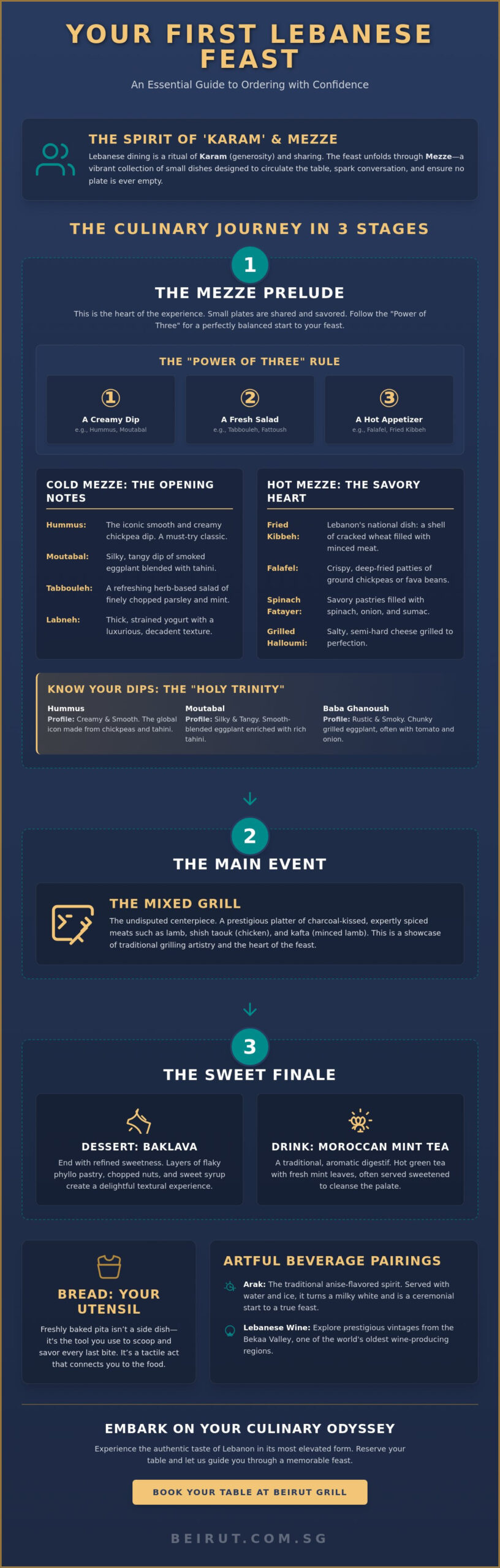
This guide promises to elevate your dining experience from a simple meal to a sophisticated cultural journey. You’ll learn to navigate the menu with the confidence of a regular, ensuring your table features a harmonious balance of textures and flavors. We will preview the essential stages of the Lebanese feast, starting with the vibrant arrival of cold mezze like Tabbouleh and silk-smooth Hummus, moving through the smoky allure of a Mixed Grill, and concluding with the refined sweetness of Baklava paired with a traditional Moroccan Mint Tea.
Key Takeaways
- Understand the philosophy of Karam, where the mezze ritual serves as a sophisticated prelude to stimulate both conversation and appetite.
- Apply the “Power of Three” rule to your selection of starters to achieve a rhythmic balance between refreshing salads and indulgent hot appetizers.
- Gain the confidence to know what to order at a lebanese restaurant first time, centering your feast around the charcoal-kissed excellence of a traditional Mixed Grill.
- Elevate your palate by exploring the nuanced differences between the “Holy Trinity” of dips, including the distinct textures and smoky depths of Baba Ghanoush and Moutabal.
- Discover the art of traditional beverage pairings, from the ceremonial preparation of Arak to the prestigious vintages of the Bekaa Valley.
The Philosophy of the Lebanese Feast: A Ritual of Sharing
Within the warmth of a storied dining room, the table isn’t merely a piece of furniture; it’s a stage for a centuries-old performance of hospitality. To understand what to order at a lebanese restaurant first time, you must first embrace the concept of Mezze. Unlike the rigid, individual courses found in Western dining, Mezze is a vibrant collection of small dishes designed to circulate the table and spark conversation. This style of eating is deeply rooted in Karam, the traditional Lebanese spirit of generosity that dictates no guest should ever see an empty plate. It’s a slow-dining ritual where time stretches as thin as the steam rising from the kitchen. Authentic experiences depend heavily on the quality of the pantry, often utilizing a comprehensive guide to Lebanese cuisine to select the finest imported olive oils, sumac, and tahini that ground the meal in its Levantine heritage.
While many global cuisines prioritize a linear progression from appetizer to entree, the Lebanese feast is a circular experience. It encourages guests to linger over a bowl of Warak Enab or a plate of Grilled Halloumi. This deliberate pace isn’t just about the food; it’s about the stories shared between bites. By prioritizing fresh, high-end ingredients, the meal becomes a prestigious journey that rewards your curiosity with every shared platter.
Understanding the Mezze Flow
The journey begins with a deliberate, cooling touch. Cold mezze, such as the citrus-bright Tabbouleh or the creamy depths of Hummus, arrive first to awaken the palate without overwhelming it. This initial phase prepares your senses for the transition into warm, savory appetizers like Spinach Fatayer, Falafel, or Fried Kibbeh. It’s a rhythmic progression. You’ll find that pacing is essential; the goal is to enjoy the intricate textures of the starters while reserving space for the grand arrival of the charcoal-grilled mains that define the heart of the feast.
The Role of Bread in Every Bite
In this culinary landscape, bread isn’t a side dish; it’s an essential tool. Freshly baked pita serves as a natural culinary utensil, replacing silver forks with a more tactile connection to the food. Mastering the art of the ‘scoop’ allows you to capture the perfect ratio of smooth Labneh or smoky Baba Ghanoush in every mouthful. It’s a communal act that brings everyone closer to the heritage of the Levant. Freshly baked bread is the warm, breathing heartbeat of the Lebanese table that binds every flavor together.
The Mezze Essentials: Cold and Hot Starters You Must Try
Stepping into the heart of the meal, the table begins to resemble a vibrant mosaic of textures and aromas. For those wondering what to order at a lebanese restaurant first time, the ‘Holy Trinity’ of dips is your essential starting point. While Hummus is a global icon, a true connoisseur looks to the eggplant to find the soul of the kitchen. Baba Ghanoush offers a rustic, smoky profile, whereas Moutabal provides a silkier, tangy experience enriched with tahini. These are often accompanied by Fried Kibbeh, a delicate shell of cracked wheat and minced meat that stands proudly as Lebanon’s national dish. This guide to Lebanese food highlights how these starters set the tone for the entire culinary journey, rewarding your curiosity with layers of heritage.
The beauty of the mezze ritual lies in its variety. It’s a curated selection that balances the cooling crunch of fresh vegetables with the indulgent warmth of savory pastries. To experience these flavors in their most elevated form, you might explore the authentic Lebanese mezze offered at our historic location, where every dish is a tribute to our enduring roots.
Cold Mezze: The Vibrant Opening Notes
Cold starters serve as the refreshing opening notes of your feast. It’s important to distinguish between Baba Ghanoush, which is often grilled with tomatoes and onions for a chunky texture, and Moutabal, which leans into the velvety creaminess of sesame paste. You should also experience Labneh, a thick, strained yogurt that carries a luxurious decadence when drizzled with premium olive oil. When selecting a salad, remember that Tabbouleh is a celebration of finely chopped parsley and mint; it’s an herb-based palate cleanser, not a grain dish. For a different crunch, Fattoush offers a bright citrus lift, topped with toasted pita chips that have been dusted with tangy sumac.
Hot Mezze: Savoury Bites and Textural Delights
As the meal progresses, hot mezze introduce savory depth and satisfying crunch. Falafel should be a revelation of contrast, featuring a golden, crisp exterior that gives way to a vibrant, herb-rich center. For a touch of heat, Batata Harra delivers cubes of potato sautéed with cilantro, garlic, and a hint of chili. Don’t overlook the delicate Warak Enab, where tender grape leaves are hand-rolled around a fragrant mixture of rice and herbs. These warm additions, alongside Cheese Sambousek and Grilled Halloumi, create a rich tapestry of flavor that prepares you for the charcoal-grilled masterpieces yet to arrive.
As the cooling notes of the mezze begin to settle, the atmosphere of the room shifts toward the evocative warmth of the hearth. Deciding what to order at a lebanese restaurant first time often leads the guest toward the mesmerizing aroma of the grill, where meat is transformed into a masterpiece of smoke and spice. The Mixed Grill serves as the ultimate introduction, offering a curated assembly of the kitchen’s finest work. This grand platter typically features the Shish Taouk, celebrated for its traditional marinade of lemon and garlic, alongside the savory Beef Kebab and the aromatic Lamb Kofta. For those seeking the pinnacle of our grilling heritage, the Beirut Lamb Chops provide a succulent, premium experience that defines sophisticated Levantine dining.
The distinction between these cuts lies in their meticulous preparation. While the Lamb Kofta is a delicate blend of minced meat, parsley, and onions, the Beef Kebab relies on the quality of the prime cut and a simple seasoning to let the natural flavors shine. This variety ensures that every guest finds a texture and flavor profile that resonates with their palate. Each skewer represents a different facet of our heritage, from the zesty, bright notes of the chicken to the earthy, herb-flecked richness of the lamb.
The Art of the Charcoal Grill
The secret to authentic Lebanese grilling is the use of natural charcoal. This method imparts a distinct, evocative smokiness that cannot be replicated by modern gas flames. The intense heat sears the exterior of the Beef Kebab, locking in juices while the smoke seasons the meat from the outside in. This technique is what distinguishes a professional Lebanese kitchen from a standard grill. No grilled chicken dish is complete without Toum, a potent, cloud-like garlic sauce that acts as the essential accompaniment. To round out the plate, these meats are traditionally paired with fragrant vermicelli rice or a selection of charred vegetables, creating a balanced and fulfilling main course.
Seafood Selections for the Discerning Diner
While meat often takes center stage, the Lebanese coastline has inspired a wealth of seafood traditions that reward the visitor’s curiosity. Grilled Prawns and Grilled Fish Fillets offer a lighter, yet equally indulgent, alternative to the meat-heavy grills. These selections are typically seasoned with a refined trio of lemon, garlic, and cumin, preserving the delicate sweetness of the sea. Enjoying these dishes allows guests to experience the sophisticated Lebanese hospitality found in our Singapore enclave, where every meal is treated as a prestigious cultural journey.
A truly authentic feast is never complete without the arrival of the traditional decanters. As you navigate the menu and decide what to order at a lebanese restaurant first time, the beverage selection offers a parallel journey through the history of the Levant. The high-fat content of succulent grilled meats, such as the Lamb Kofta or the Beirut Lamb Chops mentioned previously, finds its perfect adversary in the sharp, refreshing notes of Lebanese spirits and wines. These pairings are not merely choices; they are essential rituals that cleanse the palate and prepare the senses for the next discovery.
The beverage culture of Lebanon is one of the oldest in the world, rooted in a landscape that has produced world-class viticulture for millennia. From the sun-drenched slopes of the Bekaa Valley to the coastal distilleries, each sip is a testament to a heritage that values both complexity and hospitality. These traditional pairings act as a bridge between the savory intensity of the main course and the delicate sweetness of the finale.
The Spirit of Lebanon: Arak
Arak, often referred to as the ‘Lion’s Milk,’ is the quintessential Lebanese spirit. This anise-flavored grape brandy undergoes a mesmerizing transformation when diluted with water, turning from a clear liquid into a milky white cloud. It’s a slow-sipping companion designed to last throughout the long mezze session. The anise notes act as a powerful digestive, cutting through the richness of olive-oil-heavy dips like Hummus and charred proteins. Tradition dictates that you never pour a second glass into the same water; instead, a fresh glass is prepared to maintain the purity of the louche. Prestigious labels such as Massaya or Arak Fakra are often favored by regulars for their smooth, refined finish.
Sweet Finales: Kunefe and Baklava
The final act of the feast moves from the savory to the indulgent. Kunefe remains a firm favorite, featuring a warm, cheese-filled center encased in a golden pastry crust and soaked in a fragrant rose-water syrup. For those seeking a deeper understanding of this iconic dish, our ultimate guide to kunafa explores its rich history. Alternatively, Baklava offers a masterclass in texture, with its countless layers of flaky filo pastry and crushed pistachios. These sweets are traditionally accompanied by the bold intensity of Lebanese Coffee, often spiced with cardamom, or a soothing Moroccan Mint Tea. This transition provides a rhythmic and satisfying conclusion to the experience, allowing the conversation to linger long after the plates have been cleared.
Ordering Like a Regular at Beirut Grill
Mastering the art of the table requires more than just a list of dishes; it demands a strategic approach to harmony and variety. When considering what to order at a lebanese restaurant first time, seasoned diners rely on the ‘Power of Three’ rule for their mezze selection. This framework ensures a balanced palate by selecting one dip, one vibrant salad, and one hot savory bite per person. By following this ratio, you prevent the common mistake of over-ordering on heavy starches while ensuring that every guest experiences the full spectrum of Levantine textures. It’s a method that transforms a simple dinner into a curated culinary event, allowing the flavors to build toward the main event without overwhelming the senses.
While the mezze provides the rhythm, the Mixed Grill acts as the communal centerpiece. Ordering this grand platter allows the table to share in the kitchen’s mastery of fire and spice, creating a focal point for the meal. For a truly professional experience, don’t hesitate to consult your host about the day’s specials. Asking for the chef’s recommendation or the freshest seasonal arrival is a pro move that often reveals off-menu gems or particularly succulent cuts of Beirut Lamb Chops. This dialogue between guest and host is a hallmark of traditional hospitality, ensuring your feast is tailored to the evening’s finest offerings.
Inclusivity is a cornerstone of our heritage, and a well-ordered table should reflect this. Lebanese cuisine is naturally accommodating, offering a wealth of riches for both meat-lovers and those seeking plant-based excellence. A balanced table might pair the robust **Beef Kebab** with a **Vegetarian Kebab** or a platter of golden **Falafel**. This ensures that the spirit of *Karam* is extended to every guest, regardless of their dietary preferences, making the feast a truly collective celebration. Similarly, the diverse menu at Kurrywalah offers an authentic range of traditional Indian dishes that cater to every palate, from tandoori meats to rich vegetarian curries.
A Sample First-Timer’s Menu
To simplify your first journey, we’ve curated a selection that highlights our most prestigious flavors. Begin with the ‘Heritage Duo’ of Hummus and Baba Ghanoush, which provides a masterclass in contrasting textures. Add the ‘Freshness Factor’ with a shared bowl of Fattoush, its sumac-dusted crunch acting as a bright palate cleanser. For the main course, the ‘Grill Master’ approach features a Mixed Grill platter paired with a robust bottle of Lebanese Wine from the Bekaa Valley. This progression offers a comprehensive introduction to the depths of our culinary tradition.
The Beirut Grill Experience
Since our founding in 2009, we’ve stood as a landmark of reliability and expertise in the heart of the city. The sensory allure of our charcoal grill, combined with an evocative atmosphere of silk and stone, creates a prestigious destination for those seeking an authentic cultural journey. We invite you to explore the finest authentic Middle Eastern food in Singapore at our historic location, where every meal is a tribute to our enduring roots and the timeless art of the Lebanese feast.
Embark on Your Culinary Odyssey
The Lebanese feast is a rhythmic celebration that rewards the guest’s curiosity with every shared plate. By embracing the “Power of Three” and the ritual of the mezze, you transform a simple meal into a prestigious cultural journey. From the smoky depths of the charcoal grill to the delicate, rose-water sweetness of Kunefe, knowing what to order at a lebanese restaurant first time is the key to unlocking a world of heritage and hospitality. You now possess the expertise to navigate the menu like a seasoned regular, ensuring a table that balances tradition with indulgence.
Since 2009, we’ve remained a cornerstone of authenticity, utilizing traditional charcoal-grilled techniques to honor our Levantine roots. We invite you to experience this atmosphere firsthand, complemented by our curated selection of prestigious Lebanese wines and the ceremonial pour of Arak. The table is set, and the scent of charred sumac and fresh pita awaits your arrival.
Book Your Heritage Dining Experience at Beirut Grill and discover why our historic location remains a destination for the discerning diner. We look forward to welcoming you into our story and sharing the warmth of our table with you.
Frequently Asked Questions
Is Lebanese food spicy or hot?
Lebanese cuisine is characterized by its aromatic complexity rather than aggressive heat. While we prioritize the use of garlic, lemon, and fragrant herbs like mint and parsley, most dishes are mild and nuanced. If you’re looking for a gentle kick, Batata Harra offers a delightful warmth through its sautéed cilantro and chili seasoning, but the overall experience remains accessible to all palates and preferences.
What is the difference between Hummus and Baba Ghanoush?
The primary difference lies in the base ingredient and the resulting texture. Hummus is a velvety blend of chickpeas and tahini, while Baba Ghanoush utilizes fire-roasted eggplant mixed with tomatoes and onions for a rustic, smoky profile. Both are essential when deciding what to order at a lebanese restaurant first time, as they showcase different facets of our culinary heritage and provide a sophisticated contrast on the shared table.
How many mezze dishes should I order for two people?
For a pair of diners, we recommend a selection of four to six mezze dishes to ensure a balanced feast. Following the “Power of Three” rule, this usually includes two dips, two salads, and two hot appetizers like Sambousek or Falafel. This variety allows you to explore multiple textures and flavors without feeling overwhelmed before your main course of charcoal-grilled meats or seafood arrives.
What is Arak and how should I drink it?
Arak is a prestigious anise-flavored spirit distilled from grapes, often referred to as the soul of the Lebanese table. It’s traditionally served by pouring one part Arak followed by two parts water into a fresh glass, which creates its signature milky-white appearance. You should always add ice after the water to maintain its refined flavor, and sip it slowly to complement the rich, savory notes of your meal.
Are there many vegetarian options at a Lebanese restaurant?
Vegetarians will find themselves well-catered to, as our menu is naturally abundant with plant-based riches. From the protein-rich Falafel and Spinach Fatayer to the delicate Warak Enab, there’s no shortage of indulgent choices. For a substantial main, the Vegetarian Kebab offers a charred, smoky excellence that rivals any meat dish, ensuring every guest experiences the full warmth of our hospitality and culinary expertise.
What is the most famous Lebanese dessert to try first?
Kunefe is arguably the most iconic finale, celebrated for its warm, molten cheese center and golden, syrup-soaked crust. If you prefer something lighter, Mouhalabieh offers a delicate milk pudding infused with rose water and topped with a generous dusting of crushed pistachios. Both desserts provide a sophisticated end to your journey, especially when paired with a strong Lebanese Coffee or a soothing Moroccan Mint Tea.
Do I need to eat the garnishes and pickles served with the meat?
The pickles and fresh herbs served alongside our grills aren’t merely decorative; they’re essential palate cleansers. These tangy “Kabees” and crisp vegetables are designed to cut through the richness of the charcoal-grilled proteins. Incorporating a bite of pickle between your Lamb Kofta or Shish Taouk helps refresh your senses, allowing you to appreciate the nuanced spices and smokiness of the meat more fully.
What is the best way to eat pita bread with dips?
Pita bread is best enjoyed when used as a natural utensil to scoop your dips. Simply tear a small piece of the warm, freshly baked bread and fold it into a small “shovel” shape to capture a generous portion of Labneh or Moutabal. This tactile method is the traditional way to enjoy our cuisine, ensuring you get the perfect ratio of bread to flavor in every evocative and flavorful bite.