
Did you know that while Lebanese cuisine was ranked the best in the Arab world in the 2025-2026 TasteAtlas rankings, many diners still mistake a basic kebab for a true culinary masterpiece? Finding an authentic lebanese restaurant often feels like a search for a hidden gem amidst a sea of generic menus that lack a distinct cultural identity. It’s disappointing when your feast lacks the smoky char of traditional charcoal grilling or the vibrant, herbaceous variety of a proper mezza spread.
We understand that you seek more than just a meal; you want a divine dining experience that transports you to the heart of the Beqaa Valley. By following our expert 2026 connoisseur’s checklist, you’ll master the art of evaluating quality, from the specific silkiness of the Hummus to the prestigious labels on the wine list like Chateau Musar. We, the connoisseurs at Beirut Grill, will guide you through the essential progression of a heritage meal, ensuring your next visit delivers the award-winning hospitality and authenticity that we have championed since 2009. You’re about to discover how to separate the ordinary from the truly majestic.
Key Takeaways
- Distinguish between generic menus and the “Paris of the Middle East” style by looking for specific mezza variety and traditional hospitality.
- Identify a high-quality lebanese restaurant by its commitment to charcoal-grilling, which provides a smoky allure that gas grills can’t replicate.
- Learn to evaluate the beverage program through the presence of Beqaa Valley wines and the proper “Lion’s Milk” ritual for serving Arak.
- Discover the essential cold and hot starter pairings that ensure a textured, vibrant dining experience beyond simple dips.
- Recognize the markers of a reliable heritage establishment in Singapore, ensuring your special occasion is met with seasoned expertise.
Defining the Lebanese Dining Experience: More Than Just Middle Eastern Food
Often referred to as the “Paris of the Middle East,” Lebanese dining is a sophisticated dance of flavors that transcends the generic “Middle Eastern” label. While many eateries in Singapore claim to offer regional dishes, a true lebanese restaurant provides a sensory journey rooted in millennia of history. The core philosophy centers on karam, or generosity. It’s a world where abundance isn’t just about quantity; it’s about the vibrant quality of sun-drenched ingredients that fill the table. This isn’t merely a meal; it’s a divine dining experience designed to reward the visitor’s curiosity.
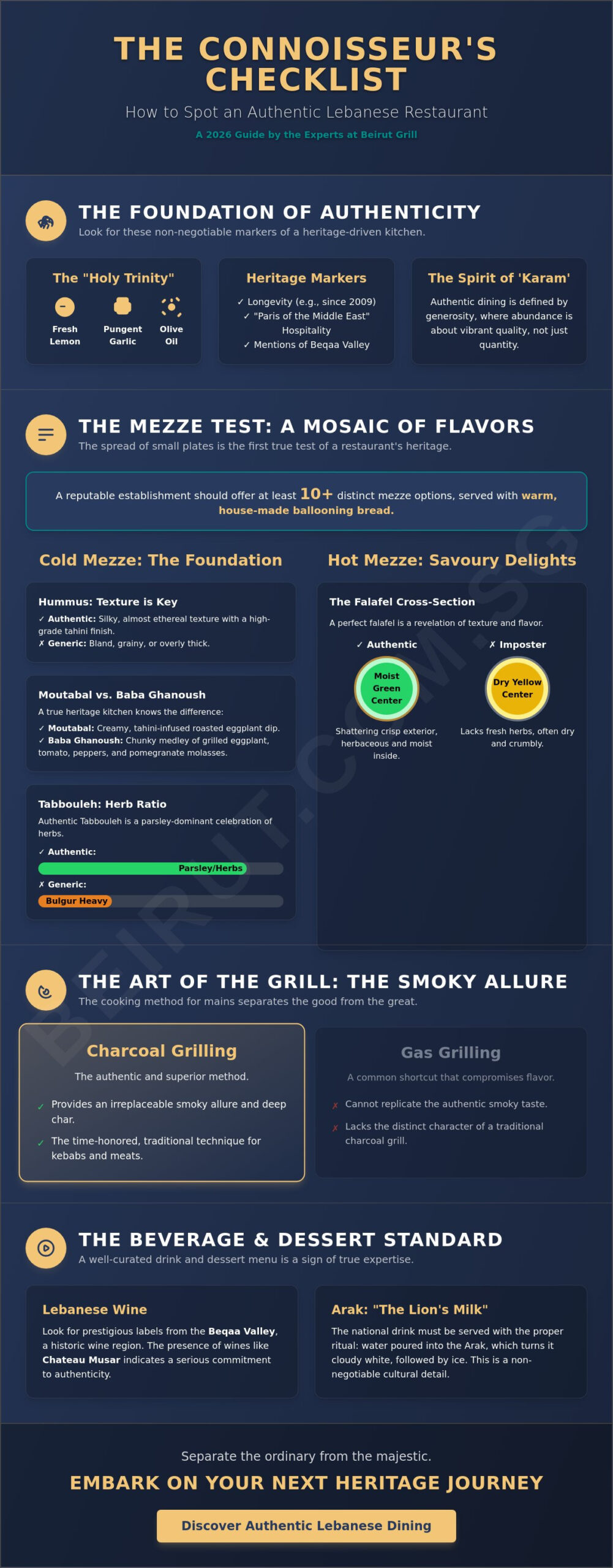
The hallmark of a genuine kitchen lies in its mastery of the “holy trinity”: fresh lemon, pungent garlic, and premium olive oil. This isn’t just seasoning; it’s the very soul of the culinary art. In 2026, as global food trends favor transparency and heritage, understanding these nuances is essential for any connoisseur. A generic eatery might offer a bland dip, but a heritage-driven kitchen serves a masterpiece that balances acidity and richness with surgical precision. This checklist ensures you find the majestic flavors you deserve.
The Cultural Heritage of the Lebanese Table
The story of Lebanese cuisine is one of resilience and refinement, shaped by Ottoman, French, and Phoenician influences over centuries. This heritage birthed the “Mezza,” a social ritual that serves as the heartbeat of the meal. It isn’t a mere appetizer course. It’s a curated collection of small plates meant for family-style sharing, designed to slow the pace of life and encourage conversation. Whether you’re enjoying a silky Hummus or the tart crunch of Fattoush, the table should feel like a communal celebration where every guest is an honored friend.
Key Indicators of a Heritage-Driven Restaurant
When you’re scouting for authenticity in the heart of Singapore, longevity is your most reliable guide. Establishments that have stood the test of time, such as those operating since 2009 on historic Bussorah Street, demonstrate a commitment to traditional methods that newer, trend-focused spots often lack. A genuine menu will boast specific geographic markers. Look for mentions of the “Beqaa Valley” for wine selections or “Beirut style” for specific preparations. The presence of traditional beverages like Arak, served with the proper ritual, and the deep, cardamom-scented aroma of Lebanese coffee are non-negotiable markers of a curator who respects their cultural roots.
The Mezze Checklist: Essential Cold and Hot Starters to Look For
A true Lebanese table is a mosaic of small plates, designed to stimulate the palate and encourage lingering conversation. When you step into an authentic lebanese restaurant, the mezza spread is the first true test of its heritage. A connoisseur’s checklist begins with variety; a reputable establishment should offer at least 10 distinct mezze options to truly represent the abundance of the culture. This culinary ritual is incomplete without house-made bread, which must arrive at your table warm and ballooning with steam. This pillowy vessel is the ultimate tool for sweeping up every last drop of velvet-smooth dip.
Cold Mezze: The Foundation of the Feast
The cold mezza section is where the quality of ingredients truly shines. Start with the Hummus. It should possess a silky, almost ethereal texture, achieved through meticulous blending and a generous finish of high-grade tahini. A common pitfall for generic eateries is confusing Moutabal with Baba Ghanoush. A heritage kitchen knows that Moutabal is the creamy, tahini-infused eggplant dip, while Baba Ghanoush is a vibrant, chunky medley of grilled eggplant, tomatoes, peppers, and pomegranate molasses. Similarly, look closely at the Tabbouleh. In a traditional setting, this salad is a bright, parsley-dominant celebration of herbs rather than a grain-heavy bulgur dish. For those exploring the wider landscape of Mediterranean food in Singapore, these technical distinctions are the markers of a kitchen that honors its roots.
Hot Mezze: The Crispy and Savoury Delights
The transition to hot mezza introduces a playful contrast of temperatures and textures. Your Falafel should be a revelation: shattering with a crisp, golden exterior while revealing a moist, herbaceous green center. If it’s dry or yellow inside, it likely lacks the fresh parsley and coriander required for authenticity. The Fried Kibbeh, a torpedo-shaped shell of bulgur and minced meat, requires a delicate spice balance, usually featuring cinnamon and allspice, punctuated by the buttery crunch of pine nuts. Finally, evaluate the Grilled Halloumi. It shouldn’t be rubbery or bland. Instead, it should bear the dark, caramelized marks of a fierce sear while maintaining a soft, squeaky interior that melts slightly on the tongue. If you’re eager to taste these expertly crafted textures, exploring our menu reveals the dedication we’ve maintained on historic Bussorah Street since 2009.
The interplay between these hot and cold elements creates a rhythmic dining experience. It’s a deliberate progression that prepares you for the robust flavors of the grill to follow. By insisting on these standards, you ensure your meal is a genuine reflection of Beirut’s legendary hospitality.
Evaluating the Mains: The Art of Charcoal Grilling and Meat Quality
As the last traces of mezza are savored, a truly authentic lebanese restaurant begins its most evocative performance: the dance of the charcoal grill. In the world of high-end Levantine dining, gas grills are an unacceptable compromise. True authenticity requires the intense, dry heat of natural charcoal; it imparts a signature smoky allure that no modern appliance can replicate. This ancient technique seals in juices while creating a delicate, charred crust that defines the Beirut style. A connoisseur knows the meal is approaching when the scent of smoldering wood and rendering fat reaches the table well before the plate does. If you can’t smell the fire, the kitchen isn’t honoring the heritage.
Quality begins with sourcing. In Singapore’s diverse culinary landscape, an authentic Lebanese kitchen remains strictly pork-free, focusing instead on premium cuts of lamb, beef, and poultry. The secret to the mouth-watering depth of flavor lies in the marination, a slow process where meats are infused with a specific heritage blend of sumac, allspice, and cinnamon. These spices, often imported directly from the Beqaa Valley, provide a sophisticated profile that is both earthy and bright. This commitment to traditional methods has been the hallmark of our kitchen on historic Bussorah Street since 2009.
The Signature Mixed Grill
The Mixed Grill serves as the ultimate benchmark for any chef. An authentic platter must feature a balanced trio: Shish Taouk, Lamb Kofta, and Beef Kebab. The Shish Taouk should be garlic-marinated chicken that remains succulent and tender, never dry. For the Lamb Kofta, pay close attention to the parsley-to-meat ratio; it requires just enough greenery to provide a fresh lift without overpowering the rich, spiced lamb. This level of precision is what distinguishes the best Middle Eastern food in Singapore from generic alternatives.
Premium Cuts and Seafood
For those seeking a more indulgent experience, the Beirut Lamb Chops represent a true test of mastery. These should be tender enough to yield to a gentle pull, richly spiced and charred to perfection. The menu should also extend to the Mediterranean coast with Grilled Prawns and Fish Fillets, seasoned with a vibrant mix of lemon and traditional herbs. Presentation is equally vital. Your mains should arrive garnished with charred tomatoes, grilled onions, and the quintessential spicy bread, creating a majestic display of color and aroma that rewards your choice of a premier lebanese restaurant.
The Beverage and Dessert Standard: Lebanese Wine, Arak, and Kunefe
A divine dining experience doesn’t conclude with the final bite of a succulent kebab. In a premier lebanese restaurant, the beverage program is a curated extension of the meal’s narrative, offering a high-status marker for those who appreciate the finer points of viticulture. An authentic wine list must pay homage to the Beqaa Valley, a region where ancient traditions meet modern refinement. Look specifically for the bold, spicy profiles of Chateau Kefraya or the critically acclaimed Chateau Musar. Chateau Musar stands as the gold standard for Lebanese viticulture, offering complex reds that have matured into legends over decades.
The liquid heritage of Lebanon is a point of immense pride for any knowledgeable host. When you dine on historic Bussorah Street, the presence of these prestigious labels signifies a commitment to authenticity that generic eateries simply cannot match. It’s a way to transport the guest to the sun-drenched slopes of Lebanon, rewarding their curiosity with every pour. This attention to detail has been a hallmark of our service since 2009, ensuring that every pairing enhances the sensory journey of the meal.
Spirit of the Levant: Arak and Wine
Beyond the vine lies the cultural heart of the mezza experience: Arak. Known affectionately as “Lion’s Milk,” this anise-flavored spirit is the traditional accompaniment to small plates. The ritual is as important as the taste. An authentic host serves Arak in a specific sequence, diluted with two parts water and finished with ice, causing the clear liquid to bloom into a milky white cloud. This refreshing, palate-cleansing effect is essential for balancing the rich oils of hummus or the savory char of grilled meats. If a restaurant serves it neat or without the proper glassware, it fails the connoisseur’s authenticity test.
Indulgent Desserts: Baklava and Kunefe
The sweet finale in Lebanon is never an afterthought; it’s a majestic celebration of floral waters and premium nuts. Authentic desserts must balance the crunch of pistachios with the delicate scent of rose or orange blossom. Your Baklava should feature multiple layers of paper-thin filo pastry, each crisp and distinct, rather than a soggy, over-syruped mass. For a truly indulgent experience, the Kunefe is non-negotiable. This iconic dish requires a perfect balance of warm, melting cheese and a crown of golden, shredded pastry, all drizzled with sweet attar syrup. For those seeking deeper insight into this masterpiece, you can explore the ultimate guide to Kunafa to understand its regional variations.
As you soak up the ambiance in the heart of Singapore, the final marker of hospitality is the arrival of traditional hot beverages. A true lebanese restaurant will offer a choice between thick, cardamom-scented Lebanese Coffee or refreshing Moroccan Mint Tea, often served in ornate glassware that mirrors the heritage of the location. To experience this level of curated culture firsthand, reserve your table at Beirut Grill today and indulge in a legacy of flavor that has defined Singapore’s Middle Eastern dining scene for over 15 years.
With the majestic Sultan Mosque as your backdrop, walking down the cobblestones of historic Bussorah Street feels like stepping into a different era. Tucked away in this vibrant cultural enclave, Beirut Grill has stood as a definitive lebanese restaurant since 2009. It isn’t merely a place to eat; it’s a hidden gem that rewards your curiosity with a divine dining experience. While many establishments have come and gone, our longevity serves as a hallmark of credibility and seasoned expertise in Singapore’s competitive culinary scene.
The personality of our space is that of a refined and knowledgeable host, proud of our cultural roots and the award-winning authority we’ve built over the last 15 years. We’ve designed every corner of our establishment to transport you, balancing professional service with a warm, inviting hospitality that mirrors the legendary generosity of a Beirut home. It’s a place where the flow of information is as logical as the progression of the meal itself, moving from the atmospheric external environment to the sensory-rich indulgence of our kitchen.
A Legacy of Authenticity Since 2009
For more than a decade, we’ve remained steadfast in our commitment to traditional techniques that many generic eateries overlook. Whether you’re planning a sophisticated corporate dinner or a romantic special occasion, the atmosphere here is designed to slow you down and encourage you to soak up the ambiance. We import our key spices and herbs directly from Beirut to ensure every bite of our critically acclaimed mezza selection resonates with the soul of the Beqaa Valley. Under the Safety Assurance for Food Establishments (SAFE) framework, our commitment to excellence is backed by a track record of reliability that ensures your meal is as safe as it is mouth-watering.
Your Next Culinary Journey Starts Here
Now that you’ve mastered the connoisseur’s checklist, it’s time to put your knowledge to the test. You’ve learned to seek the smoky allure of true charcoal grilling and the prestigious notes of a Chateau Musar pairing. At Beirut Grill, these aren’t just checklist items; they’re the foundation of our award-winning Mixed Grill and our curated wine cellar. The sensory-rich experience of dining within our heritage architecture, combined with the aroma of freshly prepared Lamb Kofta and Shish Taouk, creates an allure that is both boutique and accessible.
We invite you to indulge in a true Lebanese feast that honors centuries of tradition. Don’t settle for a generic meal when a majestic journey awaits you in the heart of Singapore. Your table on historic Bussorah Street is ready, and we look forward to being your refined host. Experience the “Paris of the Middle East” without leaving the city, and discover why we’ve been a premier destination for those seeking an authentic lebanese restaurant journey since 2009.
Embark on Your Next Heritage Journey
Mastering the connoisseur’s checklist ensures your next visit to a lebanese restaurant is a genuine cultural exploration rather than just a meal. By insisting on the smoky allure of charcoal-grilled meats and the precise, herbaceous balance of a traditional mezza, you distinguish between generic dining and a truly majestic feast. These technical markers, combined with the presence of prestigious Beqaa Valley wines and the careful ritual of Arak service, define the gold standard of Levantine hospitality in 2026.
Since 2009, we’ve remained a hidden gem on historic Bussorah Street, providing a critically acclaimed Mixed Grill and an evocative ambiance that transports every guest. Our award-winning commitment to imported ingredients and traditional techniques ensures a divine dining experience that rewards your curiosity. Don’t leave your next special occasion to chance when a legacy of excellence is waiting for you in the heart of Singapore’s heritage district. We invite you to soak up the ambiance and indulge in the flavors of Beirut.
Book your divine dining experience at Beirut Grill today and discover a world of authentic indulgence that has captivated diners for over 15 years.
Frequently Asked Questions
What is the main difference between a Lebanese restaurant and a generic Middle Eastern one?
Authentic Lebanese dining is distinguished by its focus on fresh herbs, lemon, garlic, and a sophisticated “mezza-to-grill” progression. While generic eateries use broad labels, a true lebanese restaurant emphasizes specific heritage techniques like charcoal grilling and offers a wider variety of cold and hot starters. This refined balance of flavors, often called the “Paris of the Middle East” style, separates it from more rustic regional cuisines.
Is Lebanese food always halal or pork-free?
Authentic Lebanese dining in Singapore is almost exclusively pork-free to honor regional traditions and cater to a diverse local audience. At Beirut Grill, we’ve maintained a strictly pork-free kitchen since our establishment in 2009. All ingredients are sourced following rigorous safety standards under the Singapore Food Agency (SFA) guidelines, ensuring a reliable and inclusive experience for all guests seeking heritage flavors.
What are the must-order dishes for a first-time visitor at a Lebanese restaurant?
A first-time visitor should start with a diverse mezza spread including silky Hummus and fresh Tabbouleh before moving to the signature Mixed Grill. This platter features Shish Taouk, Lamb Kofta, and Beef Kebab, showcasing the essential charcoal-grilling technique. To finish, the Kunefe offers a majestic balance of warm cheese and sweet syrup that perfectly encapsulates the indulgence of Lebanese hospitality.
Can I find good vegetarian options at an authentic Lebanese restaurant?
You’ll find an incredible abundance of vegetarian dishes because Lebanese culture celebrates fresh, plant-based ingredients. Options range from protein-rich Falafel and Grilled Halloumi to flavorful classics like Baba Ghanoush and Spinach Fatayer. In fact, roughly 60% of a traditional mezza menu is naturally vegetarian, making it a premier choice for those seeking diverse, meat-free dining in a sophisticated lebanese restaurant environment.
How should I properly drink Arak during a Lebanese meal?
Arak should always be diluted with water and served with ice to achieve its signature milky “Lion’s Milk” appearance. The traditional ratio is one part Arak to two parts water; you must add the water first and the ice last to prevent a film from forming on the surface. This refreshing ritual cleanses the palate between bites of rich mezza and savory grilled meats.
What makes Lebanese wine from the Beqaa Valley so special?
The Beqaa Valley is one of the world’s oldest wine-growing regions, offering a unique high-altitude terroir that produces bold, heritage-rich reds. Prestigious wineries like Chateau Musar and Chateau Kefraya are celebrated globally for their complexity and aging potential. These wines are a high-status marker on any menu, providing a sophisticated pairing that honors the 6,000 year history of Lebanese viticulture.
Is a reservation necessary for a premium Lebanese dining experience?
Securing a reservation is highly recommended, especially for weekend dining or special occasions in historic districts like Bussorah Street. As a popular “hidden gem” since 2009, Beirut Grill often reaches capacity during peak dinner hours. Booking ahead ensures you can soak up the ambiance without disappointment and helps our team prepare for your divine dining experience with the attention it deserves.
What is the traditional way to end a Lebanese feast?
A Lebanese feast traditionally concludes with a combination of decadent sweets and a hot, aromatic beverage. You might indulge in layers of nutty Baklava or a warm Kunefe, followed by a small cup of thick, cardamom-scented Lebanese Coffee or refreshing Moroccan Mint Tea. This final ritual is designed to aid digestion and extend the social experience, allowing guests to linger and enjoy the hospitality.