
Could the kebab you just enjoyed be a pale imitation of a centuries-old tradition? While many food stalls across Singapore offer quick wraps, true arab street food is a sophisticated alchemy of Beqaa Valley spices and precise charcoal techniques that generic outlets often fail to replicate. You’ve likely felt the disappointment of a dry skewer or a hummus that lacks that silky, authentic finish. It’s a common frustration when a meal lacks the vibrant, soulful essence of the Levant.
In this 2026 culinary guide, we’ll show you how to distinguish award-winning craftsmanship from the ordinary. Since 2009, Beirut Grill has flourished as a boutique hidden gem on historic Bussorah Street, and we’re ready to share our seasoned expertise with you. You’ll learn to identify the tell-tale signs of expertly grilled meats, understand the deep cultural significance of a shared mezza, and discover why a bold Lebanese wine like Chateau Musar is the perfect partner for your palate. We’re inviting you to move beyond the basics and immerse yourself in a truly divine dining journey.
Key Takeaways
- Learn how the earthy aroma of sumac and the nuttiness of tahini define the true essence of authentic arab street food from the Levant.
- Master the art of the mezze tradition by understanding the delicate balance between refreshing, acidic cold plates and savory, indulgent hot selections.
- Uncover the marination secrets behind a tender Shish Taouk and why the charcoal-grilled Mixed Grill remains the pinnacle of the Levantine experience.
- Elevate your dining journey by discovering sophisticated pairings featuring world-class Lebanese wines and traditional Arak from the historic Beqaa Valley.
- Explore why Beirut Grill has been Singapore’s critically acclaimed “hidden gem” on historic Bussorah Street since 2009, offering a premium pork-free heritage menu.
Defining the Soul of Arab Street Food and Levantine Cuisine
With the majestic Sultan Mosque standing as a silent witness to centuries of trade and culture, the essence of arab street food reveals itself through the historic, vibrant lanes of Singapore’s Kampong Glam. To truly understand this culinary landscape, one must look beyond the quick-service stalls and toward the sun-drenched hills of the Levant. Defining the Soul of Arab Street Food requires an appreciation for a heritage that has flourished at Beirut Grill on Bussorah Street since 2009. It’s an experience defined by a specific sensory profile: the earthy, tart perfume of sumac, the creamy nuttiness of premium tahini, and the unmistakable scent of natural charcoal smoke drifting through the evening air.
Middle Eastern dining is never a solitary affair; it’s a profound act of hospitality. The sharing philosophy, rooted in the traditional service of mezza, transforms a simple meal into a communal celebration of life. While mass-produced versions of these dishes often rely on frozen ingredients and generic spice blends, the award-winning approach of heritage-focused kitchens prioritizes authenticity and patience. This commitment to traditional methods distinguishes a “hidden gem” from a standard eatery. Since our doors opened in 2009, we’ve found that guests deeply value the indulgence of a meal prepared with imported ingredients that honor the flavors of the Beqaa Valley.
The Core Ingredients of the Levant
The foundation of every mouth-watering dish lies in the quality of its base. We utilize premium cold-pressed olive oils and vibrant lemon juice to create the bright, acidic lift that characterizes Lebanese style cooking. Spices like za’atar and Aleppo pepper are essential for creating the complex, layered profiles that diners crave. Freshness is the highest priority for vegetarian staples like parsley and chickpeas, ensuring that every bite of salad or dip feels as divine as it is authentic.
A History of the Charcoal Grill
Open-flame cooking is a tradition that predates modern borders, originating from the ancient hearths of nomadic tribes. In a professional kitchen, charcoal remains superior to gas because it provides a searing heat that locks in juices while imparting a smoky complexity. The Grill Master is a central figure in our establishment, a role that requires years of experience to master the delicate balance of heat and timing. This expertise is what ensures every skewer achieves a texture that is nothing short of divine, rewarding the curiosity of every guest who visits us.
The Mezze Tradition: A Symphony of Small Plates
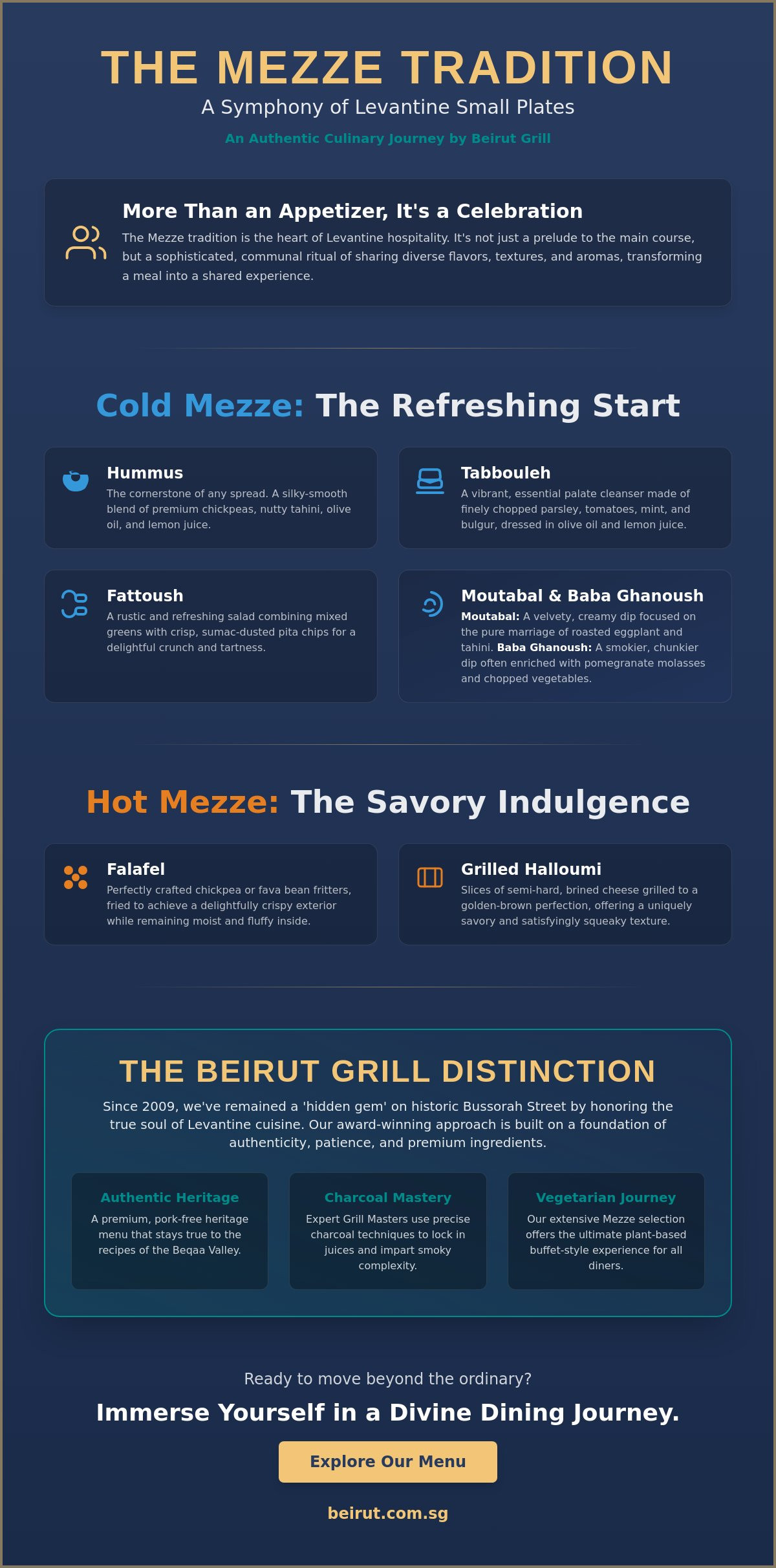
Against the backdrop of the historic Sultan Mosque, the dining experience begins not with a single dish, but with a curated ensemble of flavors. Mezze serves as the essential opening act, a culinary prelude that defines the quality of the entire meal. In the vibrant landscape of arab street food, these small plates are more than mere appetizers. They represent a sophisticated heritage practice that prioritizes communal connection and sensory exploration. To understand this ritual, one must look at the history of Levantine cuisine, where these dishes evolved as a symbol of hospitality and abundance.
The table typically balances two distinct temperatures and textures. Cold Mezze provides a refreshing, acidic counterpoint to the heavier mains, while Hot Mezze offers savory, indulgent bites that showcase technical mastery. For diners in Singapore seeking a plant-based journey, the mezze tradition functions as the ultimate vegetarian buffet style experience. It allows guests to sample a diverse array of legumes, fresh herbs, and premium oils without the need for meat-centric courses.
Cold Mezze Classics: Hummus to Tabbouleh
The foundation of any reputable spread begins with Hummus, which is a silk-smooth blend of premium chickpeas and tahini. While many diners confuse the two, a clear distinction exists between the smoky depth of Baba Ghanoush, often enriched with pomegranate molasses and chopped vegetables, and the velvet creaminess of Moutabal, which relies on the marriage of roasted eggplant and nutty tahini. These dips find their perfect companions in Tabbouleh and Fattoush. These salads act as essential palate cleansers. The finely chopped parsley of the Tabbouleh and the crisp, sumac-dusted pita chips in the Fattoush provide a bright acidity that prepares the taste buds for the richer flavors to follow.
Hot Mezze: From Falafel to Grilled Halloumi
The transition to warm plates introduces a new level of craftsmanship. Achieving the perfect Falafel requires a precise technique to ensure a shatteringly crispy exterior that gives way to a vibrant, herbaceous interior. For those craving a meat-free kebab alternative, the mouth-watering appeal of Grilled Halloumi is unmatched. The cheese is seared until golden, offering a salty, satisfying chew that pairs beautifully with a drizzle of honey or fresh mint. The complexity continues with Fried Kibbeh, where a shell of cracked wheat and lean beef is stuffed with spiced pine nuts, and the delicate Spinach Fatayer pastry, which showcases the baker’s skill in creating light, triangular pockets of tangy greens. You can experience these timeless flavors by exploring the authentic menu at Beirut Grill, where heritage recipes have been celebrated since 2009. The mezze table remains the most vibrant expression of arab street food for the modern palate, rewarding the curious diner with every bite.
Mastering the Charcoal Grill: Shish Taouk and Beyond
Within the vibrant enclave of Kampong Glam, the rhythmic sizzle of fat hitting white-hot coals signals the arrival of the ultimate arab street food experience. The Mixed Grill stands as the pinnacle of this tradition, acting as a curated assembly of textures and temperatures that rewards the curious diner. It is a grand display of culinary heritage, where each skewer represents a different facet of the Levantine kitchen. At Beirut Grill, established on historic Bussorah Street since 2009, this charcoal-grilled feast is treated with a level of reverence usually reserved for fine art.
Diners sometimes ask if this is simply another form of BBQ. The distinction lies in the specific Levantine spice rubs and the absence of heavy, sugary sauces. Instead of masking the meat, the use of sumac, cumin, and Lebanese seven-spice blends enhances the natural flavors. These spices, often imported directly to maintain authenticity, create a complex aromatic profile that distinguishes Middle Eastern grilling from any other global technique. The visual appeal is equally vital; Beirut Lamb Chops and Lamb Kofta are served on traditional platters, creating a scene of indulgence that transports guests straight to the heart of Beirut.
The Art of the Shish Taouk
Shish Taouk is a staple of arab street food culture that relies entirely on the precision of its preparation. The secret to its signature tenderness is a 24-hour yogurt-based marinade. This lactic acid gently breaks down the chicken fibers, while infusions of lemon juice, garlic, and paprika provide a bright, aromatic finish. When the skewers meet the charcoal, the yogurt creates a delicate crust that seals in the moisture. For a truly authentic experience, these golden cubes of chicken must be paired with a generous serving of garlic toum and warm, pillowy flatbread to balance the smoky char.
Lamb Kofta and Beef Kebabs: The Butcher’s Pride
Creating a succulent Lamb Kofta is a technical challenge that requires a strict 75 to 25 ratio of lean meat to fat. This specific balance ensures the meat remains juicy while held over the intense heat of the grill. As the charcoal reaches peak temperature, it caramelizes the exterior of the Beef Kebab, creating a rich umami layer that contrasts with the soft interior. The use of premium cuts is non-negotiable, particularly for the Beirut Lamb Chops, which are trimmed with the expertise of a seasoned butcher. This commitment to quality has defined the boutique dining experience at Beirut Grill for over 15 years, making it a hidden gem for those seeking genuine Middle Eastern flavors in Singapore.
Elevated Pairings: From Lebanese Wine to Arak
Against the majestic backdrop of the Sultan Mosque, the experience at Beirut Grill transcends the simple act of dining. Since 2009, we’ve acted as a cultural curator on historic Bussorah Street, ensuring every sip matches the intensity of our kitchen’s output. While many perceive arab street food as a casual affair, we introduce a sophisticated layer through a beverage heritage that spans millennia. This isn’t just about quenching thirst. It’s about a sensory journey where the drink acts as a bridge between the ancient soil of the Levant and the vibrant pulse of Singapore.
The Legacy of Lebanese Wine
The Beqaa Valley remains one of the oldest wine-producing regions on the planet, with viticulture roots stretching back 5,000 years. At Beirut Grill, we source prestigious labels like Chateau Musar and Chateau Kefraya to provide an authentic high-status pairing for our meats. These wines are famous for their resilience and character. The bold tannins found in a Lebanese red are specifically suited to complement charcoal-grilled lamb. They slice through the richness of the fat, while the dark fruit notes enhance the smoky complexity of the meat. Choosing a 2017 vintage ensures a bottle with enough structure to stand up to the most robust spices in our pantry.
Arak and Moroccan Mint Tea
No Middle Eastern feast is complete without the ritual of Arak. Often called ‘Lion’s Milk,’ this potent anise-flavored spirit undergoes a magical transformation when water is added, turning from crystal clear to an opaque, milky white. It’s served in small glasses with plenty of ice, providing a sharp, cooling effect that cleanses the palate between bites of spicy mezza. This ritualistic drink is more than a spirit; it’s a digestive aid that prepares you for the next course of arab street food by resetting your taste buds.
- Moroccan Mint Tea: This isn’t just a drink, but a concluding ceremony. Poured from a height to aerate the tea and create a delicate foam, it provides a refreshing, sweet finish to a heavy meal.
- Lebanese Coffee: A symbol of hospitality since our doors opened in 2009. Our coffee is thick, aromatic, and prepared with the seasoned expertise of a traditional host.
These beverages transform a simple meal into a divine dining experience. They allow the flavors to linger longer, rewarding the curiosity of every guest who seeks a hidden gem in the heart of the city. For those who wish to extend this appreciation for quality to their own home, Caffeine Lab provides the specialty equipment and expertise needed to master the art of the perfect brew. The combination of imported ingredients and traditional preparation methods ensures that every glass tells a story of heritage and pride.
Experience the divine harmony of these authentic pairings for yourself at Beirut Grill on Bussorah Street.
Experiencing the Heritage: The Beirut Grill Distinction
Since 2009, Beirut Grill has stood as a sophisticated hidden gem on historic Bussorah Street. It transports guests to the heart of the Levant with every bite. While the raw energy of arab street food offers a vibrant glimpse into Middle Eastern culture, our award-winning kitchen provides a refined sanctuary for those seeking a deeper connection to these traditions. We maintain a strictly pork-free menu. This ensures every guest can indulge in our offerings without hesitation; it’s a commitment to inclusivity and authenticity that has defined our identity for seventeen years.
With the majestic Sultan Mosque as a scenic backdrop, the dining experience rewards the curiosity of every visitor. We don’t just serve meals. We curate a divine dining experience that balances professional authority with the warm, inviting hospitality of a Lebanese home. This sense of place and heritage makes us a destination rather than just a restaurant. It’s a space where the sensory-rich language of spices and the rhythmic flow of Lebanese culture come alive in the heart of Singapore.
Why Heritage Matters in 2026
In an era often dominated by fast-food shortcuts and fleeting culinary trends, our longevity serves as a hallmark of reliability. Since we first opened our doors in 2009, we’ve remained dedicated to traditional Lebanese techniques that cannot be replicated by modern machinery. We prioritize premium, imported ingredients, including hand-selected spices and olive oils that reflect the terroir of the Beqaa Valley. This dedication is most evident in our critically acclaimed signature dishes.
- The Mixed Grill: A masterclass in flame-grilled precision featuring succulent lamb chops, kofta, and chicken shish taouk.
- Authentic Mezza: A collection of small plates, including silky hummus and smoky baba ghanoush, prepared daily.
- Lebanese Wine Selection: High-status markers like Chateau Musar and Chateau Kefraya that elevate the meal.
Choosing heritage over convenience allows us to maintain a standard of culinary excellence that has earned us numerous accolades over the years. We provide a boutique experience that feels exclusive yet remains accessible to anyone seeking the true soul of the Middle East.
Your Journey into Lebanese Hospitality
The atmosphere at Beirut Grill is a deliberate blend of sophisticated dining and the legendary warmth of Lebanese hospitality. As you enter our space, the communication rhythm slows down. We encourage you to soak up the ambiance and enjoy the deliberate, atmospheric flow of a traditional meal. The journey moves seamlessly from the vibrant sights of the street to the sensory indulgence of our kitchen. It’s a place where the history of the location meets the modern refinement of our service.
No truly authentic Middle Eastern journey is complete without a sweet conclusion. We offer traditional desserts like our crisp, honey-layered Baklava and the warm, cheese-filled Kunefe to end your meal on a high note. These mouth-watering treats are the perfect accompaniment to a cup of Lebanese coffee or a glass of fine wine. We invite you to book your divine experience for your next special occasion or intimate gathering. Discover why our commitment to heritage makes us the premier destination for those who appreciate the finer details of arab street food and culture in Singapore.
Savor the Timeless Legacy of the Levant
Authentic arab street food is more than a quick meal; it’s a sensory journey that connects the ancient charcoal pits of the Levant to the modern tables of Singapore. Mastering this craft involves a deep respect for the mezze tradition and the precise, mouth-watering sear of a traditional grill. By 2026, the focus remains on the purity of ingredients and the elevated experience of pairing heritage dishes with world-class Lebanese wines.
Since 2009, Beirut Grill has stood as a bastion of this culture on historic Bussorah Street. With the majestic Sultan Mosque as your backdrop, you’ll enjoy our critically acclaimed Mixed Grill and a premium, pork-free menu crafted with seasoned expertise. Our boutique space offers a divine dining experience that features prestigious labels like Chateau Musar, ensuring every visit feels like a hidden gem discovery. It’s a place where award-winning authority meets the warm hospitality of a knowledgeable host.
Book your divine Lebanese dining experience at Beirut Grill and indulge in a heritage that spans centuries. Your seat at our table is waiting.
Frequently Asked Questions
What exactly is Arab street food?
Arab street food is a vibrant tapestry of portable, flavor-packed dishes traditionally sold in the bustling souks and city corners of the Middle East. At Beirut Grill on historic Bussorah Street, we define arab street food through the lens of centuries-old traditions. It includes hand-held delights like shawarma and falafel, designed to be enjoyed amidst the energy of the street. These dishes rely on fresh herbs, aromatic spices, and high-quality proteins to provide a quick yet deeply satisfying culinary journey.
Is Arab street food always halal?
The vast majority of traditional Arab street food is prepared according to halal dietary laws, as it originates from predominantly Muslim regions. In Singapore, our establishment has maintained a strictly halal-certified kitchen since 2009 to ensure inclusivity and religious compliance. This means all meats are slaughtered according to Islamic rites and no alcohol is used in the cooking process. This allows every guest to indulge in our divine offerings with total peace of mind and cultural respect.
What are the most popular mezze dishes for beginners?
Hummus and Baba Ghanoush are the quintessential starting points for any newcomer to the mezza table. Hummus, a creamy blend of chickpeas and tahini, remains a global favorite, while Baba Ghanoush offers a smoky depth from fire-roasted eggplants. For a bit of crunch, try a signature Falafel or spinach-filled Sambousek. These small plates are designed for sharing, encouraging a communal dining experience that has been a hallmark of Lebanese hospitality for generations.
How is Lebanese wine different from European varieties?
Lebanese wines are distinguished by the unique high-altitude terroir of the Beqaa Valley, which sits 1,000 meters above sea level. This elevation provides a cooler climate and intense sunlight, resulting in grapes with concentrated flavors and balanced acidity. Unlike many European varieties, labels like Chateau Musar and Chateau Kefraya benefit from 6,000 years of winemaking history. These wines often possess a spicy, earthy character that pairs perfectly with the bold, aromatic flavors of the Middle East.
What is the best way to eat a Mixed Grill?
The best way to enjoy a Mixed Grill is to eat it while the meats are still sizzling from the charcoal, using fresh pita bread as your primary utensil. Tear a piece of warm bread to wrap around a succulent morsel of Shish Taouk or Lamb Kofta. Add a generous dollop of garlic toum or hummus to enhance the moisture. This method respects the communal spirit of arab street food, where hands are preferred over cutlery for a truly authentic experience.
Are there many vegetarian options in Arab street food?
Approximately 40% to 50% of a traditional mezza menu consists of plant-based dishes, making it an ideal choice for vegetarians. Staples like Tabbouleh, Fatayer, and Foul Medames rely on legumes, grains, and fresh vegetables rather than meat. These dishes aren’t just side thoughts; they’re central to the regional diet. Our kitchen uses premium olive oil and sun-ripened produce to ensure these meat-free options are as indulgent and flavorful as any charcoal-grilled protein.
What is Arak and how do you drink it?
Arak is a potent, unsweetened anise-flavored spirit that serves as the traditional accompaniment to a Lebanese feast. It’s clear in the bottle but turns a milky white when mixed with water, a phenomenon often called the milk of lions. To drink it properly, pour one part Arak into two parts cool water, then add ice. This ritual creates a refreshing palate cleanser that cuts through the richness of grilled meats and creamy dips during your divine dining experience.
Why is charcoal grilling so important in Middle Eastern cuisine?
Charcoal grilling is essential because it imparts a distinct, smoky aroma that gas flames simply cannot replicate. The intense heat of the coals sears the exterior of the meat instantly, locking in juices while creating a charred, flavorful crust. Since our opening in 2009, we’ve prioritized this ancient technique to honor the heritage of the Levant. The infrared heat from the embers ensures that every kebab reaches a level of tenderness and authenticity that defines our award-winning menu.