
What if the most sophisticated bottle in your cellar didn’t come from Bordeaux or Tuscany, but from a sun-drenched valley where vines have flourished for 5,000 years? It’s natural to feel a bit bored with the same standard French or Italian selections that dominate every wine list. You likely want something that challenges your palate while offering the same prestigious quality you’ve come to expect from the Old World. By diving into the world of lebanese wine, you’ll unlock a heritage of winemaking that predates the Roman Empire and offers a sensory journey unlike any other.
Since 2009, Beirut Grill has stood on historic Bussorah Street as a dedicated curator of these ancient traditions. We’ve watched countless guests discover how a single glass of Chateau Musar or Chateau Kefraya can transform a simple dinner into a divine experience. This guide will show you how to master the “Middle Eastern Terroir” and confidently select labels that harmonize with vibrant, spiced mezze. You’ll learn the specific secrets to pairing complex reds with charcoal-grilled meats to ensure your next gathering is a critically acclaimed success.
Key Takeaways
- Journey through 5,000 years of viticulture to uncover how ancient Phoenician traditions evolved into the prestigious global recognition of today.
- Explore the high-altitude Bekaa Valley, a “Garden of Eden” where unique climate conditions create the perfect balance for world-class grapes.
- Discover the distinct profiles of indigenous grapes like Obaideh and Merwah that make lebanese wine a captivating choice for the modern connoisseur.
- Master the art of pairing regional spices and creamy mezze with the ideal pours to elevate your next Middle Eastern dining experience.
- Learn how to immerse yourself in this liquid history at Beirut Grill, where curated heritage meets the majestic ambiance of historic Bussorah Street.
What is Lebanese Wine? A 5,000-Year Legacy of Viticulture
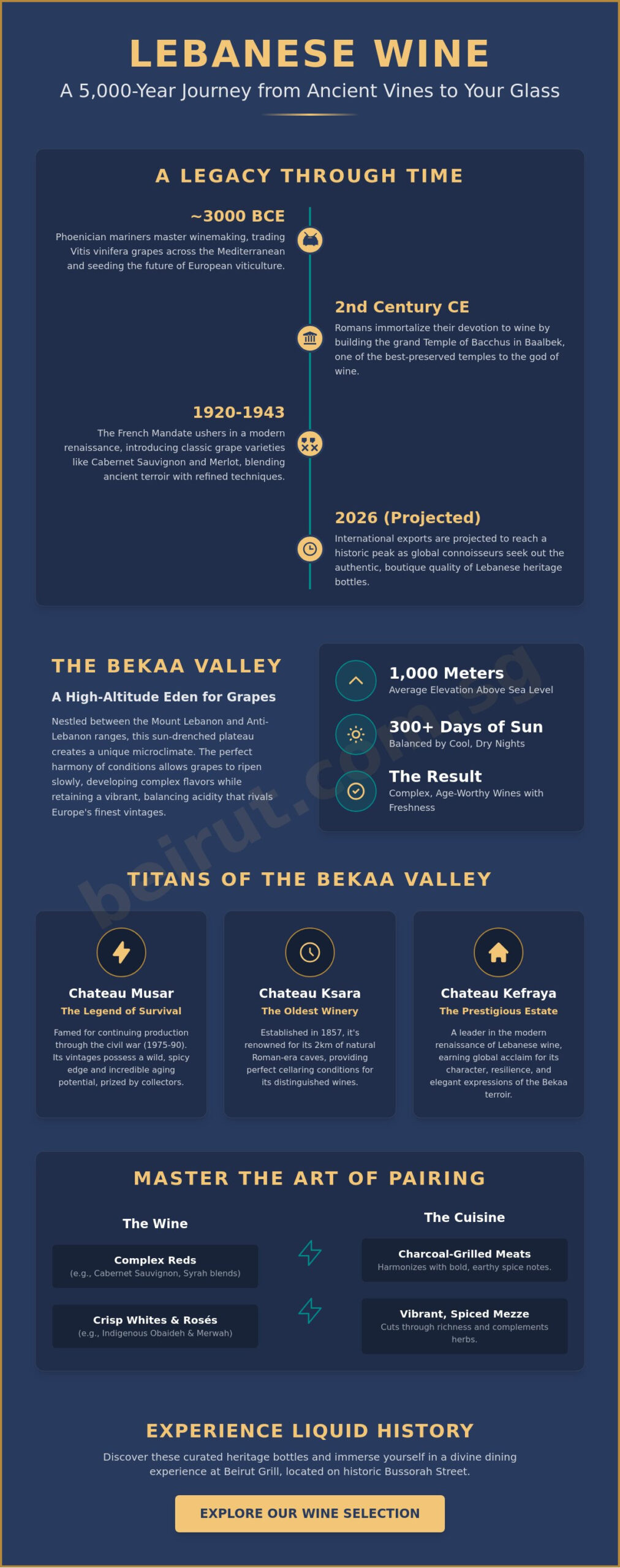
Nestled between the snow-capped peaks of Mount Lebanon and the Anti-Lebanon mountains, the sun-drenched vineyards of the Bekaa Valley tell a story older than most modern civilizations. Many diners mistakenly assume that Middle Eastern viticulture is a recent or experimental trend. In reality, Lebanon boasts a 5,000-year winemaking history that predates the famous estates of Bordeaux and Tuscany. This isn’t a new arrival on the world stage; it’s a grand return of an ancient master.
The high-altitude plateau of the Bekaa Valley, sitting at an average of 1,000 meters above sea level, creates a microclimate that is truly unique. Cool nights balance the intense Mediterranean sun, allowing grapes to ripen slowly while retaining a vibrant acidity. This natural harmony produces lebanese wine with a complexity and aging potential that rivals the finest vintages in Europe. At Beirut Grill, we’ve curated these selections since 2009 to offer our guests a taste of this enduring heritage.
The Phoenician Influence on Global Wine
Long before the Roman Empire expanded, Phoenician traders were the Mediterranean’s master mariners. They carried the Vitis vinifera grape from the Levant to the shores of Greece, Italy, and Spain, effectively seeding the future of global viticulture. The majestic Temple of Bacchus in Baalbek stands today as a stone testament to this ancient devotion to the vine. The Phoenician wine legacy serves as the foundational root from which modern European viticulture originally grew.
- Phoenician amphorae have been discovered in shipwrecks across the Mediterranean, proving the scale of their trade.
- Baalbek remains one of the best-preserved Roman temple complexes dedicated to the god of wine.
- Ancient rituals involving wine were central to Canaanite and Phoenician social structures.
The Modern Renaissance: French Influence Meets Ancient Roots
The 20th century brought a sophisticated evolution to these ancient soils. During the French Mandate between 1920 and 1943, winemakers introduced refined techniques and classic varieties like Cabernet Sauvignon, Merlot, and Syrah. While these international grapes are used, the soul of the lebanese wine remains distinctly Levantine, characterized by earthy spice and sun-ripened fruit profiles. Prestigious estates such as Chateau Musar and Chateau Kefraya have led this charge, earning global critical acclaim for their resilience and character. Industry analysts project that 2026 will mark a historic peak for international exports as connoisseurs increasingly seek out the authentic, boutique quality of these heritage bottles.
The Titans of the Bekaa Valley: Prestigious Wineries to Know
Nestled between the Mount Lebanon and Anti-Lebanon mountain ranges, the Bekaa Valley serves as a lush “Garden of Eden” for viticulture. At an average elevation of 1,000 meters above sea level, this plateau provides a unique microclimate. The cool nights and sun-drenched days ensure grapes develop complex sugars while retaining the vital acidity needed for balance. This high-altitude terroir is the heartbeat of lebanese wine, allowing for a freshness that defies the intense Mediterranean heat.
The landscape is a tapestry of historical prestige and modern innovation. While grand chateaus with sprawling estates define the region’s global reputation, a collection of boutique, family-run vineyards offers a more intimate perspective. These smaller estates often focus on limited production and hand-harvested techniques, ensuring that every bottle reflects the specific nuances of its plot. This blend of scale ensures Lebanon remains a dynamic force in the global market.
Chateau Musar: The Legend of Survival
The story of Chateau Musar is inextricably linked to the late Serge Hochar, who was named Decanter Magazine’s first “Man of the Year” in 1984. Throughout the Lebanese Civil War from 1975 to 1990, Hochar missed only two vintages, often transporting grapes through active conflict zones to ensure the tradition continued. A glass of Musar offers a profile often likened to a fine Bordeaux, yet it possesses a wild, spicy edge and notes of dried fruits. Collectors in Singapore prize older vintages, such as the 1998 or 2000, for their incredible aging potential and evolving complexity that can last for decades.
Chateau Kefraya and Chateau Ksara
Chateau Ksara stands as the oldest winery in the country, established in 1857 by Jesuit Priests. It’s famous for its two-kilometer stretch of natural Roman-era chalk caves, which maintain a constant temperature of 13 degrees Celsius for perfect aging. These subterranean tunnels hold thousands of bottles, some dating back to the early 20th century, providing a literal bridge to the past.
Chateau Kefraya, founded in 1951, is celebrated for its elegance and the “Comtesse de M” flagship blend. This label represents the pinnacle of Middle Eastern luxury, offering a consistent quality that has secured its place on global Michelin-starred menus. Both estates demonstrate how lebanese wine combines ancient tradition with French-influenced precision. To truly appreciate the heritage of these bottles, one must experience them alongside authentic cuisine. You can explore a curated selection of these labels at our Bussorah Street sanctuary, where each vintage tells a story of resilience.
Choosing Your Style: Red, White, and the “Sunset” Rosé
With the majestic Sultan Mosque as a backdrop to our terrace on historic Bussorah Street, we often guide guests through the sensory tapestry of the Beqaa Valley. Selecting the perfect lebanese wine is an act of discovery. It’s a journey that moves from the sun-baked earth of the plateau to the cooling breezes of the Mount Lebanon range. Since 2009, Beirut Grill has curated these selections to ensure every pour reflects a 5,000-year heritage of excellence.
Robust Reds: The Heart of the Bekaa
The red blends of Lebanon are celebrated for their power and longevity. Most prestige bottles, including those from the critically acclaimed Chateau Musar, utilize a foundation of Cabernet Sauvignon, Carignan, and Cinsault. These wines present a deep, garnet color and a profile rich with intense dark fruit. You’ll find exotic spice notes like cinnamon and clove dancing on the palate; these are direct results of the unique terroir and traditional oak aging processes. Cinsault is the secret weapon of the Lebanese winemaker. It acts as a softening agent, adding a velvet silkiness and red-fruit brightness to otherwise heavy blends. For those dining out in 2026, look for the 2017 and 2019 vintages. These years benefited from ideal rainfall patterns, producing structured tannins that will be reaching a divine maturity by mid-decade.
Crisp Whites and Aromatic Rosés
Lebanese whites offer a textured complexity rarely found in European counterparts. This is largely due to indigenous grapes like Obaideh and Merwah. These ancient varietals produce wines with honeyed textures, balanced by vibrant citrus and white floral aromas. They aren’t merely refreshing; they’re substantial. Similarly, Lebanese Rosé is a hidden gem for the tropical humidity of Singapore. Unlike the often-sweet commercial rosés found elsewhere, the Lebanese style is bone-dry and savory. It serves as a sophisticated aperitif that prepares the palate for a rich mezza spread.
- Flavor Profile: While French Provencal styles are airy and floral, Lebanese Rosés possess a “soul” of dried herbs and stone fruit.
- Labeling: Most premium bottles follow French labeling conventions, indicating the specific estate and the “Appellation” to guarantee origin.
- Climate Pairing: The crisp acidity of a Chateau Kefraya Rosé cuts through the heat of a 30-degree Singapore afternoon, making it our most requested “sunset” pour.
Whether you prefer the weight of a historic red or the cooling embrace of a white, these wines offer an authentic Middle Eastern journey. They reward the curious drinker with layers of history in every glass. Understanding the label is simple; most wineries use French terminology to denote quality levels, ensuring consistency across every vintage. Our boutique collection since 2009 has focused on these high-status markers to provide a truly divine dining experience.
The Art of Pairing: Lebanese Wine with Mezze and Grills
Since 2009, Beirut Grill has stood as a boutique sanctuary on historic Bussorah Street, where the culinary traditions of the Levant meet the sophisticated palates of Singapore. The golden rule of our table remains simple: what grows together, goes together. This ancient philosophy ensures that the regional spices, sun-drenched vegetables, and charcoal-kissed meats find their perfect echo in a bottle of lebanese wine. By mirroring the terroir of the Beqaa Valley with the ingredients of the land, we create a dining experience that is both evocative and divine.
Pairing with Cold and Hot Mezze
The journey often begins with our silken Hummus and smoky Baba Ghanoush. To balance the creamy, rich tahini, a crisp, aromatic white or a bone-dry Rosé is essential; the wine’s natural acidity acts as a refreshing palate cleanser. For the earthy, herb-forward Falafel and Spinach Fatayer, a light-bodied red like Cinsault offers a surprising success by providing a fruit-driven contrast to the savory crust. The vibrant lemon and garlic profile of our Tabbouleh requires a high-acidity wine to ensure the citrus notes don’t overpower the glass.
The Main Event: Charcoal-Grilled Meats
As the aroma of the grill wafts toward the majestic Sultan Mosque, the meal transitions to our signature charcoal-grilled meats. Our Lamb Kofta and Shish Taouk are best enjoyed with a structured Red blend, typically a mix of Cabernet Sauvignon and Syrah, which provides the backbone needed to stand up to intense Middle Eastern spices. For a truly majestic experience, we recommend pairing the Beirut Lamb Chops with a bottle of aged Chateau Musar. The rich, fatty marbling of the lamb finds a soulmate in the wine’s complex, tertiary layers. This harmony is no accident; the smoky notes from our traditional charcoal grill perfectly mirror the elegant oak aging found in premium lebanese wine selections from prestigious estates like Chateau Kefraya.
Expert Service in the Tropics
Maintaining the integrity of these historic vintages in Singapore’s tropical climate requires meticulous care. At Beirut Grill, we ensure your selection is served at the peak of its potential. We recommend a 30-minute decanting period for younger reds to soften their tannins, while older vintages should be poured immediately to preserve their delicate bouquet. In our 30-degree Celsius humidity, we serve whites at a chilled 9 degrees and reds at a steady 16 degrees, ensuring the heat never masks the wine’s sophisticated character. Experience this award-winning harmony for yourself and book your table at Beirut Grill to enjoy a masterclass in authentic Levantine flavors.
Experience Liquid History at Beirut Grill
Since our doors first opened in 2009, Beirut Grill has stood as a guardian of Levantine tradition in the heart of Singapore. Our wine cellar isn’t just a collection; it’s a carefully curated map of a 5,000-year-old heritage. We take immense pride in sourcing directly from the most prestigious estates in the Beqaa Valley, ensuring that every bottle of lebanese wine served at your table carries the authentic soul of its terroir. By maintaining direct relationships with historic wineries like Chateau Musar and Chateau Kefraya, we guarantee the quality and provenance that true connoisseurs demand.
Dining with us is a sensory journey that begins long before the first cork is pulled. With the majestic Sultan Mosque as your backdrop, the atmosphere on historic Bussorah Street transforms a simple meal into a cultural pilgrimage. Our staff undergo rigorous training to serve as your personal guides through the “Beqaa Valley journey.” They don’t just pour wine; they explain the high-altitude viticulture and the sun-drenched history behind every label. This expertise ensures that whether you’re a seasoned collector or a curious newcomer, you’ll find a vintage that resonates with your palate.
A Curated Selection for Every Occasion
Beirut Grill serves as a versatile sanctuary for every type of gathering. For corporate dinners, our premium labels command respect and spark conversation. For those seeking a romantic “hidden gem” discovery, our boutique finds offer an intimate connection to the Mediterranean. We’ve specifically selected our lebanese wine offerings to complement the smoky, robust flavors of our signature Mixed Grill. Beyond the vine, our award-winning beverage list invites you to explore the potent allure of Arak or the rich, cardamom-scented depths of traditional Lebanese Coffee.
Join Us for a Divine Dining Experience
Located on the vibrant and historic Bussorah Street, Beirut Grill offers more than just a meal. It’s a destination where history and hospitality converge. We invite you to slow down, soak up the majestic ambiance, and indulge in the timeless flavors of Lebanon. Every glass tells a story of resilience and craft that has survived millennia. Your seat at our table is waiting. Book your table at Beirut Grill today to experience this liquid history for yourself.
Savor Five Millennia in a Single Glass
You’ve journeyed through a 5,000-year legacy of viticulture, from the ancient Phoenician traders to the modern titans of the Bekaa Valley. Mastering the nuances of lebanese wine means appreciating the bold character of a Chateau Musar red or the crisp elegance of a Kefraya rosé. These bottles aren’t just beverages; they’re liquid history that transforms a simple meal into a majestic celebration of heritage. Whether you’re pairing a robust red with charcoal-grilled lamb or a bright white with cold mezza, the right pour bridges the gap between ancient tradition and modern indulgence.
Since 2009, Beirut Grill has served as a sanctuary for those seeking an authentic Middle Eastern journey. Located in the heart of historic Kampong Glam with the Sultan Mosque as a backdrop, we offer a critically acclaimed wine list curated for the true connoisseur. It’s time to reward your curiosity and soak up the ambiance of our boutique space on Bussorah Street. Experience the finest Lebanese wines and charcoal-grilled meats at Beirut Grill. Book Now. We look forward to hosting your next divine dining experience.
Frequently Asked Questions
Is Lebanese wine considered “Old World” or “New World”?
Lebanese wine is classified as Old World, boasting a viticultural history that spans over 5,000 years. This heritage predates the Roman expansion into Europe, tracing back to the Phoenician traders of 3,000 BCE. While it shares the traditional techniques of Europe, its soul is ancient. You’ll find that these bottles offer a complexity that only five millennia of practice can produce.
What is the most famous wine from Lebanon?
Chateau Musar is the most famous wine from Lebanon, achieving legendary status after the 1979 Bristol Wine Fair. Founded in 1930 by Gaston Hochar, the winery became a symbol of resilience during the country’s 15-year civil war. Its unique, non-interventionist approach creates a profile that’s both wild and sophisticated. It remains a mandatory inclusion for any serious global wine connoisseur.
Can Lebanese wine age as well as French wine?
High-quality lebanese wine possesses the structural integrity to age for 40 years or more, frequently outlasting its French counterparts. Critics often cite the 1954 vintage of Chateau Musar as a testament to this longevity. The high altitude of the Bekaa Valley, sitting 1,000 meters above sea level, ensures grapes retain the acidity required for a long life in the cellar.
What grape varieties are native to Lebanon?
Obeideh and Merwah are the two most prominent grapes native to Lebanon, representing the region’s ancient viticultural DNA. While 70% of modern vineyards grow international varieties like Cabernet Sauvignon, these indigenous vines are often 50 to 100 years old. They produce white wines with a rich, waxy texture and notes of honeycomb. These varieties offer a sensory connection to the land that imported grapes simply can’t replicate.
How should I serve Lebanese red wine in Singapore’s heat?
You should serve Lebanese red wine at a chilled temperature of 16 to 18 degrees Celsius to balance Singapore’s 31-degree heat. A quick 15-minute rest in an ice bucket prevents the warmth from masking the wine’s intricate cedar and spice aromas. It’s a practical step that ensures the bold flavors don’t become heavy or cloying in the tropical humidity. Proper temperature control preserves the wine’s elegant structure.
Is Lebanese wine usually sweet or dry?
Lebanese wine is predominantly dry, with over 95% of modern production focused on savory, structured table wines. Although the warm climate might suggest sweetness, the high-altitude vineyards preserve a crisp acidity that defines the dry finish. These wines are designed to complement the complex spices of Middle Eastern cuisine. You won’t find the cloying sugar levels often associated with other warm-climate regions in these sophisticated bottles.
Why is the Bekaa Valley so good for winemaking?
The Bekaa Valley is ideal for winemaking because of its 1,000-meter elevation and 300 days of annual sunshine. This high altitude provides a diurnal temperature swing where cool nights preserve acidity while the intense sun ripens the grapes. The soil is a mix of limestone and gravel, which has provided natural drainage for over 5,000 years. It’s a microclimate that produces consistently award-winning vintages year after year.
Where can I try a wide selection of Lebanese wines in Singapore?
You can experience a divine selection of Lebanese labels at Beirut Grill on historic Bussorah Street. Since 2009, we’ve curated a boutique list featuring world-class names like Chateau Musar and Chateau Kefraya. It’s a majestic setting to explore Lebanon’s 5,000-year heritage right in the heart of Singapore. Our knowledgeable staff will guide you through a sensory journey that pairs these mouth-watering wines with our critically acclaimed mezza.