
A memorable meal in Singapore starts with choosing the experience you want. For anyone seeking unique dining spots in Singapore for foodies, decide whether you’re after a heritage setting, a lively market or a restaurant centred on a particular cuisine. Then choose a suitable meal time and reserve ahead, especially for weekends and public holidays.
The setting can matter as much as what arrives at the table. A meal might take you from the bustle of a hawker centre to a distinctive dining room, with each offering a different way to enjoy Singapore’s food scene. Decide what kind of outing you want, then leave enough time in your itinerary to enjoy the meal rather than rushing through it.
Key Takeaways
- Book distinctive dining experiences ahead, especially for weekends and public holidays, and choose a time that suits the setting you want.
- Look beyond the menu: a view, heritage surroundings or an unexpected location can shape the meal as much as the cuisine.
- Explore Singapore’s hawker scene for local character; Satay Street beside Lau Pa Sat comes alive after 7 pm.
2. Dining with views and unusual settings
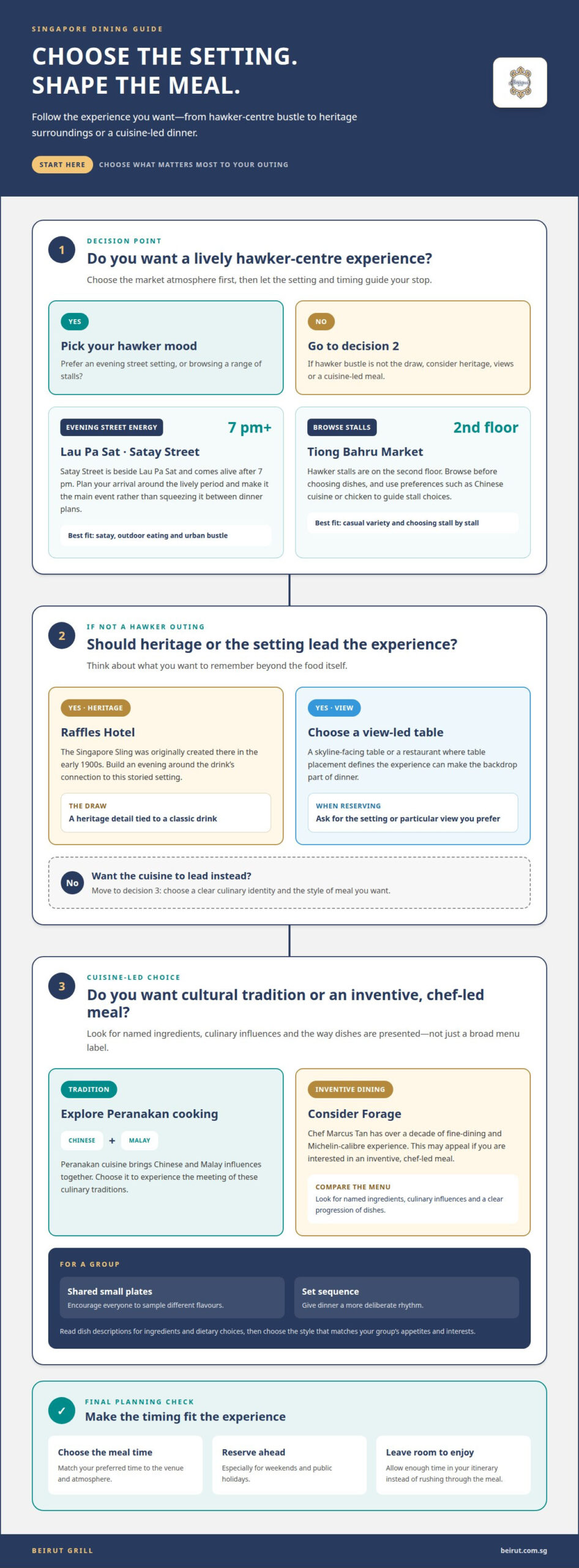
In Singapore, the backdrop can shape dinner as strongly as the cuisine. Before booking, choose the experience first: a skyline-facing table, a heritage setting, or the lively atmosphere of a market. Then match your preferred meal time to the venue and reserve ahead, especially for weekends and public holidays. This simple order helps you plan around the setting rather than settling for whatever remains.
For an unusual local-food setting, Tiong Bahru Market brings hawker stalls together on its second floor. Browse the stalls before choosing dishes, then settle in for a casual meal surrounded by the market’s bustle. Its location makes the meal feel different from a formal dinner, while the range of stalls lets friends choose different flavours. If Chinese cuisine or chicken is on your list, use those preferences to guide your stall choices.
At Lau Pa Sat, Satay Street beside the market comes alive after 7 pm. That makes it a distinctive evening stop: plan your arrival around the street’s lively period, then enjoy satay in an urban setting. The exact appeal is the contrast between a familiar local dish and the energy of eating outdoors. For a delicious change of pace, make this the main event rather than squeezing it between other dinner plans.
Raffles Hotel offers another point of interest for diners drawn to heritage. The Singapore Sling was originally created there in the early 1900s, linking a drink with a storied setting. You can build an evening around that connection, or choose a restaurant where views and table placement define the experience. Ask for the setting you prefer when making a reservation; a particular view or table can shape the meal’s atmosphere.
For notable locations and timing, Tiong Bahru Market’s hawker stalls are on the second floor, while Satay Street is beside Lau Pa Sat and comes alive after 7 pm. Popular dining experiences are best booked ahead for weekends and public holidays. Distinctive settings definitely reward a little planning, whether the draw is a heritage detail, a view, or dishes served amid Singapore’s evening bustle.
3. Which restaurants in Singapore serve distinctive local or fusion cuisine?
Start with the cuisine you want to explore, then choose a restaurant whose menu makes that tradition clear. Peranakan cooking, for example, brings Chinese and Malay influences together, while contemporary fusion menus may combine local ingredients with techniques from elsewhere. Read dish descriptions for specific ingredients and cooking methods, not just broad labels. Those details offer a clearer sense of a menu’s character.
For a more considered meal, look at Forage, where chef Marcus Tan has over a decade of fine-dining and Michelin-calibre experience. That background may appeal if you’re interested in an inventive, chef-led experience. When comparing restaurants, look for menus that explain their point of view through named ingredients, culinary influences and a clear progression of dishes. These details help distinguish a purposeful fusion menu from one that simply combines styles.
Local cuisine can be distinctive without being reworked. Peranakan dishes offer a way to experience the meeting of Chinese and Malay culinary traditions; other menus may focus on a single heritage cuisine. Decide whether you want recognisable classics, contemporary interpretations or a tasting-style progression. Then choose a restaurant whose descriptions match your preference, rather than relying on the word “fusion” alone.
For a group, compare menus by the kind of meal they offer. Shared small plates encourage everyone to sample different flavours, while a set sequence gives dinner a more deliberate rhythm. Read descriptions for ingredients and dietary choices, then reserve a time that leaves room to enjoy the meal. This approach works well when friends have different appetites or culinary interests.
Distinctive dining in Singapore is less about chasing a label than choosing a cuisine with a clear identity. Forage is one option for chef-led dining, while Peranakan cooking offers a compelling example of cultural exchange. Match your choice to the occasion, the menu’s culinary identity and the style of meal your group wants to share.
4. What are the most unusual hawker stalls and food spots in Singapore?
For a food adventure with a distinctly local rhythm, explore Singapore’s hawker centres. Rather than choosing one formal menu, you can scan individual stalls, compare dishes and build a meal around different cravings. Start by browsing the stalls, then decide what you want to eat.
Make Lau Pa Sat a destination after dark. Satay Street beside the market comes alive after 7 pm, creating an evening food stop with a lively street setting. Arrive around that time, take in the atmosphere, and let the satay stalls guide your meal. It’s a memorable contrast to a restaurant dinner: open-air energy, the scent of grilling and food chosen stall by stall.
For a hawker-centre experience, visit Tiong Bahru Market. Its stalls are on the second floor, so factor that in as you plan your route through the building. Browse before ordering, note which stalls appeal to your group, and choose dishes that complement rather than duplicate one another. This turns a quick stop into a more varied tasting experience.
Make the market itself part of the meal. At Lau Pa Sat, time your visit for Satay Street’s evening atmosphere; at Tiong Bahru Market, head upstairs to explore the hawker stalls. Keep the plan flexible, since discovering dishes as you browse is part of the appeal. Sharing a table lets friends taste a wider range of selections.
These stops suit different moods. Choose Lau Pa Sat for an evening shaped by satay and street-side bustle, or Tiong Bahru Market for a second-floor hawker-centre browse. If your itinerary includes both, give each outing its own time and appetite. Hawker centres offer an accessible way to explore food through place, variety and the pleasure of choosing as you go.
4. Cost of unique dining in Singapore per person?
That figure is per dish, not per person, so your total depends on what you order. A light meal built around one choice differs from a shared spread with several dishes and drinks. Treat the hawker benchmark as a starting point, not an estimate for a full meal.
At Tiong Bahru Market, for example, browse the second-floor hawker stalls before deciding what to eat. Your spending will reflect the number of dishes you choose and whether your group shares them. At Lau Pa Sat, Satay Street beside the market comes alive after 7 pm. There, the final spend depends on how much satay and what else your group orders.
For restaurant dining, compare the format before setting a per-person budget. Ordering separate dishes gives diners control over their selection, while a set course meal follows a planned sequence. Drinks, additional courses and shared plates also affect the total. Decide what matters most, such as trying several flavours or enjoying a longer dinner, then choose accordingly.
A practical way to plan is to set a comfortable total for the group, then divide it between food and drinks. At hawker centres, count the dishes you intend to order rather than assuming one dish makes a complete meal. At a restaurant, consider the menu structure and whether you prefer individual orders or shared selections. These decisions shape the overall cost more than the setting alone.
For a meal with a distinctive Lebanese character, explore Lebanese dining options and choose the style of meal that suits your plans.
Beirut Grill
Beirut Grill offers a distinctive change of pace for diners seeking heritage-led cuisine in Singapore. Its Lebanese menu brings people together over shared dishes, with options such as Hummus, Mixed Grill and Vegetarian Kebab. Lebanese Wine can accompany the meal, adding another taste of the region to the table.
Choose Beirut Grill when you want an evening shaped by Lebanese flavours rather than a hawker-style tasting or fusion menu. The menu makes it easy to build a meal around shared plates or choose a more substantial centrepiece, with the experience rooted in one cuisine. It’s a welcoming option for food-loving friends curious to explore beyond familiar local dishes.
For a Lebanese dining experience in Singapore, contact Beirut Grill.
Make Your Next Meal a Destination
Let your next dinner plan begin with a flavour you’re curious to discover. Unique dining spots in Singapore for foodies are most rewarding when the meal suits the people around your table, whether you’re gathering with friends or planning a quieter evening. Choose the atmosphere you want, then let the cuisine guide the occasion.
For a Lebanese dining experience, Beirut Grill brings together dishes such as Hummus and Mixed Grill, with Lebanese Wine as an accompaniment. These choices make it easy to share the table and explore a cuisine rooted in regional tradition. Think about what your group enjoys, and make the meal the centrepiece of your plans.
Ready to shape your next gathering around Lebanese flavours? Contact Beirut Grill to plan your meal. A little intention can turn dinner into a memorable part of your time in Singapore.
Frequently Asked Questions
Want to Experience Singapore’s Food Like a Local?
Explore at your own pace and let curiosity guide what you order. At a food centre, scan several menus before choosing a dish you haven’t tried, then ask about its ingredients or customary accompaniments. This can make unfamiliar flavours easier to approach. When dining with friends, agree on a few different tastes so everyone can discover something new together.
What are the most unique dining experiences in Singapore for foodies?
Unique dining spots in Singapore for foodies can pair a distinctive culinary tradition with a setting or format that suits your evening. You might choose a chef-led menu for a carefully paced dinner, or a shared meal that lets friends sample several dishes. For a memorable outing, pick an experience that gives your group a reason to linger, discuss flavours and enjoy the occasion together.
Which Singapore restaurants offer dining in unusual settings, such as rooftops, gardens, or heritage buildings?
For a distinctive alternative, Beirut Grill offers a boutique Arabic-themed lounge alongside interior and al-fresco seating. Its atmosphere suits diners looking for a setting with character, paired with Lebanese and Middle Eastern cuisine. If a rooftop or garden is essential to your plans, use that feature as your first filter, then choose a menu that fits the occasion.
Which unique restaurants in Singapore require advance reservations, and how far ahead should I book?
Popular dining experiences are best booked in advance, especially for weekends and public holidays. There isn’t one lead time that suits every restaurant: demand, date and preferred seating all affect how early to reserve. Once your group settles on an evening, make the reservation promptly and include any seating preference. Planning ahead leaves more room to organise the rest of your outing, including time to discover other unique dining spots in Singapore for foodies.
What are the opening hours and locations of notable unique dining spots in Singapore?
Satay Street is beside Lau Pa Sat and comes alive after 7 pm. Tiong Bahru Market’s hawker stalls are on the second floor. Raffles Hotel is noted for its heritage setting, but no opening hours are given.
Which unique dining spots in Singapore are suitable for vegetarians or diners with dietary restrictions?
Beirut Grill offers Vegetarian Kebab. For other dietary restrictions, read menu descriptions for ingredients and dietary choices before booking.