
What if one crescent of sambousek held a delicate, stretchy cheese filling, while the next offered a different savoury twist? Lebanese cheese pastries (sambousek) can be made with varied fillings, provided each one fits neatly inside the dough and the edges are sealed well. The pleasure lies in the contrast: crisp, golden pastry giving way to a warm, fragrant centre.
A good batch begins with balanced cheese, a supple dough and careful shaping. This guide shows you how to prepare different cheese fillings, make flaky dough, form and seal crescent pastries, then freeze them for cooking straight from frozen. You’ll find practical steps for keeping the filling contained and the pastry crisp, so you can bring a little Lebanese hospitality to the table in Singapore, whether you’re serving sambousek as a mezze or preparing them ahead for a gathering.
Key Takeaways
- Balance the cheese’s saltiness and moisture to create a filling that’s flavourful and easy to enclose.
- Use a supple dough and give it time to rest for a flakier pastry that’s easier to shape.
- Portion the filling neatly, then press the crescent edges firmly closed to help prevent leaks during cooking.
- Prepare pastries ahead by freezing them uncooked, then cook them from frozen for a convenient mezze.
Cheese filling options and preparation
Serve warm cheese sambousek with a cool yoghurt dip or tangy tahini sauce, both of which complement the savoury filling. Lebanese cheese pastries (sambousek) can suit vegetarians when made with cheese that uses vegetarian rennet, so choose a suitable cheese for the filling.
- Choose a cheese combination. For a stretchy Lebanese-style filling, combine 500 grams of mshallaleh, majdoola and mozzarella. Soak the mshallaleh and majdoola for 5 hours, changing the water every hour to reduce saltiness. Alternatively, grate 600 g of Akkawi, Nabulsi or Halloumi. These cheeses give the filling a firmer, saltier profile.
- Drain and season thoroughly. After soaking, drain the cheese well and squeeze out excess moisture before mixing. Too much liquid can soften the dough and escape through the seal during cooking. Stir in 2 tablespoons of chopped fresh flat-leaf parsley and ½ teaspoon of nigella seeds for a fragrant, savoury note.
- Stabilise a softer filling with a roux. Warm 3 tablespoons of sunflower or canola oil, then stir in 2 tablespoons of all-purpose flour until smooth. Gradually whisk in 1 cup of milk, then combine the thickened mixture with the cheese. Let the filling cool before shaping; a cooler, thicker mixture is easier to portion and less likely to leak.
- Adapt the filling to the occasion. For baked Lebanese cheese pastries (sambousek), keep the cheese mixture well drained and avoid overfilling each pastry. For a different savoury centre, prepare sambousek with 500 g of lamb or beef mince, or both, and season it with 2 teaspoons of seven spice. Keep meat and cheese fillings separate for distinct flavours and vegetarian portions.
Flaky sambousek dough preparation
Yeasted dough gives sambousek a tender, airy bite. Measure each ingredient before mixing to help the dough develop evenly.
-
Gather the Yeasted Dough Ingredients
Measure 3 cups of bread flour, 2 teaspoons of dried active yeast, and 3 tablespoons of olive or vegetable oil. Keep the flour and oil ready before preparing the yeast mixture, so you can combine everything smoothly. Leave the yeast mixture for 15 minutes to ferment and bubble. This visible activity is the cue to continue; don’t rush ahead while it’s still inactive.
-
Mix the Dough to the Right Texture
Combine the flour, prepared yeast mixture and oil, then bring them together into a dough. Mix until no dry flour remains, and assess the texture before kneading. It should feel cohesive and pliable, not crumbly or stiff. If dry patches remain, keep mixing until they disappear; avoid adding flour just because the dough feels slightly tacky.
A soft, even dough is easier to knead and shape than a dry one. Use the same flour throughout, as changing flour can affect how the mixture comes together. Incorporate the oil into the dough instead of pouring it over the finished dough. This helps create a consistent texture for rolling into sambousek rounds.
-
Knead and Rise the Dough
Knead the dough by hand until it feels smooth and elastic. If it tears easily or remains rough, continue kneading before leaving it to rise. Set the dough aside for at least 2 hours, or until it has doubled in size. The rise gives the yeast time to aerate the dough.
Judge the rise by the dough’s volume, not the clock alone. Once it has doubled, handle it gently to preserve some of the air developed during fermentation. Then divide and roll it for shaping. Well-kneaded, fully risen dough gives each pastry a tender interior beneath its crisp, golden exterior.
Freezing and cooking from frozen
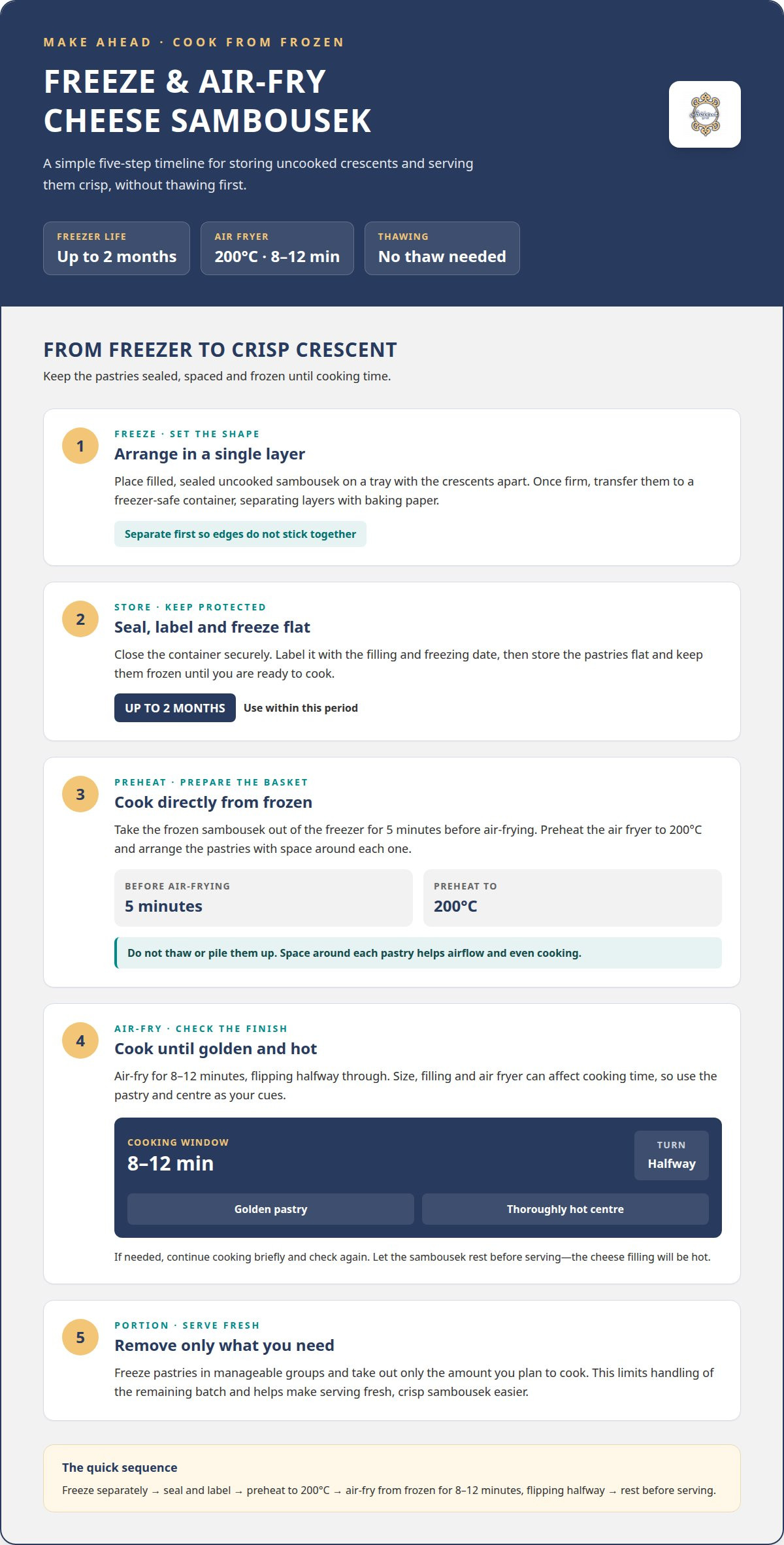
Yes, assemble cheese sambousek ahead and freeze them uncooked for up to 2 months. Cook them from frozen in an air fryer, without thawing them first.
- Arrange the pastries for freezing. Once filled and sealed, place the uncooked sambousek in a single layer on a tray. Keep the crescents apart so their edges don’t stick together as they freeze. Once firm, transfer them to a freezer-safe container, separating layers with baking paper. This keeps the pastries easier to remove individually when you’re ready to cook them.
- Protect the pastry from freezer moisture. Close the container securely before returning it to the freezer. Label it with the filling and the freezing date, so you can identify the batch and use it within 2 months. Store the pastries flat, where they’re less likely to shift and lose their crescent shape. Keep them frozen until you’re ready to cook.
- Prepare the air fryer. Take the frozen sambousek out of the freezer for 5 minutes before air-frying. Preheat the air fryer to 200°C, then arrange the pastries in its basket with space around each one. Avoid piling them up; airflow helps the pastry cook evenly and turn crisp. Cook directly from frozen rather than leaving them out to thaw.
- Cook until crisp and evenly heated. Air-fry the pastries for 8-12 minutes, flipping them halfway through. Their size, filling and air fryer can affect how quickly they cook, so look for golden pastry and a thoroughly hot centre. If the pastry needs more time, continue cooking briefly and check again. Let the sambousek rest before serving, since the cheese filling will be hot.
- Plan portions before cooking. Freeze the pastries in manageable groups, then remove only the amount you need. This avoids repeatedly handling the remaining batch and makes it easier to serve fresh, crisp sambousek at a gathering. For best texture, cook the pastries after freezing rather than thawing them in advance.
Shaping and sealing crescent pastries
Use chilled filling and evenly rolled dough to shape neat crescents. Prepare the sealing paste before filling each round so the edges stay clean.
- Roll and cut the dough. Roll the dough evenly, then cut it into rounds. Keep the circles covered while you work, since exposed dough can dry and become harder to seal. Gather scraps, reroll them gently, and cut more rounds without leaving the pastry uncovered.
- Make the sealing paste. Stir together ⅓ cup of flour and ⅓ cup of water until smooth. This simple slurry gives the dough edges a tacky surface for pressing closed. Keep it nearby and stir again if flour settles. Apply only a thin film along the edge, since excess paste can make the seam slippery.
- Add a measured portion. Place about 1 tablespoon of cheese filling in the centre of each round. Keep the filling in a compact mound, away from the rim, so it won’t interfere with the seal. Too much filling can stretch the dough or escape during cooking. If the cheese mixture looks wet, drain it before portioning.
- Fold into a crescent. Lift one side of the dough over the filling and align it with the opposite edge. Press the edges together from one end to the other, pushing out trapped air as you go. Check that the filling remains centred and the seam sits flat. A clean edge makes a more reliable seal.
- Crimp and inspect each pastry. Press the joined edge firmly with your fingertips, then crimp it with a fork for a neat finish. Check for gaps, thin spots, or filling caught in the seam, and patch these before cooking. Arrange the crescents without crowding them. For another shape, cut 5 × 5 cm squares and fold their corners over the filling.
For a beautifully prepared Lebanese meal without shaping a batch yourself, enjoy a ready-made meal.
Beirut Grill: Sambousek
Beirut Grill serves sambousek for those who would rather savour the pastry than prepare it themselves. It’s a simple way to enjoy a Lebanese favourite without another round of mixing, shaping and cooking.
Build a meal around sambousek with hummus, or choose a Mixed Grill for a broader spread of Lebanese flavours. Lebanese Wine can accompany the meal. Whether you’re sharing mezze or sitting down to a fuller dinner, these dishes offer different ways to enjoy Lebanese cuisine.
For a Lebanese meal featuring sambousek, contact Beirut Grill.
Bring a Lebanese favourite to your table
Preparing Lebanese cheese pastries (sambousek) can be more than a recipe to master. It’s a way to make a meal feel generous, whether you’re sharing a quiet dinner or welcoming friends. Let your next batch reflect your own taste, with each crescent offering a little Lebanese hospitality.
As you get comfortable with the process, make sambousek part of a wider meal, pairing its warm, savoury character with dishes that suit the occasion. Or leave the cooking to Beirut Grill when you’d rather spend the gathering with your guests. Either way, sambousek brings people together over food made for sharing.
If you’d like to enjoy sambousek without preparing it yourself, ask Beirut Grill about sambousek. Take the next step toward a welcoming Lebanese meal, and enjoy discovering what you’ll share around the table.
Frequently Asked Questions
Can I make sambousek with different fillings?
Yes, sambousek can hold different savoury fillings, including cheese, spiced minced meat or vegetables. Make separate batches to keep each filling distinct, and keep the mixture compact rather than wet. For a cheese variation, parsley and nigella seeds add herbal, gently toasted notes. Label trays before freezing so you can identify each filling later.
Can I bake the sambousek instead of frying them?
Yes, bake sambousek at 230°C/450F for around 10 minutes, turning them halfway if needed for an even bake. Before baking, brush the pastries with milk for a golden finish. Arrange them with space between each crescent so hot air can circulate. Check the pastry colour and centre before serving, since ovens may bake unevenly.
Can I make the cheese sambousek or borek with ready-made puff pastry?
Yes, ready-made puff pastry works for a quicker variation, though its texture is more layered than traditional sambousek dough. Thaw it according to the package directions, then cut and fill the sheets without overloading them. Press the edges firmly closed and follow the package’s baking guidance for temperature and timing.
Can I make the dough ahead of time?
Yes, prepared sambousek dough can be refrigerated for up to 3 days before use. Keep it covered so the surface doesn’t dry out or form a crust. Before shaping, let the chilled dough soften enough to roll without cracking. If it feels firm, give it a little time at room temperature rather than forcing it with the rolling pin.
Can cheese borek or fried cheese puffs be made ahead of time?
Yes, assemble the uncooked cheese pastries ahead and freeze them for up to 2 months. Freeze them in a single layer first, then store them in a sealed container to protect their shape. Cook from frozen when you’re ready to serve, rather than thawing them; this helps keep the pastry firm while the filling heats.
What type of cheese should be used?
For a stretchy, balanced filling, combine mshallaleh, majdoola and mozzarella. Akkawi, Nabulsi or Halloumi are alternatives for a more assertive, savoury taste. Choose according to your preferred texture and saltiness, and grate firmer cheeses for an even mixture. If using salty cheese, soak it first and taste before adding extra seasoning.