
Charcoal grilling gives a Middle Eastern feast its centre of gravity. For a Middle Eastern feast in Singapore, smoky meats bring depth to the table, while hot and cold mezze add contrasting textures, herbs and bright, savoury flavours. Together, they create a generous spread made for sharing.
Mezze may be the first dishes guests notice, but grilled meats give the feast its lasting appeal: tender skewers and richly seasoned cuts alongside hummus, tabbouleh and other small plates. Balance matters, too. Fresh, cool mezze can complement the warmth of the grill, while hot dishes add a comforting counterpoint. This guide explores how Middle Eastern flavours come together in a Singapore feast, what distinguishes mezze from grilled dishes, and how to choose a spread for the occasion. You’ll also find tips for enjoying each part of the meal, from the opening plates to the final bites.
Key Takeaways
- Recognise how regional traditions shape flavour, from aromatic herbs to distinctive spice profiles, and choose dishes that reflect the tastes you want to explore.
- Use a mixed grill to bring different charcoal-grilled meats together, with each cut offering its own texture and savoury character.
- Balance warm mezze with cool, fresh plates to create contrast and variety across the table.
- For a family gathering or group meal, consider a spread with shared mezze, grilled favourites and options such as a vegetarian kebab.
Authentic Middle Eastern cuisine and regional diversity
Middle Eastern food spans distinct traditions, so a feast can vary in ingredients, cooking styles and flavour. In Singapore, begin by identifying the regional influence, then consider how each menu brings dishes together for sharing.
Lebanese, Turkish, and Arabic Feasts
Lebanese feasts often pair mezze with grilled meats, while Turkish cuisine has its own traditions of seasoned grills and breads. “Arabic” describes a broad culinary landscape, not one fixed menu. Named regional dishes offer a practical way to understand a restaurant’s focus, whether Lebanese, Turkish or another tradition.
Persian cuisine has a distinctive profile, often aromatic rather than aggressively hot. Mint, parsley, coriander and dill feature in dishes such as Ghormeh Sabzi, an herb-rich stew. These ingredients show how Persian cooking builds flavour beyond grilled dishes.
Halal and Family Feast Choices
For a halal meal, choose a restaurant that clearly identifies its halal status, since dish names alone don’t establish it. For a family feast, look for a mix of meat, vegetable-led plates and familiar choices. That variety helps guests with different preferences share a table while exploring Middle Eastern flavours together.
Mediterranean and Balkan cuisines share some ingredients and techniques with Middle Eastern cooking, but each has distinct dishes. Read menu descriptions to tell them apart rather than treating the regions as interchangeable.
Reservation and deposit policies vary by restaurant and may depend on the booking. Delivery and catering are also venue-specific, so look for those options stated explicitly. To find Lebanese, Persian, Turkish or Arabic food in Singapore, use the cuisine label and named dishes as practical guides.
Persian menus may include aromatic, herb-led dishes, so read descriptions for clues about their flavour profile. This offers a useful point of comparison when choosing from menus: notice which herbs are named and whether a dish is herb-led, rather than defined only by its protein or cooking method. For a shared order, pair a familiar dish with one that highlights herbs. This is a focused way to explore a Persian profile without assuming all Middle Eastern meals taste alike.
Charcoal-grilled meats and mixed grills
Charcoal grilling gives meat a smoky edge and savoury crust while keeping the centre tender. A mixed grill brings several preparations together on one platter, creating contrast in seasoning, texture and richness. Lamb, chicken and beef each respond differently to direct heat, so a varied selection makes the meal more engaging. For a group, the platter lets everyone sample more than one style instead of choosing a single main.
Look beyond the word “grilled” on a menu. The cut, seasoning and shape influence how each piece cooks and tastes. Skewered chicken, for example, offers compact bites, while a lamb chop has a different texture and fuller richness. A well-composed mixed grill lets those differences stand out rather than making every piece taste alike. Bread, fresh vegetables and dips can balance the meat.
For a group meal, consider how the platter fits the rest of the table. Prawns or fish offer a lighter alternative to lamb or beef, while grilled halloumi brings a savoury option without meat. These choices make a feast more varied and give guests a chance to explore different grilled flavours in one sitting, rather than centring the occasion on a single dish.
In Singapore, the restaurant setting shapes the experience as much as the food. A casual meal near a lively street has a different atmosphere from a quieter dinner, even when both feature charcoal-grilled cooking. Consider whether the occasion calls for a relaxed spread or a more leisurely shared meal. For a Singapore table inspired by Middle Eastern grilling, explore charcoal-grilled dining alongside mezze and other dishes.
That detail gives diners a practical point to weigh alongside the meal’s style and the range of dishes they hope to share. It can help shape a relaxed meal around grilled meats and complementary flavours.
A mixed grill suits a table where guests want to sample different preparations, while mezze and sides add variety. This can help guide the choice of a place for a shared meal, while keeping the focus on smoky meats, fresh accompaniments and dips.
Hot and cold mezze
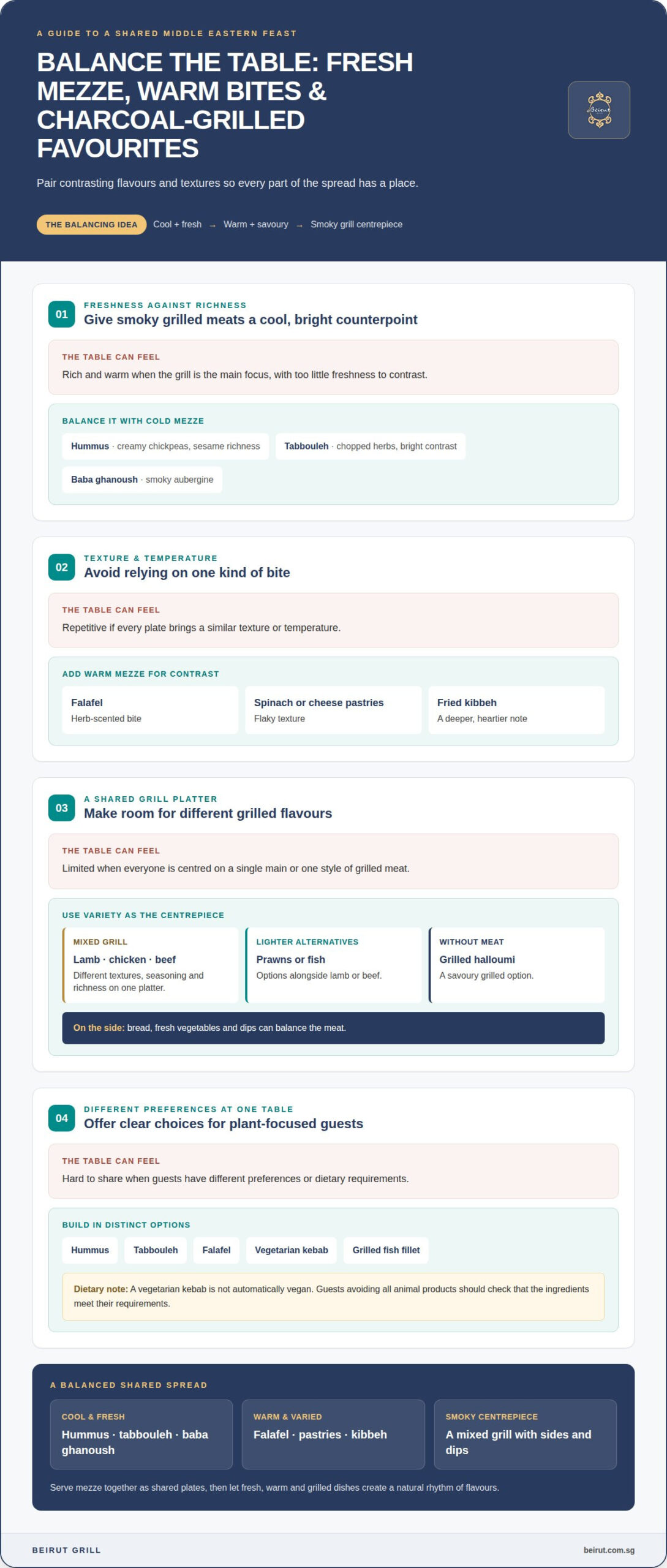
A Singapore feast often combines cold mezze, warm small plates and grilled dishes for a varied shared dinner. Familiar examples include hummus, baba ghanoush, tabbouleh, falafel and stuffed vine leaves, each bringing a different texture and flavour to the table.
Cold mezze make a fresh, vibrant start. Hummus brings creamy chickpeas and sesame richness, while tabbouleh offers chopped herbs and a bright contrast. Baba ghanoush adds a smoky note from aubergine. These dishes draw on Levantine and wider Mediterranean cuisine, where herbs, vegetables and pulses contribute as much character as meat.
Warm mezze bring crisp edges and savoury comfort. Falafel offers a herb-scented bite, while pastries filled with spinach or cheese add flaky texture. Fried kibbeh brings a deeper, heartier note. To build a balanced table, combine creamy, fresh and crisp dishes, then add charcoal-grilled food as a substantial centrepiece. This contrast makes sharing feel generous without relying on one flavour or texture.
Vegetarian choices can include falafel, hummus, tabbouleh and a vegetarian kebab, giving plant-focused guests several distinct dishes. A vegetarian kebab is not automatically vegan, so diners avoiding all animal products should choose dishes whose ingredients meet that requirement. Grilled fish fillet is another option for guests who eat seafood but prefer not to choose meat.
For a group dinner, serve mezze together rather than treating each plate as an isolated course. A spoonful of hummus with crisp vegetables, followed by herbs and warm pastries, creates a natural rhythm of flavours. Lebanese dining traditions and neighbouring food cultures make this communal style an expression of hospitality as well as appetite. The result is a meal with room for conversation, culture and varied plates.
Middle Eastern restaurants in Singapore for large groups and family feasts
For a family meal in Singapore, choose a restaurant around the gathering’s practical needs. Start with the guest list, then consider whether everyone can sit together and share dishes comfortably. A celebration with children may call for a relaxed setting, while a reunion dinner may suit a slower pace. These details shape the evening as much as the cuisine.
Menu variety matters when relatives have different preferences. A spread can combine meat, seafood and vegetarian choices, with familiar options alongside regional dishes. Grilled fish, for example, offers an alternative to meat, while vegetable-led plates give vegetarian guests considered choices. Look for a menu that lets the table order a balanced spread rather than relying on one large central dish.
Seating is another practical consideration. A family with young children may value room for people to settle in, while a multigenerational group may prefer a table that makes conversation easy. Before choosing, compare the restaurant’s location with the gathering’s travel plans and arrival points. A convenient Singapore setting can help guests arrive without turning the meal into a logistical challenge.
For a special occasion, plan dinner around the group. Shared starters create an easy beginning; more substantial plates can follow once everyone is seated. If guests arrive at different times, choose a format that still feels welcoming as the table fills. This simple step helps a birthday meal or family reunion feel considered.
A successful feast balances atmosphere, menu choice and the needs of the people around the table. Consider the occasion, preferred dishes and seating arrangement together, then choose a Singapore restaurant that suits the group’s style. To explore an inviting setting for a shared Middle Eastern feast, take the next step with a meal centred on generous hospitality and regional flavour.
Beirut Grill
Beirut Grill brings Lebanese flavours to the table through a shared meal. The menu includes a Mixed Grill, Hummus and Vegetarian Kebab, giving guests different choices for a feast. Lebanese Wine is also available to complement the meal.
For a gathering that calls for variety, grilled dishes and mezze create a relaxed progression from shared plates to the main course. Hummus adds a creamy, savoury element, while a Vegetarian Kebab offers a meat-free choice alongside the Mixed Grill. Together, these dishes let guests explore Lebanese food through distinct tastes and textures, whether they’re planning a family dinner or meeting friends.
Contact Beirut Grill to discuss your visit and enjoy a Middle Eastern feast in Singapore.
Make Your Next Gathering a Shared Table
Let the occasion guide your final choices. A lively dinner with friends might call for an abundant table, while a family gathering may feel best with a pace that leaves room for conversation. For a Middle Eastern feast in Singapore, consider how you want guests to experience the evening, from the first shared plate to the last sip.
At Beirut Grill, a Mixed Grill, Hummus and Lebanese Wine can each help shape the meal. Choose the atmosphere you have in mind, then bring your guests together around flavours made for sharing. The most memorable feasts leave room for discovery as well as familiar pleasures.
Contact Beirut Grill to plan your feast and take the first step towards a welcoming evening at the table.
Frequently Asked Questions
Which Singapore restaurants offer Middle Eastern sharing platters or set menus?
Beirut Grill serves a Mixed Grill alongside mezze such as Hummus, Falafel and Baba Ghanoush. This gives diners grilled flavours and smaller plates to enjoy together. For a family dinner, sharing a spread makes it easy to sample different dishes; Lebanese Wine is also available to accompany the meal.
Do Middle Eastern feast restaurants in Singapore require reservations or deposits?
Reservation and deposit policies vary by restaurant and booking.