
The biggest ordering mistake is assuming every Lebanese dish is fiery, or that one plate tells the whole story. Avoiding common mistakes when ordering Lebanese food starts with knowing that its flavours are often aromatic rather than intensely hot, then choosing dishes by texture, ingredients and how they work in a shared meal. If you prefer gentle heat, ask how spicy a dish is before ordering. If you’re unsure about its consistency, ask whether it’s a dip, salad, pastry or grilled dish.
It’s understandable to pause over a menu where unfamiliar names sit beside vivid descriptions and tempting combinations. This guide will help you choose a comfortable spice level, know what to expect from different textures, and make sense of a broad selection without ordering at random. You’ll also see how mezze works as a shared spread, so you can shape a balanced meal around your appetite and preferences. The result is a more confident order, with room to discover the bright herbs, citrus, smoky notes and generous variety that make Lebanese dining such a pleasure.
Key Takeaways
- Choose your heat level by asking how a dish is seasoned, and let aromatic flavours lead rather than assuming every plate is fiery.
- Use a dish’s ingredients and preparation style to anticipate whether it will be crisp, creamy, tender or substantial.
- Make an unfamiliar menu easier to navigate by choosing a mix of dips, fresh mezze and grilled dishes that suit your preferences.
- Order Lebanese food as a shared spread, balancing variety with your group’s appetite instead of defaulting to one large plate per person.
1. Spice levels and customizable heat
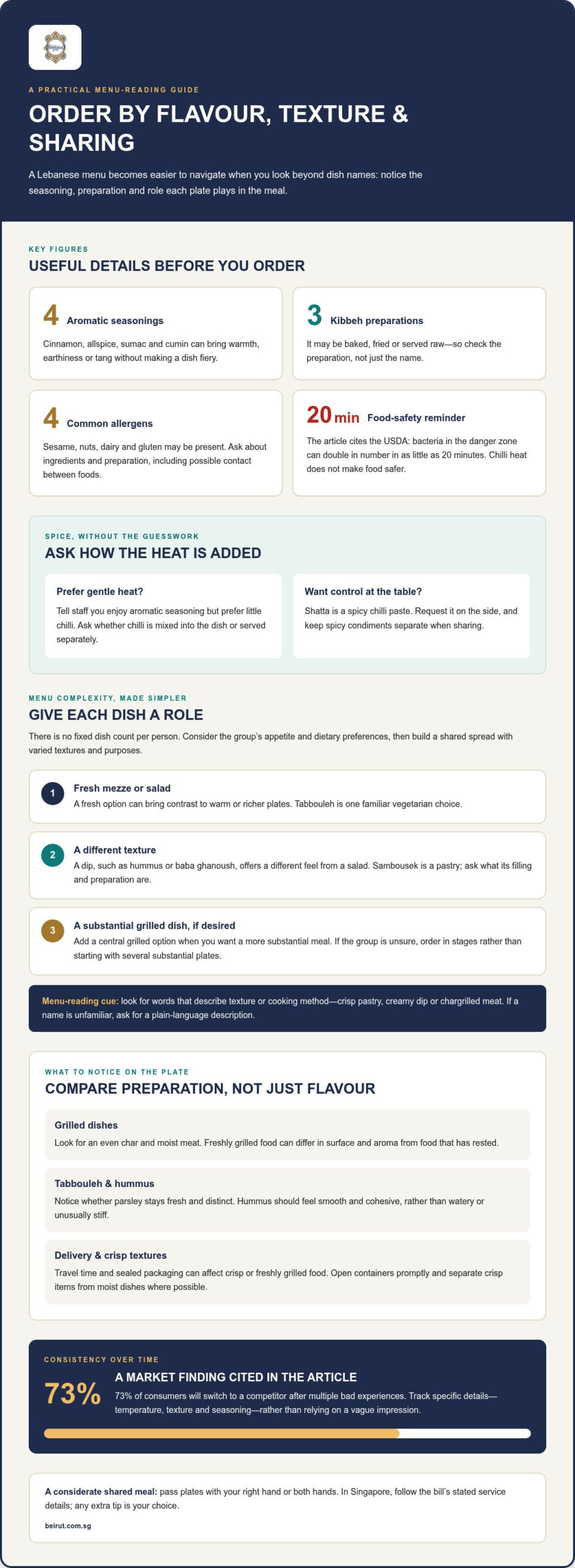
Lebanese cooking often builds depth with cinnamon, allspice, sumac and cumin rather than relying on chilli heat. That distinction matters when ordering: a dish can taste bold, earthy or tangy without being fiery. If you prefer mild flavours, ask whether chilli is mixed in or served separately. Shatta, a spicy chilli paste, adds heat, so request it on the side if you want to control each bite.
Use a simple approach: describe your comfort level, then ask which dishes suit it. For example, say you enjoy aromatic seasoning but prefer little chilli. This helps staff guide you towards a comfortable balance without losing a dish’s distinctive flavours. When sharing, keep spicy condiments separate so everyone can season their own portion.
Food safety is separate from spice preference. Bacteria in the danger zone can double in number in as little as 20 minutes, according to the United States Department of Agriculture. Don’t treat a fiery taste as evidence that food is safer; heat from chilli is not a substitute for safe handling. This is a useful distinction when avoiding common mistakes when ordering Lebanese food, especially across a meal of several shared plates.
Tabbouleh, falafel, baba ghanoush and stuffed grape leaves are familiar vegetarian options, but recipes and preparation can affect whether they’re vegan, gluten-free or dairy-free. If you have dietary requirements, ask about ingredients and preparation rather than assuming a dish meets every restriction based on its name.
At a Lebanese meal, pass plates with your right hand or both hands. In Singapore, follow the bill’s stated service details and treat any extra tip as your choice. Gracious sharing matters more than tipping.
2. Consistency in food quality
Judge consistency by details you can observe, not by one dramatic flavour or presentation. With grilled dishes, look for an even char and moist meat; with tabbouleh, notice whether the parsley stays fresh and distinct. A dip such as hummus should feel smooth and cohesive, not watery or unusually stiff. Comparing these qualities across dishes gives you a clearer sense of preparation than judging a meal by one bite.
Temperature and timing affect texture. Freshly grilled food has a different surface and aroma from food that has rested, while crisp bread can soften when it meets steam or sauce. For a balanced spread, pair contrasting preparations, such as a fresh salad with a warm grilled dish. Notice whether herbs, citrus and seasoning remain distinct, rather than letting one strong element overwhelm the plate.
In Singapore, delivery and dining in can differ because travel time and sealed packaging affect texture, especially for crisp or freshly grilled food. Portions depend on the dish and serving format, so compare the menu description and intended sharing style rather than assuming takeaway is smaller. For delivery, open containers promptly and separate crisp items from moist dishes where possible. For diners exploring multicultural dining at home in Australia, platforms like Gonje deliver specialty foods and restaurant meals straight to your door.
Common allergens in Lebanese dishes include sesame, nuts, dairy and gluten. Tahini contains sesame; baklava may contain nuts and wheat; labneh is dairy-based, while bread and pastry commonly contain gluten. If you have an allergy, identify the specific ingredient and ask about preparation and possible contact between foods before ordering.
Consistency also means paying attention to the same dish across visits. A market finding reports that 73% of consumers will switch to a competitor after multiple bad experiences. Keep track of concrete details, such as temperature, texture and seasoning, rather than relying on a vague impression. That makes it easier to identify what you enjoy and order accordingly next time.
For a considered meal in Singapore, explore the Lebanese dining experience and choose dishes that suit how you want to enjoy them.
3. Menu complexity
A Lebanese menu often moves from small mezze to substantial grilled dishes, with different names describing distinct preparations. Read each description for its ingredients and cooking method instead of choosing by name alone. Kibbeh, for example, can be baked, fried or served raw, changing its texture and character. Sambousek is a pastry, while a dip or salad offers a different pace and feel at the table.
For a clearer order, decide what role each dish should play. Choose a few mezze to share, then add a central grilled dish if you want a more substantial meal. A table might combine a fresh salad, a warm pastry and a grilled option, creating contrast without ordering several dishes that serve the same purpose. This makes a complex menu easier to navigate and keeps the meal varied.
Group orders need a little coordination. To avoid ordering too much or too little, count the diners, consider their appetites and dietary preferences, then choose dishes with varied roles: mezze to share, followed by a main if desired. If the group is unsure, add dishes in stages rather than ordering several substantial plates at once.
Menu descriptions also help you distinguish familiar preferences from unfamiliar ingredients. Look for words that signal texture, such as crisp pastry, creamy dip or chargrilled meat, and check whether a dish includes a sauce or filling. If a name is unfamiliar, ask for a plain-language description before ordering. This small step can prevent duplicate choices or an unexpected texture.
Lebanese hospitality centres on a table made for sharing, not a rigid sequence of individual courses. Let the group’s appetite guide the spread, and leave room for a contrasting finish such as baklava. When each choice serves a clear purpose, the menu becomes an invitation to explore rather than a puzzle.
4. How many dishes should you order per person at a Lebanese restaurant?
There’s no fixed dish count per person at a Lebanese restaurant. Mezze is traditionally served as several small plates at the start of a meal, creating a shared spread rather than one large individual portion for each diner. First decide whether your group wants mezze alone or a fuller meal with substantial dishes afterwards.
Let appetite and dish size guide your order. A table sharing hummus, tabbouleh and another mezze has different needs from one adding grilled mains. For a lighter meal, focus on small plates; for a more substantial one, include dishes that offer different roles or textures. The mix matters more than counting identical portions for everyone.
Consider the group before choosing. Note who prefers vegetarian dishes, who wants grilled food and whether anyone has dietary restrictions. Then choose variety to suit those needs. For example, a fresh salad and a dip can complement a grilled dish, while several similar fried pastries may make the spread feel repetitive.
If you’re unsure how much the table will enjoy, begin with a considered selection of mezze and add more once you see what suits the group. This avoids ordering a large spread before diners know their appetites. Keep the menu descriptions in view, since sharing plates and individual mains serve different purposes.
Lebanese meals value abundance and conversation, but a generous spread needn’t mean ordering without a plan. Choose dishes that the group can share, balance lighter and more substantial preparations, and leave space for the meal to unfold. For a table in Singapore, plan a Lebanese meal for sharing around your group’s appetite and preferences.
Sharing multiple dishes, including mezze, is common at Lebanese restaurant meals. Lebanese mezze is known for its diverse, abundant spread and emphasis on sharing.
Beirut Grill: Mixed Grill
Beirut Grill’s Mixed Grill is a straightforward way to explore a shared Lebanese meal. It gives the table a substantial centrepiece, while Hummus adds a creamy contrast and Vegetarian Kebab offers a meat-free choice. This combination turns the menu advice into a practical order without requiring everyone to choose the same dish.
For a more leisurely meal, Lebanese Wine can accompany the spread while the focus stays on the dishes and company. Choose the Mixed Grill when your group wants a substantial grilled centrepiece, then add complementary options to suit your appetite and preferences.
Visit beirut.com.sg to explore Beirut Grill’s menu, or contact Beirut Grill to plan your meal.
Make Your Next Meal Your Own
Let your next Lebanese meal be a small act of discovery: choose one familiar flavour, then leave room for something new. This keeps the table personal rather than prescriptive, whether you’re gathering with friends or settling in for a quiet dinner. The pleasure comes from building a spread that suits your group, not following a fixed formula.
At Beirut Grill, a Mixed Grill can anchor the table, with Hummus alongside and Lebanese Wine to accompany the meal. Use those choices as a starting point, then shape the occasion around the people sharing it. A thoughtful order needn’t be elaborate; a few well-matched plates can make space for conversation and curiosity. The same spirit guides avoiding common mistakes when ordering Lebanese food: make choices that suit your appetite and taste, and let the meal unfold at its own pace. Contact Beirut Grill to plan your order, and look forward to a welcoming table in Singapore.
Frequently Asked Questions
What are the most common mistakes when ordering Lebanese food?
Common mistakes include choosing several dishes with the same texture, ordering only substantial plates or overlooking ingredients that affect dietary needs. A practical way to avoid mistakes when ordering Lebanese food is to scan the menu for contrast: pair something fresh with something grilled, and consider whether the group wants a light or filling meal. Check dish descriptions for fillings, sauces and preparation styles before deciding.
How do you choose between mezze, mixed grills, and à la carte dishes?
Choose mezze if your table enjoys sampling and sharing, a Mixed Grill for a central selection of grilled meats, or à la carte dishes when diners want individual choices. You can also combine formats: share a few mezze, then order a main for anyone wanting a more substantial portion. For example, a diner who prefers vegetables can choose separately while others share grilled dishes.
How spicy are Lebanese dishes, and can you request mild or extra spicy?
Lebanese dishes are often aromatic rather than very hot, with spices such as cumin, cinnamon and allspice adding fragrance and depth. Shatta, a chilli paste, brings extra heat. If you prefer mild food, ask about chilli before ordering; if you want more heat, ask whether shatta can be served alongside the dish. Adding it gradually lets each diner adjust their own portion.