
A spoonful of labneh carries the richness of yogurt transformed by time. Labneh is made by straining yogurt to remove its whey, and whole-milk or goat-milk yogurt with salt provides a simple starting point. Understanding what labneh is made from also means understanding the strain: 24 to 48 hours produces a thicker, more concentrated spread.
Labneh is made from yogurt, and the type you choose shapes the result. Whole-milk yogurt makes rich, creamy labneh, while goat-milk yogurt has a distinct tang. The longer the yogurt drains, the firmer the texture; a shorter strain leaves it soft and easy to scoop.
This guide walks you through choosing your yogurt, seasoning it, and straining it safely in the refrigerator, with practical cues for judging when the texture suits your table. You’ll also learn how to serve the finished labneh, whether you want a soft dip for warm bread or a firmer spread to accompany a generous mezze. In Singapore’s warm climate, the method is straightforward: keep the yogurt chilled as it drains, then savour the delicate balance of creaminess and gentle acidity.
Key Takeaways
- Labneh starts with yogurt, strained to remove whey; salt seasons the mixture.
- Choose whole-milk yogurt for a creamy result or goat-milk yogurt for a distinct tang.
- Strain for 24 to 48 hours, adjusting the time to get the softness or firmness you want.
- Keep the yogurt chilled while it drains, then use the finished labneh as a dip or spread.
- For a Lebanese meal in Singapore, Beirut Grill’s Mixed Grill offers a savoury next course to explore.
Straining time and texture
- Before you begin, gather a bowl, a fine-mesh sieve and clean cheesecloth. Rest the sieve over the bowl with space beneath it for the whey to collect. Line the sieve with several layers of cloth, then spoon in the yogurt. Clean, tightly woven muslin also works: it should hold the yogurt while letting liquid drain through. Keep the setup stable in the refrigerator.
- Straining removes whey, the thin liquid that separates from the yogurt solids. Gather and tie the cloth edges, or fold them over the yogurt. If needed, place a small plate on top to keep the bundle contained, but don’t press hard. Gentle gravity helps create an even texture. Set the bowl and sieve in the refrigerator so the yogurt drains while chilled.
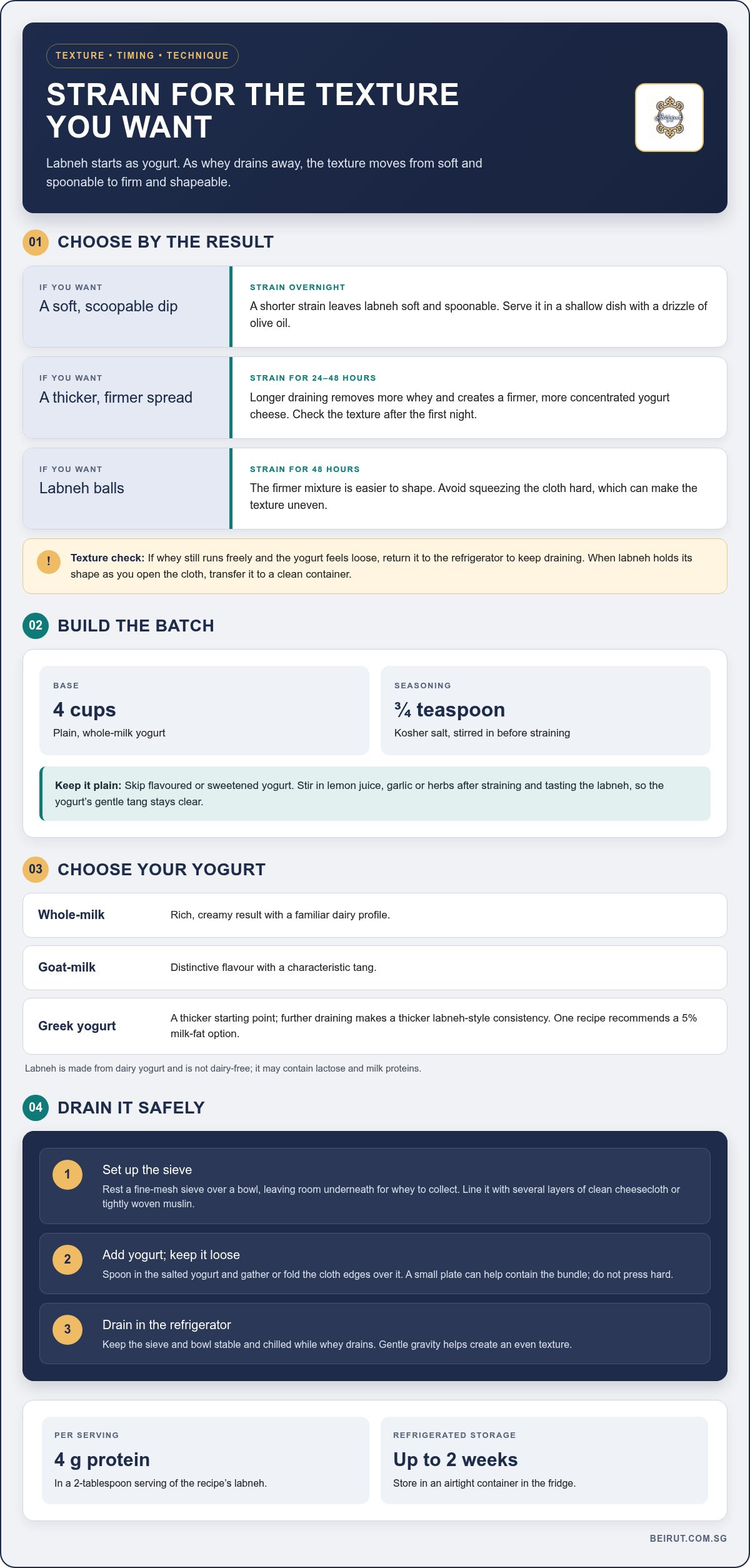
- Choose the draining time by the texture you want. Overnight straining gives a soft, spoonable labneh, while 24 to 48 hours creates a thicker, firmer yogurt cheese. Check the bowl after the first night: if whey still runs freely and the yogurt feels loose, let it continue draining. For labneh balls meant for preservation in olive oil, strain for 48 hours so the mixture is firm enough to shape.
- Check the cloth and collected whey before removing the labneh. If liquid is still draining, return the bundle to the sieve in the refrigerator. If the labneh holds its shape when you open the cloth, transfer it to a clean container. A shorter strain makes a smooth dip for olive oil, while a longer one creates a dense spread. Avoid squeezing hard, which can make the texture uneven.
- Labneh provides protein: a 2-tablespoon serving of the recipe’s labneh contains 4 g of protein. Store it in an airtight container in the fridge, where it keeps for up to 2 weeks. For serving, spoon the soft version into a shallow dish and finish it with a drizzle of olive oil; keep firmer labneh chilled until you’re ready to shape or spread it.
Labneh ingredients
- Choose plain, full-fat yogurt as the base. A simple homemade version uses yogurt and salt as its two ingredients; straining removes whey and concentrates the yogurt into a tangy, creamy cheese. For a practical batch, start with 4 cups of whole-milk yogurt. Avoid flavoured or sweetened yogurt, since added sugar and fruit would change the savoury character of the finished labneh.
- Season the yogurt before straining so the salt disperses evenly. Stir 3/4 teaspoon of kosher salt into 4 cups of yogurt until no crystals remain on the surface or around the bowl. Salt sharpens the yogurt’s mild acidity and gives each spoonful a balanced savoury edge. Since salt grains vary in size, measure the listed amount rather than estimating by eye.
- Prepare the straining setup after mixing. Set a fine-mesh sieve over a deep bowl, line it with clean cheesecloth, then spoon in the salted yogurt. Several layers help hold the thick solids while whey drains into the bowl. Keep the cloth’s edges clear of the collected liquid, and don’t let the sieve rest against the bowl’s base. This simple arrangement separates the ingredients without adding heat.
- Keep the ingredients simple while the yogurt drains. Stir in lemon juice, garlic or herbs after straining and tasting the plain labneh. That keeps the yogurt’s gentle tang clear and lets you vary the toppings for different portions. For example, finish one bowl with olive oil and a sprinkle of za’atar just before serving.
- Use the strained yogurt as a cheese-like spread, dip or accompaniment, then tailor each serving. Labneh’s roots lie in the Levant of the Middle East, where strained yogurt belongs naturally among generous mezze. To explore those flavours at a table in Singapore, discover Lebanese mezze dining. At home, keep additions separate until serving; fresh herbs, garlic or a measured sprinkle of seasoning can then complement the creamy base without masking it.
The recipe uses a heaping ¼ teaspoon of sea salt, while the labneh recipe calls for a small pinch. These examples show how modest seasoning lets the yogurt remain the main ingredient. Taste the strained labneh before adding more. A commenter says they use two litres of Greek yoghurt a week to make labneh, showing how this simple combination can fit into regular home cooking. Measure salt to suit your batch and how you plan to serve it.
Whole-milk and goat milk yogurt options
Labneh is made from dairy yogurt, so it can contain lactose and isn’t suitable for people with a milk allergy. Straining changes the yogurt’s texture, but it doesn’t make it dairy-free or remove its milk proteins.
Select Whole-Milk or Goat-Milk Yogurt
Choose plain, full-fat cow’s-milk or goat-milk yogurt for a rich starting point. Goat-milk yogurt brings its own distinctive flavour, while whole-milk cow’s yogurt offers a familiar, creamy profile. Check the container for a plain, unsweetened yoghurt; fruit, flavourings or added sugar can alter the savoury result. A recipe using whole-milk Greek yogurt recommends a 5% milk-fat option.
- Read the ingredient panel before opening the container. Choose plain yogurt without sweeteners or flavourings, then decide whether you prefer a classic dairy taste or the characteristic tang of goat yogurt. Both can be strained into labneh.
- Use plain Greek yogurt for a thicker starting point, or regular plain yogurt for a less-concentrated base. Greek yogurt has already been strained, so draining it further makes a thicker, labneh-style consistency. The starting texture affects how much liquid remains to drain.
Combine Yogurt and Salt
Stir salt evenly through the yogurt before straining, rather than sprinkling it over the finished labneh. One recipe seasons 4 cups of whole-milk yogurt with 3/4 teaspoon of kosher salt. Mixing first distributes the seasoning throughout the batch and gives the strained result a balanced savoury taste. Keep garlic and other flavourings for later, so you can assess the plain base before seasoning further.
- Measure the yogurt into a clean bowl, add the salt, and stir until evenly combined. If using the recipe’s quantities, add 3/4 teaspoon of kosher salt to 4 cups of yogurt. Avoid guessing the amount, since saltiness becomes more noticeable as straining removes whey.
- Transfer the seasoned yogurt to your lined sieve and let it drain in the refrigerator. Taste the finished labneh before adding garlic or extra salt. Serve it plain for a gentler flavour, or stir in garlic after straining for a more aromatic variation. Adjust the seasoning to suit the dish.
What labneh is and its texture and flavour
- Labneh is yogurt transformed by straining, rather than a separate kind of cheese. As whey drains away, the yogurt thickens and its flavour becomes more concentrated. In Middle Eastern mezze, it’s often served as a creamy dip or spread. Its gentle tang comes from the yogurt, while the final texture depends largely on how much whey drains away.
- Match the straining time to the texture you want. After an overnight drain, labneh is generally soft enough to scoop and spread. Straining for 24 hours produces a firmer result, while 48 hours can make it dense enough to shape into balls. These are useful texture cues: choose a shorter drain for dipping, and a longer one when you want labneh to hold its form.
- Taste the labneh before adding a garnish. Its flavour is creamy and tart, with acidity that becomes more pronounced as the yogurt concentrates during straining. A drizzle of olive oil adds a rounded, fruity note, while za’atar brings herbal, savoury character. Sprinkle it over the surface just before serving rather than mixing it into the whole batch.
- Serve soft labneh as a dip with crusty bread, or alongside tomato wedges for a bright, juicy contrast. For a simple mezze presentation, spread it across a shallow plate, make a small hollow with the back of a spoon, then add olive oil and za’atar. A thicker batch works as a savoury spread, holding its shape on bread.
- Use labneh when you want a tangier alternative to cream cheese or mascarpone. It can replace either in cheesecake, adding a more pronounced tartness. Since the substitution changes the flavour, taste the mixture before baking and consider how its acidity will pair with the other ingredients. For savoury dishes, serve a spoonful with sliced tomato or use it to add a cool, creamy contrast to warm bread.
Consider texture when planning ahead. Frozen labneh should be used within three months, although freezing may change its texture after thawing. Keep that in mind when deciding whether to reserve a batch for a smooth dip or a dish where it will be combined with other ingredients. Once thawed, check its consistency before serving and choose a presentation to suit. If the texture has changed, serve it with bread or vegetables and let its tang take centre stage.
Texture also helps you decide how long to strain a fresh batch. Consider whether you want labneh that spreads easily, sits on a spoon or holds its shape on a plate, then serve it to suit. A gentle swirl shows off a creamy texture, while a firmer mound makes a more substantial presentation. Keep the flavour simple as you assess the result: yogurt’s tartness is the defining note, and olive oil or za’atar complements it without obscuring it.
What labneh is made from
- Start with plain, full-fat yogurt and salt. Those are the essential ingredients: straining removes whey and leaves concentrated, creamy yogurt behind. For one recipe, use 32 ounces of plain full-fat yogurt with 1/4 teaspoon of fine-grain sea salt. Avoid sweetened yogurt, since its added flavour won’t suit the savoury spread you’re making.
- Stir the salt through the yogurt before straining. This simple step seasons the mixture evenly, rather than leaving isolated salty spots in the finished labneh. A different recipe uses 4 cups of whole-milk yogurt with 3/4 teaspoon of kosher salt, showing that salt amounts vary by recipe and salt type. Follow one recipe’s measurements instead of combining amounts from separate versions.
- Line a sieve with clean cheesecloth, set it over a bowl, and spoon in the salted yogurt. As it drains in the refrigerator, whey collects below while the solids become thicker and more spreadable. If you’re asking what labneh is made from, this is the defining transformation: yogurt becomes a concentrated, tangy yogurt cheese.
- Check the texture before removing the labneh from its cloth. A shorter drain leaves a creamy spread for scooping; a longer drain makes it firmer for shaping. One recipe yields about 2 cups of labneh from 32 ounces of yogurt, though the final amount depends on how much whey drains away. Save the whey for uses such as pancakes, soups or smoothies.
- Transfer the finished labneh to an airtight container and refrigerate it. A simple serving needs little more than a shallow dish, a drizzle of olive oil and a sprinkle of za’atar. For a favorite variation, add garlic after straining, tasting as you season so the yogurt’s tang remains distinct. If you’d rather enjoy this Levantine staple at a table in Singapore, explore Lebanese dining.
Beirut Grill: Mixed Grill
Beirut Grill offers a natural next step when you’d rather enjoy Lebanese flavours than prepare another dish at home. After learning how labneh’s creamy tang complements a meal, explore a Mixed Grill alongside hummus, or choose the Vegetarian Kebab for a meat-free option. Lebanese Wine offers another way to round out the table.
For a relaxed meal in Singapore, these choices bring variety to the table without taking you away from the Levantine flavours behind labneh. Visit Beirut Grill at beirut.com.sg to explore the menu, or contact Beirut Grill to plan your visit.
Let Your Next Mezze Begin
Knowing what labneh is made from can make a homemade bowl feel like the start of a meal, not its final course. Let its cool, tangy character inspire a wider Lebanese table, where contrasting textures and savoury flavours make each taste part of a shared experience.
At Beirut Grill, labneh fits naturally into a Lebanese meal. Pair it with hummus, enjoy it alongside the Mixed Grill, or choose Lebanese Wine for a more leisurely meal. Each offers a different way to explore the flavours that first drew you to labneh.
If you’d like to savour labneh as part of a Lebanese dining experience in Singapore, contact Beirut Grill about labneh. Let curiosity lead you to your next memorable meal.
Frequently Asked Questions
What is Labneh (Labne)?
Labneh, also spelled labne, is a thick, tangy dairy food made by draining yogurt. In Levantine cooking, it’s served as a dip, spread or part of a mezze table. Think of it as a bridge between yogurt and soft cheese: a spoonable version pairs well with bread, while a firmer one can be shaped for serving. Its texture depends on how much whey drains away.
What To Do With The Whey?
Use leftover whey in recipes that benefit from a gently tangy liquid. Stir it into pancake or cornbread batter, blend it into a smoothie, or add it to soup. Replace some of the recipe’s liquid first rather than adding a large amount at once, since whey’s acidity can affect the flavour. Refrigerate the whey in a clean, covered container until you’re ready to use it.
What ingredients is labneh made from?
To understand what labneh is made from, start with plain yogurt and salt. For example, one recipe seasons 4 cups of whole-milk yogurt with 3/4 teaspoon of kosher salt before straining. The yogurt supplies the creamy base, while salt brings savoury balance. Olive oil, garlic and za’atar are optional ways to finish a serving, not essential ingredients in the basic mixture.
Is labneh made from yogurt or milk?
Labneh is made from yogurt, not directly from fresh milk. Draining separates the watery whey from the thicker yogurt, creating a concentrated dairy food. Milk is used to make yogurt, but for home preparation, the practical starting point is plain yogurt. Choose an unsweetened variety, then season and strain it to your preferred consistency.
How is labneh traditionally made?
Traditionally, salted yogurt is placed in a cloth bundle and left to drain overnight. The whey drains away while the thicker yogurt remains inside, ready to serve by morning. Straining has also helped nomadic communities preserve yogurt. For a home method, use clean, tightly woven cloth over a bowl and keep the yogurt chilled as it drains. The cloth should hold the solids while allowing the whey to escape.
What type of yogurt is used to make labneh?
Choose plain, full-fat yogurt for a rich, creamy result. Cow’s-milk and goat-milk yogurt are both options. Plain Greek yogurt also works, though its already-thick consistency affects how quickly it reaches your preferred texture. Check the container for added sugar or flavourings, which can clash with a savoury preparation. Whole-milk yogurt is a useful choice for a fuller mouthfeel.
How long does it take to strain yogurt into labneh?
Straining can take from overnight to 48 hours, depending on the desired firmness. Check the yogurt after an overnight drain for a soft, scoopable consistency. Leave it longer if you want a denser spread; at 48 hours, it can become firm enough to shape into balls for olive-oil preservation. Keep the setup in the refrigerator throughout, and use texture as your cue for when to stop.
What does labneh taste and look like?
Labneh looks like a smooth, pale cream spread and tastes tangy, savoury and gently lactic. A shorter strain leaves it soft enough to spoon, while further draining makes it denser and more compact. Serve it in a shallow dish with olive oil, or spread a firmer batch on bread. Its mild acidity also pairs well with fresh tomato and herbs.