
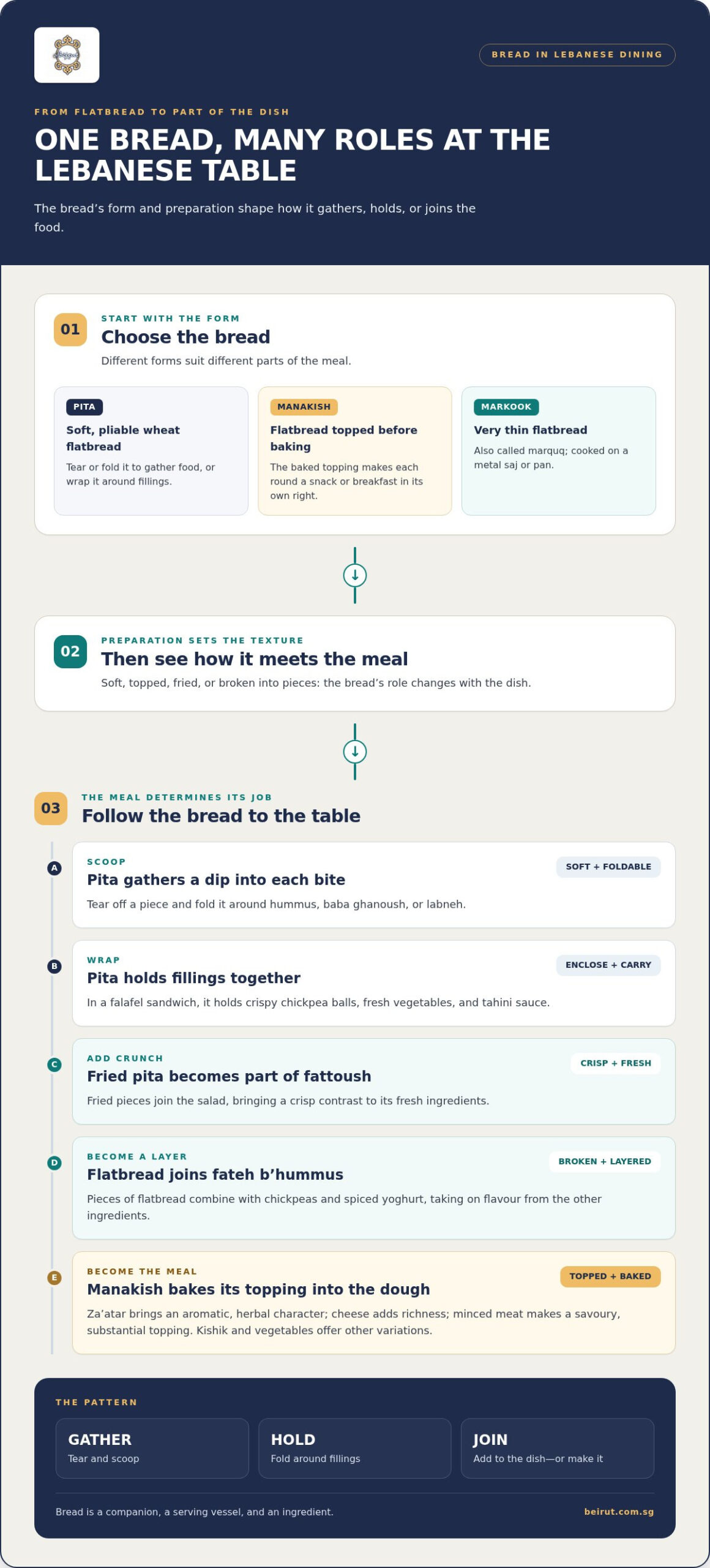
In Lebanese dining, bread is part of the meal’s structure, not merely something served alongside it. The role of bread in Lebanese meals ranges from soft pita for scooping hummus, baba ghanoush and labneh to crisp pieces folded into fattoush or flatbread wrapped around grilled meat. Manakish, topped with za’atar, cheese or minced meat, makes bread a meal in its own right.
It’s easy to think of bread as a simple accompaniment, but its texture and form shape how Lebanese dishes are shared and enjoyed. A warm piece gathers a savoury dip; tender flatbread holds meat and fresh vegetables; a crisp bite adds contrast to a salad.
Here, you’ll discover how familiar Lebanese bread varieties fit into everyday dining and traditional meals, what makes manakish toppings distinctive, and how flatbreads complement grilled chicken, lamb and beef. These customs reveal bread as both a practical part of the meal and an expression of Lebanese hospitality.
Key Takeaways
- Recognize manakish as a flatbread topped with za’atar, cheese or minced meat, enjoyed as breakfast or a snack.
- See how pita moves beyond the side of the plate: it scoops dips, forms part of fattoush and wraps around sandwich fillings.
- Compare Lebanese breads such as pita, manakish and thin markook to understand how their different forms suit different dishes.
- Pair flatbread with grilled chicken, lamb or beef to hold savoury fillings and bring bread, meat and vegetables together.
- Read Lebanese meals through the sharing traditions of mezze, where bread helps bring dips and small dishes to the table.
Manakish flatbread and its toppings
Lebanese pita is served at breakfast, lunch and dinner as a soft wheat flatbread alongside other dishes. Tear off a piece to scoop hummus, baba ghanoush or labneh, or fold it around vegetables and meat. Its pliable shape makes pita useful as both an accompaniment and a way to gather food into each bite.
Manakish gives flatbread a different role: its topping is baked onto the dough, so each round can be eaten as a complete snack or breakfast. Familiar toppings include za’atar, cheese and minced meat. Each brings a different balance: za’atar adds an aromatic, herbal character, cheese brings richness, and minced meat makes the topping savoury and substantial.
Manakeesh may also be filled with kishik or vegetables, offering variations beyond the best-known toppings. In Lebanon, bakeries sell them early in the morning, traditionally baked in a flame oven. The warm dough and topping come together in an easy-to-eat-by-hand meal. Manakish is also enjoyed as a favourite breakfast or snack during holidays.
The topping helps determine the occasion for a manakish. Za’atar suits a simple morning meal, while cheese or minced meat can make the flatbread more filling. Vegetable fillings offer another option. Rather than serving the topping separately, the baker spreads or arranges it over the dough before baking, bringing the flavours together as the surface cooks.
Flatbread also joins chickpeas in Lebanese fateh b’hummus, a dish combining chickpeas, pieces of flatbread and spiced yoghurt. The bread is not simply placed beside the bowl: broken into pieces, it becomes part of the layers, taking on flavour from the chickpeas and yoghurt. The contrast between soft bread and creamy, savoury components gives pita a distinct role in the recipe.
These examples show how form affects use. Plain pita can scoop dips or hold sandwich fillings; topped manakish is eaten as a baked dish; and pieces of flatbread become an ingredient in fateh b’hummus. In each case, wheat dough provides a familiar base, while toppings, fillings or accompanying ingredients shape the meal. This is the role of bread in Lebanese meals: a versatile element that can accompany, contain or become the dish itself.
Bread as part of Lebanese dining
At breakfast, lunch or dinner, pita may accompany dishes, become part of a salad or hold sandwich fillings. It lets diners scoop, wrap and serve food in simple, practical ways.
Scooping Food with Bread
To scoop with bread, tear off a piece and fold it around a portion of food. With hummus, baba ghanoush or labneh, bread gathers dip into a satisfying bite without a separate utensil. This custom explains why pita belongs at the table, rather than being treated as an optional side.
Wrapping and Serving Food
Bread can also enclose fillings or carry food from plate to mouth. In a falafel sandwich, pita holds crispy chickpea balls, fresh vegetables and tahini sauce; in other meals, diners fold it around ingredients as they eat. This flexible use makes bread a serving vessel as well as a companion to dishes.
Bread’s role changes with the meal. At breakfast, pita can be eaten with olive oil or sprinkled with za’atar. At lunch or dinner, it may sit beside dips, accompany cooked dishes or become part of a sandwich. The same wheat flatbread shifts from a simple bite to a practical way of serving food.
Fattoush shows how bread can become part of a dish instead of remaining beside it. This Lebanese salad includes fried pieces of pita, adding crisp texture among fresh ingredients. The contrast makes each bite different: bread contributes crunch, while vegetables bring freshness. It’s a clear example of Lebanese cooks making bread part of a composed plate.
In other meals, toasted pita may be served with mulukhiyah stew. Freshly baked pita can also be drizzled with olive oil or sprinkled with za’atar. Preparation affects bread’s place at the table: toasted pieces add texture to stew, while soft bread can accompany savoury dips or be enjoyed simply with a seasoned finish.
A falafel sandwich demonstrates the wrapping method particularly well. Pita keeps the chickpea balls, vegetables and tahini together, making the combination easy to hold and eat. By contrast, fried pita is broken into fattoush, while bread served with a dip is torn as needed. The dish determines whether bread encloses, joins or gathers the food.
For a Singapore meal, Lebanese fattoush offers a familiar example of bread contributing texture within a salad. Recognizing these uses helps you notice how Lebanese dining gives one ingredient several purposes, from the first scoop of dip to the crisp pieces woven through a shared dish.
Bread varieties in Lebanese cuisine
Lebanese bread comes in several forms, each suited to a particular meal or setting. Nutritional differences depend on ingredients and preparation: plain wheat pita differs from sesame-coated ka’ak or cheese-topped manakish. Flour, toppings, fillings and cooking methods all influence what each bread contributes to a meal.
Pita is the familiar soft wheat flatbread, while markook, also called marquq, is notably thin. Marquq is cooked on a metal saj or pan, giving it a different feel and use from thicker breads. In some Arabic dialects, pita is called “esh,” a word that literally translates to “life.” The name reflects bread’s close place in daily food traditions.
The wider range includes ka’ak, katma, manakish, fatayer and khubz tannoor, alongside pita and markook. These names describe distinct bread forms, not interchangeable labels. A filled fatayer, for example, is shaped as a pastry, while khubz tannoor is associated with a tannoor oven. Recognizing the names helps readers understand the variety found across Lebanese meals.
Manakeesh bring dough together with toppings, while fatayer are filled pastries. Bakery traditions give each a particular context: in Lebanon, manakeesh are traditionally baked in a flame oven and sold early in the morning. Their dough can be topped or filled with za’atar, kishik, cheese or vegetables. These additions turn bread from a plain accompaniment into a more substantial bite.
Regional ka’ak offers another example. In Tripoli, North Lebanese flat ka’ak is a popular breakfast bread, often served with cheese. Beirut’s ka’ak alasreya takes a different form: a sesame-covered, handbag-shaped savoury roll sold by cart vendors. It can be eaten by hand as a snack or enjoyed with tea at breakfast. Sesame gives this variety a distinct ingredient profile from plain pita.
Meshtah, a regional flatbread associated with Ramadan suhoor, shows how bread can reflect the rhythm of a particular occasion. Its place differs from everyday pita or breakfast ka’ak. Together, meshtah, markook, fatayer and khubz tannoor reveal a cuisine with breads suited to different textures, fillings and settings.
For a useful comparison, look first at the form, then at what is added. Plain wheat pita, sesame ka’ak, filled fatayer and topped manakish differ in ingredients and preparation, so their nutritional profiles differ too. These details show why Lebanese bread is not one single food, but a family of breads with varied roles at the table.
Plain wheat pita has a different ingredient profile from sesame-coated ka’ak, while manakish and fatayer gain additional ingredients from toppings or fillings. These additions make the breads nutritionally different and can make topped or filled bread a more substantial bite than plain pita.
Bread with grilled meats
Lebanese bread pairs naturally with grilled chicken, lamb and beef, bringing the meal’s components together. It can accompany meat on a plate or become a soft wrap around it. The serving style guides the choice: a platter lets diners combine bites themselves, while a wrap gathers meat and other fillings into each mouthful.
With grilled chicken, bread offers a mild, tender counterpoint to the meat’s savoury char. Lamb and beef bring deeper flavours that plain flatbread can balance without competing with. Tear off a piece to eat with the meat, or fold it around a portion. Either way, bread makes the grilled meat easy to enjoy alongside other dishes.
Shawarma illustrates the wrap’s practical purpose. Thinly sliced, spiced meat, often chicken or lamb, is cooked on a rotating spit and served in wraps or on plates. In a sandwich, bread holds the meat with vegetables and sauces. Each bite combines those elements, while a plate lets diners choose how much bread, meat and accompaniment to bring together.
Kebabs and kofta show another side of the pairing. At Lebanese national holidays, grilled meats such as these are often served with fresh bread and salads. Bread can be torn to gather meat and salad into a composed bite with savoury, fresh and soft textures. On a shared platter, diners can make each bite a little different.
Salads add freshness alongside grilled flavours, while bread brings a soft, substantial element to the meal. This contrast matters with charred meat: crisp or fresh salad lightens the bite, and bread carries the meat’s seasoning. Rather than treating bread as decoration, consider how it connects the meat with the other foods served alongside it.
The serving format shapes how bread works at the table. With meat on a plate, tear off pieces as needed and combine them with salad or grilled meat. For a wrap, place the meat and chosen accompaniments inside, then fold the bread around them. These approaches suit different ways of eating, from a composed platter to a handheld sandwich.
Bread’s role in traditional Lebanese meals
In Lebanese hospitality, bread helps make a meal shared and interactive. It accompanies mezze, gathers dips and connects small dishes with the diners around the table. The tradition is less about bread as decoration and more about bringing different tastes together.
Mezze is central to Lebanese dining: small dishes are served as appetizers, often with groups of 4 – 6 small plate dishes served in a course. Hummus, baba ghanoush and labneh are classic examples that bread can scoop. A torn piece lets diners take a little dip at a time, moving between plates and flavours as the meal unfolds.
This way of eating gives bread a quiet role in hospitality. Rather than eating each dish in isolation, diners share a spread and choose their own combinations. A piece of bread can carry creamy labneh, then gather hummus, making each mouthful a little different. The welcome comes through the variety on the table and the ease of sharing it.
Celebrations also bring traditional dishes to the table. Lebanese mezze at celebrations can include hummus, baba ghanoush, tabbouleh and falafel. Bread fits naturally among these plates, helping diners taste dips alongside fresh salads and other small dishes. It offers a practical way to enjoy the spread without making one dish the sole focus.
Eid celebrations have their own food traditions. Families prepare kibbeh in fried, baked or raw forms during Eid, while mezze may accompany festive gatherings. Bread’s role is not limited to one ceremonial recipe: it supports the wider meal, letting guests scoop and combine foods served together. This distinction shows how bread contributes to hospitality without confusing it with the defining dish of a celebration.
At home or around a festive table, the same principle applies: bread makes shared food easier to taste and serve. With hummus, tear off a small piece to scoop a portion; with baba ghanoush or labneh, use it to gather the dip without overwhelming the bite. These simple gestures let the texture of the bread and flavour of each mezze remain distinct.
The takeaway is that bread belongs to Lebanese tradition through its place in the shared meal. It links mezze, supports the tasting of dips and helps a spread feel welcoming. To explore these customs through Lebanese dining in Singapore, discover Lebanese meals and traditions.
Beirut Grill: Mixed Grill
Beirut Grill offers a natural next step for exploring how grilled meats and shared dishes fit into Lebanese dining. Its Mixed Grill brings grilled flavours into focus, while Hummus connects with the tradition of enjoying dips as part of a meal. Together, these choices let you experience two complementary parts of the food culture discussed here.
If you prefer a meat-free option, Vegetarian Kebab offers another way to explore Lebanese grilling. Lebanese Wine can accompany the meal for those who want to include a traditional beverage. Choose a combination that suits your table, whether you’re curious about grilled dishes, mezze or both.
Visit Beirut Grill’s website to explore the restaurant’s Lebanese dining experience.
Make Your Next Meal a Shared Experience
Understanding the role of bread in Lebanese meals can change how you approach the table: not as a collection of separate plates, but as an invitation to taste, combine and share. Bring that spirit to your next meal in Singapore by choosing a spread that lets you explore different textures and flavours at your own pace.
At Beirut Grill, Mixed Grill and Hummus bring grilled dishes together with a classic dip, while Lebanese Wine can complement the meal. Let curiosity guide your choices, whether you’re discovering Lebanese dining for the first time or returning to familiar flavours. The pleasure is in taking time over the table and finding combinations you enjoy.
Contact Beirut Grill about Lebanese dining and plan a welcoming meal to look forward to.
Frequently Asked Questions
What types of bread are commonly eaten in Lebanon?
Common varieties include pita, markook, manakish, ka’ak, katma, fatayer and khubz tannoor. Their names point to different forms: fatayer are filled pastries, while manakish are dough breads with toppings or fillings. Ka’ak also varies by region, from North Lebanese flatbread to a sesame-covered roll associated with Beirut. This range explains why “Lebanese bread” can refer to more than one style.
What role does bread play in mezze and shared dining?
Bread gives diners a simple way to move between small dishes and create individual bites from a shared spread. A mezze course may include groups of 4 – 6 small plate dishes, such as tabbouleh, falafel and dips. Rather than tasting each plate alone, diners can combine a little bread with different foods, making the meal more interactive and allowing each person to choose their own pairings.
Which Lebanese dishes are traditionally eaten with bread?
Bread commonly accompanies hummus, baba ghanoush and labneh, and toasted pita may be served with mulukhiyah stew. Fattoush incorporates pieces of pita, while falafel can be served in a sandwich with vegetables and tahini. These examples show different ways to enjoy bread: alongside a dish, incorporated into it or used to hold several ingredients together.
What are the differences between markouk, pita, and other Lebanese breads?
Markook, also called marquq, is an extremely thin bread cooked on a metal saj or pan. Pita is a wheat-flour flatbread with a softer, more substantial form. Manakish differs through its toppings, while fatayer are filled pastries. Comparing thickness, shape and filling helps distinguish these breads, especially when deciding whether a dish calls for a wrap, an accompaniment or a filled bite.
When is bread served during a traditional Lebanese meal?
Pita can be part of breakfast, lunch and dinner, so its place isn’t limited to one course. At breakfast, it may be served with olive oil or za’atar; during a meal, it can accompany dips or other dishes. Manakish is also enjoyed as breakfast or a snack. Bread’s form depends on the meal, from a simple flatbread to a topped or filled option.
How do Lebanese breads vary by region and occasion?
Regional and seasonal customs shape which breads appear. In Tripoli, North Lebanese flat ka’ak is popular at breakfast and often served with cheese; Beirut’s ka’ak alasreya is a sesame-covered handheld roll. Meshtah is associated with Ramadan suhoor, while manakeesh are sold at Lebanese bakeries early in the morning. These examples connect bread’s shape and serving occasion to local food traditions.
What are the nutritional differences between common Lebanese breads?
Nutritional differences depend on ingredients and preparation: plain wheat pita differs from sesame-coated ka’ak, while manakish and fatayer include toppings or fillings. These additions can make them more substantial than plain pita.