
What if the secret to a deeply flavourful Lebanese meal lies less in elaborate recipes than in knowing when to chop, season, grill or let ingredients rest? That’s the promise of traditional lebanese cooking techniques: simple ingredients become layered dishes through fresh preparation and careful heat.
If cooking terms feel unfamiliar, or a menu describes ingredients without explaining the method, it can be difficult to picture the result. Grilling can give meat a savoury char, while finely chopped herbs add freshness and texture to mezze. Each choice affects the finished dish, and together they create a meal with plenty of contrast.
Here, you’ll discover how grilling, baking, sautéing and frying shape flavour and texture, and how to recognise their effects on the plate. From Beirut Grill’s charcoal-grilled Mixed Grill and Lamb Kofta to the crisp exterior of fried kibbeh, these methods offer a welcoming way to explore Lebanese food and its tradition of sharing.
Key Takeaways
- Learn how traditional lebanese cooking techniques turn fresh ingredients into dishes with distinct textures and layered flavour.
- See how grilling, frying, simmering and baking create different results, and what flavour and texture cues to look for.
- Use a simple approach at home: prepare ingredients, choose a suitable method, manage the heat and assess the finished texture.
- Notice how cooking method shapes a dish, then look for those contrasts across familiar Lebanese favourites.
What makes traditional Lebanese cooking techniques distinctive?
Traditional lebanese cooking techniques are the recurring ways ingredients are prepared, combined and cooked to create a dish’s character. The method matters as much as the ingredients: chopping, crushing, seasoning and applying heat can turn familiar foods into crisp, tender, bright or deeply savoury bites. Preparation and cooking bring out the character of each ingredient.
That variety belongs to a generous table. Mezze can bring different colours, temperatures and textures together for sharing, while grilled meats and baked pastries add their own contrast. There is no single pattern that every dish or household must follow. For a wider cultural context, explore Middle Eastern culinary traditions alongside this overview of traditional Lebanese cuisine, its ingredients and dishes.
How preparation shapes Lebanese flavour
Before anything reaches a flame or oven, preparation begins shaping the result. Finely chopped parsley blends through a salad; larger pieces keep its flavour and texture more distinct. Mint adds a fragrant lift, while crushed garlic spreads its pungency more evenly than a roughly chopped clove. The same ingredient can taste and feel different depending on how it is cut, crushed or mixed.
Seasoning has an effect at different stages, too. Lemon added to fresh ingredients brings immediate acidity, while garlic or spices worked into a mixture can become more integrated as it rests or cooks. A final scattering of herbs stays vivid and aromatic; flavours carried through cooking tend to mellow. Beirut Grill uses key spices and herbs imported for its Lebanese dishes, reflecting how ingredient character and careful handling work together. Fresh preparation is part of the cooking, not just a preliminary task.
Why one cuisine uses many methods
A Lebanese table invites contrast. Some dishes call for a browned exterior and the smoky notes of direct heat; others are defined by a crisp coating, a soft centre or the gentle melding that comes from simmering. Baking offers another option, enclosing ingredients in pastry or helping a dish cook through evenly. The method depends on the texture and flavour the cook wants, rather than a fixed rule for the whole cuisine.
Practices can also vary between households. A familiar dish may have small differences in seasoning, texture or cooking sequence, reflecting personal preference and family habits. That variety is part of the tradition, not a departure from it. A broader guide to Middle Eastern culinary traditions can help put shared influences and distinct ways of preparing and presenting food into context.
In brief: Lebanese cooking technique means preparing and cooking ingredients with care to shape a dish’s flavour, texture and place at the table. Keep that in mind as you explore the methods ahead: each offers a different expression of Lebanese food.
How traditional Lebanese cooking techniques use heat
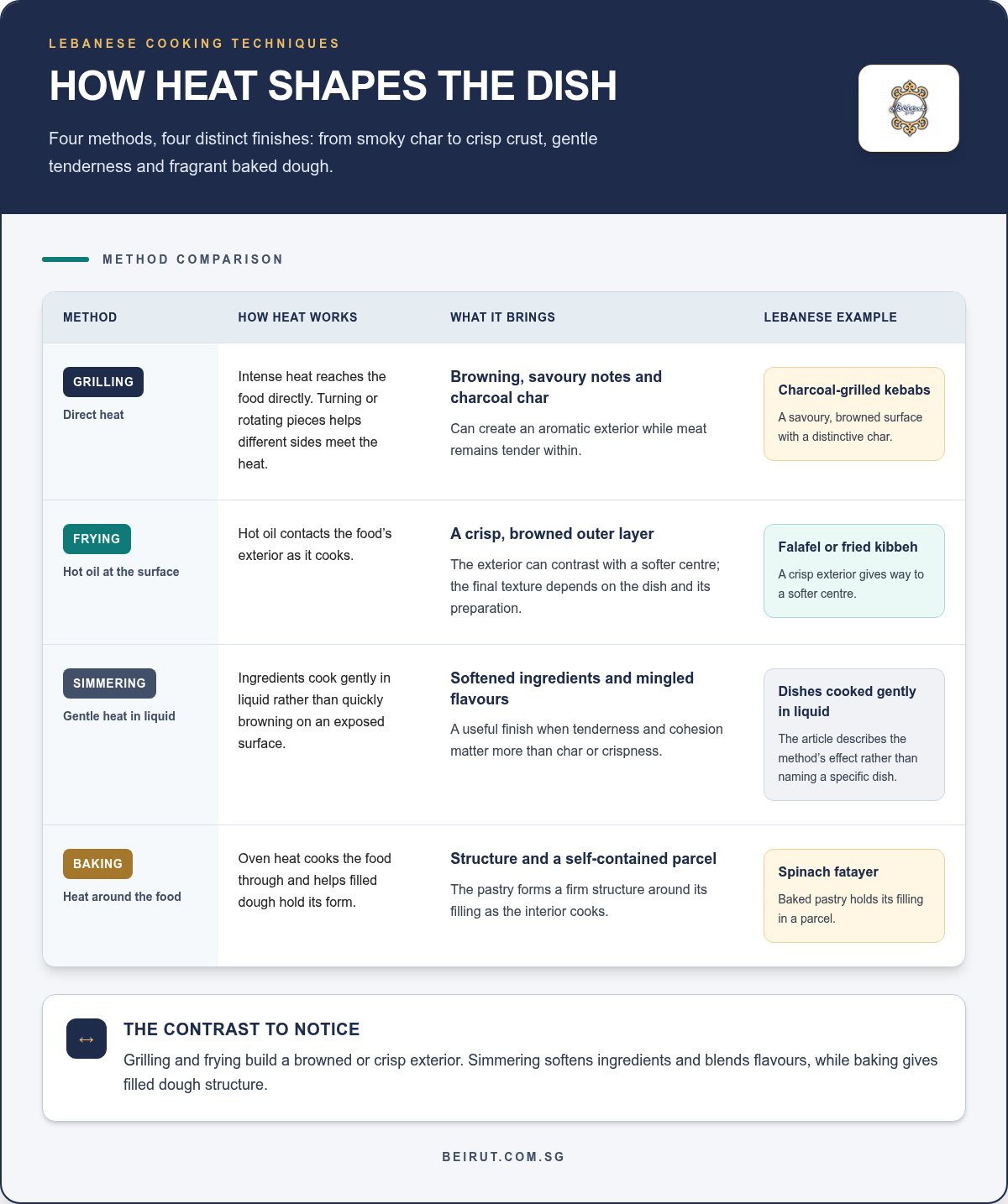
Heat is not a single step with one result. In traditional lebanese cooking techniques, grilling, frying, simmering and baking each guide ingredients towards a different finish. Direct heat can brown and char a kebab; hot oil helps form a crisp exterior on falafel or kibbeh; gentle simmering softens ingredients and allows flavours to mingle; and oven heat cooks dough and fillings into a structured pastry. These methods are related, but they are not interchangeable.
As this overview of traditional Lebanese cooking methods suggests, a dish’s character depends on more than what goes into it. It also depends on how heat reaches the ingredients and the texture the cook wants to bring forward.
Grilling and frying: browning, char, and crispness
Grilling exposes food to intense, direct heat. The surface browns where it meets the heat, developing savoury notes and, over charcoal, a distinctive char. Charcoal-grilled kebabs show how this method can create an aromatic exterior while the meat remains tender within. Turning or rotating pieces helps different sides meet the heat, so one surface is less likely to become overexposed.
Frying works differently: hot oil contacts the food’s surface, encouraging a crisp outer layer. Falafel and fried kibbeh offer a contrast to grilled meat, with a browned exterior giving way to a softer centre. The final texture depends on the dish and how it is prepared, not simply on the fact that it is fried.
Simmering and baking: tenderness and structure
Simmering uses gentle heat in liquid. Rather than quickly browning an exposed surface, it gives ingredients time to soften and their flavours to mingle. It suits dishes where tenderness and cohesion matter more than char or crispness. Baking applies heat around the food in an oven, giving filled dough a firm structure as its interior cooks. Spinach fatayer illustrates this approach: the pastry holds its filling in a self-contained parcel.
Cooking method shapes both texture and flavour, from smoky char to crisp crust, gentle tenderness or fragrant baked dough. These examples explain what each method contributes; they are not complete recipes. Heat intensity, cookware and turning practices can differ between kitchens, so use the desired finish as your guide rather than expecting one universal technique.
- Grilling: Direct heat brings browning and char to kebabs.
- Frying: Hot oil creates the crisp exterior associated with falafel or kibbeh.
- Simmering: Gentle heat helps ingredients soften and combine.
- Baking: Enclosing heat gives filled dough dishes structure.
To experience these contrasts at the table, explore Beirut Grill’s charcoal-grilled dishes alongside falafel and fried kibbeh. Each offers a different expression of how heat can shape a Lebanese dish.
What changes when Lebanese dishes are grilled, fried, or simmered?
A cooking method leaves clues on the plate. Look beyond the dish’s name and notice its surface, tenderness, moisture and aroma: these details reveal how heat has shaped it. In traditional lebanese cooking techniques, the same broad ingredient can take on a different character depending on how it is cooked. The comparisons below describe common tendencies, not guaranteed results. Ingredients, cut size, preparation and heat control all matter.
| Method | Likely texture | Flavour cues | Illustrative dish |
|---|---|---|---|
| Grilling | Browned exterior, often tender within | Savoury, with possible smoky or charred notes | Grilled Shish Taouk or lamb kofta |
| Frying | Crisp outer layer, softer centre | Toasty, rich notes from the browned surface | Falafel or fried kibbeh |
| Simmering | Softened, moist ingredients | Flavours that can meld gently over time | A gently cooked stew |
How to recognise the results of each method
Start with what you can see and feel. Grilled meat may show browned patches or light char, while the centre can remain tender and moist. Falafel and kibbeh are often recognised by a crisp, browned exterior. A simmered preparation tends to look softer and more cohesive. These are observation cues, not promises: the exact result depends on the recipe, ingredients and heat.
Smoky aromas are often associated with grilling, especially over charcoal, while fried foods are easier to identify by their crisp surface. Neither method is better; each offers a different experience. A piece of Shish Taouk or kofta brings the savoury character of grilled meat, while falafel or fried kibbeh offers the contrast of a crisp shell and a tender middle.
Why the same ingredient can taste different
Heat changes more than the outside. Meat exposed to direct heat can develop a browned surface, while gentler cooking in liquid can leave it tender and moist. Chickpeas, too, can be prepared in different ways: their texture and flavour shift with the cooking method, their form and the ingredients combined with them. The main ingredient may stay familiar, but the experience changes.
Preparation shapes the result alongside heat. Cut size affects how quickly ingredients cook and how much surface is exposed; seasoning and finishing ingredients influence the final impression. Lemon or herbs can bring brightness, while spices incorporated earlier may taste more integrated. Traditional lebanese cooking techniques are best understood as a meeting of method, ingredient and intended texture. Notice those contrasts at the table, and a browned edge, tender centre or crisp bite becomes a clue to how the dish was made.
How to understand and practise Lebanese cooking techniques at home
Learning traditional lebanese cooking techniques is easier when you treat each dish as a series of choices rather than a set of mysterious kitchen terms. First picture the result you want: a browned surface, a tender centre, a crisp bite or ingredients softened together. Then choose one method to practise. Focusing on a single technique makes its effect easier to recognise and helps you build confidence without needing to reproduce an entire meal at once.
A simple sequence for learning a new method
Use this order as a flexible guide, not a full recipe. It keeps preparation, heat and observation connected.
- Decide on the texture. Before cooking, consider whether the dish should be crisp, tender, browned or soft. That aim helps you choose a suitable approach, such as grilling, frying, simmering or baking.
- Prepare and organise. Chop, mix and season the ingredients before applying heat. Keep everything ready so you can focus on the food rather than rushing through preparation once cooking begins.
- Manage the heat. Start with a level of heat suited to the method, then observe the food as it cooks. Notice the developing colour and aroma, and adjust the heat if the outside is changing too quickly.
- Assess the result. Look at the surface and check the texture as the food cooks. Note what worked, then adjust one factor at a time the next time you practise.
That last step matters. If you change the method, heat and seasoning all at once, it is harder to understand which choice changed the result. Make one adjustment, and the lesson becomes clearer.
Common technique mistakes and how to avoid them
Overcrowding a pan or cooking surface can hinder browning. Food packed too closely releases moisture into the space between pieces, making it harder for exposed surfaces to brown. Give the pieces room, or cook in manageable batches. That small change makes it easier to see and taste what the method contributes.
Excessive heat can also brown the exterior before the inside is ready. If the surface darkens too quickly, reduce the heat and give the food more time to cook through. Season gradually, tasting as you go where appropriate, since herbs, spices, salt and lemon can each shift the final balance. Avoid relying on fixed timings or quantities when ingredients and equipment differ; colour, aroma and texture offer useful cues.
Practice brings the methods into focus: a small batch of falafel can teach you to notice a crisp exterior, while grilled meat helps you observe surface browning and tenderness. To see how these traditional methods come together across Lebanese dishes, explore Beirut Grill’s Lebanese dishes, including charcoal-grilled meats, falafel and fried kibbeh.
Experience traditional Lebanese techniques through Beirut Grill’s dishes
A meal offers a vivid way to recognise the methods explored in this guide. At Beirut Grill, charcoal-grilled Mixed Grill, Lamb Kofta and Shish Taouk bring different expressions of grilled meat to the table, while falafel and Fried Kibbeh offer the contrasting appeal of fried preparations. Look for browned surfaces, aromatic seasoning and varied textures, and the cooking technique becomes part of the experience, not just a term in a recipe.
From charcoal-grilled meats to mezze
Charcoal-grilled meats carry the sensory character of direct heat: savoury browning and, depending on the cooking, hints of char. Mixed Grill brings an assortment of grilled meats together, while Lamb Kofta and Shish Taouk let diners appreciate their own forms and seasonings. These dishes offer a practical reference for noticing how grilling shapes the surface and aroma of meat.
Falafel and Fried Kibbeh provide another contrast. Their fried exteriors meet a softer centre, creating a crisp bite rather than the browned, flame-kissed surface associated with grilling. Served alongside grilled dishes, they make the differences between methods easy to appreciate. Beirut Grill also uses key spices and herbs imported for its Lebanese dishes, bringing ingredient character into the wider story of preparation and flavour.
A meal that brings culinary traditions together
Lebanese dining can bring a range of preparations to one table, where mezze, grilled dishes and other favourites offer contrasting tastes and textures. Hummus provides a creamy counterpoint, while tabbouleh brings a fresh herbal note. Alongside grilled meats or fried bites, these dishes invite diners to move between different flavours and textures at an unhurried pace. There is no fixed pattern to follow; the pleasure is in the variety and the shared experience.
This way of thinking also connects Lebanese food to the wider Mediterranean table, where fresh ingredients, varied preparations and shared meals are familiar themes. A broader guide to Mediterranean food can offer useful context for those culinary connections, while Lebanese dishes retain their own character and traditions.
Understanding traditional lebanese cooking techniques can enrich the way you read a menu: notice the difference between a charcoal-grilled skewer and a crisp fried bite, then consider how herbs and spices complete each dish. Explore Beirut Grill’s Lebanese menu and discover these techniques through the flavours, textures and generous spirit of the meal.
Let the next meal deepen your curiosity
Understanding traditional lebanese cooking techniques can change how you approach a meal: notice the texture, follow the aroma and savour the differences that make each preparation distinct. Then let curiosity lead beyond the page. Choose mezze to share, enjoy the contrast between charcoal-grilled dishes and crisp fried favourites, and take time to discover how herbs and spices bring their own character to the table.
Beirut Grill brings this culinary heritage into a welcoming dining experience, with charcoal-grilled Lebanese dishes, traditional mezze, and key spices and herbs imported for their distinctive character. Each plate offers another way to appreciate the care behind Lebanese cooking.
Discover Lebanese cooking at Beirut Grill, and enjoy exploring the flavours and traditions one dish at a time.
Frequently Asked Questions
What does “traditional” mean in Lebanese cooking?
“Traditional” describes culinary practices inherited and adapted across families and communities, not an unchanging rulebook. Lebanese cooking has developed over time, and cooks may vary their seasoning, preparation and serving choices. In this guide, traditional lebanese cooking techniques refers to familiar ways of handling ingredients and applying heat, not a claim that every cook follows one canonical recipe. Differences between versions are part of a living food culture.
Is Lebanese food always spicy?
No. Lebanese food does not have one universal level of chilli heat. A dish may be aromatic or lively because of herbs, citrus, garlic or other seasonings without being hot from chilli. When choosing what to eat, consider the dish’s description and your own preference rather than assuming all Lebanese food is spicy. Beirut Grill’s menu includes varied dishes such as hummus, tabbouleh and grilled meats, each with its own character.
Can Lebanese cooking be suitable for vegetarians?
Yes. Lebanese cuisine includes vegetarian-friendly traditions built around vegetables, legumes, grains and herbs. Hummus and falafel are familiar examples, and both appear on Beirut Grill’s menu; other listed options include tabbouleh and spinach fatayer. Ingredients and preparation can differ between recipes, so the name of a dish alone may not tell the whole story. Exploring a range of mezze is one way to discover varied flavours and textures without centring a meal on meat.
How important is bread in Lebanese meals?
Bread often accompanies Lebanese food, serving as a practical way to scoop up dips or bring different elements together in a bite. Its role depends on the dish and setting, though, so it is not essential to every meal. Bread also has a wider cultural place in Lebanese food traditions, from everyday eating to baked preparations. Think of it as a valued companion at the table rather than a rule for how a meal must be served.
What is the difference between sumac and za’atar?
Sumac is a tangy spice made from dried berries, while za’atar commonly refers to a herb-and-spice blend with ingredients that can vary. Their flavours and uses are not identical, so one is not simply a substitute for the other. Sumac can bring a bright, tart note; za’atar offers a more blended herbal and savoury character. Recipes differ, and there is no single formula for za’atar across every household.
Can I learn Lebanese cooking techniques without special equipment?
Yes. Ordinary kitchen equipment can help you explore many foundational methods and observe how preparation and heat affect a dish. Begin with one approach at a time and pay attention to colour, aroma and texture as you cook. A home pan or oven may not reproduce the flavour of charcoal or the results of specialised equipment exactly, but it can still teach you useful cues. Treat each attempt as practice, not a perfect replica.