
A Lebanese dinner party doesn’t depend on a crowded menu or hours spent at the stove. The secret of how to host a lebanese dinner party is to bring people together around a generous spread of mezze, then make room for a satisfying grilled main and something sweet. Hummus, tabbouleh and warm bread invite guests to settle in, share and linger.
If choosing dishes that belong together feels daunting, or timing every recipe seems likely to keep you from enjoying your guests, keep the plan simple. Lebanese dining is rooted in generosity, not perfection. A thoughtful mix of fresh mezze and savoury favourites can make the table feel abundant without asking you to cook everything at once.
This guide will help you build a balanced menu, decide what to prepare ahead and pace the meal so you can enjoy your guests. From crisp fattoush and creamy baba ghanoush to a grilled main and delicate kunefe, you’ll find practical ways to create a warm, relaxed evening.
Key Takeaways
- Build a balanced menu with a few complementary mezze rather than trying to prepare every dish.
- Offer different tastes and textures with a mix of fresh salads, dips and satisfying vegetarian or grilled options.
- Plan around what can be prepared ahead and what is best served fresh, so you can stay present with guests.
- Learning how to host a lebanese dinner party starts with sharing: arrange mezze for the table and let conversation set the pace.
- If you’d rather enjoy Lebanese flavours without cooking, Beirut Grill offers restaurant dining, delivery and takeaway.
What Makes a Lebanese Dinner Party Feel Generous and Welcoming?
A Lebanese-inspired dinner party is a shared meal shaped by generosity: dishes are set out for everyone to enjoy, with space for conversation, discovery and second helpings. Rather than relying on one elaborate centrepiece, offer a considered variety of flavours and textures. The menu can reflect the season, your preferences and the people gathered around the table.
At its heart is mezze, a selection of small dishes served for sharing. Think creamy hummus or labneh beside crisp vegetables, tangy tabbouleh and warm, savoury bites. Guests can sample a little of each, return to a favourite and discover new flavours at their own pace. For a broader look at the dishes, ingredients and traditions that shape Lebanese cuisine, explore this overview.
Mezze turns a meal into a shared invitation: a table of small, varied dishes that encourages guests to taste, talk and linger together. That spirit is a useful guide for how to host a lebanese dinner party. Aim for an inviting mix, not a display of every dish you can make.
How does a shared Lebanese meal usually unfold?
Small dishes may arrive before the main or sit on the table alongside it, allowing the meal to unfold naturally rather than following a rigid sequence. Fresh, bright flavours balance richer, savoury ones: pair tabbouleh or fattoush with hummus, baba ghanoush or grilled halloumi. If you’re serving a main such as shish taouk or lamb kofta, those contrasts help make the spread satisfying without making every dish heavy.
There’s no single arrangement that represents every Lebanese household or occasion. Treat the shared format as inspiration, then make choices that suit your guests and table. A smaller selection presented thoughtfully can feel more generous than an oversized menu that leaves you rushing between the kitchen and dining area.
How can a host make guests feel at ease?
Hospitality is also in the practical details. Give each dish its own serving spoon, set out plates where guests can reach them, and leave enough room for everyone to pass dishes comfortably. If a flavour or name is new to someone, offer a friendly introduction rather than a long explanation. A simple description helps guests decide what to try and makes the table feel approachable.
- Call hummus a smooth chickpea dip, or describe tabbouleh as a bright, herb-forward salad.
- Point out which dishes are creamy, crisp, savoury or grilled so guests can build a plate to suit their appetite.
- Invite everyone to help themselves, and let the conversation guide the pace.
There’s no need to turn dinner into a formal tasting or keep each dish perfectly timed. Let guests return to the table, share what they enjoy and settle into the evening. A relaxed host sets the tone; a little care in how food is introduced and served helps everyone feel welcome.
How to Build a Lebanese Dinner Party Menu Around Mezze
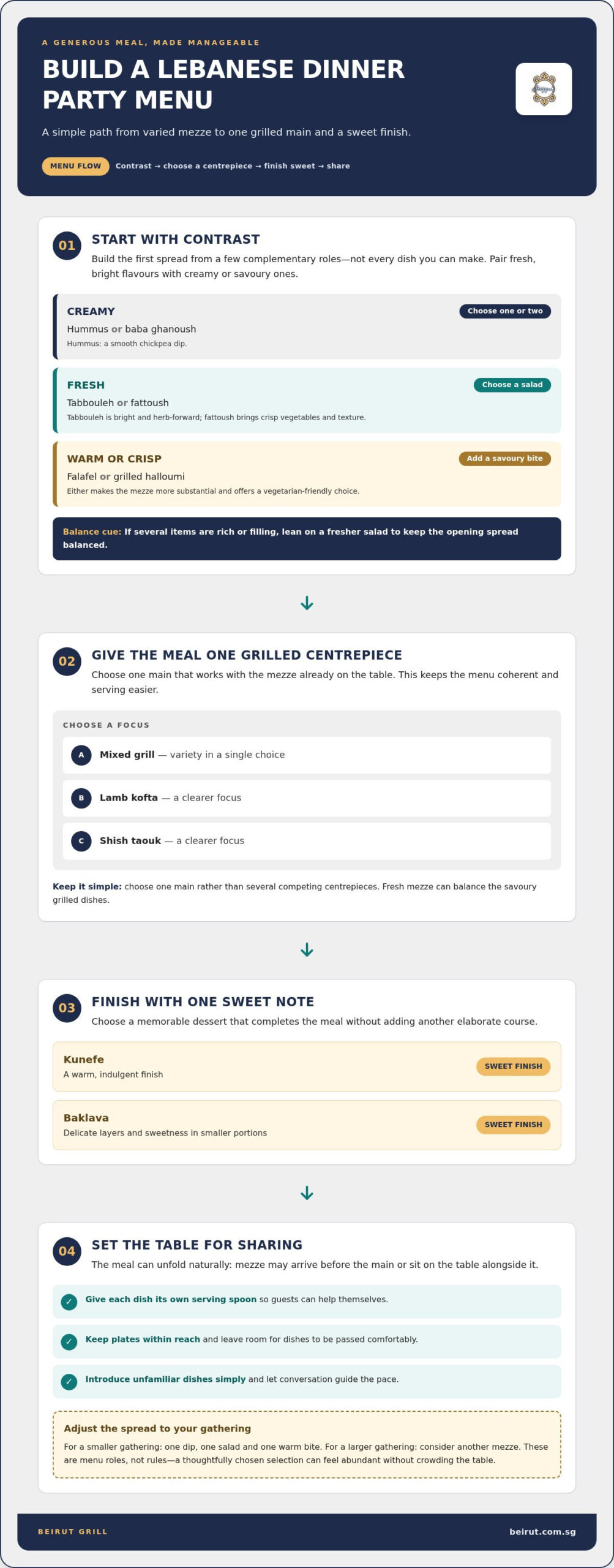
A memorable menu needs variety, not an exhausting number of recipes. For a practical approach to how to host a lebanese dinner party, plan around a few complementary categories: dips, something fresh, one warm mezze, a central main and a sweet finish. This creates a sense of abundance while keeping shopping, preparation and serving manageable.
Which mezze make a varied first spread?
Start with contrast. Choose one or two creamy dips, such as hummus and baba ghanoush, then add a salad for freshness. Tabbouleh brings parsley and a lively, lemony note; fattoush offers crisp vegetables and texture. You don’t need both salads or every dip. Select the combination that suits your table and leaves room for the main.
Round out the spread with one warm or crisp dish. Falafel adds a savoury, satisfying bite, while grilled halloumi offers a tender centre and golden edges. Either can make the mezze more substantial and provide a vegetarian-friendly choice. If you’re serving several rich or filling items, choose a fresher salad to keep the opening spread in balance.
- Creamy: Hummus or baba ghanoush.
- Fresh: Tabbouleh or fattoush.
- Warm or crisp: Falafel or grilled halloumi.
Think of these as menu roles, not rules. A smaller gathering might need just one dip, one salad and one warm bite; a larger gathering may welcome another mezze. The aim is to give guests different flavours to explore without crowding the table with dishes that taste or feel alike.
How should you choose a main and dessert?
Let one grilled main take centre stage. A mixed grill offers variety in a single choice, while lamb kofta or shish taouk gives the meal a clearer focus. Pair the main with the mezze already on the table rather than preparing several competing centrepieces. This keeps the menu coherent and makes serving easier, especially when kitchen or table space is limited.
Finish with one sweet, memorable note. Kunefe brings a warm, indulgent finish; baklava offers delicate layers and sweetness in smaller portions. Either can follow a meal of dips, salad and grilled food without requiring a second elaborate course. For broader ideas about regional flavours and dishes, browse this guide to Middle Eastern food.
A balanced Lebanese spread pairs varied mezze with one satisfying main and a sweet finish, creating abundance without an overwhelming menu. If you’d rather savour that combination without cooking, Beirut Grill’s Lebanese mezze, grilled dishes and desserts offer inspiration for enjoying the cuisine.
How to Balance Lebanese Dinner Party Dishes for Different Guests
An impressive table doesn’t require every dish to be made from scratch. Thoughtful selection matters more than sheer quantity: combine a few mezze that can be prepared ahead with one grilled main and a dessert, then make small adjustments for the people you’ve invited. This keeps the meal welcoming without turning your kitchen into a production line.
Use guest preferences as a planning guide, not a set of assumptions. A dish that sounds suitable for one person may not work for another because recipes and preparation methods differ. If a guest has a specific dietary need, ask what they can comfortably eat and describe ingredients and preparation accurately. Avoid broad labels such as “allergy-safe” unless you can verify every ingredient and how the dish is prepared.
| Guest preference | Menu components to consider | Host’s planning note |
|---|---|---|
| Prefers vegetarian dishes | Falafel, grilled halloumi, salads and dips | Give these dishes space across the meal, not only at the start. |
| Enjoys grilled meat | Shish taouk, lamb kofta or mixed grill | Choose one main rather than several centrepieces. |
| Wants lighter flavours | Tabbouleh, fattoush and selected dips | Balance fresh elements with richer bites. |
| Is new to Lebanese food | A familiar dip, salad and one warm mezze | Introduce each dish briefly and let them choose what to try. |
How can you balance vegetarian and meat dishes?
Make plant-based mezze visible and satisfying in their own right. Place falafel, salads and dips alongside the main, and include grilled halloumi as another substantial option. Guests can then build a plate around their preferences instead of relying on a token salad. A grilled meat dish can share the table without defining the whole meal; varied textures and flavours make the spread feel considered for everyone.
Describe dishes plainly. Halloumi is cheese, and recipes or preparation methods can vary, so don’t assume a dish suits every vegetarian or dietary requirement. Keep serving utensils separate where practical, and avoid presenting a dish as suitable for a particular need unless you know its ingredients and preparation support that claim.
How can you adapt the spread without overcooking?
Choose a small group of mezze that can be arranged before guests arrive, including dips and salads served cool or at room temperature. Then reserve your last-minute attention for the grilled main or one warm mezze, rather than juggling several hot dishes. This approach works well when kitchen and dining space are limited, and gives you more time at the table.
Dessert can be planned just as simply. Baklava offers a small, sweet finish, while kunefe brings a warm, richer note. For more background on this beloved dessert, explore the guide to kunafa. A flexible menu is central to how to host a lebanese dinner party: choose dishes that suit your guests, prepare what you can in advance, and leave yourself room to enjoy the evening.
How to Prepare and Serve a Lebanese Dinner Party Without Rushing
A relaxed evening begins before the first guest arrives. Decide which dishes need attention at the last minute, then build the rest of your preparation around them. Dips, serving ware and a clear place for each dish can be ready in advance, leaving you free to focus on the main and welcome your guests with ease.
The simplest way to ease last-minute pressure is to prepare everything you can ahead, then leave only one or two finishing tasks for serving time. Use this flexible sequence to keep the evening moving without making it feel hurried:
- Set the menu. Choose your mezze, one main and dessert. Make a short list of what can be prepared ahead and what needs to be cooked or assembled close to serving.
- Prepare the foundations. Make dips, wash and dry salad ingredients, and organise serving plates, spoons and small dishes. Keep crisp components and fresh herbs separate until you’re ready to assemble the salads.
- Set the table before guests arrive. Arrange plates, cutlery, napkins and glasses, and leave room for shared dishes. Put drinks where they’re easy to reach, and keep serving spoons beside their dishes.
- Finish in sequence. Set out the first mezze spread as guests arrive. Cook or warm the main when the table is ready, then bring out dessert and offer coffee or tea to close the meal.
What can you prepare before guests arrive?
Prepare dips and arrange serving ware ahead, then wash and dry salad ingredients so they’re ready to assemble. Keep herbs, dressing and crisp toppings separate until nearer serving to preserve their freshness and texture. Leave the grilled main, or one warm mezze, as your principal last-minute task. This division gives you a clear plan without requiring every dish to be finished at once.
In what order should you serve the meal?
Welcome guests with drinks and a ready-to-share first spread, allowing them time to settle in and enjoy the mezze. Bring out the main after the table has had a chance to linger over those first flavours. Finish with dessert, then offer Lebanese coffee or Moroccan mint tea as an unhurried final course. The sequence gives each part of the meal its moment without imposing a strict timetable.
Before the evening, make a small serving plan: note which platter holds each dish and where it will sit. This helps prevent a crowded table and makes it easier to bring food out smoothly. Keep a clear surface for dishes waiting to be served, and avoid laying out every platter at once if space is limited.
That preparation is the practical heart of how to host a lebanese dinner party: thoughtful planning lets the meal feel abundant while you remain part of the gathering. If you’d rather enjoy Lebanese mezze and grilled dishes without cooking, reserve a meal at Beirut Grill.
Make Your Lebanese Dinner Party Easy with Beirut Grill
Cooking for guests can be a pleasure, but it isn’t the only way to share Lebanese food. Hosting at home lets you shape the evening around your own table; dining out gives you the chance to focus on conversation while the meal is prepared for you. Both can capture the spirit of a generous spread, with mezze to share, grilled dishes at the centre and a sweet finish to linger over.
For guests curious about the wider culinary traditions behind the meal, this guide to Mediterranean food offers broader context. The pleasure of a Lebanese meal lies in its interplay of fresh herbs, savoury dishes and warm hospitality, rather than in how much effort the host puts into cooking.
When might dining out suit your gathering better?
Choose a restaurant meal if you’d rather spend the evening catching up than coordinating a menu, serving dishes and clearing the kitchen. At Beirut Grill, mezze such as hummus and tabbouleh can begin the meal, followed by a mixed grill and kunefe for dessert. Beirut Grill uses authentic spices and herbs imported from Beirut, Lebanon, bringing a sense of culinary heritage to the table.
A meal out can also make a gathering feel special without requiring a formal occasion. Guests can share familiar favourites, explore dishes they haven’t tried before and let the meal unfold at an easy pace. It’s a useful alternative when you have limited table or kitchen space, or simply want to be present with the people you’ve invited.
How can you enjoy Lebanese food without hosting at home?
For a shared restaurant meal, reservations are an option. Delivery or takeaway can suit a quieter evening at home when you want Lebanese flavours without preparing every dish yourself. These choices let you keep the focus on sharing the meal, whether you’re gathering around a restaurant table or enjoying food in your own space.
There’s no single right way to bring the experience to life. If you’re planning to cook, use the menu ideas in this guide as a starting point and choose a spread that feels manageable. If you’d rather leave the cooking to the restaurant, Beirut Grill’s mezze, charcoal-grilled dishes and traditional desserts offer a ready-made journey through Lebanese flavours.
Enjoy the meal in the way that suits your gathering. Explore the Beirut Grill menu and discover dishes for your next Lebanese-inspired meal.
Make Your Next Gathering a Shared Table
The best next step is simple: choose a date, invite the people you’d love to see, and decide whether you want to cook or let someone else take care of the meal. The heart of how to host a lebanese dinner party isn’t a flawless menu; it’s creating room for guests to share, discover new flavours and enjoy one another’s company.
If you’re planning to cook, keep your first gathering manageable. Pick a few dishes you’re excited to prepare, and let the evening grow from there. If you’d rather spend the occasion entirely with your guests, Beirut Grill offers another way to enjoy Lebanese food, whether you dine at the restaurant or choose delivery or takeaway.
Explore the menu for inspiration, then choose the kind of gathering that feels right for you. Explore Beirut Grill’s Lebanese menu and plan your next shared meal.
However you bring everyone together, let generosity set the tone. A welcoming table and good company are more than enough to make the evening memorable.
Frequently Asked Questions
What dishes should I serve at a Lebanese dinner party?
For a well-rounded meal, choose a few mezze, one main dish and a dessert. For example, serve hummus with tabbouleh and falafel, then offer shish taouk or lamb kofta, followed by baklava. If you’re learning how to host a lebanese dinner party, think about how the dishes work together: fresh, creamy and savoury flavours create variety without requiring an elaborate menu. Add bread for scooping and sharing.
How many mezze should I prepare for a dinner party?
There’s no fixed number; choose enough variety for guests to enjoy different tastes while leaving room for the main course. For a simple plan, select a dip, a salad and a warm or crisp bite, then adjust the spread to suit your table and appetites. If the main is substantial, keep the mezze selection lighter. A smaller, balanced assortment is easier to serve and enjoy than a crowded table.
Can I prepare Lebanese mezze the day before?
Yes, some preparation can be done ahead. You can make dips such as hummus or baba ghanoush and wash and dry salad ingredients in advance. Keep fresh herbs, dressing and crisp components separate, then combine them closer to serving so their texture and flavour stay lively. Use suitable food storage practices for your ingredients, and follow authoritative food-safety guidance for storage and handling rather than relying on a general timing rule.
What main course goes well with Lebanese mezze?
Grilled dishes make satisfying companions to mezze. Shish taouk brings chicken to the table, while lamb kofta offers a savoury alternative; a mixed grill suits guests who enjoy variety. Choose one main that complements the sides rather than competing with them. If the mezze include several rich items, fresh salads can add contrast. Keep the main easy to serve so guests can combine it with their favourite dishes.
How do I include vegetarian dishes in a Lebanese dinner party?
Give vegetarian-friendly choices a central place on the table, not just a small side plate. Falafel, salads and dips can make a meal more varied, while grilled halloumi offers a cheese-based option. Ingredients and preparation methods vary, so describe dishes accurately and don’t assume they meet every guest’s dietary needs. If someone has a specific restriction, ask what they can eat and explain what you know about each dish.
What dessert should I serve after a Lebanese dinner?
Baklava and kunefe are appealing choices for a sweet finish. Baklava suits guests who’d like a small, rich bite, while kunefe makes a more indulgent dessert to share. You could also serve mouhalabieh for a softer, milk-based finish. Choose one dessert rather than creating another large course, and consider offering Lebanese coffee or tea alongside it for a relaxed end to the meal.
What drinks can I serve with Lebanese food?
Offer a choice that suits different preferences: Lebanese wine or arak for guests who enjoy alcoholic drinks, and Moroccan mint tea or Lebanese coffee as non-alcoholic options. Water is also a useful addition throughout the meal. Set out glasses and drinks before serving food, and let guests choose what they’d like. If you’re unsure what everyone prefers, a varied selection makes the table feel welcoming without making drink service complicated.