
What if the secret to balanced Lebanese coffee is taking it off the heat before it boils? If you’ve seen different names for similar coffee styles or ended up with a bitter, muddy cup, you’re not alone. Learning how to make lebanese coffee starts with understanding the method: it is closely related to Turkish-style coffee and is commonly associated with dark-roasted Arabica and cardamom.
This guide walks you through a practical stovetop method, from choosing a fine grind to pouring without disturbing the settled grounds. You’ll also learn how to adjust the heat, sweetness and cardamom to suit your taste, and what to change if a brew turns bitter, flat or gritty.
Lebanese coffee is often sweetened during brewing and shared as a gesture of hospitality, though family preferences vary. If you’d rather enjoy the ritual over a Lebanese meal, Beirut Grill serves Lebanese coffee alongside Lebanese and Middle Eastern cuisine.
Key Takeaways
- For how to make lebanese coffee, use finely ground coffee and water in a Turkish-style stovetop method, adding sugar or cardamom if you like.
- A cezve or ibrik is a traditional pot for gently heating the mixture and watching the foam rise. A small saucepan can also work.
- If the coffee tastes bitter, seems flat or feels gritty, adjust one part of your method at a time so you can tell what makes a difference.
- Serve the concentrated coffee in small cups, and let guests choose their preferred sweetness and cardamom level.
Lebanese Coffee: Is It the Same as Turkish Coffee?
Lebanese coffee is a concentrated, finely ground coffee traditionally prepared in a small pot and served in small cups. Its preparation often resembles Turkish-style coffee, so recipes may use the names interchangeably. But names, ingredients and customs aren’t identical everywhere. Household traditions differ, and one family’s recipe is not a universal standard for Lebanese coffee.
That distinction matters when you’re learning how to make lebanese coffee. Think of Turkish-style brewing as a common preparation approach, rather than a rule that every Lebanese cup must follow one recipe. The name can also express cultural identity: the Syndicate of Restaurant Owners in Lebanon has called for restaurants and tourism establishments to use “Lebanese coffee” on menus and in communications.
Lebanese coffee and Turkish-style coffee: where the names meet
Both styles can use powder-fine grounds, slow stovetop heating and a small serving that leaves sediment in the cup. Those similarities explain why a home recipe might call the brew Turkish coffee while a Lebanese household calls a similar cup Lebanese coffee. The name may reflect family or regional habits rather than a completely different brewing technique.
Arabic coffee is a broader term that can refer to preparations with different roasts, grinds and flavourings. Some versions use lightly roasted beans and spices, while the fine-ground, concentrated method in this guide follows a Turkish-style approach. For broader context on the traditions and preparations grouped under the name, see Arabic coffee on Wikipedia.
What makes a cup recognisably Lebanese-style?
For the method in this guide, expect a concentrated body and very fine grounds that settle at the bottom of the cup. Dark-roasted Arabica and cardamom are often associated with Lebanese coffee, but cardamom is optional, not a universal requirement. Sugar is a matter of preference, too. These choices shape the flavour, while the fine grind and gentle stovetop preparation define this brewing approach.
Keep the distinction simple: the technique shapes the cup’s strength and texture; roast, sweetness and cardamom let each household make it its own. Some Lebanese recipes use a Turkish-style method without cardamom, while others include its warm, fragrant note. Neither choice alone determines whether a cup is authentic. Customs vary, so avoid treating one family’s proportions or flavour preferences as the only correct expression.
What You Need to Make Lebanese Coffee at Home
A balanced cup starts with a short ingredient list and attention at the stove. For the Turkish-style method used in this guide, gather:
- Cold water, measured for the number of small cups you plan to serve.
- Extra-finely ground coffee, with a powder-like texture suited to this brewing method.
- Optional sugar, added according to your preferred sweetness.
- Optional cardamom, if its warm, aromatic flavour suits your household’s tradition.
Proportions vary between recipes, so use the measurements in a recipe that clearly describes the method you’ve chosen. The Lebanese Coffee from Food Heritage Foundation resource offers cultural and preparation context; follow a recipe with clear quantities when you’re ready to brew.
Choosing the coffee grind and optional flavourings
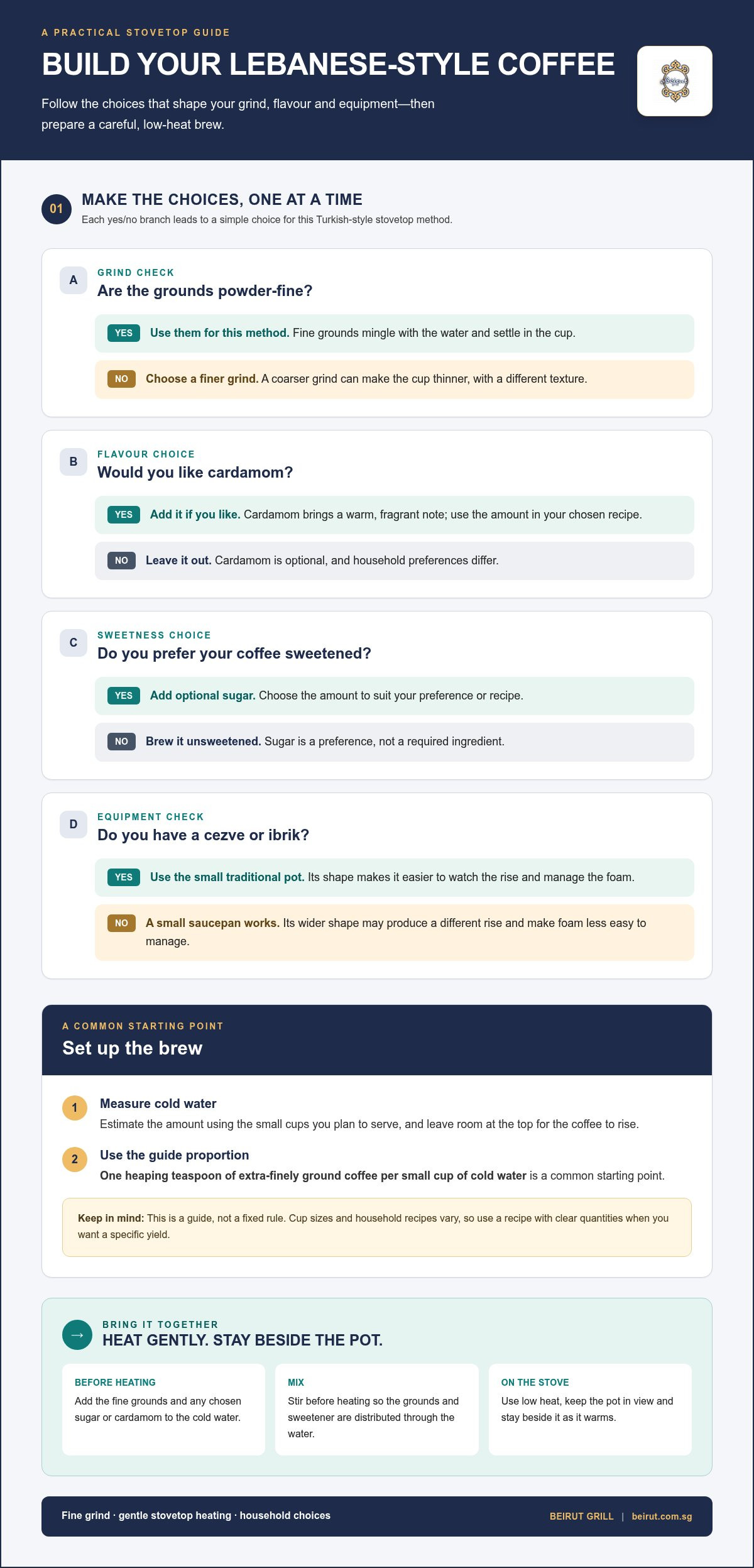
Choose coffee ground finer than the texture used for most filter brewing. The grounds should be powder-like, so they mingle with the water rather than brewing like a coarse infusion. A coarser grind changes the extraction and can leave the cup thinner, with a different texture from the concentrated style intended here.
Sugar and cardamom are choices, not compulsory ingredients. Some households prefer sweetness built into the brew; others enjoy it unsweetened. Cardamom adds a fragrant, gently spiced note, but leaving it out doesn’t make the preparation less Lebanese-style. Start with the amount in your chosen recipe, then adjust to suit your taste on a later brew.
Using a cezve, ibrik, or simple saucepan
A cezve, also called an ibrik, is a small pot traditionally used for this kind of stovetop coffee. Its shape gives the mixture room to rise and makes it easier to watch the surface and manage the foam. It’s a helpful tool, but not essential for trying the method at home.
A small saucepan is a practical substitute, though its wider shape may produce a different rise and make the foam less easy to manage. Use a stable burner on low heat, keep the pot in view and stay beside it as it warms. Gentle, attentive heating gives you more control than turning up the flame and stepping away.
With your ingredients and equipment ready, you can focus on how to make lebanese coffee one careful step at a time. If you’d rather enjoy Lebanese coffee as part of a Lebanese meal, Beirut Grill serves Lebanese coffee.
How to Make Lebanese Coffee: A Step-by-Step Brewing Method
Once you’ve chosen your grind and flavourings, the method is a slow, watchful brew. A common starting point is one heaping teaspoon of extra-finely ground coffee per small cup of cold water. Treat that as a guide, not a rule: cup sizes and household recipes vary, so follow a trusted recipe’s measurements when you want a specific yield. This sequence shows how to make lebanese coffee using a cezve or small saucepan.
- Measure the water. Pour cold water into the pot, using the small cups you’ll serve from to estimate the amount. Leave room at the top for the coffee to rise as it heats.
- Add coffee and chosen flavourings. Stir in the finely ground coffee and, if desired, sugar or cardamom. Mix before heating so the grounds and sweetener are distributed through the water.
- Warm the pot gradually. Set it over low heat and stay beside it. As the mixture warms, watch for foam to form and slowly rise. Avoid vigorous stirring once heating begins, which can disturb the developing surface.
- Lift it from the heat before it boils over. As the foam approaches the rim, remove the pot from the burner. A rolling boil can collapse the foam and make the brew harsh. Some recipes repeat the gentle heating and rising process, sometimes up to three times; follow the approach in the recipe you’re using.
- Let the grounds settle, then serve. After the final heating, allow the coffee to rest briefly so the fine grounds can sink. Pour slowly into small cups, sharing the foam as evenly as possible, and leave the settled grounds behind in the pot.
The essential principle: heat gently, watch continuously and remove the pot as the foam rises, before the coffee reaches a rolling boil.
Pouring for a balanced cup
Pour steadily rather than rushing. The first cup may carry more foam, so a slow pour can help distribute it among the servings. Don’t stir the cups after pouring, as that can lift settled grounds back into the drink. Expect rich, concentrated coffee with fine surface foam and sediment at the bottom. The precise texture varies with the grind, pot and heat.
If the foam starts rising quickly, lift the pot from the heat immediately. With practice, the rising surface becomes your clearest cue. Keep the burner low enough to give yourself time to respond, especially when using a saucepan, whose wider shape may behave differently from a cezve.
How to Fix Lebanese Coffee That Is Bitter, Flat, or Gritty
A disappointing cup doesn’t always point to one mistake. Heat, grind, ingredient balance and pouring can all affect the result. If you’re refining how to make lebanese coffee, change one thing at a time and keep the rest of your method steady. That makes it easier to identify what improves the next cup.
Why coffee turns bitter or loses its foam
A harsh, bitter taste can develop if the coffee is heated too aggressively or left cooking for too long. Vigorous boiling can also break up the surface foam before you pour. Try lowering the heat or lifting the pot earlier as the foam rises. Adjust gradually instead of changing the heat, grind and coffee quantity all at once.
Foam can vary from brew to brew, so a thinner layer doesn’t automatically mean the coffee has failed. Check that the grounds are finely milled and mixed evenly before heating, then keep the pot under close watch. If you’re testing a different coffee-to-water balance, measure both ingredients consistently so you can tell whether the change affects strength or foam.
- Bitter or harsh: Consider whether the pot boiled vigorously or stayed on the heat too long; try gentler heating next time.
- Little foam: Review the grind and watch the pot as the surface rises; avoid a rolling boil.
- Weak or flat: Check that your measurements are consistent and that the coffee is ground finely enough for this preparation.
- Gritty in the sip: Give the brew more time to settle, then pour more slowly without disturbing the grounds.
How to reduce excess grounds and uneven flavour
Fine grounds are expected in this style, but a mouthful of sediment can make the cup unpleasant. Check the grind first: coarse coffee won’t behave like the powder-fine grounds used for a Turkish-style preparation. After heating, let the pot rest briefly so the grounds can sink. Pour gently and stop before the settled layer enters the cup.
If one cup tastes stronger or sweeter than another, uneven mixing or pouring may be the cause. Stir the ingredients before heating, then distribute the brew carefully among the small cups. On your next attempt, keep the water, coffee and sweetener measurements the same while adjusting only one element, such as grind fineness or heating intensity. Small, deliberate changes are easier to assess than a complete recipe overhaul.
Good coffee rewards attention, but a little sediment or modest foam is no reason to abandon the ritual. If you’d like to enjoy Lebanese coffee alongside a Lebanese meal, Beirut Grill serves Lebanese coffee with its Lebanese cuisine.
How to Serve Lebanese Coffee and Enjoy the Tradition
Serving is part of the pleasure: Lebanese coffee is concentrated, so a small cup gives you time to savour its depth. Set out the cups before brewing, then serve the coffee soon after it has rested. That small bit of preparation lets you focus on your guests rather than searching for cups while the aroma fills the room.
Serving a small cup with care
Pour gently, aiming to share the foam evenly if it has formed. Fine grounds settle at the bottom, so invite guests to sip slowly and leave the final sediment in the cup. A glass of cold water is also commonly served alongside coffee, offering a fresh contrast between sips.
Hospitality customs differ between families and gatherings. In some homes, the first or foam-rich cup may be offered to an honoured guest or an elder; elsewhere, the host may simply serve each person in turn. Sweetness and cardamom are personal preferences, too. If you’re hosting, ask how guests like their coffee rather than assuming everyone wants the same balance.
A relaxed serving sequence keeps the ritual welcoming:
- Prepare the cups before brewing so you can serve without delay.
- Pour carefully once the coffee has rested, taking care not to disturb the grounds.
- Offer it with warmth and let each guest enjoy the coffee at their own pace.
Some households have their own gestures for accepting or declining another serving, so follow the host’s lead rather than treating one custom as universal. The aim is comfort and connection, not perfect etiquette. If you’re learning how to make lebanese coffee for guests, leave room for individual tastes and the customs people bring to the table.
Enjoying Lebanese coffee as part of a meal
After a Lebanese meal, coffee can provide a graceful close, its roasted aroma lingering as conversation continues. Its small serving suits a pause after dishes have been shared, whether the table has been filled with savoury favourites or a sweet finish. There’s no need to turn the cup into a formal ceremony; the welcome is in the act of sharing it.
Beirut Grill serves Lebanese coffee as part of its Lebanese dining experience. Find Lebanese coffee at Beirut Grill.
Make the Next Cup Your Own
The first brew is a starting point, not a test of authenticity. Let your next cup reflect the people gathered around it: keep the sweetness restrained, add cardamom if it suits your taste, or invite each guest to share a preference. A familiar coffee ritual often becomes more meaningful through these small choices and the conversations they make room for.
If you’d rather enjoy Lebanese coffee as part of a meal, Beirut Grill brings together Lebanese and Middle Eastern cuisine, with Lebanese coffee among its beverages. Visit Beirut Grill to enjoy Lebanese coffee and cuisine.
Frequently Asked Questions
Is Lebanese coffee the same as Turkish coffee?
Lebanese coffee and Turkish coffee often share a fine-ground, stovetop preparation, but the names don’t always mean the traditions are identical. Lebanese coffee is commonly associated with dark-roasted Arabica and may include cardamom, while Turkish coffee is also its own named cultural tradition. Recipes and terminology vary between households, so a similar brewing method doesn’t make every cup or custom interchangeable.
How do you make Lebanese coffee at home?
To make Lebanese coffee at home, combine cold water with finely ground coffee and any sugar you want in a small pot, then warm it gently while watching for foam to rise. Lift the pot before the mixture boils over, let the grounds settle and pour carefully. Follow the quantities in your chosen recipe, since cup sizes and household preferences differ.
What kind of coffee grind should I use for Lebanese coffee?
Use an extra-fine, powder-like grind for the Turkish-style stovetop method. It should be noticeably finer than grounds intended for drip or pour-over brewing. Coarsely ground coffee may extract differently and feel less concentrated, with a different texture. A grinder that can produce a consistent fine powder gives you greater control from cup to cup.
Do you need a cezve to make Lebanese coffee?
No, a cezve isn’t essential. It’s a traditional small pot that helps you monitor the coffee as it heats, but a small saucepan can serve as a practical substitute. Because a saucepan is often wider, the coffee may rise or foam differently. Use a stable burner, choose a pot with room for the mixture to rise and stay close throughout heating.
Should Lebanese coffee contain cardamom or sugar?
Neither cardamom nor sugar is compulsory. Both are matters of taste and household custom: cardamom adds a fragrant spice note, while sugar changes the sweetness of the finished cup. If you’re serving guests, ask about their preferences before preparing the coffee. Since sugar is mixed in before heating, decide on the sweetness before the pot goes on the stove.
Why does my Lebanese coffee taste bitter or have no foam?
Bitter flavour can result from heating the coffee too strongly or cooking it for too long, though grind and coffee-to-water balance can also affect taste. A vigorous boil can disrupt the foam, and its amount can vary between brews. For a useful test, keep your measurements and grind the same, then lower the heat and remove the pot earlier as the foam rises.
Do you drink the grounds at the bottom of Lebanese coffee?
Usually, you sip the coffee and leave the settled grounds at the bottom rather than drinking them. Once poured, pause briefly before your first sip so the sediment can collect, then avoid tipping the cup sharply at the end. In some settings, the leftover grounds are used for tasseography, or coffee-ground reading, but that’s an optional folk practice, not part of drinking the coffee.