
What if the most satisfying way to explore an arabic restaurant menu is not to choose one dish, but to let the meal unfold together? If names such as moutabal, warak enab and kibbeh feel unfamiliar, you’re not alone. Arabic cuisines reflect distinct regional traditions, so knowing how to approach the menu can make a first visit easier and more enjoyable.
At Beirut Grill, a Lebanese and Middle Eastern meal can begin with hot and cold mezze to share, continue with charcoal-grilled favourites, then linger over dessert and traditional drinks. This guide explains how the courses complement one another, introduces menu favourites and shows how to build a spread for meat lovers, seafood fans and vegetarians. You’ll find dishes such as hummus, tabbouleh, Shish Taouk and grilled prawns, with sweet finishes including Baklava and Kunefe. The menu is pork-free, and the shared style of dining invites you to take your time, pass plates and enjoy the conversation.
Key Takeaways
- An arabic restaurant can reflect diverse regional food traditions, so expect variety rather than one fixed menu or flavour profile.
- Use mezze to sample contrasting tastes and textures before moving on to more substantial shared dishes.
- Balance the order with fresh, vegetarian, meat-focused and seafood choices to suit different preferences.
- Compare the group’s preferences, then choose mezze, mains and a possible sweet finish for a well-rounded meal.
- Beirut Grill brings Lebanese and Middle Eastern dishes together in a shared dining experience.
What Does an Arabic Restaurant Offer? A Friendly Introduction to the Cuisine
An arabic restaurant offers more than one set of dishes. The phrase points to food traditions across Arab cultures, with menus and flavours shaped by regional history and the people who cook them. One restaurant may bring together familiar staples and regional specialities; another may focus on a particular culinary tradition. The label is a useful introduction, not a promise that every menu will look or taste the same.
That variety is part of the appeal. Look for contrasts across the menu: fresh salads beside warm plates, dips alongside grilled dishes, and lighter choices balanced by more substantial ones. At Beirut Grill, Lebanese dishes such as fattoush, baba ghanoush, grilled halloumi and falafel each offer a different way to explore the spread. For a wider overview of the traditions and variations involved, the Arab cuisine entry provides useful context.
Mezze are small dishes commonly shared at the table, inviting diners to taste a variety of flavours together. They do more than provide an opening course: mezze give a meal an unhurried, social start. Combine a fresh salad with creamy dips and warm savoury plates, then sample a little of each to discover what you enjoy most.
Arabic, Middle Eastern, and Lebanese: How the Terms Relate
These labels overlap, but they aren’t interchangeable. “Arabic” refers broadly to Arab cultures and their food traditions; “Middle Eastern” is a wider geographic label that includes varied culinary communities. Lebanese cuisine is one distinct regional expression within this broader landscape, with its own dishes and dining traditions. Beirut Grill focuses on Lebanese and Middle Eastern food. For more context on the wider category, explore this broader Middle Eastern food guide.
What Makes the Dining Experience Feel Distinctive?
The character of the meal comes not only from what’s served, but from how the table comes together. A shared spread encourages conversation and makes it easy to compare tastes: a forkful of fattoush, a piece of grilled halloumi, then a taste of falafel. At Beirut Grill, hot and cold mezze sit alongside charcoal-grilled dishes, seafood and vegetarian choices, giving diners different ways to shape the meal.
Hospitality here is expressed through sharing and discovery, not complicated rules. Choose what appeals, pass dishes around and let the meal unfold at a relaxed pace. Knowing the labels can help you approach an unfamiliar menu with curiosity: Arabic describes a broad cultural landscape, while Lebanese names one particular tradition within it.
From Mezze to Charcoal-Grilled Mains: How an Arabic Meal Comes Together
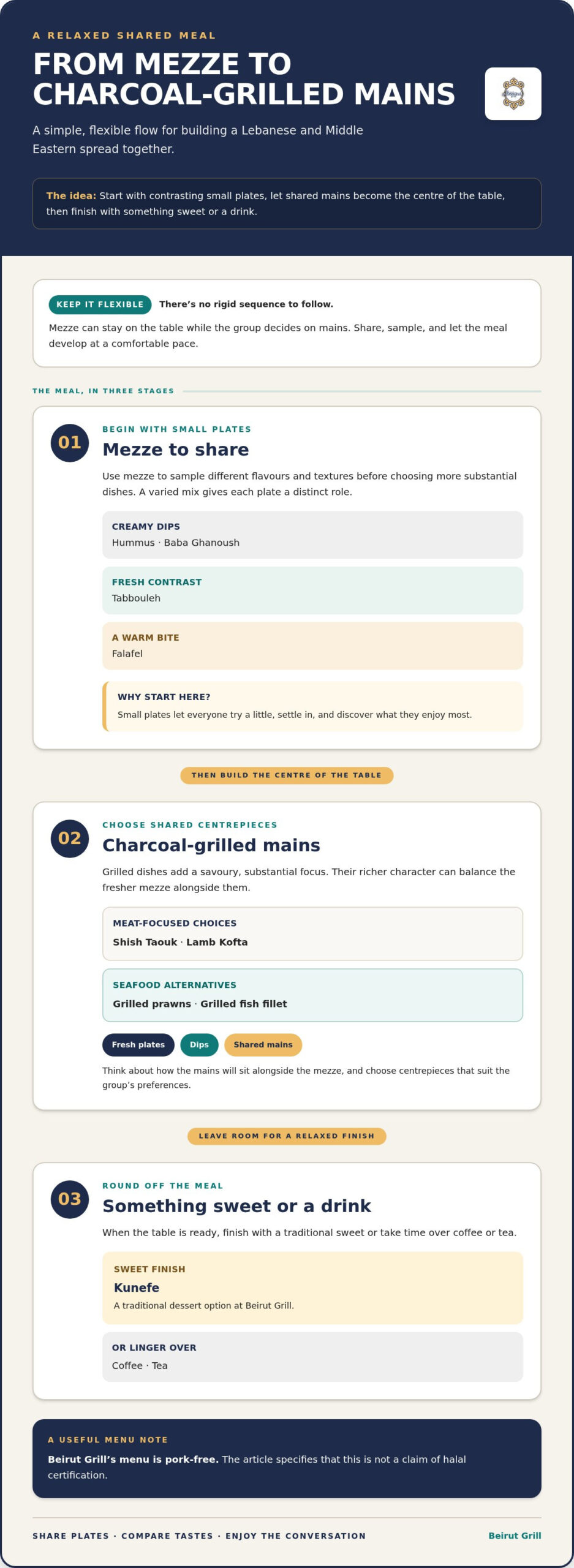
A shared meal often unfolds in stages, but there’s no rigid sequence to follow. Diners might begin with mezze, add substantial dishes for everyone to share, then round things off with dessert, coffee or tea. The pleasure lies in letting the table develop at a comfortable pace, with room to revisit a favourite plate or try something new.
Shared mezze introduce a broader meal, offering a first taste of the contrasts and variety to come. Small plates let a group try different textures and flavours before committing to a particular main. They also give diners time to settle in and decide what they’d most like to enjoy as the meal continues.
Start with Mezze: Small Plates for the Table
At Beirut Grill, mezze include hummus, Baba Ghanoush, Tabbouleh and Falafel. Together, they bring contrasting sensations to the table: creamy dips, a fresh salad and a warm bite. Choose a mix rather than several dishes with similar textures, so each plate adds something different. Place the dishes within easy reach, then share and sample at your own pace.
There’s no need to treat mezze as a course that must be finished before anything else arrives. The plates can stay on the table while the group settles on mains, making the transition feel relaxed rather than formal. For a sweet finish, Beirut Grill’s Kunefe offers a traditional option; this Kunafa dessert guide explores the wider appeal of this dessert.
Make Charcoal-Grilled Dishes the Centrepiece
Charcoal-grilled dishes can anchor the meal with a savoury, substantial focus. At Beirut Grill, Shish Taouk and Lamb Kofta are menu examples, bringing the aroma and colour associated with charcoal grilling. Their richer, grilled character can balance the lighter, fresher mezze, while sharing lets diners taste across the spread.
Not everyone at the table has to choose meat. Grilled prawns and grilled fish fillet offer seafood alternatives and add variety to a shared selection. Consider how mains will sit alongside the mezze: a few fresh plates, a dip or two and centrepiece choices that suit the group’s preferences.
The rhythm is simple, not prescriptive: begin with small plates, let grilled dishes take a central role, then finish with something sweet or a drink. If this style of meal appeals, explore Beirut Grill’s Lebanese menu for mezze, charcoal-grilled choices and traditional desserts.
How to Navigate an Arabic Restaurant Menu for Different Tastes
An unfamiliar menu becomes easier to explore when you start with what you enjoy. Are you drawn to charcoal-grilled meat, prefer a meat-free plate, or want seafood and fresh, lighter choices? In an arabic restaurant, dishes can reflect varied traditions, so the cuisine label alone won’t tell you exactly what ingredients or dietary standards to expect. Use the individual dishes and their descriptions as your guide.
At Beirut Grill, the pork-free menu brings together several preferences. Pork-free is a specific menu fact, not a claim of halal certification. The examples below can help you identify dishes for your meal and choose a mix that suits the table.
Meat-focused: Lamb Kofta and Shish Taouk are charcoal-grilled choices for diners looking for a substantial meat dish.
Vegetarian: Grilled Halloumi, Falafel and Vegetarian Kebab offer meat-free options to consider.
Seafood: Grilled Prawns and Grilled Fish Fillet give seafood lovers choices beyond meat.
Lighter, fresh choices: Tabbouleh and Fattoush are salads that can add a fresh element to a broader spread.
Choosing Between Grilled Meat, Seafood, and Vegetarian Dishes
For a group with different tastes, build variety into the order instead of choosing one style for the whole table. Lamb Kofta or Shish Taouk can provide a meat-focused centrepiece, while grilled prawns or fish fillet bring seafood into the mix. Add vegetarian dishes such as Falafel, Grilled Halloumi or Vegetarian Kebab so meat-free diners have choices of their own.
Fresh salads round out those choices and add contrast. Tabbouleh or Fattoush may suit diners looking for something lighter alongside richer or more substantial plates. The aim isn’t to make every dish suit everyone. It’s to create a spread where each person can find something appealing and sample the table’s variety.
Understanding Dietary Labels and Menu Questions
Arabic cuisine doesn’t guarantee a particular dietary standard. A broad cuisine label describes a culinary tradition, not whether a restaurant or dish meets an individual’s religious, ethical or health-related needs. Beirut Grill’s menu is pork-free, but pork-free and halal-certified are not interchangeable descriptions. The menu’s pork-free status shouldn’t be read as a certification claim.
If you have a dietary requirement, focus on the specific dish and its ingredients and preparation, rather than relying on the cuisine label alone. A dish described as vegetarian is a useful starting point, but individual needs can differ. Reading dish descriptions carefully helps you make a considered choice and select options for a shared meal without assuming everyone has the same preferences.
How to Order and Share a Meal at an Arabic Restaurant
Planning a shared meal is less about following strict rules and more about giving everyone something to enjoy. Start by comparing preferences, then build a spread with different kinds of dishes instead of choosing several that fill the same role. This helps the table move from first tastes to more substantial plates, with room for a sweet finish if the group wishes.
A flexible shared-meal sequence is simple: agree on preferences, begin with mezze, choose mains to share, then decide whether to finish with dessert or a drink. Treat it as a guide, not a fixed order. Enjoy the dishes at a pace that suits the table.
- Agree on preferences. Find out whether diners are leaning towards meat, seafood, vegetarian dishes or a mix. Note any dietary needs before choosing, rather than assuming everyone can eat the same things.
- Select mezze. Choose a combination of dips, salads and warm plates so the opening spread offers variety. Hummus, Tabbouleh and Falafel are examples from Beirut Grill’s menu.
- Choose mains. Consider how the group’s preferences can sit together. Lamb Kofta, grilled prawns and Vegetarian Kebab illustrate meat, seafood and vegetarian options.
- Consider dessert. Decide whether to continue the meal with something sweet or finish with a traditional beverage such as Lebanese coffee or Moroccan mint tea.
Planning a Balanced Spread for a Group
A balanced table brings together contrasting experiences: fresh salad, creamy dips, warm plates and substantial grilled dishes. At Beirut Grill, Fattoush adds a fresh element, while Hummus offers a creamy choice. Fried Kibbeh and charcoal-grilled Shish Taouk provide different warm, savoury options. Vegetarian diners can choose Falafel or Grilled Halloumi, while seafood choices include Grilled Prawns and Grilled Fish Fillet.
Think about the group, not a prescribed serving count. Preferences, appetites and the dishes selected will shape what feels right, so use the menu to build a spread that can be shared comfortably. Variety is more useful than ordering by an assumed number of plates per person.
Leave Room for Dessert and Traditional Drinks
As the savoury dishes wind down, Baklava, Kunefe and Mouhalabieh offer traditional dessert choices. You don’t need to decide on dessert before the meal begins; the group can see how it feels after the mains. For a gentler close, Lebanese coffee and Moroccan mint tea are among the beverage options. Beirut Grill also offers Lebanese wine and Arak, so the group can choose a drink that suits the occasion.
Ready to put together a shared table of mezze, mains and a sweet finish? Explore Beirut Grill’s menu and choose dishes to suit your group.
Discover Lebanese Hospitality and Signature Dishes at Beirut Grill
For diners curious about Lebanese cuisine, Beirut Grill offers a place to explore a menu shaped by Lebanese and Middle Eastern food traditions. Begin with familiar mezze, continue through charcoal-grilled specialities, and finish with traditional desserts or a drink. Whether you’re gathering with friends or choosing a meal for different tastes, the menu offers several ways to make the table your own.
The menu is pork-free, a clear point of information for diners planning what to order. That describes the menu’s pork-free status only; it doesn’t imply halal certification. Across mezze, vegetarian dishes, meat, seafood and sweets, the selection invites guests to explore an arabic restaurant meal and choose according to their preferences.
Explore the Menu from Mezze to Grilled Specialities
Hummus and Falafel make familiar introductions to the mezze selection and an easy starting point for a shared table. From there, charcoal-grilled choices bring a more substantial dimension. Shish Taouk and Lamb Kofta are signature examples, while the Mixed Grill offers another choice for diners drawn to grilled dishes.
The range extends beyond meat. Vegetarian Kebab gives vegetarian diners a dedicated choice, while Grilled Prawns and Grilled Fish Fillet bring seafood to the table. This variety makes it easier to shape a meal around different preferences, rather than asking the whole group to settle on one style of dish. Diners can choose individually or share plates, letting the meal reflect the company gathered around the table.
Beirut Grill’s Lebanese and Middle Eastern menu brings these choices together for a meal of discovery. Start with the dishes that catch your eye, then let the spread develop naturally, balancing familiar favourites with something you haven’t tried before.
Complete the Meal with Dessert and Drinks
A sweet finish offers another way to explore the menu. Baklava, Kunefe and Mouhalabieh are among the traditional dessert choices, each making a fitting end to a leisurely meal. Finish with Lebanese coffee or Moroccan mint tea, or explore the beverage selection, which also includes Lebanese wine and Arak.
The best choice is the one that suits the moment and the people at your table. With mezze, grilled specialities, seafood, vegetarian dishes, desserts and traditional beverages, Beirut Grill gives diners room to create a meal at their own pace. Explore Beirut Grill and discover the menu for your next shared dining experience.
Make Your Next Meal a Shared Discovery
Now that the menu feels more familiar, let curiosity guide your next meal. Choose a dish you already enjoy, add something new for the table to share, and let the meal unfold at its own pace. That’s the pleasure of an arabic restaurant experience: it can turn a meal into an invitation to taste, talk and discover together.
Beirut Grill brings that spirit to a menu spanning Lebanese mezze, charcoal-grilled dishes, seafood, vegetarian choices and desserts. Its menu is pork-free, offering a clear point of reference as you consider what suits your group. Bring everyone’s preferences to the table, then make space for a dish that catches the whole group’s attention.
Explore Beirut Grill’s menu and plan your meal. Your next shared table can begin with a familiar favourite and end with a delicious new discovery.
Frequently Asked Questions
Is Arabic food always spicy?
No, Arabic food isn’t always spicy. Menus can offer a range of flavours, and a dish’s warmth or intensity depends on its ingredients and preparation rather than the broad cuisine label. At an arabic restaurant, read the individual dish descriptions instead of assuming every plate will be hot. If you prefer milder flavours, choose familiar dishes first and explore less familiar options as you go.
Does an Arabic restaurant menu always mean the food is halal?
No. “Arabic” describes a broad culinary and cultural landscape, not a halal certification or dietary guarantee. Beirut Grill’s menu is pork-free, but that fact should not be confused with halal certification. If certification is essential to your dining decision, look for an explicit certification statement rather than inferring one from a restaurant’s cuisine or pork-free menu.
Can vegetarians find satisfying dishes at an Arabic restaurant?
Yes, vegetarian diners can find appealing choices, though the selection varies from restaurant to restaurant. Beirut Grill’s menu includes Vegetarian Kebab, Falafel and Grilled Halloumi, offering options beyond salads and dips. If you avoid particular ingredients for religious, ethical or health reasons, review each dish’s description carefully. “Vegetarian” may not answer every individual dietary question, so focus on the specific ingredients that matter to you.
What is the difference between hummus and Baba Ghanoush?
Hummus is generally made with chickpeas, while Baba Ghanoush is typically based on eggplant. Both are served as dips and can appear alongside other small plates, but their main ingredients give them distinct characters. Recipes vary, so the names alone won’t tell you every ingredient or preparation detail. Trying both is a simple way to compare their flavours and textures.
Can Arabic restaurant meals include seafood as well as grilled meat?
Yes. Menus can include seafood alongside grilled meat, though the selection depends on the restaurant. Beirut Grill serves Grilled Prawns and Grilled Fish Fillet as seafood choices, as well as charcoal-grilled meats. That range can help a group choose dishes to suit different preferences without everyone ordering the same kind of main. Seafood can be a shared alternative to meat-focused choices.
What desserts might I find at a Lebanese restaurant?
Lebanese restaurant menus may feature a range of traditional sweets, and Beirut Grill offers Baklava, Kunefe and Mouhalabieh. These give diners a few distinct options to explore after the savoury part of a meal. Sharing a dessert can be an easy way to taste something unfamiliar without committing to one choice for yourself. Lebanese coffee is another menu option to enjoy after eating.