
Is tahini good for you, or does its richness make it a food to limit? The answer depends less on a single ingredient’s reputation than on how much you eat and what else is on your plate. Tahini’s smooth, nutty flavour has a long place in Middle Eastern food culture, but its calorie density makes portion size worth considering.
Made from ground sesame seeds, tahini provides unsaturated fats, plant-based protein and minerals. Those qualities can make it a nourishing part of a meal, but they don’t make it a cure-all or mean that more is always better. If you’ve found conflicting advice about fat, calories or health benefits, the details matter.
Here, you’ll learn what tahini contains, what its nutrients can and can’t tell us about health, and how to think about a sensible serving. You’ll also find practical ways to enjoy it alongside other foods, from a spoonful stirred into a dressing to Lebanese mezze, where dishes such as hummus bring sesame’s culinary heritage into view.
Key Takeaways
- Is tahini good for you? It can fit into a balanced diet, with its role depending on portion size and the rest of the meal.
- Made from ground sesame seeds, tahini is energy-dense and offers nutrients worth weighing alongside its calorie content.
- Distinguish tahini’s nutrient profile from claims about health outcomes, and remember that unsaturated fats can be part of balanced eating.
- For a more mindful serving, check the ingredients, measure your portion, and consider what else is on your plate.
- Tahini belongs to a broader Lebanese mezze tradition, where variety brings balance and flavour to the table.
What Is Tahini, and What Is It Made From?
Tahini is a paste made by grinding sesame seeds. It has a rich, nutty flavour and a texture that can be silky or slightly grainy. Familiar across Middle Eastern and Mediterranean cooking, tahini appears in dressings, sauces, dips and other dishes. Whether it fits into a balanced diet depends on the portion and the foods around it.
It helps to distinguish the ingredient from the finished recipe. Plain tahini is sesame paste; a tahini sauce or dip may include other ingredients that change its flavour and composition. That distinction matters when considering is tahini good for you: the answer can depend on whether you’re looking at pure sesame paste or a prepared product.
For a broader introduction to its history, culinary uses and preparation, see What is Tahini. Products can differ, so the name alone doesn’t tell you exactly how a particular tahini was made.
How Is Tahini Made?
At its simplest, tahini is made by grinding sesame seeds until they form a paste. Depending on the method, the result may be smooth and pourable or thick with a little texture. Seed preparation can shape the final character: tahini may be made from hulled or unhulled seeds, and the seeds may be raw or roasted. These choices can influence colour, flavour and texture, while processing varies between products.
Tahini, Sesame Paste and Prepared Sauces
Plain tahini generally contains ground sesame seeds, while prepared sauces and dips may include lemon juice, garlic, water, salt or other ingredients. These additions can make a sauce brighter, thinner or more savoury, but recipes vary. Check the ingredient list to see what you’re choosing and compare prepared products, especially if you’re tracking particular ingredients or prefer a simpler sesame paste.
In other words, “tahini” may refer to the pantry paste or be used casually for a sauce made with it. Check the label or recipe before treating the two as interchangeable. That distinction gives you a clearer starting point for understanding tahini’s nutrition and how it fits into a meal.
Tahini Nutrition: What Nutrients Does It Provide?
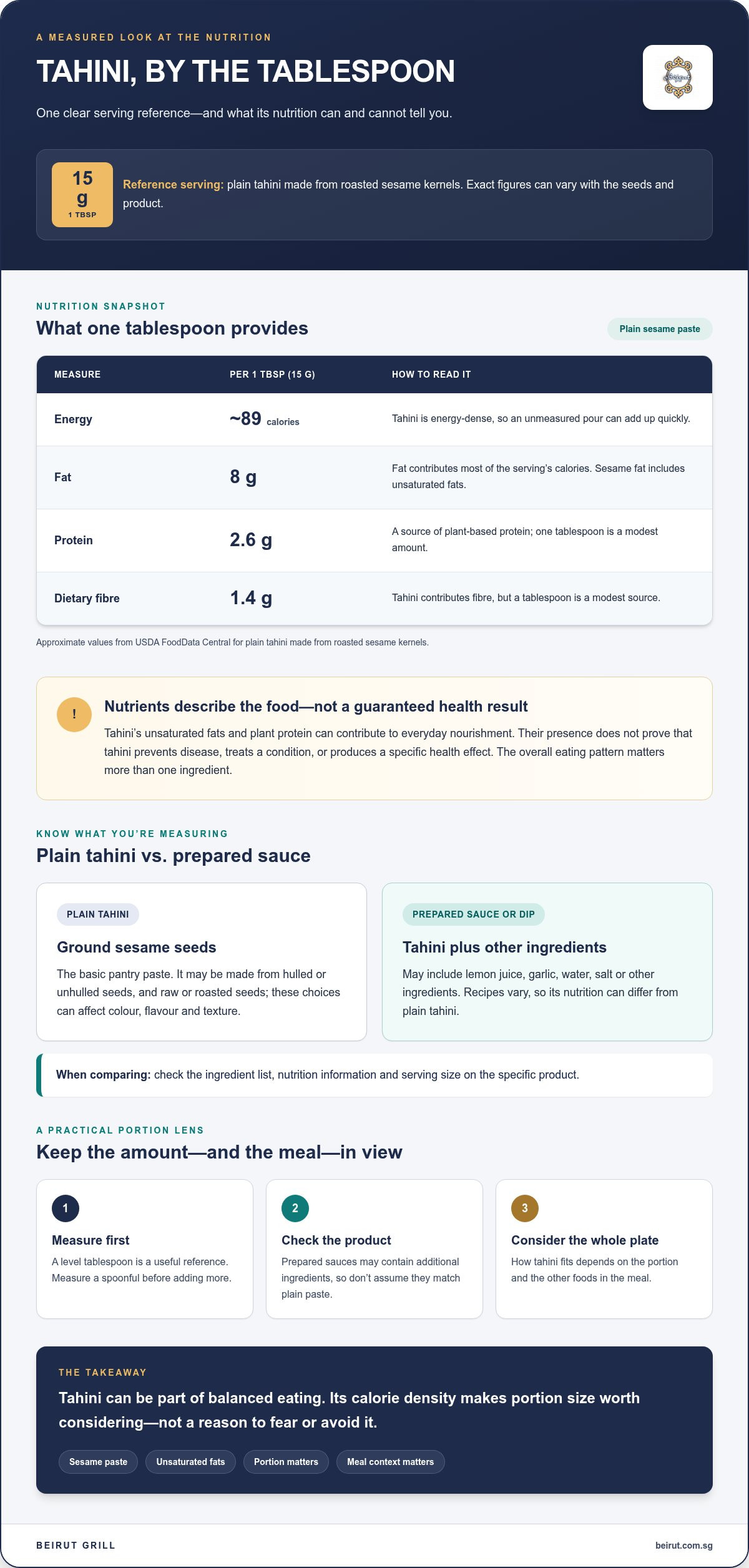
Tahini’s nutrition is easiest to understand when you have a measured serving in view. As a reference, one tablespoon (15 g) of plain tahini made from roasted sesame kernels provides about 89 calories, 8 g of fat, 2.6 g of protein and 1.4 g of dietary fibre, based on values in USDA FoodData Central. Exact figures can vary with the sesame seeds and product.
In brief: tahini is an energy-dense sesame paste that supplies mostly fat, alongside plant protein and dietary fibre.
Which Nutrients Are Found in Tahini?
Fat contributes substantially to tahini’s energy: in a 15 g tablespoon, 8 g of fat accounts for most of its calories. Sesame fat includes unsaturated fats, which can be part of a balanced eating pattern. Tahini also contributes plant protein and fibre, although a tablespoon is a modest source of both. Its nutrient profile describes what the food contains, not a promise of a particular health outcome.
Sesame paste also contains minerals, but the amounts can vary by product and preparation. For a clear comparison, use the nutrition information for the specific tahini you’re choosing rather than assuming every jar has identical values.
Why Serving Size Changes the Nutrition Picture
A level tablespoon gives you a useful reference point. An unrestricted pour can add up quickly because tahini is calorie-dense. If you’re adding it to a dressing or spreading it on bread, measure a spoonful first, then decide whether you want more. This keeps the amount visible without turning tahini into a food to fear or avoid.
One tablespoon is a comparison measure, not an ideal portion for everyone. Your needs and the rest of the meal matter. Prepared sauces may also include ingredients such as oil or salt, so their nutrition can differ from plain tahini. Check the product label and serving size before comparing figures, and remember that the estimate above applies to plain sesame paste.
So, is tahini good for you? Its nutrition offers a useful starting point, but portion and context shape how it fits into a meal. Lebanese food culture enjoys ingredients as part of a broader table. Explore Lebanese mezze dining as one way to appreciate that tradition.
Is Tahini Healthy? Potential Benefits and Important Limits
Is tahini good for you? It can be a nourishing ingredient in a balanced diet, but no single food determines whether an eating pattern is healthy. Tahini’s unsaturated fats can contribute to a varied diet, while its energy density means portions still matter. Calorie-dense doesn’t automatically mean unhealthy, and it doesn’t make a food unlimited.
A food’s value depends on the portion you eat and the overall diet it joins. That’s a more useful guide than labelling tahini simply “good” or “bad.” A spoonful mixed into a meal is different from adding it freely without considering the rest of the plate.
What Potential Benefits Can You Reasonably Attribute to Tahini?
Tahini provides nutrients, including unsaturated fats and plant protein, that can contribute to everyday nourishment. That describes its composition, not a guaranteed personal result. The presence of a nutrient alone doesn’t show that eating tahini will prevent disease, treat a condition or produce a specific health effect.
Research on individual nutrients or sesame compounds shouldn’t be mistaken for proof that tahini itself delivers a particular outcome. Overall eating patterns matter more than one ingredient. Consider tahini alongside the variety of foods in your meals, rather than expecting it to compensate for an otherwise unbalanced diet.
Who May Need Extra Care With Tahini?
For anyone with a sesame allergy, tahini is not suitable because it is made from sesame seeds. Avoid it if you’re allergic to sesame, and take advice from a qualified healthcare professional about managing your allergy and interpreting product labels. If you have a known allergy and experience a reaction, follow your clinician’s guidance for your personal care.
Needs differ, too. Someone managing their energy intake may want to measure tahini rather than pour it freely, while a person following a specific nutrition plan may need to account for it in a different way. A registered dietitian or other qualified healthcare professional can offer advice tailored to your circumstances, especially if you have medical or dietary concerns.
Enjoyed thoughtfully, tahini can bring its distinctive sesame richness to a meal without carrying the burden of a health claim. Let portion, preference and the foods around it guide its place at the table.
How Much Tahini Should You Eat, and How Can You Use It?
There isn’t one ideal amount for everyone. A practical approach is simple: check the ingredients, measure a portion, then consider how it fits with the rest of your meal. A level tablespoon can be a useful starting measure for noticing how much you’re adding, not a rule about how much you should eat. A free pour is harder to track, especially when tahini is stirred into a sauce or dressing.
Simple Ways to Add Tahini to Meals
Use a measured spoonful to bring a creamy texture and toasted, nutty flavour to a dressing, sauce or dip. Thin it with water and add lemon for brightness, then serve it alongside vegetables, legumes or other parts of a meal. Hummus offers a familiar Lebanese mezze context for sesame paste, though recipes vary. Think of tahini as one element in a varied spread, not the whole meal.
How to Read a Tahini Label
Start with the ingredient list: plain tahini may list sesame seeds alone, while prepared sauces can include additions such as water, lemon, garlic, salt or other ingredients. Then compare the serving sizes on nutrition panels. Values aren’t directly comparable if one product lists a smaller serving than another. Check for added salt or sweeteners rather than assuming every sauce has the same recipe.
The comparison below is a guide to what labels may show, not a reading of specific brands. Recipes vary, so use the actual package for nutrition details.
| What to compare | Plain tahini | Prepared tahini sauce |
|---|---|---|
| Ingredients | May list sesame seeds alone | May include sesame plus ingredients such as water, lemon, garlic or salt |
| Serving size | Check the stated amount on the label | Check the stated amount; it may differ from plain paste |
| Salt or sweeteners | Check the ingredient list and nutrition panel | Check for added salt or sweeteners, which vary by product |
So, is tahini good for you? Its place depends on the amount, the specific product and what accompanies it. Keep the portion visible, then enjoy its flavour as part of a balanced plate or shared mezze table. Explore Lebanese mezze dining for inspiration from this generous food tradition.
Tahini in Lebanese Mezze: A Delicious Part of the Bigger Picture
So, is tahini good for you? It can belong in balanced eating, with portion and the wider meal helping determine how it fits. Its place in Lebanese and Middle Eastern food culture is broader than any nutrition label: sesame paste is one ingredient among many, enjoyed for its savoury depth and ability to bring a creamy note to a dish.
Tahini’s Place Across Middle Eastern Food Traditions
Tahini has a familiar role across Middle Eastern cooking, appearing in different sauces, dips and other preparations. Not every regional dish includes it, and recipes vary, but sesame’s nutty flavour can complement a table of contrasting textures. For a wider look at the region’s culinary traditions, explore this Middle Eastern food guide.
A mezze table invites you to savour that variety at an unhurried pace. A cool, creamy dip might sit alongside crisp vegetables, fresh herbs, warm bread or more substantial dishes. Tahini can contribute where a recipe calls for it, but it needn’t define the meal. The pleasure is in the interplay of flavours and textures, and in choosing a selection that feels satisfying to you.
Enjoying Mezze With Curiosity and Balance
Think of mezze as a collection of dishes rather than a serving of one ingredient. Beirut Grill serves hummus as part of its Lebanese mezze, alongside a variety of flavours and textures. To explore the wider food traditions behind shared Mediterranean dining, read this Mediterranean food guide.
Curiosity is a lovely guide at the table. Notice how a selection of dips, salads and other mezze balances richness with freshness, and choose portions that suit your appetite. Tahini can be part of that varied spread without needing to be treated as either a superfood or something to avoid. Its value, like that of any single ingredient, depends on context.
Discover Lebanese mezze through its varied flavours, traditional techniques and generous spirit of sharing. A table offers more than one taste to explore, with sesame paste taking its place as one part of a much larger culinary picture.
Enjoy Tahini With Balance and Curiosity
So, is tahini good for you? It can fit into a balanced diet. Made from sesame seeds, it provides unsaturated fats alongside protein and fibre, but it’s energy-dense, so portion size and the rest of your meal matter. Its nutrients describe what tahini contains, not a guarantee of a particular health outcome.
Use a measured amount, check whether you’re choosing plain sesame paste or a prepared sauce, and consider how it complements the whole plate. A single ingredient doesn’t define a diet. In the same way, Lebanese mezze is best appreciated as a varied selection, with different flavours and textures coming together around the table.
At Beirut Grill, Lebanese and Middle Eastern mezze, including hummus, are served in a dining experience shaped by traditional culinary techniques. Discover the pleasure of a shared table and explore Lebanese mezze and dining at Beirut Grill.
Enjoy tahini thoughtfully, and savour the rich traditions that make every meal more than the sum of its ingredients.
Frequently Asked Questions
Is tahini good for you every day?
It can fit into your daily diet if the portion suits your needs and the rest of your meals are varied. Tahini provides unsaturated fats, plant protein and fibre, but it’s energy-dense, so frequent generous servings can add up. There’s no single daily amount that works for everyone. If you have specific health or nutrition concerns, a qualified healthcare professional can offer advice tailored to you.
How much tahini should you eat in one serving?
There’s no universally right serving, but a level tablespoon is a practical amount to measure and use as a reference. It can add flavour to a dressing or dip without becoming an unrestricted pour. Your appropriate portion depends on your dietary needs and what else is in the meal. For packaged tahini or sauce, check the label’s serving size before comparing nutrition figures.
Is tahini high in calories?
Yes. Plain tahini is energy-dense because fat contributes substantially to its calories. USDA FoodData Central lists about 89 calories in one tablespoon (15 g) of tahini made from roasted sesame kernels. The amount in a particular product can differ, so treat this as a reference rather than a label for every jar. Measuring a spoonful can make it easier to keep track of how much you add.
Can tahini be part of a weight-conscious diet?
Yes, tahini can be included in a weight-conscious eating pattern, but portion size is useful to keep in mind because it’s energy-dense. Measure an amount that fits your meal rather than pouring freely, and consider the meal as a whole. No single ingredient determines weight changes, and tahini doesn’t have a special effect on weight. For individual advice, consult a qualified dietitian or healthcare professional.
What nutrients does tahini contain?
Tahini contains fat, including unsaturated fats, as well as plant protein and dietary fibre. As a reference, one tablespoon (15 g) of tahini made from roasted sesame kernels provides about 89 calories, 8 g of fat, 2.6 g of protein and 1.4 g of fibre, according to USDA FoodData Central. Values can vary with the product and preparation, so check its nutrition label for a closer estimate.
Is tahini safe for people with sesame allergies?
No. Tahini is made from sesame seeds, so people with a sesame allergy should avoid it. Check ingredient information carefully, including for prepared sauces and dips, since ingredients vary. If you’re unsure about a product or how to manage a sesame allergy, speak with a qualified healthcare professional. Anyone with a known allergy should follow their clinician’s guidance for avoiding sesame and responding to accidental exposure.
What is the difference between tahini and hummus?
Tahini is a paste made from ground sesame seeds. Hummus is a prepared dip, commonly made with chickpeas and other ingredients; recipes vary and may include tahini. They’re not interchangeable: tahini is one ingredient, while hummus is a finished dish. Beirut Grill serves hummus as part of its Lebanese and Middle Eastern mezze. If you need to avoid a specific ingredient, check the dish or product information.