
When searching for a memorable middle eastern restaurant experience, it helps to look beyond a signature dish and consider how the whole meal comes together. Lebanese dining can set the mood for a relaxed evening, a celebration or a leisurely meal shared over mezze.
Lebanese dining invites everyone to explore. Hummus, baba ghanoush and tabbouleh bring creamy, smoky and herb-bright flavours to the table, while charcoal-grilled Shish Taouk, Lamb Kofta and Mixed Grill make satisfying mains. A well-rounded menu also gives the group a choice of vegetarian dishes, seafood, drinks and traditional desserts.
This guide looks at the details that make a restaurant experience fit the occasion, from shared dishes and grilled mains to Lebanese beverages and desserts. It also introduces Beirut Grill, serving Lebanese and Middle Eastern cuisine since 2009, with a pork-free menu that spans mezze, charcoal-grilled meats and more. Here’s what to consider when planning your next Lebanese meal.
Key Takeaways
- Choose a dining experience that suits the occasion, whether you’re planning an intimate dinner, a lively gathering or a celebration.
- Understand how mezze, warm shared plates and charcoal-grilled mains can shape the pace and balance of a Lebanese meal.
- Compare restaurants by atmosphere, menu variety and how well the dishes work for your group, rather than relying on cuisine labels alone.
- Plan a meal that welcomes different preferences by balancing fresh, vegetarian and grilled choices, then leave room for a traditional dessert.
- Beirut Grill brings together Lebanese mezze, charcoal-grilled dishes, seafood, vegetarian choices, beverages and traditional desserts.
What makes a Middle Eastern restaurant experience worth choosing?
Start with the kind of meal you have in mind. For a relaxed dinner, look for a menu that lets conversation unfold, with shared starters and mains to suit different tastes. For a celebration or group gathering, consider whether there is enough variety for everyone to find something they enjoy. The strongest fit brings the food, hospitality and occasion together rather than relying on a cuisine label or a single attraction.
A memorable Middle Eastern restaurant experience brings people together through generous hospitality, shared dishes and a meal that moves naturally from first tastes to a satisfying finish. Culinary heritage gives the experience depth, while the order and variety of dishes set its rhythm. Entertainment may matter for some occasions, but it is not a substitute for a menu and welcome that suit the group.
How atmosphere shapes the evening
The setting influences how a meal feels, but the practical question is whether it fits your plans. A leisurely dinner calls for a comfortable pace and dishes worth lingering over; a group meal benefits from a menu that makes sharing easy. Think about whether you want to try several small plates, focus on a main or combine both. Beirut Grill’s Lebanese and Middle Eastern menu is designed to take diners from mezze through charcoal-grilled dishes and dessert.
What diners can look for beyond a cuisine label
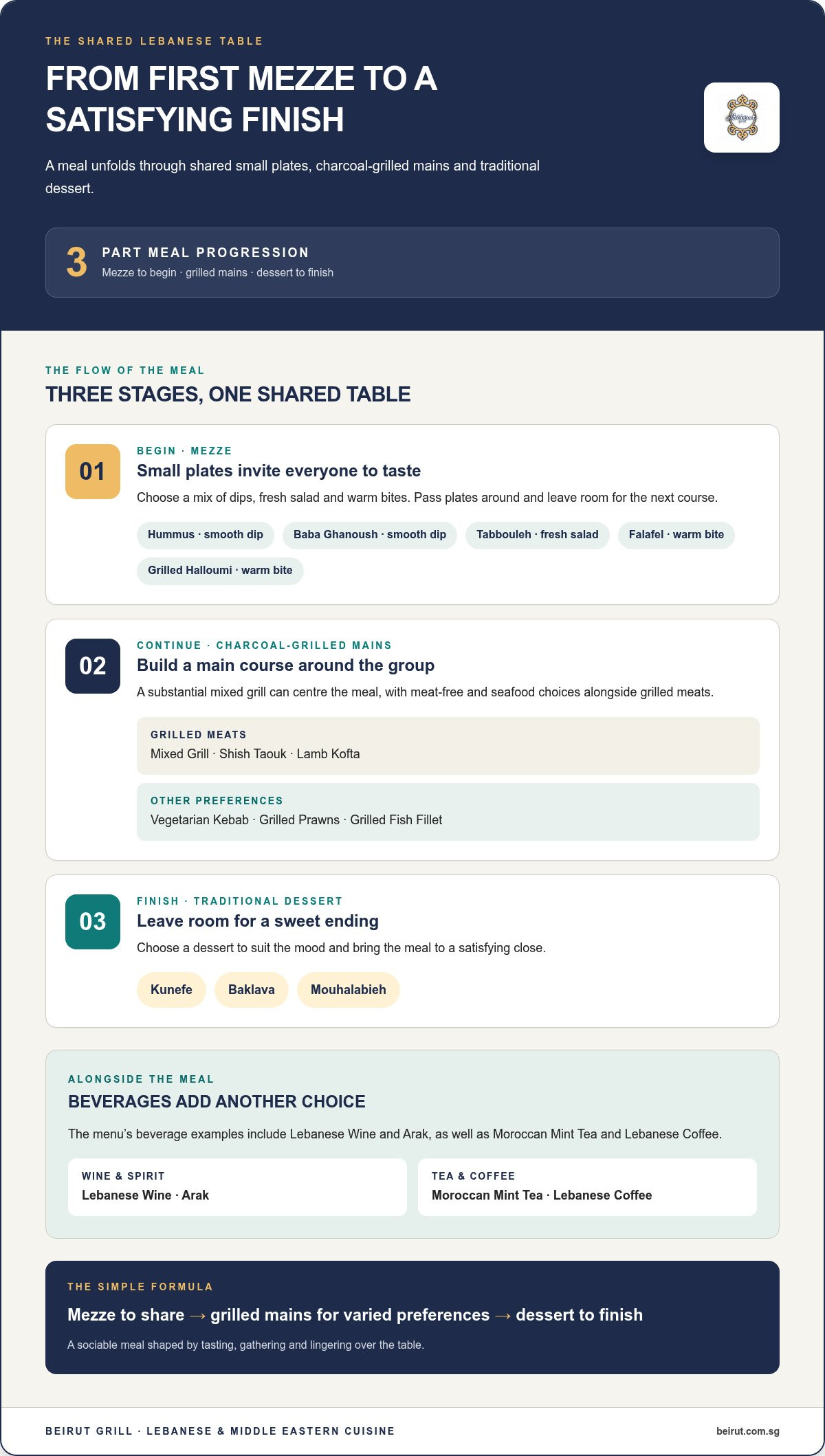
Assess the meal as a whole. Does the menu let you begin with mezze, continue with grilled dishes and finish with dessert? At Beirut Grill, examples include Hummus, Baba Ghanoush and Tabbouleh, followed by Mixed Grill or Vegetarian Kebab, with Baklava, Kunefe and Mouhalabieh among the traditional desserts. That range gives a group room to build a varied meal rather than choosing one dish for everyone.
Shared plates make dining social: guests can sample different flavours and shape the meal together. Beverages contribute to the experience, too, from Lebanese Wine and Arak to Moroccan Mint Tea or Lebanese Coffee. To explore the culinary context behind these dishes and methods, read about the culinary traditions of Lebanon.
Heritage and hospitality are practical comparison points, not claims of superiority. Look for a clear connection between the cuisine, the menu’s range and the way the meal is enjoyed. Beirut Grill has served Lebanese and Middle Eastern cuisine since 2009; the food and the pleasure of sharing it are central to the experience.
How Lebanese mezze and charcoal grilling create a shared meal
A Lebanese meal often unfolds in courses, with small plates inviting the table to taste and talk before the mains arrive. The concept of mezze is central to this shared style of dining: rather than ordering one dish each and eating separately, guests can sample a varied spread together. When exploring a middle eastern restaurant kampong glam search, consider whether the menu gives you the choice to build that kind of sociable meal.
Choosing mezze for the table
Build contrast into the opening round. Hummus and Baba Ghanoush offer smooth dips, while Tabbouleh brings a fresh salad choice. Falafel and Grilled Halloumi add more substantial bites. Together, these dishes give the table different textures and flavours to explore, with vegetarian choices among the options. A broader Middle Eastern food guide can also help diners discover how regional cuisines use shared plates in different ways.
There’s no need to treat mezze as a fixed checklist. Choose a mix of dips, salads and warm bites that lets everyone sample a few flavours, then leave room for the next course. Plates can be passed around as they arrive, making the meal feel unhurried and giving conversation space to grow.
From mixed grill to a satisfying finish
For the main course, Beirut Grill’s Mixed Grill makes a substantial centrepiece. Shish Taouk and Lamb Kofta offer other charcoal-grilled choices, while Vegetarian Kebab gives diners a meat-free main. Grilled Prawns and Grilled Fish Fillet bring seafood into the mix. Considering these categories before ordering helps a group choose a spread that reflects different preferences.
Finish with a traditional dessert that suits the mood: Kunefe, Baklava and Mouhalabieh each offer a different way to close the meal. Mezze to begin, grilled mains to share and dessert to finish create a complete Lebanese meal. At Beirut Grill, that progression brings together tasting, gathering and lingering over the table. Explore the Lebanese dining experience and the menu’s choices from opening plates through dessert.
How to compare Middle Eastern restaurants for your occasion
A useful comparison starts with the evening you want, not a ranking. For a middle eastern restaurant kampong glam search, weigh how the menu works for sharing, whether it suits the people at your table and how well its choices fit the occasion. The guide below compares experience types rather than declaring one style best for everyone.
| Experience | Atmosphere | Shared plates | Group preferences and occasion fit |
|---|---|---|---|
| Relaxed meal | A comfortable setting that encourages an unhurried dinner. | A few mezze to enjoy together, followed by mains. | Works well when the group wants conversation and a flexible pace. |
| Group dinner | A welcoming setting where everyone can gather around the meal. | A varied spread lets guests sample and share. | Look for meat, seafood and vegetarian dishes to suit different preferences. |
| Celebratory occasion | A distinctive dining experience can make the evening feel special. | Shared starters, substantial mains and dessert create a sense of occasion. | Some diners may value entertainment, such as belly dancing, while others may prefer to focus on food and conversation. |
Match the restaurant setting to the occasion
For a quiet dinner, prioritize a menu and pace that leave room to linger. A group meal benefits from dishes that can be shared, while a celebration may call for a broader spread from mezze to dessert. Beirut Grill’s menu supports this progression with Lebanese mezze, charcoal-grilled mains, seafood, vegetarian choices, beverages and traditional sweets.
Compare menu breadth and group preferences
Look for meaningful choices across meat, seafood and vegetarian dishes. Beirut Grill’s menu includes Mixed Grill, Shish Taouk and Lamb Kofta, alongside Grilled Prawns, Grilled Fish Fillet and Vegetarian Kebab. Its pork-free menu is another concrete detail for diners to consider, though individual dietary needs can differ. A selection of mezze adds variety and makes sharing feel natural.
Hospitality and cultural context matter, too. Reading about Lebanese dining customs can offer perspective on the communal spirit behind a shared meal. Beirut Grill brings together Lebanese food and a menu suited to exploring different dishes at the table. For a closer look at the food and dining experience, explore the Beirut Grill Lebanese dining experience.
Plan a Middle Eastern meal that works for the whole group
A shared meal is easier to shape when you plan in a simple sequence: decide what kind of occasion you’re marking, consider the group’s tastes, then build a menu that moves from opening dishes to mains and dessert. This approach helps everyone find something to enjoy without turning the meal into a rigid checklist.
- Start with the occasion. A relaxed dinner may call for a leisurely mix of dishes, while a group gathering can benefit from variety that gives everyone something to try.
- Consider the table. Think about whether guests prefer vegetarian dishes, meat, seafood or a combination. Beirut Grill’s menu is pork-free; that detail isn’t the same as halal certification.
- Shape the meal. Bring together dips, salads and warm mezze, then choose mains and leave room for dessert. Let the group’s preferences guide the mix rather than prescribing portions.
Build a shared menu for varied tastes
For a varied table, pair vegetarian mezze with grilled choices. Hummus and Falafel can begin the meal, while Mixed Grill offers a meat-centred main and Grilled Fish Fillet adds a seafood option. This contrast gives diners different directions to explore. Menu variety can help a group plan together, though it shouldn’t be taken as a promise of allergy handling or specific dietary accommodations.
When comparing a middle eastern restaurant kampong glam option for a group, look beyond the number of dishes. Consider whether guests with different preferences can find something they enjoy, and whether the menu gives you a natural progression from shared starters to mains.
Set expectations for drinks and dessert
Drinks and desserts help bring the meal to a satisfying close. Beirut Grill offers Lebanese Wine and Arak, as well as Lebanese Coffee and Moroccan Mint Tea. These give diners different options to suit personal taste and the mood of the meal, rather than fixed pairings. For dessert, Baklava, Kunefe and Mouhalabieh offer traditional ways to finish. Choosing one or more gives the table a final shared moment without needing to plan every detail in advance.
With the occasion, preferences and meal sequence in mind, you can make the evening feel considered while leaving room for discovery. Explore Beirut Grill’s menu and plan a Lebanese meal around the dishes that appeal to your group.
Discover Beirut Grill’s Lebanese dining experience
A memorable meal comes together through more than a single dish. Since 2009, Beirut Grill has served Lebanese and Middle Eastern cuisine through shared mezze, charcoal-grilled dishes, seafood, vegetarian choices, beverages and traditional desserts. That breadth gives diners room to shape a meal around different tastes, whether they’re gathering over a selection of plates or choosing individual mains.
What brings the Beirut Grill experience together
Begin with mezze such as Hummus, Baba Ghanoush or Falafel, then turn to a main like Mixed Grill or Vegetarian Kebab. Grilled Prawns and Grilled Fish Fillet offer seafood choices, while Lebanese Wine, Arak, Lebanese Coffee and Moroccan Mint Tea provide distinct ways to complement the occasion. Baklava, Kunefe and Mouhalabieh make traditional dessert options for a lingering finish.
The menu brings different parts of Lebanese dining together, from the first mezze to a charcoal-grilled main and dessert. That range can make a meal enjoyable for friends or family with different tastes, without requiring everyone to choose the same kind of dish. Beirut Grill has been serving Lebanese and Middle Eastern cuisine since 2009.
Take the next step towards your meal
Whether you’re planning a relaxed dinner or bringing a group together, browsing the menu can help you picture how the evening might unfold, from the first mezze to dessert. Explore Beirut Grill’s dishes and plan a Lebanese meal shaped by shared plates and considered choices.
Explore Beirut Grill’s menu and plan your Lebanese dining experience.
Choose a Meal Worth Sharing
A memorable dining experience comes from the balance of shared dishes and a menu that gives everyone at the table something to enjoy. When choosing a middle eastern restaurant kampong glam for your occasion, consider how mezze can set a welcoming pace, how grilled mains can anchor the meal and whether the menu offers choices for the group.
Beirut Grill has served Lebanese and Middle Eastern cuisine since 2009. Its pork-free menu brings together mezze, Mixed Grill, seafood and vegetarian choices. Lebanese beverages and traditional desserts complete the experience, making it easy to plan a meal that moves from the first shared plates to a lingering finish.
Ready to choose your dishes and plan a Lebanese meal to remember? Explore Beirut Grill’s menu. Gather your guests, follow your appetite and enjoy the pleasure of sharing the table.
Frequently Asked Questions
What should I look for when choosing a Middle Eastern restaurant?
Choose a restaurant by matching its menu to your occasion and the people at your table. For a middle eastern restaurant kampong glam search, compare the range of shared mezze and whether the menu offers substantial mains, vegetarian dishes, seafood and desserts. Beirut Grill brings these choices together with Lebanese mezze, charcoal-grilled dishes and traditional sweets, so diners can shape a varied meal around the table rather than relying on a cuisine label alone.
What is usually included in a Lebanese mezze meal?
Lebanese mezze usually refers to small dishes served to share, though the selection varies from meal to meal. A spread may begin with dips and salads, then include warm bites before larger dishes arrive. Beirut Grill’s examples include Hummus, Baba Ghanoush, Tabbouleh, Falafel and Grilled Halloumi. Their contrasting textures and flavours invite diners to sample together, making mezze a sociable way to begin a Lebanese meal.
Is Beirut Grill’s menu pork-free?
Yes, Beirut Grill’s menu is pork-free. This can be useful information for diners who prefer to avoid pork, but it should not be confused with halal certification, which is a separate claim. The menu also spans Lebanese mezze, Mixed Grill, seafood and vegetarian choices, along with beverages and traditional desserts. Consider the full range when planning a meal around the preferences of your table.
Can a group with vegetarian and meat-eating diners share a Lebanese meal?
Yes, a shared Lebanese-style meal can bring vegetarian and meat choices to the same table. Beirut Grill’s menu includes vegetarian options such as Hummus, Falafel, Grilled Halloumi and Vegetarian Kebab, alongside Mixed Grill and seafood dishes. A selection of mezze can add variety before mains. These examples help a group plan across different tastes, but they don’t imply specific allergy accommodations or customisations.
What is a mixed grill at a Middle Eastern restaurant?
A mixed grill is a grilled selection served together, making it a substantial choice for diners who want to enjoy a range of grilled flavours. Beirut Grill features Mixed Grill alongside individual options such as Shish Taouk, Lamb Kofta and Beef Kebab. The exact composition can vary by restaurant, so the name alone doesn’t describe every item. Pairing a mixed grill with mezze can create a fuller shared meal.
What drinks and desserts can I enjoy with Lebanese food?
Beirut Grill offers Lebanese Wine and Arak, as well as Lebanese Coffee and Moroccan Mint Tea. These provide different beverage options to suit personal taste and the mood of the meal, rather than fixed pairings. For dessert, examples include Baklava, Kunefe and Mouhalabieh. Diners can choose a sweet finish to share or enjoy individually, bringing the meal to a close with a taste of Lebanese tradition.
Does a Middle Eastern restaurant experience have to include live entertainment?
No, live entertainment isn’t essential to enjoying a Middle Eastern restaurant experience. Diners can choose based on the cuisine, hospitality, atmosphere and shared dishes, with entertainment as an optional preference for some occasions. A menu that suits the group and a meal that unfolds at a comfortable pace can be just as central to the evening.