
The best middle eastern desserts besides baklava may be the ones that take you furthest from its crisp, layered sweetness. If baklava is your familiar starting point, it’s natural to wonder what else is worth trying and how an unfamiliar dessert might taste.
From delicate pastry to cool, silky pudding, Middle Eastern sweets offer a rewarding range of textures and flavours. Regional names and preparations can make the first choice less obvious. Knowing whether a dessert is crisp, soft, creamy or syrupy can help you order with confidence.
This guide compares seven beloved treats by their defining textures, flavour profiles and serving styles, with practical questions to ask when you see one on a menu. Beirut Grill lists Kunefe and Mouhalabieh, two distinct styles, alongside Lebanese Coffee and Moroccan Mint Tea as beverage options to consider. Whether you’re drawn to warm pastry or a gentle, chilled finish, there’s a sweet discovery beyond baklava to suit your taste.
Key Takeaways
- The best middle eastern desserts besides baklava come from diverse regional traditions, so names and preparations can vary.
- Use texture as your first guide: decide whether you’re drawn to crisp pastry, soft pudding, filled dough or cake with a syrup finish.
- Before ordering, ask how sweet a dessert is, whether it contains dairy and how it’s typically served.
- Explore qatayef, basbousa and ma’amoul to discover styles beyond pastry and pudding.
- Beirut Grill lists Kunefe and Mouhalabieh, offering two different dessert styles to consider.
Why explore Middle Eastern desserts besides baklava?
Baklava offers a familiar point of entry: delicate pastry layers, a rich filling and, in many versions, a sweet finish. But the best middle eastern desserts besides baklava aren’t simply variations on the same formula. Some are creamy and spoonable; others are filled, crisp or softly cake-like. Exploring them means discovering different ways sweetness, texture and tradition come together at the table.
A Middle Eastern dessert guide is a way to explore distinct regional sweets, not just a list of baklava variations. “Middle Eastern” covers many culinary traditions rather than one uniform cuisine. Dessert names, ingredients and preparations can change between countries, communities and family recipes, so the same name may not promise the same experience everywhere.
What counts as a Middle Eastern dessert?
Think of a broad family of sweets shaped by varied local traditions. A dessert menu might include pastry, cheese-based sweets, chilled puddings and filled dough, each with its own texture and serving style. Kunefe, for example, is known by several spellings and has regional variations. Discover Kunefe for an overview of its names and forms.
How these sweets differ from baklava
Baklava is associated with layered pastry, but other desserts offer a different kind of pleasure: a creamy spoonful, a stretchy cheese texture, crisp pastry around a filling or a tender cake with a syrup finish. Sweetness also varies by recipe and preparation. Syrup may be prominent in one dessert and restrained or absent in another, while nuts and dairy are not universal ingredients. If you’re unsure, ask what the dessert contains and how it’s served.
A quick guide to Middle Eastern dessert styles beyond baklava
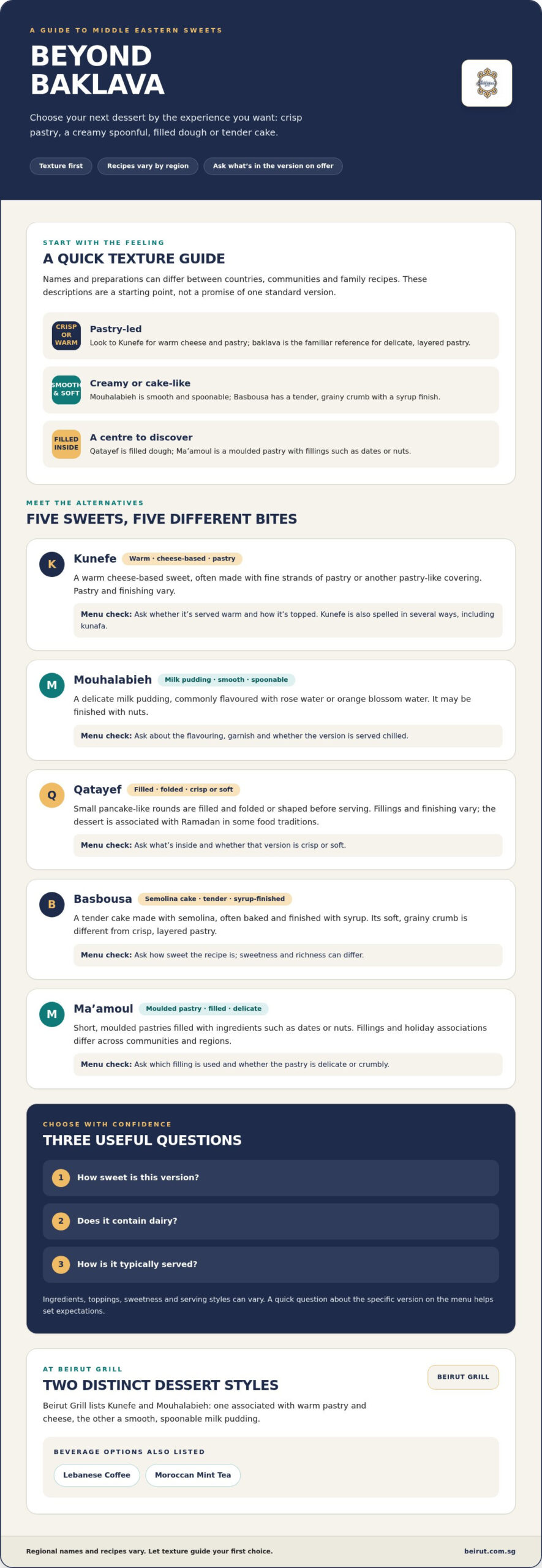
Choosing by texture can make an unfamiliar dessert name easier to approach. The best middle eastern desserts besides baklava range from silky puddings to crisp, filled pastries, and their names or preparations may vary by region. Use this guide as a starting point, then ask how a particular version is made if its ingredients or serving style matter to you.
Pastry brings crispness, pudding offers a cool, spoonable finish, and filled dough puts a soft or crisp exterior around a more substantial centre. Here are five styles to help you find a first bite you’ll enjoy.
Cheese-based and creamy desserts
- Kunefe: A warm cheese-based sweet, often made with fine strands of pastry or another pastry-like covering. Pastry and finishing vary, so ask whether the version on offer is served warm and how it’s topped. For more background, look for an ultimate guide to kunafa, another common spelling of the name.
- Mouhalabieh: A milk pudding with a smooth, delicate texture. It’s commonly flavoured with rose water or orange blossom water and may be finished with nuts, though recipes and garnishes differ.
These two styles offer contrasting experiences: Kunefe is associated with warm pastry and cheese, while Mouhalabieh is a creamy, spoonable dessert. Beirut Grill lists both among its desserts, giving diners two distinct styles to consider. Explore the menu at Beirut Grill.
Filled, baked, and spoonable sweets
- Qatayef: Small pancake-like rounds are filled and folded or shaped before serving. Fillings and finishing vary, and qatayef is particularly associated with Ramadan in some food traditions. Ask whether the version is crisp or soft and what’s inside.
- Basbousa: A tender cake made with semolina, often baked and finished with syrup. Its texture differs from layered pastry: expect a soft, grainy crumb rather than crisp flakes. Recipes vary, so sweetness and richness can differ too.
- Ma’amoul: Short, moulded pastries filled with ingredients such as dates or nuts. Fillings and holiday associations differ across communities and regions. Ask which filling is used and whether the pastry is delicate or crumbly.
These descriptions are useful guides, not guarantees of a single standard recipe. A simple question about filling, dairy, syrup or serving temperature can turn an unfamiliar menu choice into a more confident one.
How do these desserts compare in texture and sweetness?
The best middle eastern desserts besides baklava can be easier to choose when you compare how each feels to eat, not just what it’s called. A silky pudding, crisp pastry and syrup-finished cake offer distinctly different experiences. The table is a general guide: recipes, toppings and serving styles can affect both texture and perceived sweetness.
| Dessert | Typical texture | General flavour profile | Dessert style |
|---|---|---|---|
| Kunefe | Crisp pastry with a soft, stretchy cheese centre in many versions | Rich, often balanced with a sweet finish | Warm cheese-based pastry |
| Mouhalabieh | Smooth and spoonable | Mild and creamy; flavourings and garnishes vary | Milk pudding |
| Qatayef | Soft or crisp, depending on preparation | Varies with its filling and finishing | Filled dough |
| Basbousa | Tender, grainy cake crumb | Often sweet, with syrup levels differing by recipe | Semolina cake |
| Ma’amoul | Delicate, often crumbly pastry | Depends on the filling, which may include dates or nuts | Filled pastry |
Which Middle Eastern desserts are creamy, crisp, or chewy?
For a cool, gentle finish, Mouhalabieh’s pudding style contrasts with Kunefe, whose pastry can crackle around a tender, cheese-based centre. Filled pastries and dough bring another kind of bite: a soft exterior may give way to a rich filling, while a baked version can have a firmer edge. Basbousa is different again, with a cake-like crumb rather than pastry layers.
These are useful expectations, not fixed rules. Kunefe’s pastry and finish vary, and qatayef may be served soft or crisp. If texture matters most, ask how the dessert is prepared and whether it arrives warm or chilled.
Are all Middle Eastern desserts very sweet?
No single sweetness level describes the region’s many dessert traditions. A sweet’s overall impression depends on its recipe, the amount of syrup, its filling and the serving portion. Even two versions of the same dessert may taste different. Some offer direct syrupy sweetness; others may seem gentler alongside creamy or toasted flavours.
If you prefer a less-sweet finish, ask whether syrup is added generously, served separately or not used in that version. A quick question about the filling and preparation can help you choose a dessert that suits your taste rather than relying on assumptions.
How to choose a Middle Eastern dessert you will enjoy
An unfamiliar name needn’t make the choice feel uncertain. Start with the texture you usually enjoy, consider how rich or sweet you’d like your dessert to be, then check any ingredients that matter to you. This simple approach can help you find a first pick among the best middle eastern desserts besides baklava.
Choose by texture, not just by name
If you prefer a soft, spoonable finish, a pudding-style dessert such as Mouhalabieh may appeal. For a pastry-led experience, consider Kunefe or ask about filled sweets such as qatayef and ma’amoul. A cake-like option such as basbousa offers a different bite. Treat these descriptions as helpful clues rather than promises about every version, since preparation varies.
Unsure between two styles? If sharing or a smaller serving is an option, it can be a relaxed way to compare flavours without committing to a full portion. You can also ask which dessert is less sweet or whether its syrup or filling gives it a particularly rich finish.
Ask useful questions before ordering
Names and recipes can differ between regions and restaurants, so a brief question can tell you more than a menu description. If you have an allergy or dietary need, ask directly whether the dessert contains dairy, nuts or another ingredient of concern, and whether staff can confirm its ingredients. Don’t rely on the dessert’s name alone to determine what’s in it.
Temperature can shape the experience, too. Ask whether the dessert is served warm or chilled, especially if you’re deciding between a pastry-based sweet and a pudding. If sweetness is a concern, ask how it’s finished and whether syrup is part of the preparation.
A three-step way to choose: Pick a texture you enjoy, ask about sweetness and serving temperature, then confirm any ingredients relevant to your needs.
Beirut Grill lists Kunefe and Mouhalabieh as two different styles to explore. Check the Beirut Grill dessert menu for current menu details before deciding what to try.
Discover Kunefe and Mouhalabieh among Beirut Grill’s listed desserts
Once you’ve found the textures and flavours that appeal to you, Beirut Grill’s listed Kunefe and Mouhalabieh offer two different styles to explore. They’re examples, not an exhaustive guide to Middle Eastern sweets: regional traditions are broad, and a restaurant’s menu reflects its own selection.
Two different dessert experiences to explore
Kunefe is a cheese-based dessert, but its pastry and finishing can vary from one version to another. That variation is part of its appeal: the name points you towards a distinct style, while questions about preparation can clarify what to expect on the plate. For a closer look at its variations, consult an ultimate guide to kunafa, a common alternate spelling.
Mouhalabieh offers a different route: it’s a milk pudding, with a smooth, spoonable character rather than Kunefe’s pastry-led form. Specific flavourings and garnishes depend on the recipe, so check with the restaurant if you’d like to know how its version is prepared. If you’re choosing between them, consider whether you’d rather try a pudding or a warm cheese-based sweet.
Beirut Grill also lists Lebanese Coffee and Moroccan Mint Tea. These are beverage options to consider alongside your meal according to your own preference, not prescribed pairings for either dessert. Check the current menu for availability.
Continue exploring Middle Eastern flavours
Dessert is an inviting entry point into a wider food culture, where names, techniques and ingredients reflect varied regional traditions. If you’d like to continue beyond sweets, a guide to Middle Eastern food is a natural next topic to explore. As with desserts, individual dishes and preparations can differ across menus, so asking about ingredients and serving style is a useful habit.
The best middle eastern desserts besides baklava are the ones that suit your palate, whether you’re curious about a silky pudding or a pastry-and-cheese combination. Explore Beirut Grill’s listed Kunefe and Mouhalabieh, and check the current menu before visiting to confirm what’s available.
Let your next dessert be a discovery
Baklava is only one delicious starting point. The best middle eastern desserts besides baklava span crisp, pastry-led sweets and soft, spoonable puddings, with recipes and sweetness varying across regional traditions. Let texture guide your choice, and ask about ingredients or serving style if you’re unsure.
Beirut Grill’s menu lists Kunefe and Mouhalabieh alongside Baklava, offering two distinct styles to explore. Lebanese Coffee and Moroccan Mint Tea are also listed beverage options, so choose what appeals to you. The restaurant describes its menu as pork-free. Check the menu for current offerings before ordering.
Explore Beirut Grill’s menu and discover its listed desserts, then choose the sweet that suits your curiosity. A first taste can be the beginning of a wider appreciation for Middle Eastern desserts.
Frequently Asked Questions
What are the best Middle Eastern desserts besides baklava?
Good options include Kunefe, a cheese-based sweet with a pastry contrast; Mouhalabieh, a soft milk pudding; qatayef, a filled dough dessert; and basbousa, a semolina cake. Their textures range from crisp or yielding to smooth and spoonable. This is a helpful starting selection, not an exhaustive list: names, ingredients and preparation methods can vary between regions, recipes and family traditions.
Is kunefe the same as kunafa?
Kunefe and kunafa are different spellings used for a related cheese-based dessert style, but names and recipes aren’t identical everywhere. The pastry, filling and finishing can vary by place and preparation, so the name alone won’t always tell you exactly what to expect. For a broader overview of the dessert’s names, variations and preparation, read this guide to kunafa and its variations.
What does Mouhalabieh taste and feel like?
Mouhalabieh is a milk-pudding-style dessert with a smooth, delicate texture and a mild, creamy character. Some recipes use floral flavourings such as rose water or orange blossom water, and garnishes can vary. Ask how a particular version is prepared if those details matter to you. Beirut Grill lists Mouhalabieh; check its current menu to confirm availability before ordering.
Are Middle Eastern desserts always very sweet?
No, sweetness varies with the dessert, recipe, syrup, filling and individual taste. A syrup-finished cake may seem sweeter than a gently flavoured pudding, while different preparations of the same dessert can vary too. There’s no single sweetness level shared across the region’s many traditions. If you prefer a less-sweet treat, ask whether syrup is used and how the dessert is finished.
What Middle Eastern dessert should I try first if I do not like baklava?
Start with the texture you enjoy rather than looking for one universal alternative. If you like soft, creamy desserts, Mouhalabieh may be a good style to ask about. For something cake-like, consider basbousa; if you’re drawn to pastry, ask about Kunefe or a filled sweet. Recipes vary, so check the ingredients and preparation, especially if you’re unfamiliar with a filling.
Are Middle Eastern desserts suitable for people with nut or dairy allergies?
Don’t assume a dessert is free from nuts or dairy based on its name. Ingredients and preparation can differ between recipes, and cross-contact practices may vary between kitchens. If you have an allergy, contact the restaurant directly before ordering and clearly identify the ingredient of concern. Ask about both the dessert’s ingredients and how it’s handled, since no general description can guarantee that a dish is suitable.
What drinks can I enjoy with Middle Eastern desserts?
Coffee and tea can both be considered, but there’s no fixed pairing you have to follow. Choose according to the flavours and finish you enjoy, or ask what beverage options are available. Beirut Grill lists Lebanese Coffee and Moroccan Mint Tea; confirm current availability before ordering. You might prefer a warm drink alongside a dessert, or simply choose the beverage that appeals to you.