
What if the humble chickpea held the secrets to a thousand years of Levantine hospitality within its crisp, golden-brown shell? Most diners have encountered the disappointment of a dry, crumbly falafel that lacks soul, often found in lackluster commercial versions that fail to honor the dish’s prestigious origins. You likely agree that a truly memorable meal should transport you, yet many regional variations leave enthusiasts confused about what constitutes an authentic experience. Since 2009, Beirut Grill has served as a guardian of these culinary traditions, ensuring every bite reflects the vibrant heritage of the Mediterranean.
In this definitive guide, we promise to reveal the sensory delights and culinary secrets behind the perfect Lebanese falafel, from its ancient roots to its place on the modern gourmet table. You’ll learn to identify the hallmarks of premium preparation, such as the specific herb ratios that create a lush green interior and the precise crunch that pairs perfectly with a mixed grill. We will preview the art of the sophisticated mezze spread, showing you how to balance these golden jewels with velvet hummus, sharp tabbouleh, and fine Lebanese wine. Prepare to transform your understanding of this iconic dish into a journey of refined indulgence.
Key Takeaways
- Identify the hallmarks of premium falafel by looking for the vibrant green interior and aromatic crust that separate gourmet mastery from bland imitations.
- Uncover the “Green Heart” technique, where a high ratio of fresh parsley and coriander creates the tender, fragrant center essential to Lebanese tradition.
- Embrace the mezze philosophy, learning how these golden fritters serve as a cornerstone for lingering conversations and sophisticated social dining.
- Gain insight into the meticulous standards of Beirut Grill, where heritage-rich recipes have been crafted since 2009 to honor authentic Levantine flavors.
Defining the Authentic Falafel: More Than Just a Fritter
In the sun-drenched landscapes of the Levant, few dishes command as much reverence as the humble yet magnificent falafel. While a surface-level definition of what is falafel might describe it as a simple bean fritter, for a true Lebanese host, it’s a vegetarian masterpiece. It represents the pinnacle of texture and aroma. Imagine the first bite: a shatteringly crisp, golden-brown exterior giving way to a heart that’s vibrant, tender, and deeply fragrant. This sensory contrast isn’t accidental. It’s the result of centuries of culinary evolution, where ancient recipes were refined into the sophisticated mezze staple we celebrate today.
For connoisseurs, this dish serves as the ultimate litmus test for any Lebanese kitchen. If a chef can’t achieve that perfect balance between the crunch of the crust and the moisture of the center, the rest of the menu is often judged accordingly. It’s the gold standard of culinary skill, demanding precision in temperature and timing to ensure the legume’s natural sugars caramelize without burning. At Beirut Grill, we’ve honored this standard since 2009, treating every batch as a tribute to our heritage.
The Lebanese Distinction: Chickpeas and Heritage
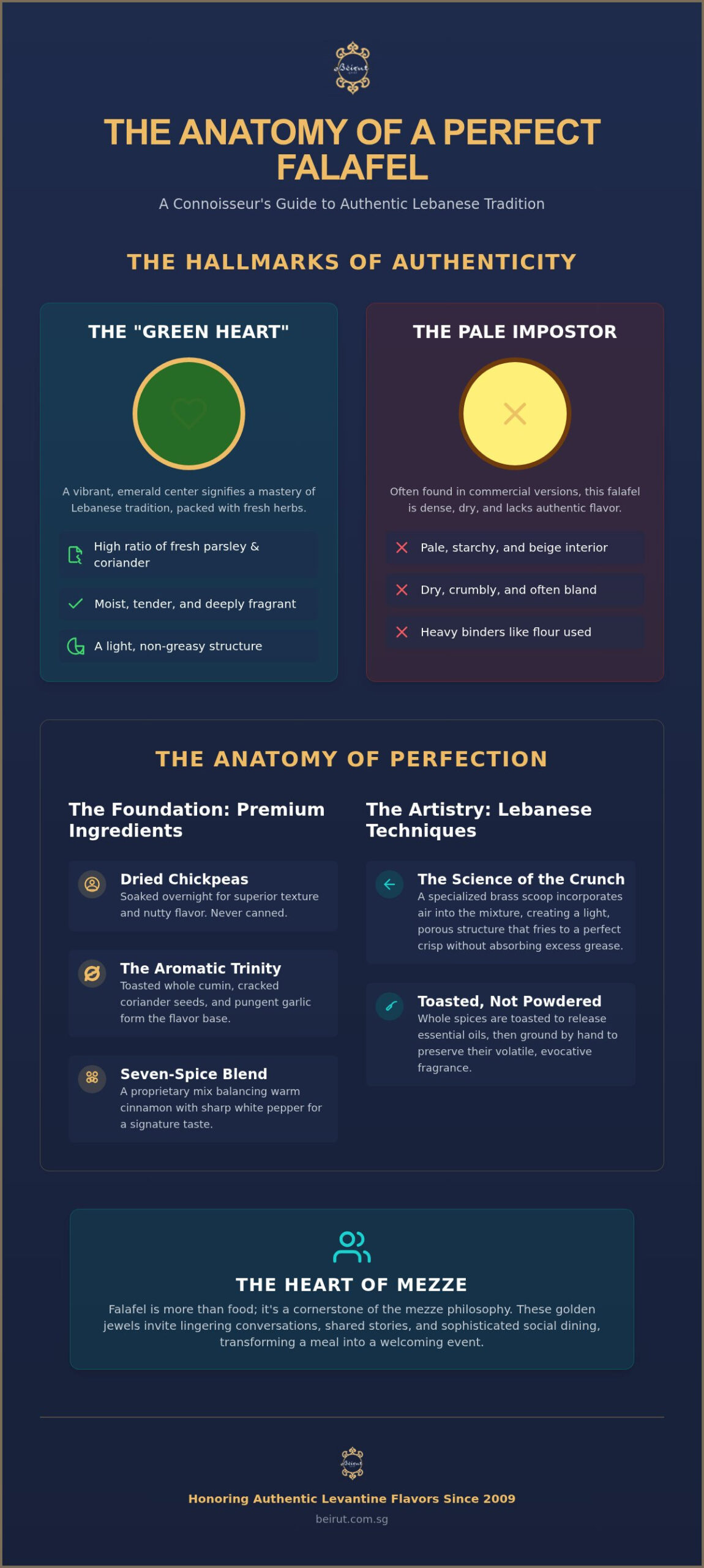
While our neighbors in Egypt traditionally utilize fava beans, the Lebanese preparation relies exclusively on the chickpea. This choice provides a superior, nutty foundation that perfectly complements our traditional spice blends. We don’t use canned varieties. The structural integrity of a premium fritter depends on the patient process of soaking dried chickpeas overnight. This patient preparation creates a coarse meal that holds its shape without the need for heavy binders. It results in a bite that feels substantial yet dissolves effortlessly on the palate, carrying the warmth of the Levant in every morsel.
A Staple of Lebanese Hospitality
Beyond the ingredients, falafel serves as a bridge across social divides, enjoyed by everyone from street-side diners to guests at the most prestigious tables. It’s the heart of the mezze philosophy, a style of dining designed for lingering and genuine connection. In the context of mediterranean food singapore, this communal approach transforms a simple meal into a welcoming event. These golden treasures invite guests to slow down, share stories, and immerse themselves in the warmth of our culture. It’s more than sustenance; it’s an invitation to join a timeless journey of hospitality and pride.
The Anatomy of Perfection: Ingredients and Lebanese Techniques
Achieving the perfect golden fritter is an act of culinary alchemy that begins long before the first batch hits the oil. In the Lebanese tradition, the hallmark of authenticity is the ‘Green Heart.’ Unlike the pale, starchy interiors found in commercial varieties, a true falafel is defined by an emerald center. This vibrant hue comes from a generous, precise ratio of fresh parsley and coriander. These herbs provide more than just color; they imbue the core with a grassy, floral freshness that cuts through the richness of the fried exterior.
This verdant base is elevated by what we call the aromatic trinity: toasted cumin, cracked coriander seeds, and pungent garlic. While the history of falafel reveals many regional adaptations, the Lebanese profile remains distinct for its punchy, herb-forward soul. To ensure every bite is light rather than leaden, we use a specialized brass scoop. This tool doesn’t just create the iconic round shape; it incorporates air into the mixture. This aeration is vital for the science of the crunch. When the dough is dropped into oil at exactly the right temperature, the air pockets expand, creating a light, porous structure that resists absorbing excess grease.
The Essential Spice Profile
The secret to an evocative aroma lies in the preparation of the spices. We never rely on pre-ground powders. Instead, whole seeds are toasted until they release their essential oils, then ground by hand to preserve their volatile fragrance. To add a subtle moisture and a hint of sweetness, finely minced leeks or onions are folded into the mix. Our signature Beirut flavor is defined by a proprietary seven-spice blend that balances the warmth of cinnamon with the sharp clarity of white pepper. If you wish to experience this heritage firsthand, you might consider exploring the authentic hot mezze selection at Beirut Grill.
Texture: The Fine Line Between Crisp and Dry
Texture is where many kitchens fail. A common mistake is processing the chickpeas into a smooth purée, which results in a dense, rubbery interior. We insist on a coarse grind. This creates a crumbly, pebble-like texture that feels light on the tongue. Before cooking, the dough requires a dedicated rest period. This allows the aromatics to meld and the starch to settle, ensuring the fritter doesn’t fall apart. You can always identify a fresh-to-order batch by the way it behaves when broken open. A plume of fragrant steam should escape immediately, signaling that the interior has been perfectly steamed by its own moisture while the shell achieved a shatteringly crisp finish.
Falafel in the Lebanese Mezze Tradition: A Symphony of Flavours
In the heart of a Lebanese home, the table is a vibrant tapestry of shared stories and small plates. Unlike the Western perception of a quick snack, falafel is rarely consumed in isolation. It is the rhythmic pulse of the mezze, a culinary philosophy designed for lingering and meaningful conversation. The Origin of Falafel suggests its journey through the Middle East was one of adaptation, yet in Lebanon, it found its true calling as a textural anchor. Its rugged, golden exterior provides a necessary contrast to the velvet-smooth dips and crisp salads that define our hospitality.
This iconic dish serves as the ultimate vegetarian bridge. While our signature Mixed Grill captures the smoky essence of the charcoal fire, these golden jewels offer a hearty, plant-based alternative that commands equal respect. They ground the meal with their earthy depth, ensuring that every guest feels the warmth of a fully realized feast. Since our founding in 2009, we’ve viewed the mezze table as a curated experience where every element must sing in harmony. It’s a deliberate progression of flavors that rewards the patient diner.
The Holy Trinity of Pairings
A true connoisseur knows that the experience is incomplete without the right companions. First is the Tarator, a sophisticated tahini sauce that balances nutty richness with a sharp, lemony brightness. This dressing doesn’t just coat the palate; it enhances the spices within the fritter. To cleanse the palate between bites, the inclusion of pickled turnips and fresh radishes is non-negotiable. Their acidic bite and peppery crunch ensure the richness never becomes overwhelming. Finally, the fresh pita serves as the traditional vessel, its soft warmth enveloping the perfect combination of textures into a single, indulgent bite.
Curating Your Mezze Table
Building a balanced table requires a thoughtful selection of complementary flavors. Pairing your fritters with hummus creates a delightful double-chickpea experience, contrasting the smooth purée with a crumbly, fried heart. To manage the heat of the hot mezze, we suggest the cooling influence of a vibrant Tabbouleh or the zesty crunch of Fattoush. For those seeking a truly elevated dining experience, a glass of full-bodied Lebanese Wine provides the perfect finish. The wine’s complex tannins and fruit notes dance beautifully with the earthy, spiced chickpeas, transporting you directly to the prestigious vineyards of the Bekaa Valley.
How to Identify Superior Falafel: A Connoisseur’s Checklist
In the bustling markets of the Levant, the discerning diner knows that not all golden fritters are created equal. Distinguishing a gourmet masterpiece from a lackluster fast-food imitation requires a keen eye and a refined palate. While many commercial versions rely on heavy binders and frozen bases, an authentic Lebanese preparation is a delicate balance of fresh ingredients and precise technique. To truly appreciate the artistry behind this iconic mezze, you must look beyond the surface and engage all your senses.
Begin with the ‘Visual Test.’ When you break open a falafel, the interior should reveal a vibrant, emerald green hue, a testament to the high ratio of fresh parsley and coriander we prioritize. A pale yellow center is a clear sign of a starch-heavy, herb-deficient recipe. Next is the ‘Sound Test.’ A superior fritter possesses a thin, shatteringly crisp shell that produces a distinct snap when broken. Finally, the ‘Aroma Test’ is non-negotiable. A fresh batch should release a fragrant cloud of toasted cumin and floral herbs. If the primary scent is merely fried oil, the soul of the dish has been lost.
Red Flags to Avoid
Identifying an inferior product is just as vital as recognizing excellence. Be wary of these common pitfalls found in lesser kitchens:
- Uniformly smooth, rubbery interiors: This indicates the chickpeas were over-processed into a paste or the product was pre-cooked and frozen, destroying the traditional crumbly texture.
- Excessive oiliness: If the exterior feels greasy, it means the oil temperature was too low, allowing the dough to soak up fat rather than searing instantly.
- A lack of fresh herbs: The absence of green flecks is the most common mistake in mass-produced versions, resulting in a bland, one-dimensional flavor profile.
The Etiquette of the Feast
The experience of enjoying a Lebanese feast is governed by a sense of warmth and shared pride. Piping hot is the only way to serve these treasures, as the volatile oils in the spices are most evocative at this temperature. Refined guests practice the ‘dip and bite’ technique. Rather than drenching the entire piece in tarator, you should lightly dip the broken edge of each morsel. This preserves the crunch while allowing the nutty tahini to accent the spices. Remember that sharing is the heart of our culture. Gracefully splitting a piece with a dining companion is a gesture of hospitality that defines the mezze tradition. Experience the difference that heritage makes by joining us at Beirut Grill.
Experiencing Falafel Mastery at Beirut Grill
Since 2009, Beirut Grill has stood as a prestigious destination for those seeking the true soul of Levantine cuisine. Our commitment to heritage isn’t merely a tagline; it’s a practice etched into every hand-scooped batch of falafel we prepare. In an environment that prizes authenticity, we’ve curated a space where the physical surroundings mirror the sensory depth of our menu. The air carries the faint perfume of charcoal and toasted spices, transporting guests to a refined Beirut estate where hospitality is the highest form of art. It’s a destination that rewards curiosity, offering a sanctuary of refined indulgence for the national palate.
Crafted with Heritage
Our chefs are guardians of traditional techniques. They reject modern shortcuts in favor of the rhythmic, manual processes that define our kitchen. Each fritter is shaped using a traditional brass scoop to ensure the aeration necessary for a light, non-greasy finish. By sourcing farm-fresh herbs and premium chickpeas, we maintain the “Green Heart” discussed earlier, ensuring a moist center that never feels leaden. This dedication to premium imported ingredients ensures every bite is a revelation of texture. Crucially, our adherence to a strictly pork-free environment ensures that our table remains an inclusive, high-status space for all who wish to indulge in a cultural journey.
Beyond the Plate
While these golden jewels are a masterpiece on their own, they are best experienced as the prelude to a larger culinary symphony. We position our fritters as the essential vegetarian starter, a textural contrast that prepares the palate for the smoky intensity of our signature Mixed Grill. As the meal draws to a close, we invite you to linger over the atmospheric surroundings, slowing down to appreciate the deliberate rhythm of our service. Rounding out the experience with a cup of strong Lebanese Coffee or the refreshing clarity of Moroccan Mint Tea provides a sophisticated, slow-paced conclusion to your visit. It’s a progression that mirrors the actual experience of a guest arriving at and enjoying a feast in a fine Lebanese home, where every detail is a curated signature of identity.
Book your table at Beirut Grill to experience authentic Lebanese falafel today.
Embark on Your Lebanese Culinary Journey
The path to discovering authentic Levantine flavors begins with understanding the meticulous artistry behind the perfect falafel. We’ve explored how the vibrant “Green Heart” of fresh herbs and the science of the shatteringly crisp exterior define a true gourmet masterpiece. By embracing the communal mezze philosophy, you transform a simple meal into a sophisticated social event that honors centuries of heritage. Whether you are identifying quality through sensory checks or pairing these golden jewels with a curated selection of Lebanese Wines and Arak, the goal is always a deeper connection to culture.
Since 2009, Beirut Grill has remained a national destination for those who refuse to settle for the bland or the dry. We invite you to complement your mezze selection with our signature charcoal-grilled Mixed Grill, creating a feast that rewards your curiosity and indulgence. Every detail in our kitchen is a signature of our expertise and pride in our roots. Reserve Your Experience at Beirut Grill to witness the pinnacle of Lebanese hospitality. We look forward to welcoming you to our table for a journey that celebrates the very best of the Mediterranean.
Frequently Asked Questions
Is falafel always vegan and gluten-free?
Traditional Lebanese falafel is naturally vegan, as it relies entirely on a base of chickpeas, fresh herbs, and aromatic spices. While the core ingredients are inherently gluten-free, some commercial preparations utilize wheat flour as a structural binder. At Beirut Grill, we honor the heritage-rich method of using only soaked chickpeas to achieve the perfect consistency. This ensures a plant-based experience that remains inclusive for our guests seeking authentic, high-quality vegetarian options without unnecessary additives.
What is the difference between Lebanese and Egyptian falafel?
The primary distinction lies in the choice of legume used for the base. Egyptian versions, often called Ta’ameya, utilize fava beans, which result in a smoother, slightly denser texture. In contrast, the Lebanese tradition favors chickpeas. This choice provides a superior, nuttier foundation that perfectly carries the warmth of our regional spice blends. The chickpea base also allows for a coarser grind, which is essential for achieving that iconic, shatteringly crisp exterior we prize.
Can falafel be healthy if it is deep-fried?
When prepared with professional precision, these golden fritters are a nutritious addition to any meal. Chickpeas are an excellent source of plant-based protein and dietary fiber, which promotes satiety. The key to health lies in the frying technique. By maintaining an exact oil temperature, the exterior sears instantly to create a protective barrier. This prevents the heart from becoming greasy, ensuring you enjoy the earthy benefits of the legumes without excessive oil absorption.
What is the best sauce to serve with authentic falafel?
Tarator is the quintessential companion for this dish. This sophisticated sauce is a blend of premium tahini, fresh lemon juice, and a hint of crushed garlic. Its creamy, nutty profile provides a cooling contrast to the spiced warmth of the chickpeas. While some might reach for generic dips, the sharp acidity of a well-made tarator is vital. It cuts through the richness of the fried shell, elevating the floral notes of the fresh coriander within.
Why is my falafel falling apart when I try to cook it?
Structural integrity usually fails due to excessive moisture or the use of canned chickpeas. Canned varieties are far too soft and lack the necessary starch to hold their shape during frying. For a successful batch, you must use dried chickpeas that have been soaked for at least twelve hours. Additionally, allowing the dough to rest in a cool environment before scooping ensures the natural starches settle, creating a resilient bond that withstands the heat.
How many pieces of falafel are usually served in a mezze portion?
In a traditional Lebanese mezze spread, a portion typically consists of four to six pieces. This quantity is designed to be shared among companions, encouraging the communal spirit that defines our dining room. Since these golden jewels are quite substantial, this serving size allows guests to also indulge in other hot mezze, such as Fried Kibbeh or Sambousek. It’s the perfect amount to whet the appetite before moving on to our signature charcoal-grilled offerings.
What makes Lebanese falafel green inside?
The vibrant emerald interior is the hallmark of an authentic Lebanese recipe. This striking color is achieved through a generous, specific ratio of fresh flat-leaf parsley and coriander. These herbs are finely minced into the chickpea meal, ensuring that every bite of your falafel is infused with a grassy, floral freshness. If the center appears pale or yellow, it’s a clear indication that the kitchen has skimped on these vital aromatics, resulting in a less evocative experience.
Can I pair falafel with Lebanese wine or Arak?
Pairing these earthy fritters with a glass of crisp Lebanese Wine or a traditional pour of Arak is a mark of a true connoisseur. The anise notes of Arak provide a refreshing palate cleanser that dances beautifully with the toasted cumin in the dough. Alternatively, a full-bodied white wine from the Bekaa Valley offers the complexity needed to stand up to the rich tahini sauce. These pairings transform a simple starter into a prestigious, multi-layered culinary journey.