
To refuse a glass of Moroccan mint tea isn’t just a breach of etiquette; it’s a rejection of a centuries-old bond of friendship and a slight against the host’s soul. While many people confuse this aromatic infusion with a standard peppermint tea bag, true connoisseurs know that the authentic preparation is a three-act ritual of hospitality that bridges history and palate. Since 2009, we’ve observed how this “Moroccan whiskey” serves as a prestigious social lubricant, turning a simple meeting into an enduring memory of warmth and indulgence.
You’ve likely felt the desire for a deeper connection to the traditions behind your drink, seeking an experience that transcends the mundane. In this guide, you’ll discover the rich heritage, meticulous preparation, and sensory delights of Moroccan mint tea, the heart of Middle Eastern hospitality. We’ll journey through the history of Maghrebi tea culture, learn the traditional method of steeping gunpowder tea with fresh spearmint, and identify the best dishes, from charcoal-grilled meats to delicate Baklava, to pair with this iconic beverage.
Key Takeaways
- Explore the cultural heritage of “Whiskey Berbere” and understand why this blend of Gunpowder tea and fresh spearmint is a non-negotiable symbol of friendship.
- Uncover the secrets of the “Atai” ceremony, focusing on how the traditional high pour creates the signature frothy head essential for an authentic experience.
- Learn the thermoregulatory benefits of drinking hot moroccan mint tea and why the specific use of Nana mint distinguishes it from standard peppermint infusions.
- Identify the perfect culinary pairings, using the tea’s refreshing profile to balance the savory fats of charcoal-grilled meats like Shish Taouk or Beirut Lamb Chops.
- Discover how Beirut Grill honors these ancient rituals in Singapore, delivering a sensory journey that has defined our hospitality since 2009.
The Essence of Moroccan Mint Tea: A Cultural Heritage
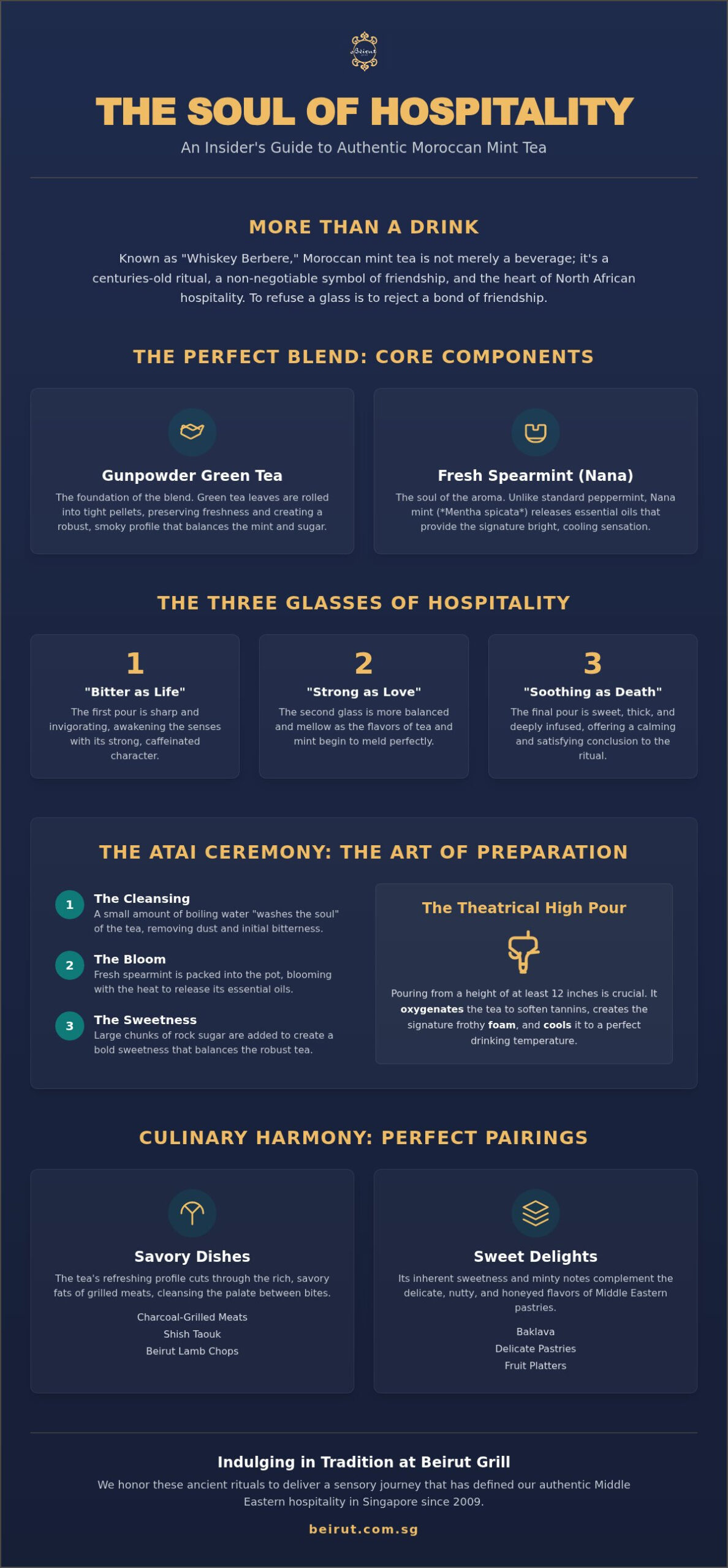
Stepping into a home in the Maghreb, you’re greeted by a scent that’s both sharp and sweet. It’s the unmistakable fragrance of moroccan mint tea, a drink that defines the very soul of North African hospitality. This isn’t a mere beverage; it’s a social contract. Known colloquially as “Whiskey Berbere,” it serves as the essential accompaniment to every negotiation, celebration, and quiet afternoon. While the name is a playful jest regarding its deep amber hue and social importance, the reverence shown to its preparation is entirely serious. To offer a glass is to offer a piece of one’s home and heart.
The story of Maghrebi mint tea is one of accidental brilliance and global connection. In the mid-18th century, trade disruptions forced British merchants to seek new markets for their Chinese tea. They landed on the shores of Morocco, where locals blended the bitter green leaves with their native wild mint. What began as a necessity evolved into a prestigious cultural staple. Since 2009, Beirut Grill has honored this legacy, recognizing that the perfect glass requires more than just ingredients. It requires an understanding of this storied heritage and the patience to let the flavors bloom properly.
The Three Glasses of Tea
Tradition dictates that guests are served three distinct rounds of infusion. There’s a famous proverb that guides this ritual: “The first glass is as bitter as life, the second is as strong as love, and the third is as soothing as death.” Because the tea leaves remain in the pot throughout the service, the flavor profile shifts dramatically with each pour. The initial glass is sharp and caffeinated, while the final one is thick, sweet, and deeply infused with the essential oils of the mint. Etiquette demands you accept all three; to refuse is to turn away a host’s genuine gesture of friendship and respect.
Gunpowder Green Tea: The Foundation
The soul of the blend lies in Gunpowder tea. These are green tea leaves that have been withered, steamed, and rolled into tiny, tight pellets. They resemble lead shot, which gives the variety its name. This rolling process serves a dual purpose: it preserves the freshness of the leaves and creates a concentrated flavor that withstands the steeping process. When the hot water hits the pot, the pellets unfurl, releasing a smoky, nutty profile. This robust base is essential for authentic moroccan mint tea because it stands up to the aggressive brightness of fresh spearmint and the heavy sweetness of the sugar, creating a balance that’s both complex and refreshing.
The Art of the Pour: Traditional Preparation and Ritual
In a traditional setting, the preparation of moroccan mint tea is a theatrical display known as the Atai ceremony. It’s a moment where time slows down and the atmosphere shifts. The host sits before a polished silver tray, surrounded by ornate, colorful glassware that catches the flickering light. This silver teapot, often an heirloom piece, isn’t just for utility; it’s a vessel of prestige. The ritual serves to honor the guest, transforming a simple beverage into a profound gesture of welcome that has been practiced for generations.
Watch closely as the host lifts the teapot high above the small glasses. This isn’t merely for show. The stream of tea must fall from a height of at least twelve inches to achieve its full potential. This distance allows the liquid to oxygenate, which softens the tannins and enhances the flavor profile while creating the characteristic layer of foam. This technique also serves a practical purpose by cooling the tea to a drinkable temperature before it reaches the guest’s hand. It’s a performance that requires steady hands and a deep respect for the craft.
Step-by-Step: The Authentic Brewing Process
To achieve the depth of flavor found in authentic Maghrebi mint tea, one must follow a specific sequence that respects the ingredients. The process begins by “washing the soul” of the tea. A small amount of boiling water is poured over the Gunpowder tea pellets and then discarded. This initial rinse removes surface dust and the harshest bitterness. Next, fresh spearmint (Mentha spicata) is packed into the pot. The heat causes the leaves to “bloom,” releasing essential oils that provide that signature cooling sensation. Finally, large chunks of cone sugar or rock sugar are added, creating a bold sweetness that balances the robust green tea base.
The Science of the Foam
The frothy layer at the top of the glass is known as “the turban.” It’s the hallmark of a skilled tea maker. A thick, persistent foam indicates that the tea has been properly oxygenated and the sugar has dissolved into a perfect, viscous syrup. If the foam dissipates too quickly, it suggests the tea was poured from too low a height or the water temperature was insufficient. This foam isn’t just aesthetic; it traps the aromatic vapors, ensuring that the first sip is as fragrant as it is flavorful. Experience this sensory ritual for yourself by joining us for a meal, where our team prepares every pot of moroccan mint tea with the same reverence for tradition. You can reserve your table to witness this heritage firsthand.
Gunpowder and Spearmint: The Science of the Perfect Blend
The alchemy of moroccan mint tea relies on a precise chemical balance between its two primary botanical components. While many western versions mistakenly utilize peppermint, the authentic recipe demands Mentha spicata, known locally as Nana mint or spearmint. Unlike the aggressive, medicinal bite of peppermint, spearmint offers a delicate sweetness and a rounded aromatic profile that doesn’t overwhelm the palate. Using fresh mint is non-negotiable; dried leaves lose the volatile oils necessary to achieve that signature brightness. This botanical choice is what separates a world-class brew from a standard herbal infusion.
It might seem counterintuitive to consume a steaming beverage in a tropical climate, but there’s a sophisticated thermoregulatory logic behind the tradition. Drinking hot tea triggers the body’s internal sensors, encouraging a mild perspiration that ultimately cools the skin more effectively than a cold drink would. This phenomenon, combined with the cooling properties of the mint, makes the tea an ideal companion for the warm afternoons we experience here in Singapore. It’s a practice rooted in desert wisdom, designed to harmonize the body with its environment. Just as this tea uses botanical properties to revitalize, brands like le jus emphasize the power of fresh fruits and vegetables to keep the body refreshed and energized.
The mastery of the blend lies in managing the interaction between the tannins of the Gunpowder green tea and the menthol of the spearmint. To avoid a bitter or astringent result, water temperature must be strictly maintained between 80-85°C. Boiling water at 100°C will scald the delicate green tea leaves, releasing unpleasant flavors that even a generous serving of sugar cannot mask. When steeped correctly, the tea achieves a luminous amber hue. This color serves as a visual guarantee that the smoky depth of the tea pellets has successfully fused with the sharp, herbaceous notes of the fresh mint.
Health Benefits of the Maghrebi Brew
Beyond its cultural prestige, this brew serves as a functional powerhouse for the body. The antioxidants found in Gunpowder tea provide a gentle caffeine lift that enhances mental clarity without the jitters often associated with coffee. Menthol is the primary volatile oil responsible for the tea’s cooling sensation. This component also acts as a natural digestive aid, making the tea the perfect conclusion to a protein-rich meal. At Beirut Grill, we often recommend a pot of moroccan mint tea to follow our signature Mixed Grill or charcoal-grilled Lamb Kofta, as the mint effectively cuts through the savory fats and cleanses the palate for dessert.
Culinary Harmony: Pairing Mint Tea with Authentic Middle Eastern Cuisine
A meal at Beirut Grill isn’t merely a sequence of dishes; it’s a carefully curated sensory journey that rewards the curious palate. The transition from the robust, spice-laden world of savory mezze to the refined sweetness of moroccan mint tea represents the pinnacle of this cultural dining arc. While many perceive tea as a standalone conclusion, its role during the meal is equally vital. It serves as the ultimate palate cleanser, cutting through the intensity of traditional spices and preparing the taste buds for the next layer of flavor with every cooling sip.
This beverage acts as a functional bridge between the heavy, savory elements of a feast and the delicate finish of a dessert. The sharp brightness of the mint effectively resets the senses, ensuring that the complex profiles of our imported ingredients aren’t lost to flavor fatigue. It’s a tradition that balances indulgence with refreshment, a hallmark of the hospitality we’ve championed since 2009.
The Perfect Match: Charcoal-Grilled Meats
The most profound synergy occurs when pairing the tea with our signature charcoal-grilled offerings. When you indulge in a Mixed Grill or succulent skewers of Shish Taouk, the palate is enveloped in savory fats and the deep, smoky essence of the open flame. The sharp, cooling notes of moroccan mint tea provide a necessary contrast, effectively stripping away the richness of Lamb Kofta and Beirut Lamb Chops. This interaction is heightened by the tea’s own smokiness, derived from the Gunpowder base, which mirrors the ‘char’ from the grill. For those exploring Middle Eastern food in Singapore, this specific pairing is essential to experiencing the full spectrum of regional flavor profiles.
Dessert Pairings: Baklava and Beyond
As the meal shifts toward the final act, the tea takes on a new character of indulgence. The intense, honey-soaked sweetness of our Baklava finds its perfect counterpart in the bold, sugary brew. This pairing creates a beautiful synergy where the tea’s heat softens the pastry’s crisp layers while its minty brightness prevents the palate from succumbing to “sugar fatigue” during a multi-course dessert service. For a more delicate finish, try pairing the tea with Mouhalabieh. The cooling milk pudding, accented with subtle floral notes, harmonizes with the tea’s botanical profile to leave a clean, refreshing aftertaste. To experience these authentic pairings for yourself, book your table at Beirut Grill today and let us host your next cultural journey.
Indulging in Tradition: The Moroccan Mint Tea Experience at Beirut Grill
At Beirut Grill, we believe that a truly elevated dining experience doesn’t end with the final bite of a main course. It concludes with a moment of reflection and a shared ritual. Our commitment to authentic Middle Eastern hospitality ensures that every pot of moroccan mint tea we serve is a testament to our heritage. We don’t merely brew a beverage; we curate a sensory transition that transports our guests from the vibrant, spice-driven energy of our kitchen to a state of refined relaxation. It is a prestigious conclusion to every feast, designed to reward the curiosity of national diners seeking a genuine cultural escape within Singapore.
The secret to our signature pour lies in a meticulous brewing process that refuses to take shortcuts. We source premium Gunpowder tea pellets, prized for their ability to unfurl and release a deep, smoky base. This foundation is then layered with the freshest spearmint, selected for its bright, aromatic clarity. By adhering to traditional techniques, we ensure the tea possesses the necessary body to stand up to the bold sweetness required for an authentic profile. This dedication to quality reflects our broader philosophy of providing a specialized yet accessible journey into the heart of the Maghreb.
A Heritage of Hospitality Since 2009
Since 2009, Beirut Grill has served as a reliable anchor for those seeking a sophisticated and pork-free dining environment. We take pride in our role as curators of culture, offering a menu that adheres to the highest Middle Eastern standards. Our long-standing presence in the industry has allowed us to refine every detail of the guest experience, from the charcoal-grilled perfection of our meats to the luminous amber hue of our tea. For those wishing to explore the broader culinary landscape, our offerings provide a vital link to the traditions of Mediterranean food in Singapore, grounding every meal in a deep sense of place and history.
Join Us for an Authentic Pour
We invite you to witness the ‘Atai’ ritual firsthand, where our staff performs the traditional high pour to create the essential frothy head. Whether you are hosting a prestigious corporate dinner or an intimate evening with loved ones, our restaurant provides the perfect architectural and atmospheric context for a cultural journey. The rhythmic sound of the tea hitting the glass and the rising steam of fresh mint create an ambiance that slows time down. We welcome you to immerse yourself in our surroundings and discover why this ritual remains the heartbeat of our hospitality. Experience the tradition of Moroccan Mint Tea at Beirut Grill and complete your next feast with us.
Embark on a Sensory Journey of Heritage and Flavor
The journey of moroccan mint tea is a testament to the enduring power of hospitality and the meticulous art of the pour. From the smoky depth of Gunpowder tea to the refreshing brightness of fresh spearmint, every glass offers a narrative of cultural connection. You’ve discovered how the Atai ritual transforms a simple gathering into a prestigious ceremony, and how this iconic brew acts as the perfect digestive following a robust meal. It’s an experience that transcends the beverage itself, rooting the guest in a landscape of tradition and sensory indulgence.
Since 2009, Beirut Grill has remained a dedicated curator of these traditions, blending authentic Lebanese hospitality with the sensory delights of the Maghreb. We invite you to experience this heritage firsthand, perhaps as the cooling finish to our signature charcoal-grilled Mixed Grill. Our doors are open to those who seek a dining destination that rewards curiosity and honors the soul of Middle Eastern culinary excellence. We look forward to welcoming you into our atmosphere of refined pride and storied history.
Book Your Authentic Middle Eastern Dining Experience
Frequently Asked Questions
What is the difference between Moroccan Mint Tea and regular mint tea?
Regular mint tea is usually a simple herbal infusion of dried peppermint leaves. Authentic moroccan mint tea is a complex blend of Gunpowder green tea, fresh spearmint (Nana mint), and sugar. The presence of green tea adds a caffeinated, smoky depth that herbal teas lack. Additionally, the preparation involves a specific ritual of rinsing and high pouring that creates a unique frothy head, ensuring a sensory experience that standard tea bags cannot replicate.
Is Moroccan Mint Tea high in caffeine?
It contains a moderate amount of caffeine because it uses Gunpowder green tea as its foundation. While not as potent as a cup of Lebanese Coffee, the green tea leaves provide a gentle, sustained energy lift without the sharp crash often associated with stronger stimulants. This makes it an ideal beverage for social gatherings throughout the afternoon or as a refreshing mental stimulant after a large meal, providing clarity without overstimulation.
Why is Moroccan Mint Tea poured from so high?
The high pour serves three essential functions: oxygenation, temperature control, and presentation. By pouring from a height, the tea aerates, which softens the tannins and creates a frothy foam called “the turban.” This process also cools the liquid slightly so it’s ready for immediate sipping. A successful high pour is the hallmark of a skilled host and signifies respect for the guests, a tradition we’ve honored since 2009.
Can I drink Moroccan Mint Tea without sugar?
While traditional recipes rely on a bold sweetness to balance the bitter tannins of the green tea, you can enjoy it without sugar. However, the sugar isn’t just for flavor; it contributes to the tea’s viscous texture and helps stabilize the iconic foam at the top of the glass. If you prefer a less traditional experience, our team can adjust the preparation to suit your personal palate while maintaining the integrity of the herbs.
What kind of mint is used in authentic Moroccan tea?
Authentic moroccan mint tea specifically requires fresh spearmint, known as Mentha spicata or Nana mint. We avoid peppermint because its high menthol content is too medicinal and sharp for this delicate blend. Spearmint offers a softer, more rounded sweetness that harmonizes with the smoky notes of the Gunpowder tea. Freshness is vital, as dried mint cannot replicate the vibrant essential oils found in blooming leaves, which we source with meticulous care.
Is Moroccan Mint Tea served hot or cold traditionally?
It’s traditionally served hot, regardless of the external climate or the tropical heat we experience nationally. In the arid regions of the Maghreb, drinking hot tea is believed to trigger the body’s natural cooling mechanisms more effectively than ice-cold beverages. The heat encourages mild perspiration, which cools the skin through evaporation. Serving it hot also ensures that the sugar remains fully dissolved and the aromatic oils of the mint are most fragrant.
What food goes best with Moroccan Mint Tea?
This tea is the ultimate accompaniment to charcoal-grilled meats like our signature Mixed Grill or Shish Taouk. The mint acts as a natural palate cleanser, cutting through the savory fats of Lamb Kofta and Beirut Lamb Chops. It also pairs beautifully with honey-soaked desserts like Baklava or the delicate milk-based Mouhalabieh. The tea’s versatility allows it to transition seamlessly from a savory main course to a sweet conclusion, cleansing the palate between every course.
Why is it called ‘Whiskey Berbere’?
The nickname “Whiskey Berbere” is a playful cultural reference to the tea’s amber color and its central role in social life. In many traditional settings, this tea serves as the primary social lubricant for celebrations, business meetings, and friendly gatherings. The name reflects the prestige and importance of the beverage, positioning it as a sophisticated alternative for toast-making and communal bonding. It represents the heart of our hospitality and our commitment to authentic heritage since 2009.