
To refuse a second glass of Moroccan Mint Tea is not merely a social oversight; in the heart of Middle Eastern tradition, it is a rejection of a centuries-old pact of friendship. You likely recognize the refreshing aroma of mint, yet you may have felt the disappointment of a standard peppermint brew that lacks the depth and soul of a true Atai ceremony. It is common to feel uncertain about the specific etiquette or the precise ingredients required to honor your guests with the prestige they deserve.
This guide promises to transport you through the sensory allure of this storied beverage, which remains the ultimate symbol of hospitality in 2026. You will discover the essential chemistry between Chinese Gunpowder green tea and fresh nana spearmint, learn the rhythmic high-pour technique that creates the signature foam, and understand the historical significance of the three-glass ritual. From the heritage-rooted traditions of the Maghreb to the refined atmosphere of Beirut Grill, we invite you to master a ritual where every pour tells a story of pride and indulgence.
Key Takeaways
- Master the precise alchemy of Gunpowder green tea and fresh spearmint that distinguishes authentic Moroccan Mint Tea from standard herbal infusions.
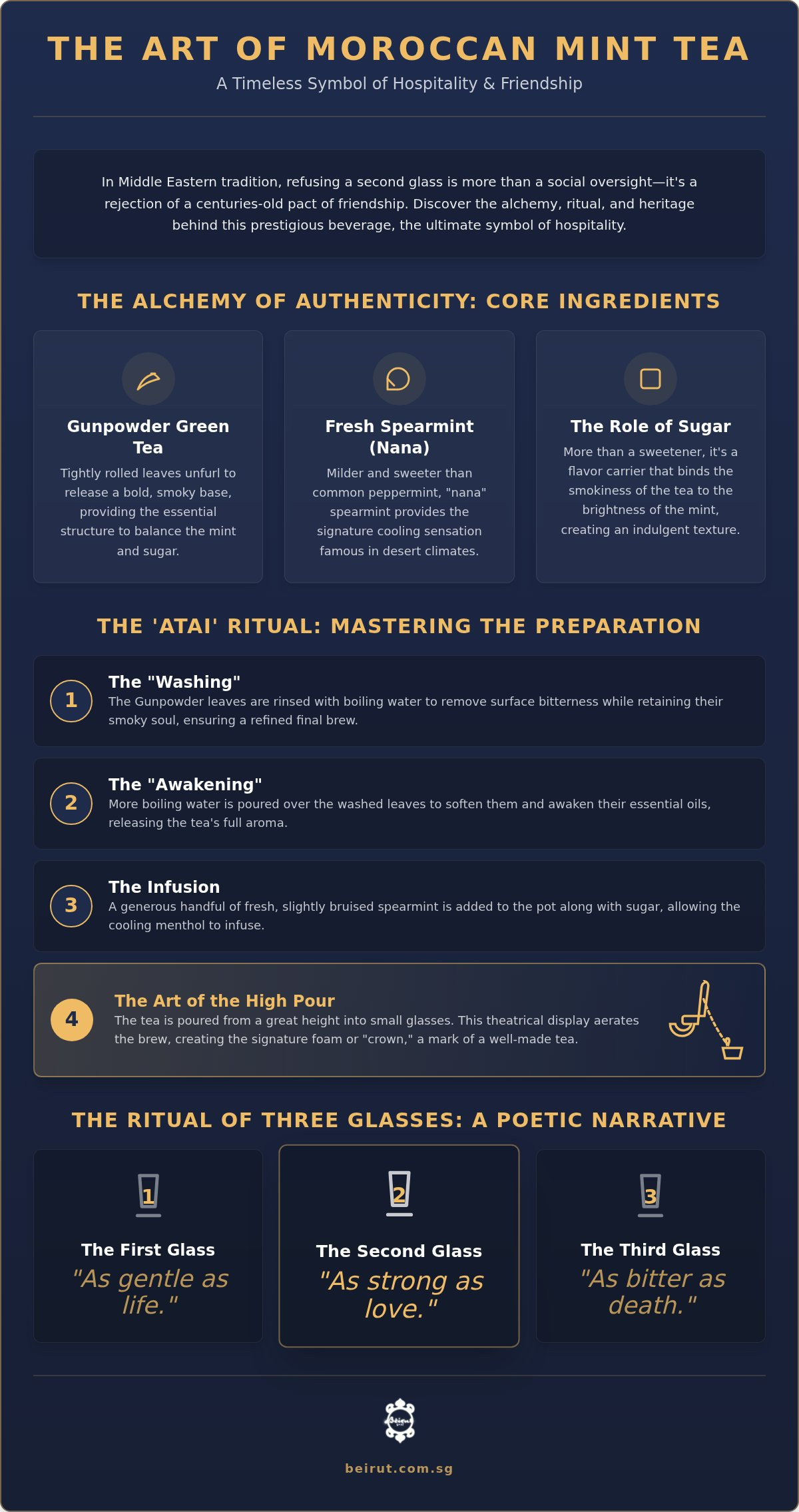
- Learn the “Atai” preparation method, including the traditional “washing” of the leaves and the art of the high pour to aerate the brew.
- Discover the poetic narrative behind the three-glass ritual, where each serving represents a different stage of life, love, and death.
- Understand how to pair this aromatic beverage with a Middle Eastern feast to serve as a sophisticated palate cleanser and digestive aid.
- Explore the cultural heritage of tea as the ultimate symbol of hospitality, bridging historical traditions with modern culinary excellence.
The Essence of Moroccan Mint Tea: More Than Just a Beverage
Stepping into a space where the air is thick with the scent of fresh herbs and smoldering charcoal, one quickly realizes that Moroccan Mint Tea is not merely a beverage. It is a liquid welcome, a handshake in a glass, and a storied tradition that has earned the evocative title “whiskey of the Berbers.” While many simply see it as a refreshing infusion, the true alchemy lies in the specific combination of Gunpowder green tea, fresh spearmint, and a generous measure of sugar. This blend creates a sensory profile that is both complex and comforting, offering a sharp bite of mint that is perfectly balanced by the deep, smoky undertones of the tea leaves.
In the context of middle eastern food singapore, this tea serves as the vital thread that connects a heavy, indulgent meal to a state of relaxed contentment. At Beirut Grill, where we have curated authentic experiences since 2009, we understand that serving a glass of Maghrebi mint tea is an act of prestige. It signals to the guest that their presence is valued and that the host is prepared to slow down the passage of time to accommodate meaningful conversation.
The Core Ingredients of Authenticity
To achieve the authentic flavor that defines this ritual, three specific components must work in harmony. You can’t simply substitute standard tea bags or garden variety mint and expect the same sensory reward.
- Gunpowder Green Tea: These tightly rolled leaves are essential. When steeped, they unfurl to release a bold, smoky base that provides the necessary structure to stand up to the strong mint and sweetness.
- Fresh Spearmint (Nana): The variety of mint matters immensely. Traditional recipes call for “nana” spearmint, which is milder and sweeter than the sharp, peppery notes of common peppermint. It’s this sweetness that creates the cooling sensation famous in desert climates.
- The Role of Sugar: In this tradition, sugar isn’t just a sweetener; it’s a flavor carrier. It binds the smokiness of the tea to the brightness of the mint, creating a syrupy, indulgent texture that is a hallmark of the craft.
A Heritage Spanning Centuries
The journey of Moroccan Mint Tea began along 18th-century trade routes, where British merchants introduced green tea to the Maghreb. Local populations quickly adapted the leaves, infusing them with native wild mint to create a drink that was uniquely theirs. Over the centuries, what began as a trade commodity evolved into an inseparable part of Middle Eastern hospitality. It became a prestigious social marker, with the quality of the tea and the height of the pour reflecting the host’s status and respect for their guest. Today, this heritage continues to thrive, bridging the gap between ancient nomadic traditions and the sophisticated dining rooms of 2026.
The Traditional Preparation: The Art of the High Pour
In the quiet moments before the first sip, the preparation of Moroccan Mint Tea unfolds as a choreographed performance of respect. Known as the “Atai” ritual, this process is far more than a culinary task; it is a theatrical display of heritage that transforms simple ingredients into a prestigious offering. To witness a master at work is to see the “Brad,” or traditional silver teapot, handled with a reverence that dates back centuries. The choice of vessels is equally deliberate, as the tea is served in small, intricately decorated glasses that allow the guest to appreciate the clarity and color of the brew before the warmth reaches their palms.
Central to this ritual is the meticulous “washing” of the tea leaves. This step is vital for removing the surface bitterness of the Gunpowder green tea while retaining its smoky soul. By rinsing the leaves with boiling water and discarding the initial dark liquid, the host ensures that the final product is bright and refined. It’s a practice that requires patience and a seasoned hand. Experience this rhythmic artistry firsthand when you join us for a meal at Beirut Grill, where every pot is prepared with the same dedication to authenticity that has defined our service since 2009.
Step-by-Step: Crafting the Perfect Brew
The journey to a perfect glass involves a precise sequence that honors the ingredients’ natural profiles. It begins with the “awakening,” where boiling water is poured over the tea leaves to soften them and release their essential oils. Once the leaves are rinsed, a generous handful of fresh, slightly bruised spearmint is added to the pot. Bruising the mint is a subtle but necessary technique; it allows the cooling menthol to infuse the smoky tea base more effectively. Finally, the “Lebech” occurs, where large blocks of sugar are stirred into the pot with a specific rhythmic motion, ensuring the sweetness is perfectly integrated rather than merely settled at the bottom.
The Science and Style of the High Pour
Perhaps the most iconic element of Moroccan Mint Tea is the dramatic high pour. This isn’t just for show. By pouring the tea from a significant height into the glass, the host aerates the liquid, which oxygenates the tea and significantly enhances the aroma of the fresh mint. This process creates the “Rezza,” a signature crown of foam that rests atop the tea. A thick, lasting foam is the hallmark of a well-prepared brew and a sign of a host who hasn’t rushed the process. Culturally, the height of the pour also serves as a silent barometer of esteem; the higher the teapot is raised, the greater the respect being shown to the guest seated across the table.
The Ritual of Three Glasses: A Cultural Narrative
The passage of time is measured not by a clock, but by the deepening hue of the infusion in the silver pot. In the Maghrebi tradition, Moroccan Mint Tea is never a singular experience; it’s a narrative told in three distinct acts. This ritual is grounded in a famous proverb that describes the evolution of the tea’s flavor: “The first glass is as gentle as life, the second as strong as love, and the third as bitter as death.” As the tea leaves and fresh mint continue to steep in the pot, the liquid transforms, offering a different sensory profile with every pour.
This progression is an essential part of the communal experience when enjoying mediterranean food singapore. It encourages guests to linger, allowing the conversation to flow as naturally as the tea itself. Refusing any of the three glasses is often seen as a breach of social etiquette; it’s a signal that you’re rushing the hospitality being offered. By accepting all three, you honor the host’s effort and the heritage of the ritual. It’s a commitment to the shared moment, ensuring that the physical environment and the culinary offerings are fully appreciated.
The First Glass: The Gentleness of Life
The initial pour is a celebration of fragrance and lightness. Because the Gunpowder tea has only just begun to unfurl, the infusion remains golden and translucent. The “gentleness” of this first glass comes from the immediate cooling effect of the spearmint, which dances on the palate without the weight of heavy tannins. It’s the perfect palate opener, designed to refresh the senses and prepare you for the vibrant spices of the meal ahead. In this stage, the sweetness of the sugar is most prominent, acting as a bright welcome to the table and setting a tone of ease and comfort.
The Second and Third Glasses: Depth and Bitterness
As the teapot rests, the character of the Moroccan Mint Tea shifts toward something more profound. The second glass, representing the “strength of love,” is noticeably darker and more robust. The smoky notes of the tea base begin to assert themselves, creating a complex dialogue with the now-softened mint leaves. By the time the third glass is poured, the tea has reached its most intense state. This “bitterness of death” isn’t a negative trait; rather, it’s a contemplative finale. The tannins are at their peak, providing a deep, lingering finish that aids digestion and signals the conclusion of the feast. This final stage invites a moment of reflection, grounding the guest in the present before they depart the sanctuary of the host’s table.
Culinary Pairings: Enhancing the Middle Eastern Feast
To fully appreciate the depth of a traditional feast, one must understand the functional elegance of the beverage that accompanies it. Moroccan Mint Tea acts as the ultimate palate cleanser, a role it performs with sophisticated precision. The cooling menthol of the spearmint cuts through the lingering richness of olive oils and spices, refreshing the senses for each new discovery. Beyond its sensory appeal, the tea offers genuine digestive benefits. The natural oils in the “nana” mint have been used for generations to soothe the stomach after a hearty meal, making it an indispensable part of the dining experience in 2026.
There is also a profound chemical harmony between the tea’s base and the kitchen’s traditional methods. The inherent smokiness of Gunpowder green tea provides a perfect mirror to the charred notes of meats prepared using authentic charcoal-grilled techniques. When you alternate between a bite of a signature Mixed Grill and a sip of steaming tea, the flavors don’t compete; they enhance one another. This interplay of temperatures creates a complete sensory journey. The warmth of the tea against the cool, refreshing textures of cold mezze like Labneh or Fattoush defines the balanced hospitality of the region.
Pairing with Savory Mezze and Grills
The bright, sharp notes of Moroccan Mint Tea are particularly effective when paired with the creamy, earthy profiles of Hummus and Baba Ghanoush. While these dips provide a rich mouthfeel, the mint provides a necessary herbal lift that prevents the palate from becoming overwhelmed by the tahini and garlic. For those indulging in our signature Lamb Kofta or Shish Taouk, the tea serves as a vital reset. It clears the taste buds between different varieties of grilled meats, ensuring that the delicate citrus notes of the chicken aren’t lost to the bold, spiced profile of the lamb chops.
The Classic Dessert Accompaniment
As the savory courses conclude, the tea transitions into its final role as a prestigious partner to Middle Eastern sweets. The intense honey-sweetness of Baklava finds its match in the herbal complexity of the brew, which prevents the sugar from becoming cloying. Similarly, the rich, melted cheese and floral syrup of a traditional Kunefe are beautifully balanced by the tea’s natural astringency. It remains the most sophisticated non-alcoholic digestive available, allowing guests to end their evening on a note of refined indulgence. To experience this perfect harmony for yourself, we invite you to book a table at Beirut Grill and explore our heritage-rooted menu.
Experiencing Authentic Moroccan Mint Tea at Beirut Grill
Since our establishment in 2009, Beirut Grill has stood as a prestigious guardian of Middle Eastern tea culture in Singapore. We don’t merely serve a drink; we curate a sophisticated sanctuary where heritage meets contemporary hospitality. Within our walls, the atmosphere is designed to slow the passage of time, allowing the guest to immerse themselves in the sensory details of our offerings. Every pot of Moroccan Mint Tea we prepare is a testament to our commitment to authenticity, utilizing premium imported ingredients that honor the traditional Maghrebi profile while rewarding the visitor’s curiosity. It’s a dedication to quality that has defined our presence in the industry for nearly two decades.
To step into our dining room is to begin a journey that transcends the physical environment. The air carries the scent of imported spices and fresh nana mint, creating an allure that prepares the palate for the feast ahead. We take immense pride in our role as curators of this culture, ensuring that every element, from the charcoal-grilled techniques used in our kitchen to the silver service at your table, reflects a seasoned expertise. This isn’t just a meal; it’s a prestigious destination where the visitor’s curiosity is rewarded with elevated flavors and a warm, inviting hospitality.
Our Signature Tea Service
The preparation of our tea is a meticulous process handled by experienced staff who understand that the “Atai” tradition is a performance of respect. We use traditional silver teapots to maintain the optimal heat and facilitate the perfect high-pour aeration that characterizes the ritual. By serving the brew in small, ornate glasses, we invite you to admire the clarity of the infusion and the signature “Rezza” foam before the first sip. It is this dedication to the visual and sensory beauty of the ritual that allows us to maintain a centuries-old tradition within a modern Singaporean setting, providing a moment of indulgence that feels both exclusive and accessible.
A Prestigious Destination for Heritage Dining
Our mission extends beyond the plate. We view our beverage offerings as a vital act of cultural preservation, positioning Beirut Grill as a destination that celebrates the longevity of its roots. This focus on prestige makes our tea service a sought-after highlight for corporate dinners and special occasions where guests seek an experience that feels both specialized and welcoming. Whether you are concluding an indulgent feast of our signature Mixed Grill or looking for a refined palate cleanser after our Beirut Lamb Chops, the final glass of tea provides the perfect digestive finish. We invite you to join us at our heritage-rooted location to experience these evocative flavors firsthand and embark on a complete cultural journey that stays with you long after the final pour.
Savor the Legacy of the Maghreb
From the rhythmic performance of the high pour to the philosophical narrative of the three glasses, you’ve explored why this beverage is far more than a simple infusion. It’s a cornerstone of hospitality that bridges ancient trade routes with modern sensory indulgence. Mastering the specific balance of smoky Gunpowder tea and cooling spearmint ensures your Moroccan Mint Tea remains an authentic tribute to a rich cultural heritage. Whether used as a digestive aid or a social marker, the ritual demands patience and respect for the ingredients.
At Beirut Grill, we’ve dedicated ourselves since 2009 to preserving these prestigious traditions within a pork-free environment that prioritizes premium imported ingredients. Our authentic charcoal-grilled techniques create the perfect savory foundation for a beverage service that rewards your curiosity and refreshes your palate. We invite you to step into our sanctuary, where the atmosphere is as deliberate as the tea itself. Experience the evocative flavors of the Middle East and let the steam from a silver pot transport you to another world. Book Your Heritage Dining Experience at Beirut Grill and become part of our storied tradition today.
Frequently Asked Questions
What is the difference between Moroccan Mint Tea and regular mint tea?
Moroccan Mint Tea is distinguished by its green tea base, whereas regular mint tea is typically a caffeine-free herbal tisane. Authentic versions use tightly rolled Gunpowder tea leaves to provide a smoky structure that supports the fresh herbs and sugar. This results in a layered beverage that balances astringency with a syrupy sweetness.
Does Moroccan Mint Tea contain caffeine?
Yes, this tea contains a moderate amount of caffeine derived from its green tea foundation. While standard herbal infusions are stimulant-free, the Gunpowder leaves provide a refined energy lift that makes it a popular choice throughout the day. It’s an ideal alternative for those seeking a sophisticated pick-me-up without the intensity of Lebanese Coffee.
Why is Moroccan Mint Tea poured from a high height?
The high pour is a functional technique designed to aerate the tea and create a signature layer of foam known as the “Rezza.” This process oxygenates the liquid, which releases the essential oils of the spearmint and amplifies its refreshing aroma. Culturally, raising the teapot higher also serves as a prestigious gesture of respect toward the guest.
What kind of mint is used in authentic Moroccan tea?
Authentic recipes exclusively use “nana” spearmint, a variety known for its milder and sweeter profile compared to sharp peppermint. This specific herb provides the cooling sensation essential to the ritual without overpowering the smoky notes of the tea base. We prioritize these traditional greens to ensure our service remains a true reflection of Maghrebi heritage.
Is Moroccan Mint Tea served hot or cold in traditional settings?
Traditional hospitality dictates that the tea is served steaming hot, regardless of the external temperature. In Middle Eastern cultures, drinking hot liquids in warm climates is believed to assist the body’s natural cooling processes through perspiration. The heat also ensures that the sugar is fully dissolved and the tea’s complex aromatic profile is fully realized.
Can I enjoy Moroccan Mint Tea with a meal at Beirut Grill?
You can certainly enjoy this ritual at Beirut Grill as the perfect conclusion to a traditional feast. Since 2009, we’ve positioned our Moroccan Mint Tea as a signature digestive finish to our charcoal-grilled Mixed Grill and savory mezze. It’s a highlight of our beverage list that rewards the curiosity of those seeking an authentic cultural journey in Singapore.
How many glasses of tea are traditionally served?
A traditional service involves three distinct glasses, each representing a different stage of a poetic narrative. The first is described as gentle as life, the second as strong as love, and the final glass as bitter as death. This three-act ritual encourages guests to linger and honor the host’s hospitality through extended conversation and shared presence.