
The perfect lamb kofta is never just a simple skewer of meat; it’s a sophisticated expression of Lebanese heritage that demands both patience and precision. You’ve likely encountered many variations of the ground meat kebab, yet finding that precise intersection of smoky charcoal char and a melt-in-the-mouth texture often feels like a rare discovery. At Beirut Grill, where we’ve honored these traditions since 2009 in the heart of Singapore’s historic district, we believe the secret lies in the unspoken bond between the flame and the spice.
We understand the frustration of encountering menus where the nuances of traditional spice profiles are lost or the texture lacks the authentic bite of the grill. This article promises to elevate your culinary journey by uncovering the heritage and spice secrets that define a prestigious Lebanese dining experience. We’ll guide you through the hallmarks of a high-quality grill, the cultural significance of the kofta, and the sophisticated techniques for pairing your feast with curated Lebanese wines and traditional mezze.
Key Takeaways
- Discover why the specific fat distribution in lamb is essential for maintaining moisture and flavor during the intense heat of traditional charcoal grilling.
- Uncover the secrets of the “Seven Spices” blend, an aromatic alchemy that transforms simple ingredients into a prestigious culinary masterpiece.
- Learn to distinguish the delicate, melt-in-the-mouth texture of authentic lamb kofta from the more robust, steak-like profile of beef-based alternatives.
- Master the art of the Lebanese feast by pairing rich, smoky meats with the vibrant acidity of fresh mezze like Tabbouleh and Fattoush.
- Understand the technical mastery required to harness real wood charcoal for the perfect Maillard reaction, a feat unattainable by gas or electric heat.
The Essence of Authentic Lamb Kofta: A Lebanese Culinary Heritage
In the sun-drenched courtyards of the Levant, the rhythmic sound of a blade against a wooden board signals the beginning of a communal feast. To understand Lebanese hospitality is to understand the grill, a centerpiece that has gathered families for generations. Since 2009, Beirut Grill has preserved this evocative tradition in the heart of Singapore, bringing the authentic spirit of the Middle East to life. The lamb kofta stands as the undisputed crown jewel of this experience, representing a culinary heritage that is as much about the soul as it is about the palate.
The Etymology and Evolution of the Kofta
Rooted deeply in history, the term originates from the Persian word kuftan, which means to grind or to smash. While the Ottoman Empire carried these ground meat traditions across the Mediterranean, each culture added its own signature to the dish. To truly appreciate What is Kofta?, one must look at how regional geography dictates flavor. In Greece, you might find the cooling notes of mint; however, the Lebanese style is defined by a lush abundance of fresh flat-leaf parsley and finely diced onions. This specific combination creates a vibrant, herbaceous profile that elevates the meat from a simple protein to a complex sensory journey. Over the decades, it has transitioned from a humble street food into a centerpiece of sophisticated restaurant dining, rewarding the curiosity of those seeking a prestigious cultural experience.
Why Lamb? The Science of Flavor and Texture
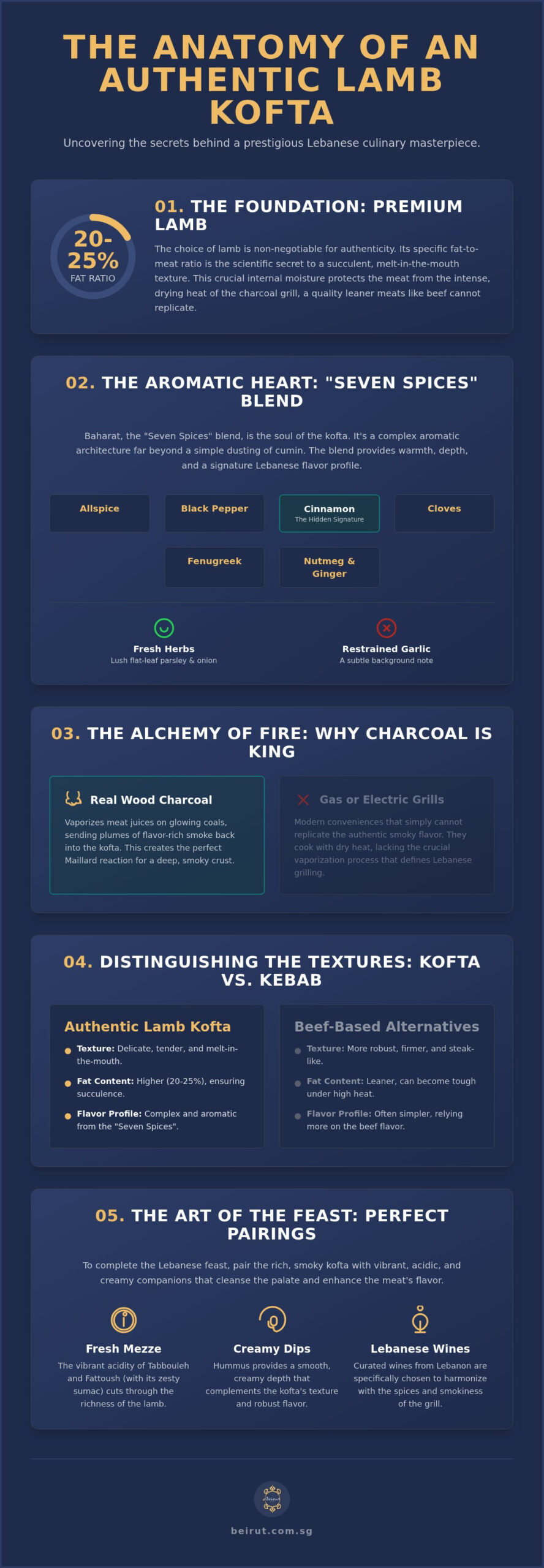
Traditionalists insist on lamb for a very specific scientific reason: its fat-to-meat ratio. To achieve a succulent, non-crumbly texture, a ratio of approximately 20-25% fat is required. This internal moisture is vital because it protects the meat from the intense, drying heat of the charcoal, ensuring every bite remains melt-in-the-mouth tender. This fat distribution is what makes the lamb kofta distinct from leaner beef versions that can often become tough under high heat.
The high iron content of premium lamb also creates a robust flavor profile that demands a bright, acidic contrast. This is why the dish feels so complete when paired with the zesty sumac found in a fresh Fattoush or the creamy depth of Hummus. In the Lebanese kitchen, Kafta is the harmonious marriage of finely minced lamb and the Lebanese “Seven Spices”. This balance of earthy meat and warm aromatics is what defines our culinary identity and ensures each guest enjoys an indulgent, authentic journey through our heritage.
The Alchemy of Spices and Charcoal: How True Kofta is Crafted
The creation of a truly prestigious lamb kofta is an act of culinary devotion that begins long before the meat touches the flame. While many contemporary recipes suggest that a simple dusting of cumin or coriander suffices, the authentic Lebanese tradition demands a far more complex aromatic architecture. It’s a process of layering flavors that requires both a deep knowledge of spice and an instinctive understanding of fire. This transformation from raw ingredients to a sensory masterpiece is what distinguishes a masterclass in grilling from mere cooking.
The Secret Blend: Understanding Lebanese Baharat
At the heart of every exceptional skewer is the Baharat, or “Seven Spices” blend. This specific mixture typically consists of allspice, black pepper, cinnamon, cloves, fenugreek, nutmeg, and ginger. Among these, cinnamon acts as the hidden signature; it provides an intoxicating warmth that perfumes the meat without veering into sweetness. This warm profile must be carefully balanced against the sharp, verdant notes of fresh flat-leaf parsley. Our chefs are taught to use garlic with extreme restraint. It should linger as a subtle ghost of a flavor rather than a dominant force that might mask the earthy sweetness of the lamb. The preparation involves a rhythmic pounding of the meat, a ritual that ensures these spices are infused into every fiber, creating a cohesive texture that holds its shape perfectly on the grill.
The Smokiness of the Grill: Why Charcoal Matters
The true distinction of a professional Lebanese kitchen is the absolute rejection of gas grills or pans. These modern conveniences simply cannot replicate the science of charcoal grilling, which relies on the vaporization of meat juices as they hit glowing wood coals. This process sends a plume of flavor-rich smoke back into the lamb kofta, creating the signature charred exterior bark that diners crave. Achieving this requires precise temperature control to trigger the Maillard reaction while keeping the interior succulent.
To ensure even heat distribution, we hand-shape the meat onto wide, flat skewers. This traditional technique prevents the meat from spinning and allows the heat to penetrate the center without drying out the surface. The result is a dish that rewards the visitor’s curiosity, offering the kind of depth found only in authentic Lebanese dining experiences. Each skewer emerges from the flames with a delicate balance of smoke and spice, standing as a testament to the craftsmanship we’ve championed since 2009.
Lamb Kofta vs. Beef Kebab: Navigating the Lebanese Grill
As you settle into the warm, evocative atmosphere of our dining room, the menu presents a choice that defines the Lebanese experience. While many believe these proteins are interchangeable, the distinction between a lamb kofta and a Beef Kebab is fundamental to the curator’s art. Lamb offers a delicate, earthy sweetness that is inherently softer, a result of the intricate fat distribution that creates a melt-in-the-mouth sensation. In contrast, beef provides a robust, structured savory note that appeals to those seeking a more traditional steak-like bite. At Beirut Grill, we’ve refined these profiles since 2009, ensuring each skewer tells its own story of heritage and prestige.
The philosophy of the Lebanese grill is rooted in the “Mixed Grill” concept, a curated ensemble where variety provides the ultimate balanced palate. This approach excels at providing rich, pork-free alternatives that don’t compromise on indulgence. By including different textures and aromatics, the meal becomes a sensory journey rather than a singular note. It’s a specialized experience that rewards the diner’s curiosity through a sophisticated interplay of smoke, spice, and protein.
Choosing Your Skewer: A Diner’s Framework
Selecting the right skewer depends on the desired emotional and sensory outcome of your meal. Choose the lamb kofta when you crave an aromatic, tender experience where the spices are woven into the very fabric of the meat. If you prefer a meaty, structured texture with a clean finish, the Beef Kebab is your ideal companion. These proteins behave differently over the charcoal; lamb requires a delicate touch to preserve its juices, while beef demands a higher heat to develop its savory crust. To achieve a truly harmonious plate, we often recommend including Shish Taouk. The citrusy, garlic-marinated chicken acts as a necessary palate cleanser, cutting through the intense richness of the red meat skewers.
The Signature Mixed Grill Experience
The lamb kofta serves as the indispensable anchor of a traditional Lebanese Mixed Grill platter. It’s the element that ties the earthy spices of the beef and the bright notes of the chicken together. Served on a bed of aromatic saffron rice or hand-stretched flatbread, the presentation invites the guest to slow down and indulge in a ritual that has remained unchanged for centuries. For those seeking to deepen their understanding of these traditions, our Middle Eastern Food in Singapore: The Ultimate 2026 Connoisseur’s Guide provides an even more expansive look at our culinary landscape. This communal feast is a hallmark of our hospitality, transforming a simple dinner into a prestigious cultural event.
The Art of the Feast: Pairing and Serving Your Lamb Kofta
In the Lebanese tradition, a meal is a choreographed progression rather than a single event. The “Mezze First” rule is sacrosanct. Before the first skewer of lamb kofta arrives, the palate must be prepared. Creamy Hummus and smoky Baba Ghanoush act as the opening movement, grounding the senses in earthy, smooth textures that will soon contrast with the intense heat of the charcoal. This deliberate pacing ensures that when the main course arrives, its complex aromatics are met with a heightened sense of appreciation.
Acidity is the architect of a successful Levantine feast. Without the sharp, citrus-forward notes of Tabbouleh or the sumac-infused crunch of Fattoush, the inherent richness of the lamb would overwhelm the senses. These salads aren’t merely garnishes; they’re essential tools used to cut through the fat and reset the taste buds for the next aromatic bite. This balance of heavy and light, warm and cool, is what defines a prestigious dining experience that rewards the visitor’s curiosity.
Essential Sidekicks: Hummus, Tabbouleh, and Batata Harra
The silkiness of our Hummus provides a luxurious counterpoint to the rugged, charred exterior of the lamb kofta. While the meat offers a smoky depth, the chickpeas and tahini deliver a velvety finish that lingers on the tongue. For those seeking a vibrant reset, the lemon-forward dressing of Tabbouleh acts as a bright, herbaceous palate cleanser. To complete the charcoal feast, we serve Batata Harra. These spicy potatoes, tossed with fresh chili and coriander, provide the necessary starchy weight to anchor the meal, ensuring every element of the platter serves a specific sensory purpose.
A Toast to Heritage: Lebanese Wine and Arak Pairings
To truly elevate the meal, one must explore the storied vineyards of the Bekaa Valley. A bold Lebanese red wine, characterized by high tannins and dark fruit notes, stands up effortlessly to the intense flavors of charcoal-grilled lamb. The tannins bind with the proteins, softening the wine while highlighting the warmth of the “Seven Spices” blend. For a more traditional journey, we recommend the ritual of Arak. Known as “Lion’s Milk,” this potent anise-flavored spirit is served diluted with water and ice. Its cooling, licorice-like profile cleanses the palate between bites, perfectly complementing the cinnamon and cloves found within the meat. To deepen your understanding of these pairings, consult our guide on Mediterranean Food in Singapore: An Authentic Guide to Flavours and Heritage.
Experience the culmination of these heritage techniques by joining us for an evening of indulgence. Book your authentic Lebanese dining experience at Beirut Grill today.
Experience the Prestige of Charcoal-Grilled Lamb Kofta at Beirut Grill
The aroma of glowing wood charcoal is the first thing that greets you as you step into our sanctuary on Bussorah Street. It’s an evocative, smoky scent that signals the beginning of a prestigious dining experience rooted in centuries of tradition. Since 2009, Beirut Grill has stood as a dedicated custodian of Lebanese culinary heritage in Singapore, offering a transportive environment where every detail is curated to reward the visitor’s curiosity. Here, the lamb kofta is more than just a centerpiece; it’s a sensory journey that captures the very soul of the Levant.
We believe that a true feast is a narrative that unfolds slowly, encouraging guests to immerse themselves in the surrounding atmosphere. From the physical textures of our dining room to the rhythmic sizzle of the grill, the experience is designed to be both exclusive and welcoming. It’s a place where professional authority meets warm, inviting hospitality, ensuring that every guest feels like a privileged traveler on an authentic cultural journey.
A Legacy of Authenticity Since 2009
Our commitment to excellence is reflected in our unwavering adherence to traditional techniques. We don’t take shortcuts with our lamb kofta; we use the same signature charcoal-grilling methods that have defined our kitchen for over a decade. By sourcing premium imported ingredients and regional spices, we ensure that the flavor profiles remain as authentic as those found in the heart of Beirut. This dedication to provenance is what has established our reputation for reliability and seasoned expertise. To conclude your feast with the same level of sophistication, we offer traditional beverages like Moroccan Mint Tea and rich Lebanese Coffee. These rituals provide a deliberate and atmospheric end to the meal, allowing the spices to linger on the palate while you soak in the surroundings.
Planning Your Lebanese Feast
When dining with a group, the most rewarding way to experience our menu is through a collective approach. We recommend ordering the Mixed Grill as the ultimate sampling platter, where the kofta is served alongside Shish Taouk and Beef Kebab for a complete protein profile. To ensure a balanced variety, start with a selection of both cold and hot mezze, allowing the creamy textures of Labneh or Moutabal to contrast with the spiced warmth of Sambousek. Because our entire menu is strictly pork-free, Beirut Grill serves as a specialized and inclusive destination for diverse gatherings seeking a high-end culinary experience. The flow of information from our knowledgeable hosts will guide you through the menu, moving from the history of our founding to the intricate details of our beverage offerings.
Indulge in a meal that balances professional craftsmanship with the pride of heritage. Reserve your table at Beirut Grill to experience the ultimate Lamb Kofta and discover why we remain Singapore’s premier destination for authentic Lebanese charcoal grilling.
Savor the Legacy of the Lebanese Grill
Mastering the authentic lamb kofta is a journey that begins with the complex “Seven Spices” and ends with the transformative power of wood charcoal. You now understand how the precise fat content of the lamb and the vaporization of juices over open flames create a texture that modern gas grills simply cannot replicate. By pairing these smoky skewers with the vibrant acidity of Tabbouleh and a bold Bekaa Valley red, you transform a simple dinner into an indulgent cultural ritual. It’s a sophisticated balance of heat and herb that defines the very essence of Levantine hospitality.
Since 2009, Beirut Grill has remained Singapore’s premier destination for those seeking this level of culinary prestige. Our signature Mixed Grill stands as a testament to these time-honored techniques, offering a harmonious balance of flavors that rewards your curiosity. We invite you to step into our evocative atmosphere and enjoy a curated selection from our authentic Lebanese wine list. Book Your Authentic Lebanese Dining Experience today and let us transport you to the sun-drenched courtyards of the Levant. We look forward to welcoming you to our table for an unforgettable feast.
Frequently Asked Questions
What is the difference between Kofta and Kebab?
Kofta refers specifically to ground or minced meat that has been seasoned with a complex blend of spices and herbs, whereas kebab is a broader term that typically describes whole chunks of marinated meat. While both are expertly grilled on skewers, the kofta’s texture is defined by its integrated blend of aromatics and fat. This creates a softer, more cohesive flavor profile than the solid muscle fibers found in a traditional shish kebab.
Is Lamb Kofta always spicy?
Authentic Lebanese kofta is defined by its fragrant warmth and aromatic depth rather than intense chili heat. The traditional “Seven Spices” blend provides a sophisticated, layered flavor using ingredients like cinnamon and allspice, which creates a rich sensory experience without a burning sensation. It’s a profile designed to reward the guest’s palate with nuance and spice rather than overwhelming fire, making it accessible yet deeply indulgent.
What are the essential spices in a Lebanese Lamb Kofta?
The foundation of this dish is the Baharat, a specific blend of allspice, black pepper, cinnamon, cloves, fenugreek, nutmeg, and ginger. These warm aromatics are combined with an abundance of fresh flat-leaf parsley and finely diced onions to create a vibrant, herbaceous profile. This specific alchemy ensures the lamb kofta remains fragrant and deeply rooted in the culinary traditions we’ve championed since our founding in 2009.
How is Lamb Kofta traditionally served in Lebanon?
In a traditional Lebanese setting, it’s served as a centerpiece of a communal feast, often resting on hand-stretched flatbread that absorbs the savory juices from the grill. It’s accompanied by an array of fresh mezze like Hummus, Tabbouleh, and pickles. This arrangement encourages a deliberate and atmospheric pace of dining, allowing guests to immerse themselves in the interplay between the smoky meat and the bright, acidic side dishes.
Can Lamb Kofta be made with other meats?
While lamb is the prestigious choice for its moisture and earthy flavor, beef is a common alternative that offers a more robust, structured bite. Some regional variations may blend the two to achieve a specific balance of fat and texture. However, we maintain a strictly pork-free menu to honor the traditional dietary heritage of the Levant, ensuring an authentic and inclusive experience for every visitor to our historic location.
Is Lamb Kofta gluten-free and halal?
Traditional Lebanese lamb kofta is naturally gluten-free as it consists purely of premium meat, fresh herbs, and spices without the breadcrumb fillers often found in Western meatballs. At Beirut Grill, our entire menu is prepared according to halal standards and remains strictly pork-free. This commitment to authenticity ensures a prestigious dining journey that respects both cultural heritage and the dietary requirements of our diverse guests.
What is the best drink to pair with grilled lamb?
A bold Lebanese red wine from the Bekaa Valley or a glass of Arak diluted with water and ice provides the most sophisticated pairing. The high tannins in the wine or the cooling anise notes of the Arak act as a perfect palate cleanser. These beverages cut through the richness of the charcoal-grilled meat while enhancing the warm, intoxicating notes of cinnamon and cloves found in the spice blend.
Why is charcoal grilling better for kofta than pan-frying?
Charcoal grilling vaporizes meat juices as they hit the glowing coals, sending a unique, smoky essence back into the protein that a pan simply cannot replicate. This process triggers the Maillard reaction, creating a charred exterior bark while keeping the interior succulent and tender. Pan-frying lacks this atmospheric depth and often results in a heavier, greasier texture that fails to meet the standards of authentic Lebanese mastery.