
The true essence of the Levant isn’t found in a hurried takeaway box, but in the slow, aromatic ritual of a table laden with mezze and the deep, smoky soul of a charcoal grill. You’ve probably felt the disappointment of a poorly spiced meal or a generic atmosphere that fails to capture the vibrant spirit of Beirut. Finding authentic lebanese food kampong glam requires moving beyond the surface to discover a destination where heritage is served on every plate.
Since 2009, the standard for Middle Eastern excellence in this historic district has been defined by a commitment to imported spices and time-honored techniques. This guide promises to transport you through the sensory-rich world of Lebanese cuisine, offering a roadmap to a truly sophisticated dining experience. We’ll reveal how to order a traditional feast, from velvet-smooth Hummus to the perfect Mixed Grill, and introduce you to the prestigious wine pairings that elevate a meal into a celebration of culture.
Key Takeaways
- Learn the social etiquette of the Lebanese table and the sensory differences between traditional cold and hot mezze.
- Discover why authentic charcoal grilling is the essential technique behind a prestigious lebanese food kampong glam experience.
- Gain expert insight into pairing your feast with world-class Beqaa Valley wines and the cultural ritual of serving Arak.
- Identify the hallmarks of a premier culinary destination, including the use of spices imported directly from Beirut for true flavor.
- Understand how to navigate a traditional menu to curate a sophisticated feast perfect for special occasions and cultural discovery.
The Essence of Lebanese Gastronomy: A Heritage of Spice and Tradition
Nestled within the historic heartbeat of the city, the search for authentic lebanese food kampong glam often leads the discerning diner to a crossroads of culture and flavor. Lebanese cuisine is a masterful equilibrium; it pairs the sun-drenched freshness of Mediterranean produce with the deeply evocative, aromatic profiles of Levantine spices. It’s a culinary philosophy where every ingredient serves a specific purpose. Traditional techniques remain the cornerstone of this heritage, where the slow, patient heat of charcoal grilling transforms marinated meats and hand-crafted mezze are prepared with a precision that honors centuries of Lebanese culinary traditions. True Lebanese hospitality is a transportive, sensory-rich experience rooted in a legacy of boundless generosity.
The Role of Imported Spices in Authenticity
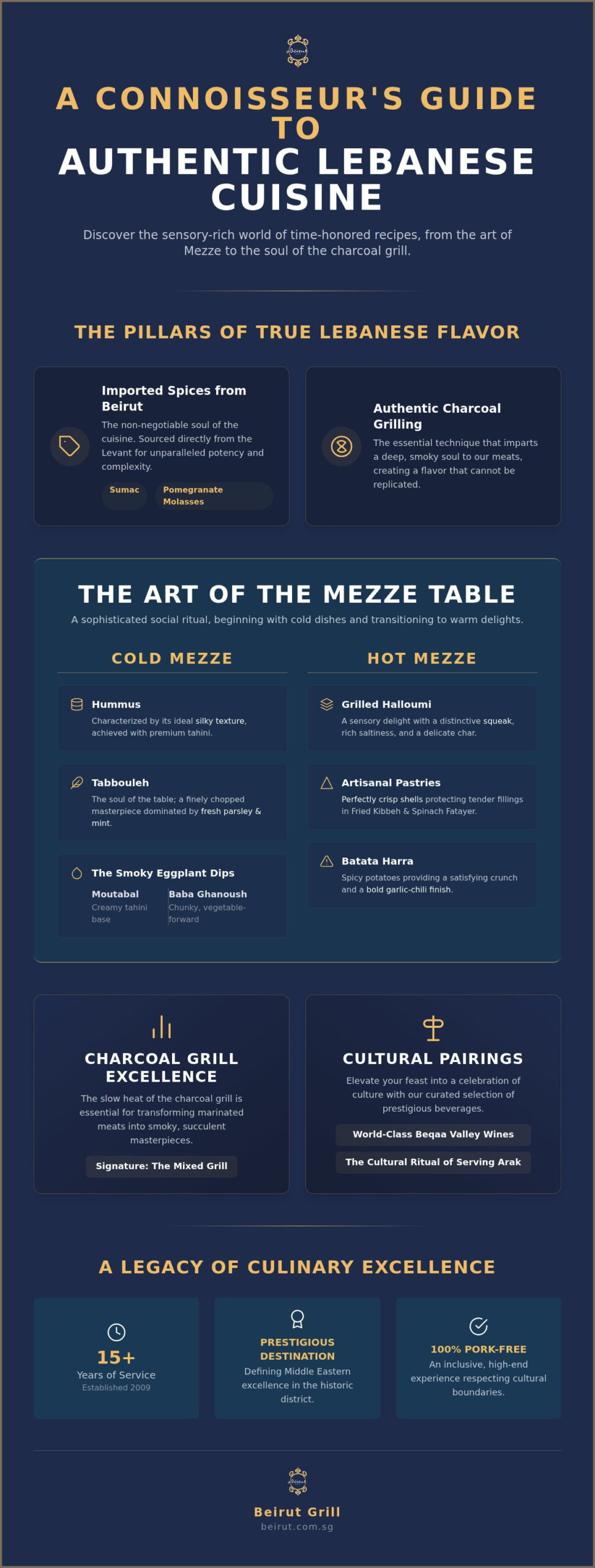
Sourcing spices directly from Beirut is a non-negotiable practice for those who seek to replicate the true flavor profiles of the Levant. The terroir of the region imparts a specific potency to herbs and seeds that local substitutes simply cannot mirror. In a prestigious kitchen, the “bright” acidity that defines the cuisine doesn’t come from simple vinegar, but from the generous use of Sumac and rich pomegranate molasses. These ingredients provide a tart, fruity complexity that cuts through the richness of grilled meats. This attention to detail extends to the complex spice blends used in traditional Lamb Kofta, where a secret ratio of warm aromatics creates a depth of flavor that lingers long after the meal is finished. Without these imported essentials, the food loses its soul and becomes a mere imitation of the original.
A Legacy of Culinary Excellence Since 2009
The Lebanese dining scene has evolved significantly over the last two decades, moving from niche curiosity to a celebrated pillar of the city’s gastronomic landscape. Beirut Grill, established in 2009, has stood as a witness to this transformation, maintaining a standard of excellence that has earned it a reputation as a reliable and seasoned expert. Longevity in this industry is a hallmark of credibility; it proves a commitment to consistency that few can match. By maintaining a strictly pork-free environment, the venue ensures an inclusive, high-end dining experience that respects cultural boundaries while delivering world-class flavors. This dedication to heritage and quality transforms a simple dinner into a prestigious journey through time and geography, rewarding the visitor’s curiosity with every bite.
Navigating the Mezze Table: A Guide to Shared Starters
Beneath the architectural elegance of the historic district, the true heart of lebanese food kampong glam beats through the shared artistry of the mezze table. Mezze is far more than a collection of appetizers; it’s a sophisticated social ritual designed to slow time down and foster deep conversation. As highlighted in the Customs & Cuisine of Lebanon, these dishes are served in a deliberate progression that rewards the visitor’s curiosity. A traditional feast begins with the cooling elegance of cold mezze before transitioning into the indulgent warmth of hot, pan-seared or fried delicacies. This rhythmic flow of plates ensures that the palate remains engaged and the spirit of hospitality stays at the forefront of the experience.
The Classics: Hummus, Baba Ghanoush, and Beyond
The soul of the cold spread lies in the mastery of texture. Achieving the ideal silkiness in Hummus requires premium tahini and a patient, knowledgeable hand. For the connoisseur, the distinction between Moutabal and Baba Ghanoush is vital; while both celebrate the smoky essence of the eggplant, Moutabal is characterized by its creamy tahini base, whereas Baba Ghanoush often emphasizes a chunky, vegetable-forward profile brightened with pomegranate seeds. Tabbouleh remains the undisputed soul of the Lebanese table. It’s a finely chopped herb masterpiece, dominated by fresh parsley and mint rather than bulgur, providing a vibrant, citrusy counterpoint to the richer dishes that follow.
Warm Delights: From Grilled Halloumi to Sambousek
As the meal progresses, hot mezze introduce a compelling variety of textures and temperatures. Grilled Halloumi offers a sensory delight with its distinctive squeak, rich saltiness, and the delicate char from the grill. Precision in pastry craft is showcased through the golden shells of Fried Kibbeh and the delicate folds of Spinach Fatayer, where the outer layer must be perfectly crisp to protect the tender, spiced fillings within. To add a layer of complexity and a touch of heat, Batata Harra (spicy potatoes) provides a necessary crunch and a bold garlic-chili finish that rounds out the spread.
Balancing these flavors is an essential skill for any diner. Pair the creamy, strained Labneh with the crisp, sumac-dusted acidity of a fresh Fattoush salad for a classic Levantine contrast. Sharing etiquette dictates that guests use warm pita bread as a vessel, sampling small portions to ensure the conversation flows as freely as the food. If you’re ready to experience this transportive ritual firsthand, you might consider starting your journey with a traditional mezze platter at a venue that has honored these customs since 2009.
Charcoal Grilling Excellence: Signature Meats and Techniques
As you wander through the vibrant streets of the historic district, the unmistakable aroma of smoldering wood and marinated spices signals your arrival at the epicenter of lebanese food kampong glam. In the world of authentic Levantine cuisine, charcoal is the only acceptable heat source. Unlike the sterile heat of gas, the radiant energy of natural charcoal imparts a profound smoky depth that defines the region’s signature dishes. This technique is deeply intertwined with the history of Lebanese cuisine, where the slow, intense sear preserves the integrity of the meat while creating a delicate, charred crust. To achieve this, the meat undergoes a patient marination process; yogurt and lemon juice act as natural tenderizers, ensuring every bite remains succulent and full of juice even after its encounter with the flame. The Shish Taouk is a masterclass in spice-infused, tender chicken.
The Secrets of the Mixed Grill
Elevated Specialties: Lamb Chops and Seafood
For those looking to explore beyond the standard kebabs, the menu offers high-status markers of Lebanese culinary prestige. The Beirut Lamb Chops are a revelation of flavor, seasoned with a traditional blend that highlights the natural richness of the meat without overpowering it. If you’re seeking a lighter alternative that still captures the essence of the Mediterranean, the Middle Eastern approach to seafood is equally refined. Grilled Prawns and Fish Fillets are kissed by the charcoal, resulting in a delicate smokiness that pairs beautifully with our vibrant citrus-based sauces. No matter your choice of protein, the essential accompaniment is our signature garlic sauce, or Toum. This potent, airy emulsion is the traditional partner for poultry and grilled meats, providing a sharp, creamy finish that balances the deep, earthy flavors of the grill.
Beyond the Plate: Lebanese Wines and Cultural Pairings
Within the sun-drenched Beqaa Valley, some of the world’s oldest viticultural traditions have been preserved for millennia. To truly appreciate the heritage of lebanese food kampong glam, one must look beyond the plate to the prestigious beverages that define the Levantine table. Lebanese wine isn’t merely a companion to the meal; it’s a liquid history of the region’s resilience and artistry. The high-altitude terroir of the valley produces grapes with a unique structural complexity, offering a sophisticated balance of fruit and acidity that’s specifically evolved to complement the bold, aromatic spices of our cuisine. Whether you’re enjoying a slow-cooked lamb dish or a vibrant array of mezze, the right pairing transforms a simple dinner into an evocative cultural journey.
The Prestigious Wineries: Chateau Musar and Chateau Kefraya
In the world of fine wine, few names command as much respect as Chateau Musar and Chateau Kefraya. These world-renowned labels are central to Lebanese identity, representing a legacy of excellence that has persisted through decades of challenge. Chateau Musar is celebrated for its longevity and evolving character, while Kefraya is known for its elegance and masterful blending of traditional Mediterranean varietals. These high-altitude wines are the perfect match for spiced cuisine because their robust tannins and earthy undertones can stand up to the intense flavors of charcoal-grilled beef and lamb. When selecting a bottle, a structured red provides the necessary backbone for heavy meats, while a crisp, mineral-forward white or rosé can highlight the citrus notes in cold mezze like Tabbouleh or Fattoush.
Traditional Sips: Arak and Mint Tea
For those seeking a more traditional ritual, Arak remains the undisputed “Lion’s Milk” of Lebanon. This potent, anise-flavored spirit is traditionally served in small glasses, diluted with water and ice. It’s famous for the “louche” effect, where the clear liquid turns a milky, opaque white upon mixing. Arak serves as an exceptional palate cleanser, its cooling properties cutting through the richness of grilled halloumi or fried kibbeh. The ritual of the pour is equally important when it comes to Moroccan Mint Tea. Poured from a height to create a delicate froth, this tea is a hallmark of Middle Eastern hospitality. To conclude the feast, Lebanese Coffee is served in small cups. It’s a thick, dark brew that delivers a profound flavor impact, providing a final, aromatic punctuation mark to the dining experience.
If you’re ready to experience these historic pairings for yourself, we invite you to explore our curated Lebanese wine list and discover the prestigious labels of the Beqaa Valley. Our knowledgeable hosts are always on hand to guide your selection, ensuring every sip honors the sophisticated heritage of our culture.
Experience Beirut Grill: A Prestigious Culinary Destination Since 2009
Since 2009, Beirut Grill has served as a prestigious anchor within the local culinary landscape, offering a sophisticated retreat for those seeking the finest lebanese food kampong glam. It’s a destination that rewards the visitor’s curiosity by weaving together the historical weight of its location with an uncompromising dedication to Levantine heritage. As you arrive, you’re greeted by a space that functions as a national hub for authentic Lebanese culture, where the air is thick with the scent of charcoal and imported spices. This isn’t merely a place to eat; it’s a curated environment designed to transport the guest through a sensory-rich journey that honors centuries of tradition. By maintaining its roots for over fifteen years, the restaurant projects a persona of seasoned expertise and reliability that few can match.
Atmosphere and Indulgence
Set against the scenic backdrop of the historic heritage district, the venue’s architectural charm mirrors the timeless elegance of the cuisine. The experience is thoughtfully structured across two distinct levels to suit the mood of the evening. On the ground floor, alfresco dining allows guests to soak in the vibrant, atmospheric energy of the neighborhood. Upstairs, the boutique Arabic-themed lounge provides a more intimate, evocative sanctuary characterized by ornate decor and soft, warm lighting. This environment is as essential to the experience as the cuisine itself, slowing the reader down and encouraging a total immersion into the surroundings. Every corner of the lounge is designed to foster a sense of exclusivity and cultural pride, rewarding those who seek a dining experience that feels both specialized and welcoming.
Hosting and Hospitality
This commitment to a sophisticated, immersive environment has made the restaurant the preferred choice for prestigious corporate dinners and significant special occasions. The hospitality here is a deliberate act of cultural sharing, where the service is as refined as the Beqaa Valley wines on the menu. A deep sense of immersion is achieved through the careful selection of traditional music and authentic decor, ensuring that every guest feels like a welcomed traveler in a distant land. It’s this balance of professional authority and warm, inviting hospitality that distinguishes the venue as a curator of culture rather than just a provider of food. Is it time for a feast? Book your table at Beirut Grill today.
Choosing to dine here is an invitation to indulge in a journey that transcends the ordinary. From the first taste of silk-smooth Hummus to the final aromatic sip of Lebanese Coffee, every moment is designed to celebrate the sophisticated heritage of the Levant. We invite you to step away from the city’s modern rush and rediscover the sensory-rich flavors and generous spirit that have made this destination a hallmark of excellence since 2009. If you are also interested in exploring other authentic regional flavors, you can read more about traditional Malaysian village-style dining.
Embark on Your Next Cultural Journey
Authentic Lebanese cuisine is a tapestry woven from aromatic spices and centuries of social tradition. By understanding the social artistry of the mezze table and the technical mastery required for a perfect charcoal grill, you’re no longer just a diner; you’ve become a participant in a living heritage. Finding the most prestigious lebanese food kampong glam means seeking out those who refuse to compromise on quality, from the vibrant acidity of sumac to the smoky depth of a perfectly seared kebab.
Since 2009, our kitchen has remained dedicated to this level of excellence, ensuring every dish honors its cultural roots. We invite you to experience the difference that spices imported directly from Beirut and critically acclaimed wine labels from Chateau Musar can make to your evening. It’s time to reward your curiosity with a meal that feels both exclusive and deeply welcoming. Reserve Your Transportive Lebanese Dining Experience at Beirut Grill and let us host you for an unforgettable feast that celebrates the very best of the Levant. We look forward to welcoming you to our table.
Frequently Asked Questions
What defines authentic Lebanese food in a heritage district like this?
Authenticity is defined by the meticulous use of imported ingredients and traditional charcoal grilling techniques. In the context of lebanese food kampong glam, this means sourcing sumac and za’atar directly from Beirut to ensure the flavor profiles remain true to their Levantine roots. It’s an experience that balances fresh Mediterranean produce with the smoky, aromatic depth only achieved through time-honored preparation methods. This dedication ensures the meal isn’t just sustenance, but a transportive cultural journey.
Is the menu at Beirut Grill suitable for vegetarians?
Yes, the menu offers a diverse and indulgent selection of vegetarian options that celebrate the bounty of the Levant. Guests can enjoy a variety of plant-based classics such as Falafel, Spinach Fatayer, and Vegetarian Kebab. Many of our most celebrated mezze, including Hummus, Baba Ghanoush, and Tabbouleh, are naturally vegetarian. These dishes provide a sensory-rich experience that ensures every diner enjoys the full spectrum of Lebanese hospitality without compromise.
What is the best way to order for a group to experience a traditional feast?
The most authentic way to dine is to follow the rhythmic progression of a traditional Lebanese feast. Begin with a generous selection of cold and hot mezze to encourage sharing and conversation. For the main course, a Mixed Grill provides a prestigious centerpiece that showcases our mastery of charcoal-grilled meats. This approach allows your group to explore a vast range of textures and flavors while honoring the social ritual that defines our culture.
Is the food at Beirut Grill halal-certified or pork-free?
We maintain a strictly pork-free menu to ensure an inclusive and high-end dining environment for all our guests. While we do offer a curated selection of prestigious Lebanese wines and spirits like Arak, every dish is prepared with the utmost respect for cultural dietary preferences. This commitment to a pork-free kitchen has been a hallmark of our reliability and expertise since we first opened our doors in 2009, providing a safe space for sophisticated dining.
What makes Lebanese wine from the Beqaa Valley so unique?
The uniqueness of these wines stems from the Beqaa Valley’s high-altitude terroir and ancient viticultural history. This specific geographic context produces grapes with a sophisticated structural complexity and a perfect balance of fruit and acidity. Prestigious labels like Chateau Musar and Chateau Kefraya are specifically evolved to complement the bold, aromatic profiles of lebanese food kampong glam. They offer a liquid history that elevates the entire dining experience into something truly extraordinary.
What is the difference between Lamb Kofta and Shish Taouk?
The primary difference lies in the preparation and the choice of protein used for the grill. Lamb Kofta consists of minced lamb blended with a complex mix of traditional herbs and spices, then shaped onto skewers. Shish Taouk features succulent cubes of chicken breast that have been marinated in a bright emulsion of yogurt, lemon, and garlic. Both are transformed by the intense heat of natural charcoal to achieve a perfect smoky char and a succulent interior.
Do I need to make a reservation for dinner at Beirut Grill?
Reservations are highly recommended to ensure you secure a table at our prestigious destination, especially during weekend evenings. Tables are typically held for 15 minutes from the reservation time, and we allocate approximately 1.5 hours per group to allow for a relaxed dining pace. Whether you prefer the lively atmosphere of alfresco dining or the intimacy of our boutique lounge, booking ahead guarantees a seamless transition into your culinary journey without unnecessary delays.
What traditional Lebanese desserts should I try after my meal?
To conclude your feast on a note of indulgence, we recommend trying the Kunefe or our delicate Baklava. Kunefe offers a compelling contrast of warm, melted cheese and crisp, syrup-soaked pastry. For a lighter finish, the Mouhalabieh is a traditional milk pudding infused with rose water that cleanses the palate beautifully. These sweets are best enjoyed alongside a cup of Lebanese Coffee or a refreshing Moroccan Mint Tea to complete the sensory experience of the Levant.