
Have you ever wondered why a garden salad at a Levantine table tastes like a complex symphony of sun and soil while your home version feels like a watery afterthought? Many home cooks struggle to replicate that vibrant, zingy profile, often finding their results either too sharp or disappointingly bland. To truly master this iconic dish, you must first understand exactly what is fattoush dressing made of. At Beirut Grill, where we have shared the rich heritage of Lebanese cuisine in Singapore since 2009, we know that the secret lies in the soul of the ingredients rather than a simple recipe card.
You likely believe that a great dressing should be bright and refreshing, yet achieving that perfect equilibrium between tartness and sweetness can feel like a culinary riddle. We promise to help you discover the precise blend of sun-drenched ingredients and ancient spices that give Fattoush dressing its iconic, mouth-watering tang. We will guide you through the roles of premium extra virgin olive oil, the deep complexity of pomegranate molasses, and the essential citrus notes of sumac. By the end, you will know how to identify high-quality components and balance every note like a seasoned Lebanese host.
Key Takeaways
- Uncover the precise botanical secrets behind what is fattoush dressing made of, focusing on the ruby-hued sumac and artisanal pomegranate molasses that provide its signature tang.
- Learn the art of balancing sharp citrus with earthy sweetness to create a sophisticated flavor profile that transports your senses to the heart of the Levant.
- Master the alchemy of emulsion to achieve a stable, silky texture, ensuring your dressing enhances rather than saturates your salad components.
- Discover how to elevate your dining experience by pairing the vibrant zest of Fattoush with the smoky richness of authentic charcoal-grilled Mixed Grills.
The Essence of the Levant: Defining the Fattoush Dressing
In the sun-washed courtyards of Lebanon, the arrival of a vibrant mezze spread signals a journey of hospitality that has endured for centuries. At the heart of this experience sits a dish that defines the regional palate through its bold colors and even bolder flavors. To understand the soul of this culinary tradition, one must look closely at the dressing that coats each crisp vegetable and toasted pita shard. You might find yourself wondering what is fattoush dressing made of to achieve such a distinctive, addictive profile. It isn’t just a simple oil and vinegar mix; it’s a sophisticated emulsion designed to invigorate the senses and celebrate the harvest.
Fattoush dressing is a sumac-infused lemon vinaigrette enriched with pomegranate molasses. This specific combination creates a flavor profile where a sharp, citrusy punch is elegantly tempered by a deep, earthy sweetness. In the context of a traditional Lebanese feast, this dressing plays a vital role. It acts as a culinary palate cleanser, reawakening your taste buds between bites of rich, charcoal-grilled meats like our signature Lamb Kofta or Shish Taouk. This acidic brilliance ensures that every bite of the meal feels as fresh and exciting as the first, balancing the smoky depth of the grill with a bright, garden-fresh zest.
The Meaning Behind the Zing
The sharp acidity found in this dressing isn’t accidental; it’s a direct reflection of the sun-drenched landscapes of Lebanon, where citrus groves and pomegranate orchards flourish. In Middle Eastern culinary traditions, acidity is used to provide structure and brightness to a meal, cutting through fats and adding a dimension of refreshment. A perfectly balanced dressing is often considered the benchmark of a Lebanese kitchen. It demonstrates a chef’s ability to master the tension between tartness and sweetness, a skill we have refined at Beirut Grill since opening our doors in 2009. To master this blend is to respect the very heritage of Levantine cooking.
Fattoush vs. Tabbouleh: A Tale of Two Dressings
While both are staples of the mezze table, the dressings for Fattoush and Tabbouleh serve very different masters. Tabbouleh relies on a lemon-heavy profile that highlights the freshness of flat-leaf parsley. In contrast, Fattoush requires a more robust, viscous blend. The inclusion of dried mint in Fattoush provides a cooling, herbal depth that fresh parsley alone cannot achieve. This complexity is necessary because the toasted pita bread in the salad acts like a sponge. It requires a dressing with enough body to coat the bread without turning it into a soggy mess, maintaining that essential crunch while delivering a concentrated burst of flavor. When you consider what is fattoush dressing made of, you realize it’s specifically engineered to transform humble toasted bread into a gourmet experience.
The Holy Trinity of Ingredients: Sumac, Pomegranate, and Lemon
While many vinaigrettes rely on a simple duo of acid and oil, the soul of Lebanese zest is found in a more complex trio. To truly answer what is fattoush dressing made of, one must look beyond the pantry staples to the three non-negotiable pillars: sumac, pomegranate molasses, and freshly squeezed lemon. These ingredients don’t just add sourness; they build layers of flavor that range from bright and floral to deep and syrupy. At Beirut Grill, we treat these components with the reverence they deserve, sourcing them from producers who respect the ancient traditions of the Levant.
This “Holy Trinity” provides the structural integrity of the dressing. The lemon offers an immediate, sharp high note that awakens the palate. Sumac follows with a dry, fruity tartness that lingers on the tongue. Finally, the pomegranate molasses provides a heavy, velvet-like base that grounds the more volatile citrus notes. Without any one of these elements, the dressing loses its identity, becoming a mere salad topper rather than the cultural signature it was intended to be.
Sourcing the Finest Sumac
Authentic sumac is the defining characteristic of this dish. You can identify high-quality sumac by its deep crimson, almost ruby-like color and its coarse, gritty texture. Many commercial varieties are blended with excessive salt or citric acid to mimic the natural tartness, which can ruin the delicate balance of your emulsion. Pure sumac provides what we call “citrus without the liquid,” allowing the dressing to achieve a powerful tang without making the vegetables soggy. This ruby-hued spice is the secret to that dry, floral finish that makes Lebanese salads so uniquely addictive.
The Magic of Pomegranate Molasses
Often referred to as “liquid gold,” pomegranate molasses is a thick syrup created by slowly reducing pomegranate juice until it reaches a dark, viscous consistency. Some recipes mistakenly label this as optional, but for a true Lebanese experience, it is essential. It provides the characteristic dark hue and a complex, wine-like sweetness that balances the sharper acids. When selecting your molasses, ensure it contains no added sugars or artificial thickeners. The natural sugars in the fruit should provide all the sweetness required. If you’re looking to experience this precise balance of tart and sweet, we invite you to enjoy a table of authentic Lebanese hospitality at our home on Bussorah Street.
The final pillar, freshly squeezed lemon juice, acts as the binder. It bridges the gap between the dry spice of the sumac and the heavy syrup of the pomegranate. By using fresh citrus rather than bottled alternatives, you ensure the dressing maintains a vibrant, living quality. This combination of three distinct acids creates a multidimensional experience that defines exactly what is fattoush dressing made of at its most prestigious level. These ingredients, when combined with premium fats and aromatics, transform a simple garden salad into a masterpiece of Middle Eastern culinary art.
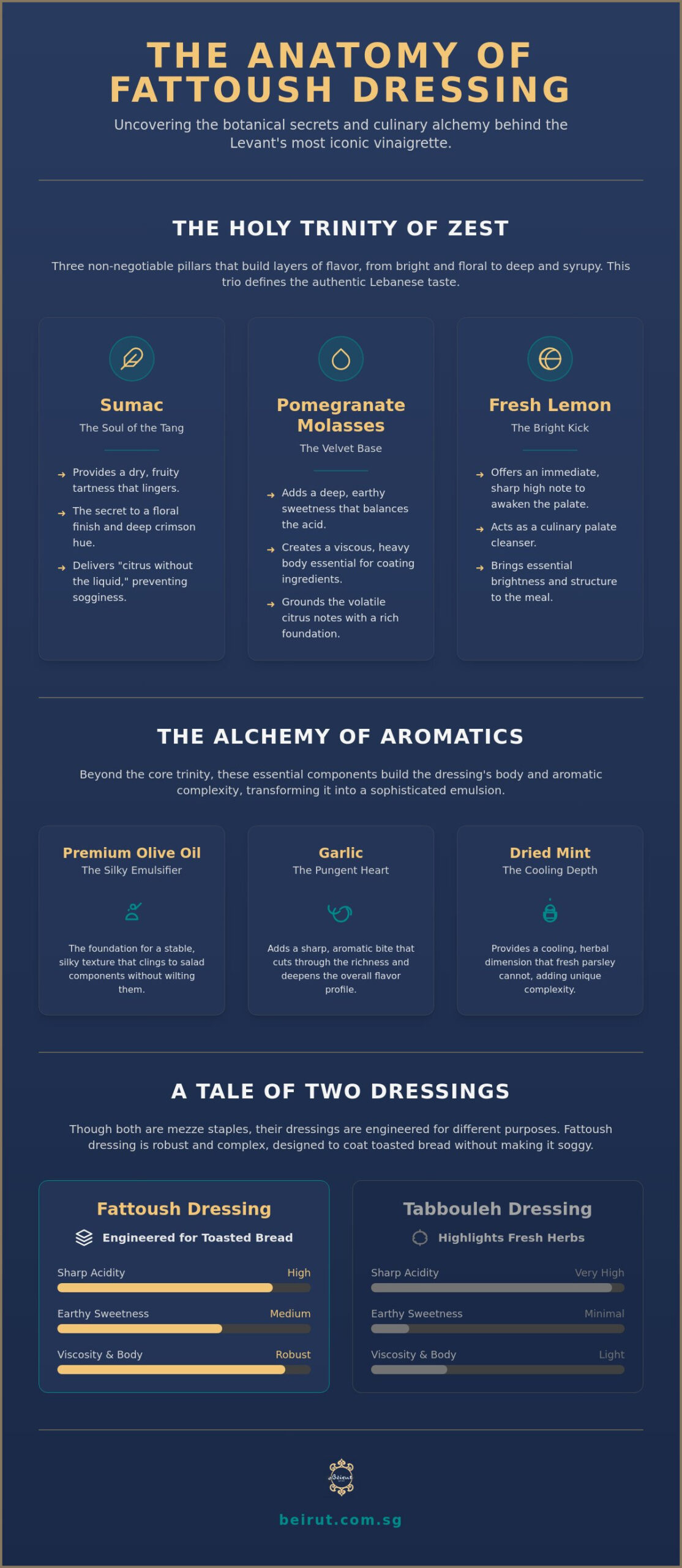
The Alchemy of Aromatics: Garlic, Mint, and Premium Olive Oil
While the vibrant tartness of sumac and pomegranate defines the initial sensory hit, the true architectural depth of the dressing emerges through a careful marriage of fat and fragrance. To truly grasp what is fattoush dressing made of, one must appreciate the foundational role of high-quality extra virgin olive oil. This is not merely an ingredient; it’s the vehicle that carries the volatile oils of the spices and aromatics across the palate. In an era where the market value of olive oil continues to rise as premiumization creates opportunities for high-quality producers, we remain committed to using only the finest pressings to ensure a velvety, luxurious finish.
The supporting cast of garlic and dried mint provides the savory and cooling counterpoints to the sharp acids discussed previously. Freshly crushed garlic offers a pungent backbone that grounds the fruitier notes of the lemon, while dried mint introduces a refreshing aftertaste. This combination ensures that the dressing doesn’t just taste sour, but feels complete and multidimensional. At Beirut Grill, we have spent years since 2009 perfecting this aromatic balance to ensure our mezze remains the benchmark of authenticity in Singapore’s dining scene.
The Golden Ratio of Oil to Acid
In the Lebanese culinary tradition, we often diverge from the classic French vinaigrette ratio of three parts oil to one part acid. A true Fattoush dressing leans into its sharp identity, often favoring a more aggressive acidity to cut through the smoky depth of charcoal-grilled meats. Achieving the perfect viscosity is essential; the dressing must be thick enough to cling to the vegetables but fluid enough to be absorbed by the toasted pita. The emulsion process relies on finely minced garlic, which acts as a natural stabilizer to bind the oil and acids into a cohesive, silky liquid.
Dried vs. Fresh Mint in the Dressing
While fresh mint is a beautiful garnish for the salad itself, the dressing specifically requires the dried variety for its concentrated, peppery resonance. Dried mint offers a deeper, more savory hit than the sweet notes of fresh leaves, which can sometimes get lost in the heavy acidity of the lemon and pomegranate molasses. To release the full potential of this herb, we recommend placing the dried leaves in your palm and crushing them firmly with your other thumb in a circular motion. This friction releases the essential oils just moments before they hit the liquid, ensuring a potent, cooling finish that defines the legendary Lebanese zest.
By understanding what is fattoush dressing made of at this structural level, you move beyond following a recipe to mastering a heritage. The interaction between the pungent garlic, the cooling mint, and the foundational olive oil creates a dressing that is both a preservative of tradition and a celebration of flavor. This alchemy is what allows a simple collection of garden vegetables to stand proudly alongside the most prestigious dishes on a Lebanese table.
Master the Emulsion: Tips for a Professional-Grade Dressing
Creating a professional-grade emulsion requires more than just a list of ingredients; it demands a respect for the sequence of assembly. While you now know what is fattoush dressing made of, the secret to a silky, stable result lies in how these components are introduced to one another. At Beirut Grill, our chefs follow a rhythmic process that ensures the dressing clings to each leaf with a velvet-like grace rather than pooling at the bottom of the bowl. This technical precision is what distinguishes a standard salad from a prestigious mezze offering.
Begin with room-temperature ingredients. Cold oil or chilled molasses will resist integration, leading to a broken dressing that feels greasy on the palate. Whisk your sumac, salt, and crushed garlic directly into the fresh lemon juice and pomegranate molasses before the oil ever touches the bowl. This allows the dry spices to hydrate and the garlic to release its natural stabilizers. Once combined, allow the mixture to rest for at least 10 minutes. This resting period is critical; it allows the sumac to “bloom,” softening its coarse texture and intensifying its ruby-hued tartness.
Common Mistakes to Avoid
The most frequent error in home kitchens is the use of bottled lemon juice. It lacks the volatile oils found in fresh citrus and results in a flat, one-dimensional flavor. Additionally, be cautious with salt. Since high-quality sumac often contains a naturally salty profile from the drying process, you should season conservatively. Finally, always check the quality of your extra virgin olive oil. With new 2026 labeling regulations in regions like California requiring standardized “BEST if Used by” dates, it’s easier than ever to ensure your foundational fat is at its peak of freshness. A rancid oil will immediately mask the delicate, floral notes of the pomegranate.
Adjusting for the Perfect Balance
Tasting your dressing is an exercise in sensory awareness. You are looking for a “front-end” zing from the lemon that transitions into a “back-end” earthy sweetness from the molasses. If the dressing feels too sharp, don’t reach for sugar; instead, add a drop more pomegranate molasses to round out the edges. If the texture feels too heavy or the oil is overpowering, a splash of lemon juice will provide the necessary lift. A final pinch of freshly cracked black pepper serves to ground these high-acid flavors, providing a subtle warmth that ties the Levant’s sun-drenched ingredients together.
To experience this masterfully balanced zest without lifting a whisk, we invite you to enjoy our signature Fattoush, prepared fresh daily by our heritage-trained chefs. Understanding what is fattoush dressing made of is the first step toward appreciating the complexity of Lebanese hospitality, where every drop of dressing is a testament to our culinary pride.
The Beirut Grill Experience: Pairing Your Fattoush
Since 2009, Beirut Grill has served as a prestigious destination for those seeking the true soul of Levantine cuisine in the heart of Singapore. When our guests inquire about what is fattoush dressing made of, they’re often captivated by the way its vibrant zest transforms an entire meal. At our table, the Fattoush is never a mere accompaniment. It serves as a vital palate cleanser, specifically designed to cut through the indulgent richness of our signature charcoal-grilled offerings. The sharp, sumac-heavy acidity acts as the perfect foil for the smoky depth of our Lamb Kofta and the tender, spice-marinated Shish Taouk, ensuring every bite remains as bright as the first. This harmonious tension between fire and garden is what defines our culinary philosophy.
We invite you to immerse yourself in these authentic flavors and explore the most refined Middle Eastern food in Singapore. Each dish we serve is a testament to our cultural roots and our commitment to the highest culinary standards. By mastering the nuances of what is fattoush dressing made of, our chefs ensure that every salad delivered to your table is a hallmark of authenticity and a reward for your culinary curiosity.
The Mezze Masterclass
A traditional mezze spread is a study in sensory contrast. The tartness inherent in a masterfully crafted Fattoush dressing provides a necessary counterpoint to the velvet-like textures of our cold mezze. When enjoyed alongside the earthy notes of our Hummus or the smoky allure of Baba Ghanoush, the dressing provides a high-note resonance that keeps the palate engaged. This interplay is particularly striking when tasted against the cooling, thick creaminess of our Labneh. By understanding the structural role of these flavors, you begin to appreciate the full, evocative spectrum of Mediterranean food in Singapore.
A Legacy of Hospitality
Our presence on Bussorah Street is more than just a restaurant; it’s a curated journey through Lebanese heritage. We take immense pride in our commitment to traditional techniques and the use of premium, imported ingredients that honor our founding year of 2009. From the precise sourcing of our ruby-hued sumac to the selection of prestigious olive oil labels, every detail is managed with professional authority and warm hospitality. We welcome you to join us and experience a sensory journey that rewards your curiosity and celebrates the enduring allure of Lebanese zest. Explore our menu and let us host you in an environment where history and flavor meet in a rhythmic celebration of the Levant.
Embrace the Vibrant Soul of the Levant
You now hold the keys to a tradition that has defined Middle Eastern hospitality for generations. By moving beyond a simple recipe to understand exactly what is fattoush dressing made of, you have gained a deeper appreciation for the heritage behind every sun-drenched ingredient. You’ve discovered how the ruby-hued sumac and velvety pomegranate molasses work in concert with premium olive oil to create a sensory experience that is both sharp and soulful. This balance isn’t just about flavor; it’s a celebration of the land and the history we carry to every table.
Since 2009, we have taken immense pride in preserving these authentic techniques within our heritage-rich setting. We believe that a true Lebanese feast is a journey of contrasts, where the bright zest of a masterfully emulsified dressing meets the smoky, indulgent depth of our signature charcoal-grilled meats. We invite you to join us and allow our expertise to transport you to the heart of Beirut. Experience the authentic taste of Lebanon—Book your table at Beirut Grill today. We look forward to hosting you for a meal that rewards your curiosity and indulges your senses.
Frequently Asked Questions
Can I substitute pomegranate molasses in Fattoush dressing?
No direct substitute perfectly replicates the complex, wine-like tang of pomegranate molasses, but you can use a high-quality balsamic glaze mixed with extra lemon zest in an emergency. This temporary fix will lack the specific Levantine fruitiness that defines the dish. To truly understand what is fattoush dressing made of at its most authentic, you must seek out the real liquid gold reduced from pure pomegranate juice.
What is the best type of oil to use for an authentic Lebanese dressing?
You should always use a premium, cold-pressed Extra Virgin Olive Oil to provide the foundational fat for your dressing. A robust, peppery oil from the Mediterranean region helps carry the volatile flavors of the sumac and garlic across your palate. Avoid neutral oils like canola or vegetable oil; they lack the character required to stand alongside the bold acidity of a traditional Lebanese mezze.
How long can I store homemade Fattoush dressing in the fridge?
Homemade Fattoush dressing will remain vibrant for up to seven days when stored in an airtight glass container in the refrigerator. Before serving, allow the dressing to reach room temperature to ensure the olive oil returns to a liquid state and the aromatics regain their full potency. A quick whisk will restore the emulsion, though the fresh lemon notes will be most vivid within the first 48 hours.
Is sumac absolutely necessary for Fattoush dressing?
Sumac is absolutely non-negotiable if you wish to achieve the iconic, dry fruitiness that characterizes this salad. It provides a citrus-like tartness without adding extra liquid, which prevents the vegetables from becoming soggy. Without this ruby-hued spice, the blend becomes a standard vinaigrette rather than a true Lebanese zest. It is the defining element when asking what is fattoush dressing made of.
Why is my Fattoush dressing too bitter?
Bitterness often stems from over-processing the garlic or using a low-quality olive oil that has begun to oxidize. If you crush garlic too aggressively, it releases pungent sulfur compounds that can overwhelm the delicate balance of the acids. To remedy this, ensure your garlic is finely minced rather than pulverized. You can also add a touch more pomegranate molasses to temper the sharp edges with earthy sweetness.
Is Fattoush dressing vegan and gluten-free?
The dressing itself is naturally vegan and gluten-free, as it consists entirely of plant-based oils, fruit reductions, and spices. However, the traditional salad includes toasted pita bread, which contains gluten. At Beirut Grill, we ensure our dressings adhere to these traditional, plant-derived roots, making them an excellent choice for guests with specific dietary preferences seeking authentic Middle Eastern flavors in Singapore.
Can I use fresh mint instead of dried mint in the dressing?
You should use dried mint specifically for the liquid dressing because its flavor is more concentrated and peppery. Fresh mint leaves are better suited as a garnish or mixed directly into the salad greens. Dried mint leaves, when crushed between your palms, release essential oils that integrate seamlessly into the emulsion, providing a cooling aftertaste that fresh leaves cannot replicate in a liquid medium.
What is the difference between Fattoush dressing and a Greek salad dressing?
The primary difference lies in the acid profile and the spices used. While Greek dressing typically relies on red wine vinegar and dried oregano, Fattoush dressing is defined by the interplay of sumac and pomegranate molasses. This creates a much more complex, fruity tartness compared to the herbal, sharp bite of a Greek vinaigrette. The Lebanese version is also thicker, specifically designed to coat and soak into toasted bread shards.