
What if the most sophisticated dish in the Levant isn’t a grand roast, but a hand-sculpted jewel no larger than your palm? To the uninitiated, the question of what is fried kibbeh might lead to comparisons with simple croquettes, yet such a view misses the profound artistry of Lebanon’s national treasure. This dish represents a masterclass in culinary architecture; a crisp, golden shell of fine bulgur and lean lamb protects a soul of spiced meat and toasted pine nuts. It’s a sensory experience that defines the heritage of our table.
You likely appreciate that authentic Lebanese cuisine is as much about the texture as it is about the spice. We promise to guide you through the intricate “meat-in-meat” structure that defines this delicacy, ensuring you never mistake a heavy, greasy imitation for the real thing again. We’ll explore the historical roots of this quintessential mezze offering, how to identify the hallmark signs of high-quality craftsmanship in a restaurant, and the perfect ways to pair it within a traditional feast.
Key Takeaways
- Understand what is fried kibbeh by exploring its intricate “meat-in-meat” construction and its status as the revered national dish of Lebanon.
- Learn to identify the delicate balance between the crisp bulgur-and-lamb shell and the aromatic hashweh filling of spiced meat and toasted pine nuts.
- Discover the versatility of the kibbeh base, from the iconic fried torpedoes to the substantial, family-style baked Kibbeh Bil Sanieh.
- Master the art of the Lebanese feast by pairing your kibbeh with essential mezze staples like hummus and the cooling contrast of fresh labneh.
- Gain the expertise to recognize authentic, hand-rolled craftsmanship that honors centuries-old traditions of Levantine hospitality.
Defining the Jewel of Lebanese Mezze
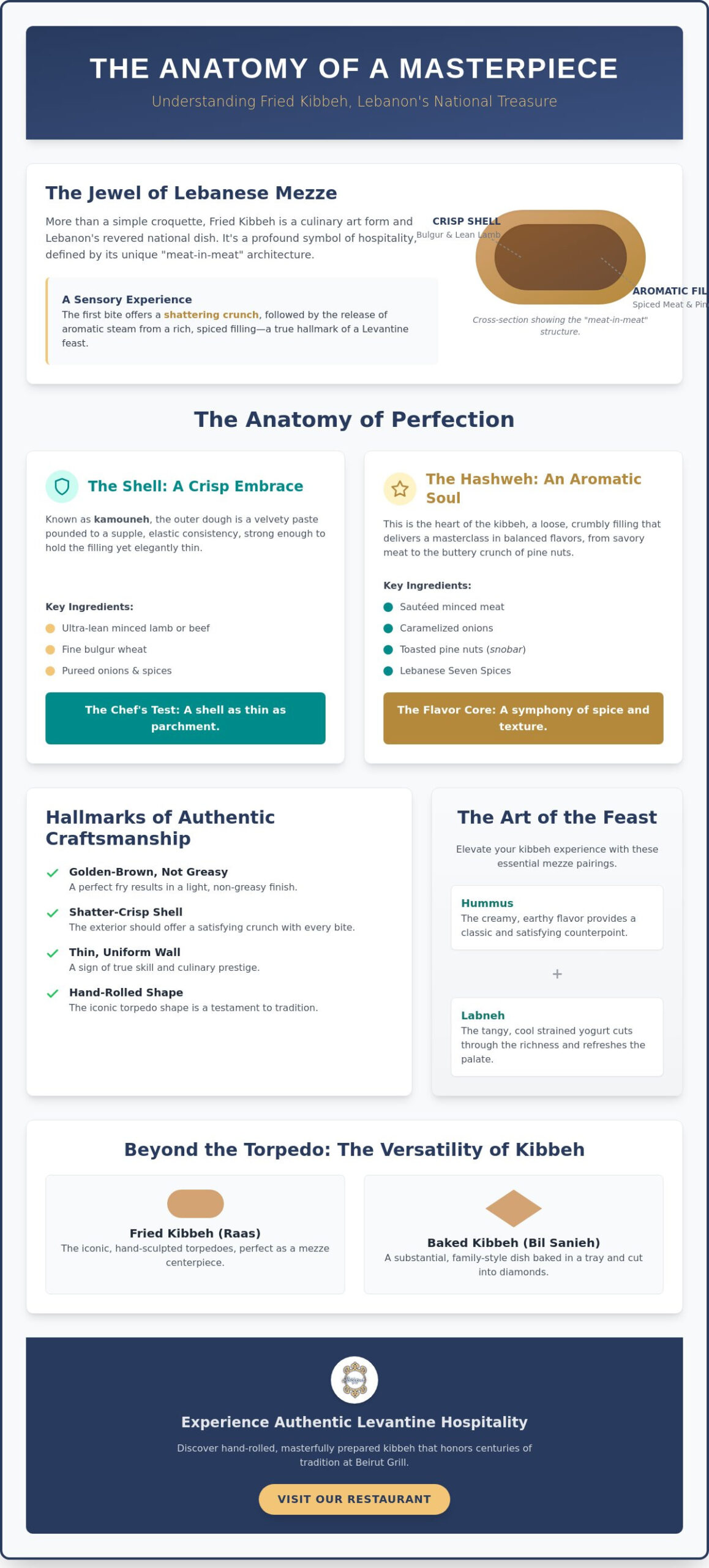
Imagine entering a dining room where the air carries the intoxicating scent of toasted pine nuts and warm spices. Placed at the center of the table, a platter of golden-brown, torpedo-shaped delicacies commands immediate attention. This is Kibbeh Raas. To understand what is fried kibbeh, one must look beyond its crisp exterior to the centuries of tradition it carries. It isn’t a mere appetizer; it is Lebanon’s national dish and a profound symbol of Levantine hospitality. Unlike a standard meatball, which is a homogenous blend of ingredients, kibbeh features a unique “meat-in-meat” architecture. A delicate, outer shell of fine bulgur wheat and lean minced lamb encases a soul of sautéed meat, caramelized onions, and toasted nuts. The first bite offers a shattering crunch, followed by a release of aromatic steam that signals the start of a true feast. Its distinctive golden-brown hue and the aromatic scent of Middle Eastern spices like allspice and cinnamon create an allure that is impossible to resist.
The Etymology and Origins of Kibbeh
The name itself whispers of the dish’s shape and soul. Derived from the Arabic word “kubba,” which translates to ball or dome, the term reflects the rounded, hand-sculpted nature of the preparation. While its roots are deeply planted in the ancient soils of the Levant, the dish evolved significantly through the Ottoman era, becoming a sophisticated staple of urban centers like Beirut. In traditional households, it is revered as the “King of Mezze,” a dish that marks celebrations and honors the arrival of esteemed guests. This legacy has transformed the dish from a rustic staple into a high-status marker of culinary excellence that rewards the diner’s curiosity with every layer of flavor.
Why Kibbeh is an Art Form, Not Just a Snack
Historically, the preparation of this dish was a communal ritual that centered around the “Jurn,” a heavy stone mortar used to pound meat into a velvety paste. This process required immense physical strength and rhythm to ensure the meat reached the perfect consistency for the shell. Today, while modern tools may assist, the true skill remains in the shaping. A chef must hollow out the dough with their thumb, creating a wall that is thin enough to be elegant yet strong enough to withstand the intense heat of the fryer without cracking. This delicate balance is the ultimate test of a Lebanese chef’s dexterity and patience, transforming humble ingredients into a culinary masterpiece that embodies the spirit of our heritage.
The Anatomy of Perfection: Shell, Filling, and Spice
To truly understand what is fried kibbeh, one must look past the golden surface and into the sophisticated architecture of the dish. It is a gastronomic duality where two distinct preparations of meat meet in a single, harmonious bite. The exterior, known as the kamouneh or dough, is a velvety paste made from ultra-lean minced lamb or beef, fine bulgur wheat, and pureed onions. This mixture is pounded until it achieves a supple, elastic consistency that can be sculpted into the iconic torpedo shape. Inside lies the hashweh, a loose, aromatic filling of sautéed meat that provides a rich, crumbly contrast to the smooth shell. When guests ask our chefs what is fried kibbeh, we describe it as a labor of love that requires hours of preparation for a few moments of indulgence.
The Secret of the Perfect Bulgur Shell
The hallmark of a master chef is the thickness of the kibbeh wall. In high-end Lebanese kitchens, the goal is a shell as thin as parchment, yet strong enough to contain the steaming filling without bursting. Achieving this requires a precise bulgur-to-meat ratio; too much grain makes the shell gritty, while too much meat makes it heavy. A crucial step in the process is the cooling of the dough before it hits the oil. This temperature control ensures the exterior achieves a shatter-crisp finish that resists absorbing excess grease, maintaining a light and elegant profile. The cultural significance of kibbeh is often measured by this very dexterity, as a thin, uniform shell is a sign of a household’s culinary prestige.
The Hashweh: A Symphony of Toasted Pine Nuts and Meat
While the shell provides the structure, the hashweh delivers the soul. This filling is a masterclass in balanced flavors, where the savory depth of the meat is lifted by the natural sweetness of caramelized onions. The addition of toasted pine nuts, or snobar, is non-negotiable for a connoisseur. These nuts offer a buttery, delicate crunch that punctuates each bite. The entire mixture is seasoned with the Lebanese Seven Spices, a traditional blend of Baharat that includes allspice, black pepper, cinnamon, cloves, fenugreek, ginger, and nutmeg. This spice profile creates a warm, evocative aroma that lingers long after the meal is finished. If you wish to experience this intricate balance of textures firsthand, you can find our signature Fried Kibbeh prepared with these exact traditional methods.
The final element of perfection is the sensory transition during the first bite. A properly fried kibbeh should offer an audible crunch, followed immediately by the moist, spiced interior. This interplay of shatter-crisp and succulent is what separates an authentic Lebanese jewel from a generic meat croquette. It is a dish designed to be savored slowly, rewarding the curious diner with layers of spice and heritage.
While the crispy, torpedo-shaped morsels are the most recognizable form, understanding what is fried kibbeh is merely the entry point into a vast culinary lineage. In a traditional Lebanese household, the mixture of bulgur and meat serves as a sophisticated foundation for an array of preparations that shift with the seasons and the setting. Whether it is baked in a shimmering tray or poached in a cooling yoghurt sauce, the “King of Mezze” demonstrates a remarkable versatility that rewards the adventurous palate.
Kibbeh Bil Sanieh represents the comforting, domestic heart of this dish. Unlike the individual hand-sculpted shells of the fried version, this variation is layered in a round baking tray. A generous portion of spiced hashweh is sandwiched between two layers of kibbeh dough, creating a substantial meal that is both earthy and refined. For those seeking a more delicate experience, Kibbeh Labanieh offers a masterclass in contrast. Here, the small, fried kibbeh balls are gently simmered in a warm, garlicky yoghurt sauce infused with dried mint, transforming the shell into a tender, flavor-soaked delight.
Baked vs. Fried: Choosing Your Experience
Deciding between the baked and fried versions often depends on the nature of the gathering and your appetite. The fried kibbeh is the quintessential star of the mezze table, offering an indulgent, textural thrill that pairs beautifully with cold appetizers. In contrast, the baked version is more substantial, often served as a main course for family dinners. Before baking, the chef meticulously scores the top layer in a precise diamond pattern. This isn’t merely decorative; these deep grooves allow premium olive oil to penetrate the dough, ensuring the top becomes beautifully crisp while the interior remains moist and succulent.
The Brave Choice: Kibbeh Nayeh
For the true connoisseur, the journey often leads to Kibbeh Nayeh. This celebrated raw version is frequently compared to a Levantine steak tartare, yet it possesses a much finer, silkier texture. It requires the absolute pinnacle of meat quality, usually lamb or beef minced to a velvety paste and blended with kamouneh spices. Eating Kibbeh Nayeh is a ritual in itself. It is traditionally spread across a flat plate, drizzled with a generous pool of extra virgin olive oil, and enjoyed with fresh mint leaves, crisp radishes, and a glass of Arak. This pairing with the anise-flavored spirit provides a sharp, refreshing counterpoint to the rich, unfettered purity of the meat. It is a dish that speaks to the deep trust between a host and their guests, representing the ultimate expression of Lebanese culinary pride.
The Art of the Lebanese Feast: How to Serve and Pair Kibbeh
To dine in the Lebanese tradition is to participate in a carefully choreographed sequence of flavors. While we have explored the technical mastery of the dish, the true pleasure lies in its place within the broader mezze spread. Understanding what is fried kibbeh involves more than just identifying ingredients; it requires knowing how it dances with other flavors on the palate. These hand-sculpted treasures are never served in isolation but act as the savory anchor of a communal feast. They’re designed to be shared, passed between friends as morsels of joy that bridge the gap between cold appetizers and the grand grilled mains.
Creating a Balanced Mezze Table
A well-curated table relies on the interplay of heat, acidity, and texture. The rich, earthy depth of the fried shell finds its perfect counterpoint in the vibrant acidity of Tabbouleh, where the fresh parsley and lemon juice cleanse the palate between bites. For a contrast in textures, we recommend ordering your kibbeh alongside a bowl of velvety Hummus or smoky Moutabal. The creaminess of these purees provides a soft backdrop to the shatter-crisp exterior of the meat. No serving is truly complete without the essential accompaniment of a cooling dip. Whether it’s the tangy brightness of fresh Labneh or the nutty richness of a tahini-based sauce, these additions balance the warmth of the Seven Spices, allowing the subtle notes of cinnamon to shine.
Elevating the Experience with Arak and Lebanese Wine
When guests discover what is fried kibbeh at a traditional table, they often find that the beverage pairing is just as vital as the dish itself. Arak, the traditional anise-flavored spirit known as “lion’s milk,” is the quintessential partner for fried meats. When diluted with water and ice, its milky-white appearance belies a sharp, refreshing profile. The aniseed notes act as a palate cleanser, cutting through the richness of the fried shell with precision.
For those who prefer the vine, a bold Lebanese red from the Bekaa Valley is an exquisite choice. The heritage of Lebanese winemaking provides a historical resonance that matches the ancient roots of the kibbeh itself. We suggest selecting varietals that possess the tannin structure to stand up to the robust lamb filling:
- Syrah: Its peppery notes complement the aromatic Seven Spices.
- Cabernet Sauvignon: The dark fruit profile balances the savory depth of the hashweh.
- Cinsault: A traditional Levantine favorite that offers a lighter, aromatic touch for a long afternoon of grazing.
To conclude such a meat-heavy feast, a pot of Moroccan Mint Tea offers a refreshing, aromatic finish that aids digestion and lingers pleasantly. We invite you to experience this harmonious blend of heritage and flavor by reserving a table to enjoy our authentic Lebanese Mixed Grill and Mezze.
Discovering Authentic Fried Kibbeh at Beirut Grill
Since our founding in 2009, Beirut Grill has served as a prestigious destination for those seeking the true essence of Levantine hospitality in the heart of Singapore. Nestled within the evocative architectural landscape of Kampong Glam, we invite our guests to step away from the urban rush and immerse themselves in a world of heritage. To truly understand what is fried kibbeh, one must experience it within this specific context, where the scent of charcoal and the chime of traditional music set the stage for a culinary masterclass. Our presence on Bussorah Street isn’t just about food; it’s about transporting the guest to the vibrant streets of Lebanon through every sensory detail.
Our chefs treat every order of Fried Kibbeh as an individual work of art. Unlike mass-produced versions found elsewhere, our kibbeh is meticulously hand-rolled to ensure a delicate, thin shell that shatters upon the first bite. This reveals a heart of perfectly seasoned meat and buttery pine nuts, reflecting the “meat-in-meat” architecture we’ve championed for over a decade. This commitment to traditional techniques is what has cemented our reputation as a curator of authentic culture. We use a specific lexicon of spices and premium imported ingredients to ensure that the flavor profile you enjoy in Singapore is indistinguishable from that of a high-end bistro in Beirut.
The Beirut Grill Standard: Freshness and Heritage
Our kitchen operates with a deep respect for tradition, maintaining a strictly pork-free environment to honor the authentic roots of our cuisine. While our fried treasures are a highlight of any visit, they’re designed to be part of a larger, more indulgent journey. We often suggest our signature Mixed Grill as the natural successor to your mezze starters. The robust, smoky flavors of our grilled lamb and beef provide a substantial follow-up to the aromatic spices of the kibbeh, creating a balanced and satisfying feast that rewards the visitor’s curiosity.
Your Invitation to a Culinary Journey
A meal at Beirut Grill is an invitation to explore the sensory delights of the Mediterranean. We encourage our guests to embrace the communal spirit of the Lebanese table by dining in groups, allowing for a diverse spread of textures and flavors that define our “Mezze Guide” style of eating. To elevate your experience, our knowledgeable hosts can guide you through our selection of Lebanese wines or prepare a traditional serving of Arak. Whether you’re finishing your meal with a refreshing Moroccan Mint Tea or lingering over a second glass of Bekaa Valley red, every moment is a celebration of place and culture. We invite you to reserve your table at Beirut Grill today and discover why we remain the definitive choice for authentic Middle Eastern excellence.
Embrace the Legacy of the Levantine Table
The journey through the world of Lebanon’s national dish reveals a culinary landscape defined by precision, patience, and pride. From the shatter-crisp exterior of the bulgur shell to the aromatic, spice-laden soul of the hashweh filling, this delicacy is a masterclass in texture. Understanding what is fried kibbeh is the first step toward becoming a true connoisseur of Middle Eastern flavors; it allows you to appreciate the hand-sculpted artistry that distinguishes a heritage feast from a simple meal. It’s a dish that invites you to slow down and savor the deep, earthy traditions of the Mediterranean.
At Beirut Grill, we’ve remained dedicated to these authentic standards since 2009, offering a pork-free menu that honors the culinary heritage of our ancestors. Located in the historic heart of Kampong Glam, our dining room serves as a gateway to the Levant where every detail is curated for your indulgence. Whether you’re seeking a light mezze lunch or a grand evening celebration, the perfect kibbeh awaits. Experience the authentic taste of Lebanon, Book your table at Beirut Grill. We look forward to welcoming you to our table for an unforgettable cultural journey.
Frequently Asked Questions
Is fried kibbeh healthy?
Fried kibbeh is a nutrient-dense dish that offers a sophisticated balance of protein, complex carbohydrates, and healthy fats. The lean lamb or beef provides essential iron, while the fine bulgur wheat contributes dietary fiber. When prepared using our traditional, high-temperature frying methods, the shell achieves a crisp finish without absorbing excessive oil, making it a wholesome addition to a balanced Mediterranean diet.
What is the difference between kibbeh and falafel?
The primary distinction lies in the foundational ingredients; kibbeh is meat-based while falafel is entirely plant-based. To understand what is fried kibbeh in relation to other mezze, one must look at its “meat-in-meat” structure of bulgur and minced lamb. In contrast, falafel consists of ground chickpeas or fava beans seasoned with fresh herbs like parsley and cilantro, making it naturally vegetarian.
Can kibbeh be made vegetarian?
Vegetarian variations are a celebrated part of Levantine cuisine, particularly the pumpkin-based version known as Kibbet Laqtin. In these recipes, the traditional meat shell is replaced by a vibrant blend of pureed pumpkin and bulgur wheat. The filling typically features a savory mixture of spinach, chickpeas, and walnuts, offering a complex flavor profile that honors the dish’s architectural heritage without the use of meat.
What meat is traditionally used in fried kibbeh?
Authentic Lebanese recipes traditionally call for very lean minced lamb or beef for both the shell and the filling. Lamb is often the preferred choice for connoisseurs because its rich, slightly gamey profile pairs exquisitely with the warm notes of the Seven Spices. At Beirut Grill, we adhere to these traditional standards by using only premium, pork-free cuts to ensure an authentic gastronomic experience.
How many pieces of kibbeh should I order per person?
We generally recommend ordering two to three pieces per person when the dish is served as part of a wider mezze spread. Because of its substantial meat and bulgur content, kibbeh is quite filling. This portion size allows guests to enjoy the rich, spiced flavors while leaving room to explore other essential Lebanese staples like hummus, moutabal, and our signature grilled mains.
Is kibbeh served hot or cold?
Fried kibbeh is at its most magnificent when served hot, immediately after being carefully fried to a golden brown. Serving it warm ensures that the exterior maintains its signature shatter-crisp texture while the aromatic oils in the filling remain fluid and fragrant. While some enjoy it at room temperature during casual gatherings, the heat is vital for the full sensory release of the Lebanese spices.
Does kibbeh contain gluten?
Traditional kibbeh does contain gluten because bulgur wheat is a fundamental ingredient used to create the structural integrity of the shell. The fine grains of cracked wheat are essential for achieving the specific elastic consistency required for hand-rolling the torpedo shapes. While some modern adaptations use rice or potatoes for the shell, these variations lack the earthy, nutty undertones that define the classic Lebanese national dish.