
Deeply rooted in the sun-drenched heritage of the Levant, true Lebanese hummus isn’t just a recipe; it’s a patient ritual of temperature control and aeration that transforms humble legumes into edible silk. If you’ve ever wondered how to make hummus from scratch only to end up with a grainy, beige paste that lacks the soul of a professional kitchen, you aren’t alone. Achieving that signature pale ivory hue and ethereal lightness requires more than a simple blender. It demands an intimate understanding of culinary heritage and the precise chemistry of high-quality ingredients.
We understand the frustration of a dip that’s too heavy on raw garlic or lacks the rich, nutty depth of premium tahini. In this masterclass, you’ll master the uncompromising techniques and heritage secrets required to create velvety, restaurant-grade Lebanese hummus in your own kitchen. We’ll guide you through the ideal tahini-to-chickpea ratio, the secrets to a “velvet” texture, and the art of presenting your creation for a sophisticated dinner party. Prepare to transport your guests to a world of refined hospitality with every indulgent, ivory swirl.
In this definitive Lebanese masterclass, you will:
- Embrace the storied heritage of the mezze table by exploring the etymology and cultural soul of authentic Hummus bi Tahini.
- Understand why selecting dried chickpeas and high-fat, artisanal tahini is the vital foundation for anyone learning how to make hummus from scratch with uncompromising quality.
- Master the patient 24-hour ritual, including the alkaline soaking method and the “over-cooking” rule, to ensure an impossibly smooth, velvet texture.
- Unlock the professional “Ice Cube Trick” used by master chefs to aerate the blend, resulting in an ethereal, pale ivory finish.
- Learn the art of the Lebanese feast, positioning your hummus alongside warm, pillowy pita and traditional accompaniments for a sophisticated dining experience.
The Soul of the Mezze Table: Defining Authentic Hummus bi Tahini
The term “Hummus bi Tahini” translates simply to “chickpeas with tahini,” yet this modest name belies a complex cultural legacy that stretches back through the annals of Levantine history. In the vibrant heart of Lebanese hospitality, this dish acts as the gravitational center of the meal, a symbol of welcome and abundance. At Beirut Grill, where we have curated authentic Middle Eastern experiences in our prestigious urban setting since 2009, we view the preparation of this staple as a sacred trust. Understanding The Soul of the Mezze Table begins with stripping away the modern dilutions of mass production. Unlike the dull, greyish, preservative-laden spreads found in supermarket aisles, a true artisanal hummus is defined by its uncompromising purity. There are no cheap vegetable oils, no chemical thickeners, and certainly no artificial stabilizers to mask inferior ingredients. When you set out to learn how to make hummus from scratch, you’re not just following a kitchen manual; you’re participating in a centuries-old tradition of culinary excellence that rewards the patient soul.
The Heritage of Lebanese Hummus
For generations, the chickpea has reigned as the golden grain of the Levant, providing a nutrient-dense foundation for communal dining. In a professional Lebanese kitchen, the quality of the hummus is the ultimate benchmark of a chef’s skill. It’s the first dish a trainee prepares to demonstrate their patience and mastery of aeration. A perfectly swirled plate, sculpted with a shallow well for a pool of liquid gold olive oil and a dusting of crimson sumac, is an evocative sight that signals the start of a prestigious feast. This visual allure is essential, transforming a simple dip into a centerpiece that invites guests to immerse themselves in the heritage of the region.
Texture vs. Flavour: The Professional Balance
Achieving the “velvet” standard is the hallmark of a master. The texture must be impossibly smooth, light, and airy on the palate, melting away without a hint of graininess or heavy oiliness. This ethereal quality requires a delicate interplay between the rich, nutty depth of high-fat tahini and the sharp, bright zing of freshly squeezed citrus. When exploring how to make hummus from scratch, one must respect the ingredients enough to let them speak for themselves. Authentic hummus is a harmonious balance of four prime elements: tender chickpeas, premium tahini, fresh lemon juice, and a subtle whisper of garlic. This sophisticated dance of flavors feels both indulgent and refreshing.
The Purist’s Pantry: Sourcing Ingredients for Excellence
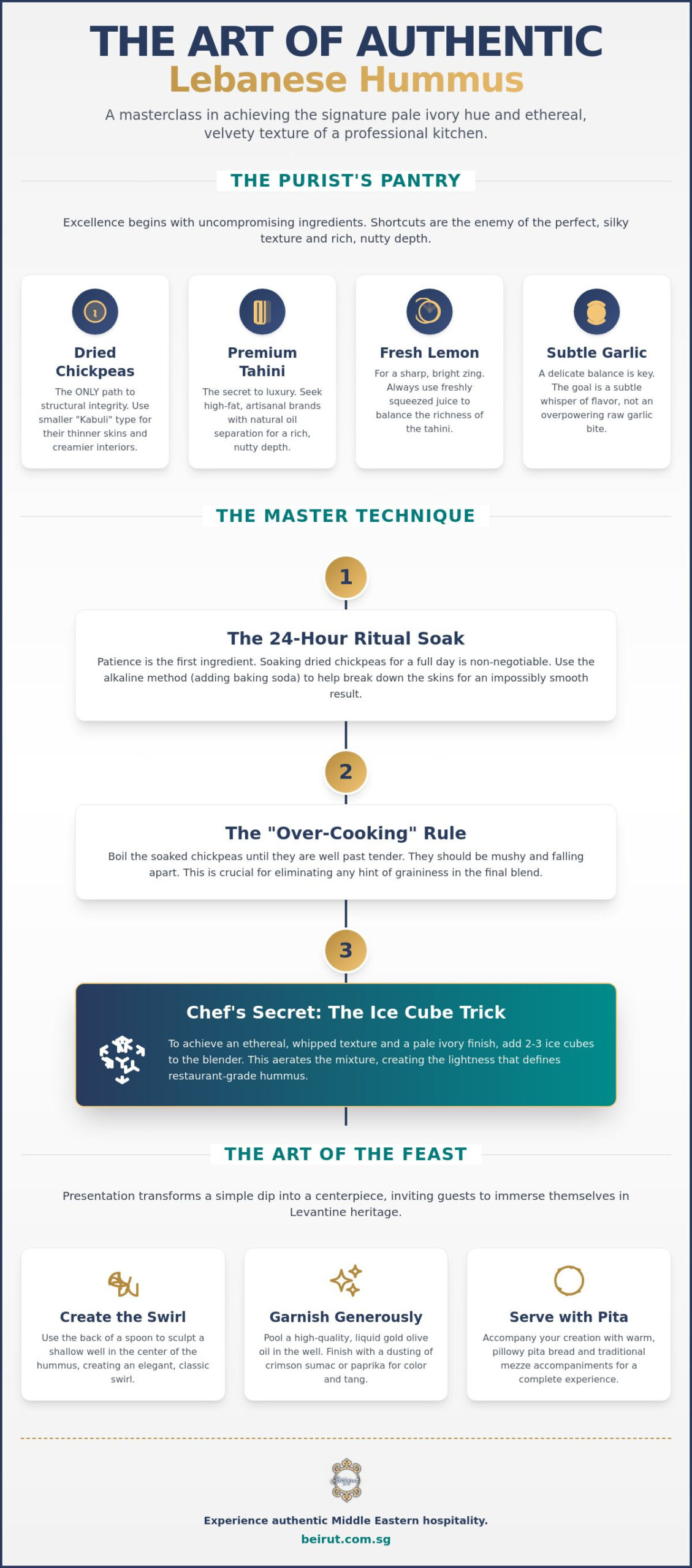
To truly master how to make hummus from scratch, one must first curate a pantry that mirrors the high standards of a professional Lebanese kitchen. The transition from a mediocre spread to a restaurant-grade masterpiece begins with the raw materials. We believe that shortcuts are the enemy of excellence. While supermarket shelves are lined with convenient tins, the discerning chef knows that dried chickpeas are the only path to achieving the necessary structural integrity and deep, earthy sweetness. These legumes are more than just a base; they are the heart of the dish, and their quality dictates the final outcome. Selecting the right components is a sensory experience that rewards the visitor’s curiosity with a superior culinary result.
The Chickpea Selection
We recommend seeking out smaller “Kabuli” type chickpeas. Their thinner skins and creamier interiors make them ideal for the intensive blending process required for a velvet finish. It’s vital to consider the age of your dried beans. Older chickpeas, often sitting on retail shelves at around $4.40 per kilogram, may require a significantly longer soaking duration and might never reach the peak creaminess of a fresher harvest. At Beirut Grill, we source only the finest, most consistent legumes to ensure our signature dips remain peerless in both texture and taste.
Premium Tahini: The Secret to Luxury
The soul of a luxurious hummus lies in its tahini. A higher tahini-to-chickpea ratio is the guarded secret to that decadent, “restaurant-style” richness. Look for markers of high quality: natural oil separation and a sweet, toasted aroma. In 2026, premium options like Soom Foods (approximately $10 per jar) or Artisana Organics (around $13) offer the single-origin Ethiopian sesame seeds that provide a superior flavor profile. Beyond the taste, the Nutritional Benefits of Hummus are significantly enhanced by these high-quality, plant-based fats. Avoid bitter, over-roasted pastes that can dominate the delicate legume.
The final flourishes require equal scrutiny. Freshness is the silent architect of flavor, and freshly squeezed lemon juice is essential. Bottled concentrates often introduce a metallic bitterness that ruins the delicate balance of acidity. For the finishing touch, select an Extra Virgin Olive Oil that balances fruity and peppery notes, acting as a luxurious silk ribbon that ties the elements together. If you wish to experience these ingredients in their most elevated form before attempting the ritual of how to make hummus from scratch yourself, we invite you to taste the heritage at Beirut Grill. Our commitment to these premium markers ensures every bite is a journey through authentic Levantine culture.
The Master Technique: From Dried Bean to Velvet Cream
The journey from a humble, sun-dried legume to a plate of ethereal, velvet cream is a test of a chef’s devotion to their craft. Learning how to make hummus from scratch is a deliberate process that begins long before the blender is ever switched on. It is a 24-hour ritual that respects the physical properties of the chickpea, ensuring that every fibre is surrendered to the final emulsion. This is where the patient soul of Lebanese hospitality truly shines through, rewarding the visitor’s curiosity with a texture that feels more like silk than food.
Step 1: The Alkaline Soak and Boil
Our process begins with an alkaline soak. By adding a pinch of baking soda to the water, you weaken the pectin in the skins, allowing them to soften more thoroughly than with water alone. Once the soaking is complete, the chickpeas must be boiled until they are arguably over-cooked. They should be soft enough to be crushed effortlessly between two fingers with the slightest pressure. When mastering how to make hummus from scratch, the “Skimming” process is a hidden hallmark of quality. A diligent chef will carefully remove loose skins and foam from the surface during the boil to ensure a cleaner, more refined flavour profile in the final dish.
Step 2: The Blending Sequence
The sequence in which ingredients meet the blade is as vital as the ingredients themselves. To achieve a professional finish, one must adopt a “Tahini-First” emulsion technique that prevents the dip from breaking or feeling heavy. Begin by blending fresh garlic and lemon juice together. This brief contact allows the acidity to “mellow” the sharp allicin bite of the garlic, preventing it from overpowering the delicate legumes. Only then do you add the tahini, whipping it into a thick, pale base. For those looking to refine their Master Hummus Technique, blending the cooked chickpeas while they are still warm is a non-negotiable step. The heat helps the fats and proteins bond, resulting in a significantly smoother breakdown of tough fibres.
Finally, the presentation is a matter of culinary topography. The “Beirut Swirl” is not merely decorative; it creates a landscape of peaks and valleys designed to hold pools of golden olive oil and dusted spices. Use the back of a heavy spoon to sculpt a deep well in a circular motion, creating a visual invitation that is as prestigious as the flavours within. This final act of artistry completes the transformation, turning a kitchen project into a cultural statement that is ready for the most sophisticated dinner table.
Chef’s Secrets for a Professional Finish
Once you’ve mastered the foundational steps of how to make hummus from scratch, the difference between a home-cooked dip and a prestigious restaurant masterpiece lies in the subtle nuances of temperature and aeration. These are the guarded techniques that ensure our Hummus at Beirut Grill remains an indulgent, airy revelation. To elevate your dish from a simple spread to a centerpiece of Lebanese hospitality, you must look beyond the basic ingredients and embrace the physics of the emulsion itself. These secrets reward the visitor’s curiosity with a sensory experience that is both sophisticated and deeply satisfying.
Aeration and Temperature Control
The most transformative secret in a professional kitchen is the “Ice Cube Trick”. While basic recipes suggest adding water to thin the mixture, the true master introduces a handful of ice cubes during the final minutes of high-speed blending. This cold shock initiates a process of rapid aeration, where the chilled water stabilizes the emulsion of tahini oils and chickpea proteins. As you blend, you’ll witness a striking visual change as the mixture shifts from a dull beige to a prestigious, pale ivory hue. This whipping action creates a fluffier, lighter texture that feels remarkably ethereal on the palate. After blending, an essential resting period is required. Allow the hummus to sit for at least thirty minutes, which permits the complex flavors to meld and settle before you perform your final tasting.
Garnishing with Intention
Presentation is the final act of hospitality, and it should be approached with a sense of pride and artistry. Use the back of a heavy spoon to create a deep, spiraling well. This topographical landscape is designed to cradle a generous pool of golden Extra Virgin Olive Oil, ensuring every bite is enriched by its peppery notes. Garnish with intention rather than habit. A dusting of crimson Sumac or earthy Za’atar provides a sharp visual contrast and a tangy flavor profile that cuts through the richness of the tahini. For a truly indulgent feast, we suggest pairing your creation with a succulent Mixed Grill. The smoky char of the grilled meats provides the perfect structural counterpoint to the cool, velvet cream of the dip.
Storage is the final hurdle in maintaining professional quality. Cold temperatures mute the delicate balance of lemon and garlic, so authentic hummus should never be served straight from the refrigerator. Always allow the dish to return to room temperature before serving. This softens the fats and allows the “Zing” of the citrus to brighten. If you find the acidity has dulled after cooling, a final, tiny squeeze of fresh lemon can restore the balance. To experience these professional flourishes firsthand, we invite you to explore the heritage of our menu at Beirut Grill, where every plate is a testament to these uncompromising standards.
The Lebanese Feast: How to Serve and Enjoy
The culmination of your culinary journey arrives when the velvet cream you’ve perfected is finally placed at the heart of the table. Once you’ve mastered how to make hummus from scratch, the final act is one of orchestration. In the Lebanese tradition, this dish never stands alone. It’s the anchor of the mezze, a communal spread that celebrates variety, texture, and the warmth of shared company. Serving your creation with warm, pillowy pita or a vibrant array of fresh, crunchy vegetables ensures an authentic Mediterranean food in Singapore experience that honors the heritage of the Levant. This ritual of sharing is what transforms a meal into a prestigious event.
Curating the Mezze Experience
A prestigious table requires a thoughtful balance of temperatures and profiles. The cool, nutty silkiness of your hummus provides a necessary counterpoint to the smoky, earthy depth of Baba Ghanoush and the sharp, herbaceous brightness of Tabbouleh. This interplay is essential for a balanced meal. When positioned alongside robust, charcoal-grilled meats such as Lamb Kofta or Shish Taouk, the hummus acts as a soothing bridge, tempering the bold spices and charred notes of the grill. We invite you to explore this full spectrum of flavors, where every dip and every skewer tells a story of our historic location and our dedication to time-honored techniques. The contrast between cold mezze and hot, succulent meats is the hallmark of a sophisticated Lebanese feast.
The richness of a high-tahini hummus also demands a beverage that can refresh the palate. The crisp acidity found in a fine Lebanese Wine serves this purpose beautifully, cutting through the dense fats with elegance. For those seeking a truly traditional encounter, a glass of Arak, with its distinctive aniseed notes, offers a sensory journey that mirrors the complexity of the feast itself. These pairings are designed to slow the reader down and encourage them to immerse themselves in the surrounding flavors.
The Logical Conclusion: Dining at Beirut Grill
While the ritual of how to make hummus from scratch is a rewarding domestic pursuit, there’s no substitute for the atmosphere of a professional Lebanese kitchen. Since 2009, Beirut Grill has stood as a hallmark of credibility in the heart of Kampong Glam. Our commitment to strictly pork-free, authentic recipes and traditional methods ensures that every guest experiences the gold standard of Middle Eastern cuisine. The historic architecture of our surroundings provides the perfect backdrop for an evening of indulgence and cultural discovery. We invite you to witness the results of true chickpea mastery in a setting that feels both exclusive and welcoming. Book your table at Beirut Grill to immerse yourself in the definitive Lebanese dining experience.
Embrace the Art of the Lebanese Mezze
Mastering the patient ritual of how to make hummus from scratch transforms a simple kitchen task into a preservation of culinary heritage. By honoring the 24-hour alkaline soak and the innovative ice-blending technique, you’ve unlocked the secrets to a texture that is truly ethereal. This journey into the soul of the Levant rewards your patience with a pale ivory cream that’s as sophisticated as it is indulgent. Every swirl on the plate is a testament to your commitment to quality and authenticity.
While your home kitchen is now a sanctuary of flavor, the full immersion into Middle Eastern hospitality awaits you at our table. Since 2009, Beirut Grill has been a destination for those seeking authentic Lebanese techniques and a strictly pork-free menu in Singapore’s historic Kampong Glam. We invite you to witness the gold standard of mezze in an atmosphere that breathes with the spirit of our ancestors. Experience the Authenticity of Beirut Grill – Book Your Table Now. We look forward to hosting you for a meal that celebrates the very best of our shared heritage.
Frequently Asked Questions
Do I really need to peel the chickpeas for smooth hummus?
You don’t need to manually peel every chickpea if you’ve followed the alkaline boiling method with a pinch of baking soda. This technique weakens the pectin in the skins, allowing them to disintegrate during high-speed blending. While some purists still prefer manual peeling for a truly peerless texture, the time-honored “over-cooking” rule ensures that the skins become soft enough to emulsify into a velvet cream without the tedious labor of individual peeling.
Can I make authentic hummus without tahini?
Authentic Lebanese hummus cannot be made without tahini, as the very name “Hummus bi Tahini” defines the dish as a marriage of these two essential ingredients. Tahini provides the necessary plant-based fats that create the signature luxurious mouthfeel and nutty depth. While some regional variations might substitute other nut butters, they lack the specific cultural soul and sophisticated flavor profile that only premium sesame paste can offer to a traditional mezze.
How long does homemade hummus last in the fridge?
Homemade hummus typically lasts for three to five days when stored in an airtight container within the refrigerator. Because authentic recipes avoid the artificial preservatives found in commercial spreads, the fresh lemon juice acts as the only natural stabilizer. To preserve its prestigious quality, ensure the surface is smoothed and covered with a thin layer of olive oil, which acts as a protective seal against oxidation and prevents the dip from drying out.
Why is my homemade hummus bitter?
Bitterness often stems from using over-roasted or low-quality tahini, which can dominate the delicate sweetness of the chickpeas. Another common culprit is the use of bottled lemon juice concentrates or old garlic that has developed a bitter green germ. When learning how to make hummus from scratch, it’s vital to source single-origin Ethiopian tahini and fresh citrus to ensure the final balance remains bright, refreshing, and free from any unpleasant metallic aftertaste.
Is it better to use canned or dried chickpeas for hummus?
Dried chickpeas are vastly superior to canned varieties for anyone seeking a professional, restaurant-grade result. Dried beans allow you to control the softening process through the alkaline ritual, ensuring the legumes are tender enough to achieve a truly smooth emulsion. Canned chickpeas are often too firm or have been processed with additives that prevent them from breaking down into the “velvet” texture that defines the heritage of Lebanese hospitality when learning how to make hummus from scratch.
What is the best way to reheat or serve leftover hummus?
The best way to serve leftover hummus is to allow it to sit at room temperature for at least thirty minutes before enjoying. You should never use a microwave, as heat can cause the tahini oils to separate and ruin the delicate aeration. If the texture has thickened too much during refrigeration, whisk in a teaspoon of cold water or a tiny squeeze of fresh lemon to restore its original fluffiness and bright acidity.
Why is my hummus not as white as the ones in professional restaurants?
The prestigious, pale ivory hue of professional hummus is achieved through intensive aeration and a high ratio of premium tahini. Using the ice-blending technique during the final stage introduces chilled air into the emulsion, which physically lightens the color of the fats. If your dip remains beige, it likely lacks sufficient tahini or hasn’t been blended at a high enough speed to create the stable, whipped structure found in prestigious kitchens.
Can I freeze homemade hummus for later use?
You can freeze homemade hummus for up to four months, though the texture may lose some of its ethereal lightness upon thawing. To freeze effectively, place it in a heavy-duty container and leave a small space at the top for expansion. When you’re ready to enjoy it, thaw the dip slowly in the refrigerator and give it a vigorous whisk or a quick pulse in the blender to reintegrate the oils and restore its signature velvet creaminess.