
Why does the humble spinach fatayer, a staple of the Lebanese table since our founding, often lose its soul when recreated in a home kitchen? You’ve likely felt the frustration of a dough that refuses to rise or a filling that turns your golden pastry into a soggy disappointment instead of the crisp, triangular treasure found in a professional mezze spread. Mastering an authentic spinach fatayer recipe is about more than just mixing ingredients; it’s a masterclass in moisture management and sensory balance that elevates a simple hand pie into a prestigious heritage experience.
In this guide, we’ll reveal the professional secrets to crafting these zesty hand pies, drawing on a culinary tradition that saw Lebanese cuisine named the best in the Arab world in the 2025-2026 TasteAtlas rankings. You’ll learn how to harmonize the sharp tang of sumac with fresh citrus while ensuring your pastry remains perfectly golden and securely sealed. We’ll walk through the heritage of the dough and the precise techniques required to bring an indulgent, restaurant-quality experience to your own table.
Key Takeaways
- Master the heritage dough through a slow-fermented, olive oil-enriched process that ensures a tender yet resilient texture for every hand pie.
- Discover the precise balance of sumac and citrus in our authentic spinach fatayer recipe to achieve a signature zesty zing without compromising the pastry’s integrity.
- Implement professional moisture management to eliminate the “soggy bottom syndrome” and maintain a crisp, golden base for your savoury pastries.
- Learn why a high-heat oven blast is critical for sealing the triangular edges and developing a superior, bakery-quality crust.
- Transform your home table into a prestigious destination by pairing these pies with silky Hummus and other classic mezze staples.
The Art of the Spinach Fatayer: A Lebanese Heritage Staple
The Fatayer bi Sabanekh represents more than a mere culinary item; it’s a testament to the meticulous artistry of the Lebanese kitchen. For generations, these triangular hand pies have served as the cornerstone of our heritage, offering a sensory journey that begins with the earthy, mineral notes of fresh spinach and culminates in the sharp, vibrant sting of the ruby-red sumac berry. When you set out to master an authentic spinach fatayer recipe, you’re not just baking a pastry. You’re participating in a ritual of precision and hospitality that has traveled from the rugged mountains of Lebanon to the sophisticated dining rooms of Singapore.
In our urban setting, where discerning guests seek the finest Mediterranean offerings, the fatayer stands as a symbol of balance. It’s a dish that demands respect for its ingredients, where the quality of the olive oil and the freshness of the greens dictate the final outcome. This dedication to excellence is why Lebanese cuisine was recognized as the best in the Arab world and ranked 20th globally in the 2025-2026 TasteAtlas rankings. Every fold of the dough and every pinch of spice tells a story of a culture that rewards curiosity with indulgence.
Fatayer vs. Spanakopita: Understanding the Distinction
While many are familiar with the Greek spanakopita, the Lebanese fatayer offers a profoundly different experience. Rather than the shatter-crisp layers of buttered phyllo, the fatayer utilizes a soft, pillowy, bread-based dough enriched with premium olive oil. This structural difference is intentional. The absence of feta cheese in our traditional recipe allows the bright, citrusy notes of lemon and the tartness of sumac to take center stage. The result is a clean, zesty profile that celebrates the vegetable’s natural essence rather than masking it with dairy.
The Cultural Significance of the Mezze Table
The fatayer is never intended to be enjoyed in isolation. It’s a communal masterpiece, designed to be shared among friends as the perfect starter for Mediterranean food in Singapore. At the mezze table, these pies act as a bridge between cold dips like Hummus and warm, grilled delights. This tradition of sharing reflects the warmth of Lebanese hospitality, where every plate is an invitation to linger and explore a storied culinary history. Whether served as a light lunch or a prestigious opening to a feast, the fatayer remains a timeless expression of our cultural soul.
Anatomy of the Perfect Fatayer: Ingredients and Sensory Balance
To execute a flawless spinach fatayer recipe, one must first respect the raw materials. The foundation of this heritage pastry lies in a slow-fermented, olive oil-enriched dough that delivers a texture both supple and resilient. This isn’t a mere vessel; it’s a living component that requires time to develop its characteristic depth. By allowing the dough to rest, you ensure the gluten relaxes, permitting those signature triangular folds to hold their shape without springing back during the bake. The use of premium extra virgin olive oil is non-negotiable here. It provides the necessary elasticity and a subtle, peppery finish that complements the greens.
Selecting your spinach is the next critical decision in the sensory journey. While fresh English spinach offers a superior, crisp bite and a vibrant mineral flavour, it requires significant preparation to remove excess moisture. Frozen varieties are a practical alternative, though they often lack the structural integrity of fresh leaves. Regardless of your choice, the aromatic profile is defined by your choice of onions. Red onions provide a sharper, more assertive bite that cuts through the richness of the oil, while yellow onions offer a mellow, caramelized sweetness that rounds out the palate. For those who prefer to experience these flavours perfected by seasoned experts, you can always enjoy our signature Spinach Fatayer as part of a curated mezze selection.
The Role of Sumac: The Soul of the Filling
Authentic Middle Eastern sumac is the defining element of the fatayer. This ground berry provides a citrusy, astringent profile that lemon juice alone cannot replicate. Beyond flavour, sumac acts as a natural tenderiser, gently breaking down the spinach fibres to create a cohesive filling. When sourcing, look for a deep ruby-red hue and a coarse, moist texture. Avoid bright red powders that often contain salt fillers or citric acid, as these lack the nuanced complexity required for a truly prestigious result.
Pine Nuts and Pomegranate Molasses: Elevated Additions
To elevate your pastry from a simple snack to a gourmet offering, the details matter. Toasting your pine nuts until they reach a pale golden brown is essential, as this releases essential oils that provide a rich, buttery contrast to the zesty greens. Many heritage recipes also include a “Beirut Secret”: a modest addition of pomegranate molasses. This thick, tart syrup introduces a layer of umami and a dark, fruity undertone that lingers on the tongue. When combined with high-quality sea salt and a final drizzle of extra virgin olive oil, these ingredients create a sensory balance that is both indulgent and deeply rooted in tradition.
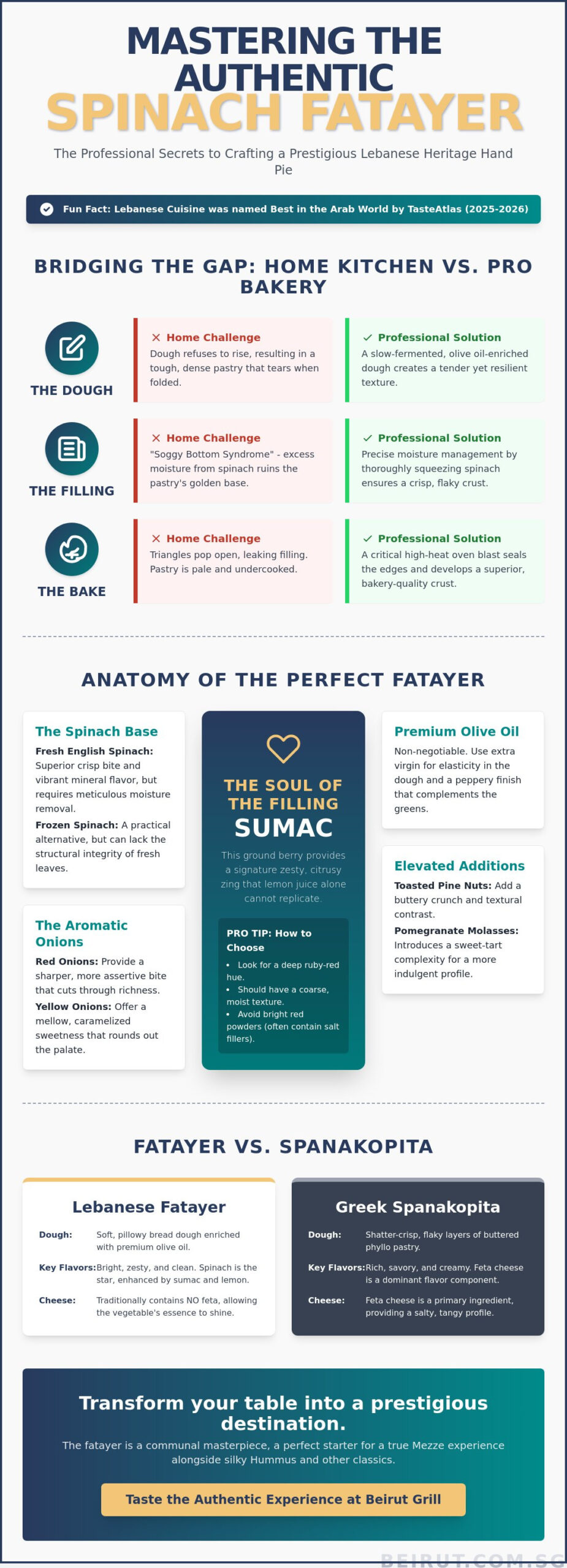
Home Kitchen vs. Professional Bakery: Bridging the Gap
Many enthusiasts attempting a spinach fatayer recipe at home find themselves disappointed by a pastry that lacks the structural elegance of a professional bakery. The most common grievance is the “Soggy Bottom Syndrome,” where the delicate base of the pie becomes saturated with liquid during the bake. In a professional kitchen, we treat moisture management with obsessive care. A chef understands that the vibrancy of the spinach must be preserved without compromising the integrity of the olive oil-enriched dough. This bridge between home cooking and professional mastery begins with understanding the physics of heat and the chemistry of the ingredients.
Professional results also depend on the intensity of the bake. While many home recipes suggest a moderate heat, we rely on a high-heat “blast” to set the crust instantly. This rapid rise of temperature, often exceeding 230 degrees Celsius, creates a superior, golden exterior while keeping the interior moist and zesty. Without this thermal shock, the pastry dries out before it browns, leading to a tough, uninspired texture. Resting the dough is equally vital. Allowing the gluten to relax for at least two hours ensures the dough is supple enough to be stretched thin without tearing, a hallmark of a prestigious hand pie.
Moisture Control: The #1 Secret to Success
The “Salt and Squeeze” method is a mandatory ritual for anyone using fresh spinach. By tossing the chopped leaves with high-quality sea salt and letting them rest, you draw out the water that would otherwise ruin your pastry. You must squeeze the greens with conviction until they are nearly dry to the touch. It’s also imperative that the filling is completely cool before it meets the dough. If the mixture is even slightly warm, it will prematurely soften the fats in the pastry, leading to the very sogginess you seek to avoid. Using a professional-grade baking stone in your home oven can help mimic the even heat distribution of a traditional stone oven.
Mastering the Fold: The Iconic Triangle Shape
The “Burst Seam” is the final hurdle for the home baker. To prevent your pies from opening up in the oven, you must master the three-point pinch technique. Start with a thin circle of dough, approximately 3 to 4 millimetres in thickness, and place a generous mound of filling in the center. Bring three sides together to meet at a single apex, pinching the edges firmly with your fingertips. Common mistakes include overfilling the pastry or getting oil on the edges of the dough, which prevents a secure seal. A perfectly executed fatayer should be a tight, uniform pyramid that holds its zesty cargo securely until the first indulgent bite.
The Beirut Grill Inspired Spinach Fatayer Recipe
Bringing the authentic taste of the Levant into your kitchen requires a commitment to both time and technique. This spinach fatayer recipe isn’t just a list of ingredients; it’s a blueprint for recreating the prestigious flavours that have defined our heritage for decades. We begin with the dough, a foundational element that demands a patient two-hour rise. This duration allows the yeast to work its magic, creating a structure that’s both airy and strong enough to house our zesty filling without rupturing. It’s this dedication to the slow process that separates a common snack from a truly indulgent mezze masterpiece.
Step 1: The Dough and the Filling Prep
To start, whisk together your all-purpose flour, yeast, and a pinch of sugar in a large bowl. Slowly incorporate warm water until a shaggy mass forms. The secret to a silkier, more professional finish is adding your premium extra virgin olive oil last. This ensures the fat coats the gluten strands perfectly, resulting in a dough that’s exceptionally easy to handle. While the dough rests in a warm, draft-free spot, turn your attention to the greens. Finely chop your spinach and onions, then apply a generous amount of sea salt. Let this mixture sit for at least 20 minutes. This timing is crucial for the ‘salt and squeeze’ technique, as it draws out every drop of excess moisture. Finally, toss the dry greens with a precise ratio of tart sumac, toasted pine nuts, and a fragrant hint of Lebanese seven spice.
Step 2: Folding and Baking to Perfection
Once your dough has doubled in size, divide it into equal balls and roll them into four-inch circles on a lightly floured surface. Place a generous tablespoon of the spinach mixture in the centre of each disc. We aim for a high filling-to-dough ratio to ensure every bite is bursting with flavour. Bring the three sides up to meet in the middle, pinching the seams firmly to create that iconic pyramid shape. Arrange them on a preheated baking sheet and slide them into a 220°C oven. After 12 to 15 minutes, the edges will emerge beautifully bronzed, signaling that the pastry is cooked through and the filling is perfectly steamed.
Chef’s Pro-Tip: The Olive Oil Brush
The final touch is what truly elevates these pies to a professional standard. Immediately after removing the fatayer from the oven, brush each one with a light coating of extra virgin olive oil. This simple step seals in the internal moisture and provides a stunning, glossy finish that’s visually irresistible. Allow the pies to rest for five minutes, giving the zesty lemon and sumac flavours a moment to settle and harmonise. If the process feels daunting, you can always experience the gold standard by ordering our signature Spinach Fatayer directly from our kitchen.
Beyond the Recipe: The Ultimate Lebanese Mezze Experience
While mastering a spinach fatayer recipe is a significant triumph for any home cook, the true magic of these savoury parcels is revealed when they are placed within a curated collection of small plates. In the Lebanese tradition, food is a communal language, a rhythmic progression of flavours designed to slow the diner down and encourage immersion in the moment. Fatayer serves as a vital bridge in this dialogue, offering a sharp, zesty contrast to the velvety, olive oil slicked surface of our Hummus or the cool, strained richness of Labneh. For those exploring Middle Eastern food in Singapore, understanding this textural interplay is essential to recreating a prestigious dining atmosphere that honors our deep rooted heritage.
The ritual of the mezze table is one of abundance and pride. These triangular pies shouldn’t be served in isolation; they belong alongside the vibrant greens of Tabbouleh and the smoky, charred depth of Baba Ghanoush. This arrangement creates a sensory balance that rewards the guest’s curiosity, moving from the earthy minerals of the spinach to the bright, refreshing notes of the salads. By positioning the fatayer as part of a broader culinary journey, you transform a simple meal into an evocative experience that mirrors the hospitality of a traditional Lebanese home.
Pairing with Lebanese Wine and Arak
The sensory journey of the fatayer is incomplete without the right beverage to elevate its complex acidity. A crisp white Lebanese Wine, perhaps a blend of Obeideh and Merwah from the high altitudes of the Bekaa Valley, provides a sophisticated counterpoint to the tartness of the sumac and citrus within the filling. For a more traditional experience, we recommend Arak, the legendary spirit of the Levant. This potent, grape based liquor with its signature aniseed notes acts as a masterful palate cleanser between different mezze courses. When properly diluted with water and ice, its cooling effect prepares the tongue for the next indulgent bite of Falafel or Grilled Halloumi. To conclude the feast, a steaming pot of Moroccan Mint Tea offers a refreshing digestif that allows the flavours of the evening to settle gracefully.
The Beirut Grill Invitation
Since our founding in 2009, we’ve remained a dedicated curator of authentic culture in the heart of the city’s historic district. While following a spinach fatayer recipe at home brings a sense of accomplishment, visiting our physical location offers an immersion into a world of seasoned expertise and refined hospitality. Here, our Spinach Fatayer is prepared with the same reverence for tradition that we apply to our legendary Mixed Grill, Shish Taouk, and Beirut Lamb Chops. We invite you to join us and experience the hospitality that has made us a prestigious destination for those seeking an authentic cultural journey. Our environment is designed to transport you, rewarding your curiosity with elevated flavours and a commitment to ingredients sourced from the finest regional producers. Join us for a meal that is more than just sustenance; it’s a celebration of longevity and culinary pride.
Embrace the Heritage of the Lebanese Table
Mastering the delicate balance of a spinach fatayer recipe is a journey into the heart of Lebanese hospitality. It requires a commitment to moisture control through the salt and squeeze method and the patience for a slow fermented dough. Tradition rewards the patient. By harmonising the tartness of sumac with the crunch of toasted pine nuts, you create a pastry that is both a culinary achievement and a cultural tribute.
While your home kitchen can now echo these traditional flavours, the ultimate expression of these heritage techniques awaits in our dining room. Since 2009, we’ve remained a prestigious destination for those seeking the sensory allure of authentic charcoal grilled dishes and premium imported ingredients. Our pork free menu is a testament to our dedication to traditional culinary standards. Experience the difference of seasoned expertise.
Book Your Table at Beirut Grill to Experience Authentic Lebanese Mezze and discover the depth of a menu crafted with pride. We look forward to welcoming you to an immersive culinary journey that rewards your curiosity and transports you to the rugged mountains of Lebanon.
Frequently Asked Questions
What does the word ‘Fatayer’ actually mean?
The term ‘Fatayer’ originates from the Arabic word for pastry or pie. It serves as a culinary category for various savoury hand pies found across the Levant. While the Fatayer bi Sabanekh is the most iconic vegetarian version, the term encompasses any dough-based parcel filled with meat, cheese, or greens. It’s a staple of the prestigious mezze spread, representing a long-standing heritage of portable, flavourful snacks.
Can I make the spinach fatayer dough in advance?
You can certainly prepare your dough up to 24 hours before baking. In fact, a slow, cold fermentation in the refrigerator allows the flavours to deepen and the gluten to relax significantly. This makes the dough more supple and easier to roll into those perfect four-inch circles. Simply ensure the dough returns to room temperature before you begin the assembly part of your spinach fatayer recipe.
What is a good substitute for sumac if I cannot find it?
A mixture of fresh lemon zest and a tiny pinch of fine sea salt is the most suitable alternative. While this provides the necessary acidity, it lacks the deep ruby-red hue and earthy complexity of the authentic Middle Eastern berry. If you’re seeking a truly indulgent and heritage-accurate result, we recommend sourcing genuine sumac from a specialist grocer to capture that signature zesty sting that defines the dish.
How do I prevent my fatayer from opening up in the oven?
Preventing burst seams requires keeping the edges of your dough circles completely free from oil or moisture. When you pinch the three points together to form the pyramid, the dough must be dry enough to fuse to itself. Avoid overfilling the pastry, as steam buildup during the high-heat bake can force the seams apart. A firm, deliberate pinch with your fingertips is the secret to a secure seal.
Is it better to use fresh or frozen spinach for fatayer?
Fresh English spinach is the superior choice for those who value a vibrant, mineral-rich flavour and a distinct structural bite. While frozen spinach is a convenient alternative, it often lacks the sensory nuance of fresh leaves. Regardless of your choice, the most critical step in any spinach fatayer recipe is the ‘salt and squeeze’ ritual. You must remove every drop of excess liquid to ensure your pastry remains crisp and golden.
How long can I store leftover spinach pies?
Leftover fatayer will remain delicious for three to five days when stored in an airtight container within the refrigerator. To restore their prestigious, bakery-quality texture, reheat them in a preheated oven at 180°C for a few minutes. Avoid using a microwave, as this’ll turn the olive oil-enriched dough soft and chewy rather than maintaining the desired crisp, golden exterior that rewards the palate.
Are spinach fatayer vegan-friendly?
Traditional Lebanese fatayer are naturally vegan and plant-based. Unlike many Mediterranean pastries that rely on butter or eggs, our heritage dough is enriched exclusively with premium extra virgin olive oil. The filling is a simple yet indulgent combination of greens, onions, toasted pine nuts, and spices. This makes it an ideal inclusion for guests seeking a sophisticated, plant-based option within a comprehensive and inclusive mezze spread.
Can I freeze fatayer before or after baking?
You can freeze these savoury pies at either stage with excellent results. For the best texture, we recommend freezing them after they’ve been baked and cooled. Simply arrange them in a single layer on a tray before transferring them to a freezer-safe bag. When you’re ready to enjoy them again, bake them directly from frozen at a moderate temperature until they’re heated through and the crust regains its original allure.