
Could the dip you have been ordering as Baba Ghanoush actually be its more refined, velvety cousin? At Beirut Grill, where we have shared the authentic flavors of Lebanon on historic Bussorah Street since 2009, we often see guests surprised by the deep, nutty complexity of a perfectly prepared moutabal. It is easy to feel uncertain when faced with an array of mezze, especially when you are trying to distinguish between different eggplant bases or checking for ingredients like tahini due to dietary preferences.
We understand that you want to experience the true soul of Middle Eastern cuisine without the guesswork. This guide will help you master the specific flavor profile of this sophisticated dish and explain exactly how it differs from other rustic, vegetable-forward appetizers. You will gain the confidence to navigate any Lebanese menu and understand the rich heritage behind our recipes. By the end, you will be ready to enjoy a divine dining experience that feels as indulgent and authentic as a journey through the Beqaa Valley.
Key Takeaways
- Understand the etymology of “spiced” and why it defines the Levant’s most complex and sophisticated eggplant creation.
- Identify the essential “Tahini Factor” that distinguishes authentic Lebanese moutabal from the rustic, vegetable-forward profile of Baba Ghanoush.
- Learn the traditional fire-roasting techniques required to achieve the “Alchemy of Smoke” and infuse the dish with its signature blackened soul.
- Master the etiquette of Lebanese communal dining and discover why warm, fluffy pita is the non-negotiable companion for a traditional mezze spread.
- Explore the commitment to culinary heritage and premium ingredients that has defined our award-winning hospitality on historic Bussorah Street since 2009.
Defining Moutabal: The Spiced Essence of the Levant
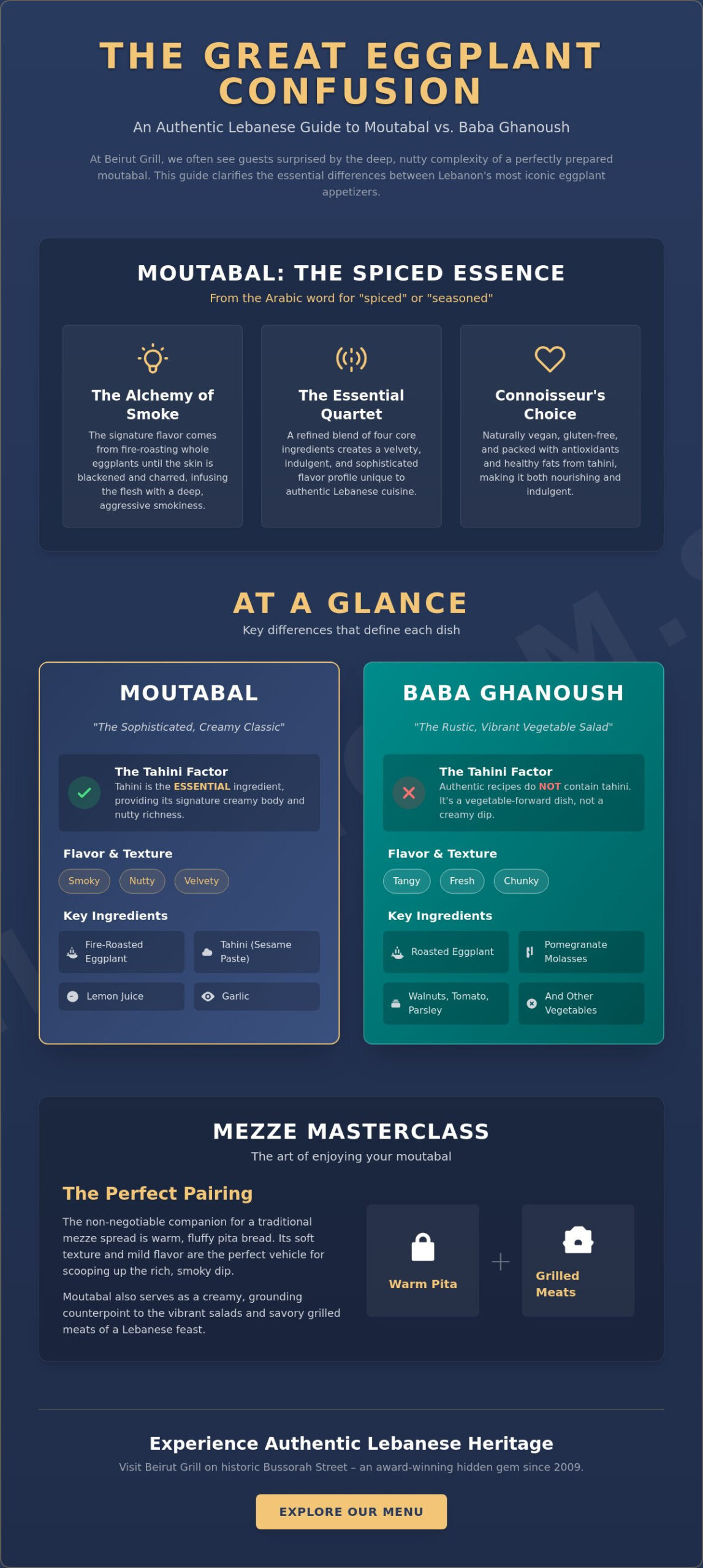
With the majestic Sultan Mosque as our backdrop on historic Bussorah Street, we have spent years perfecting the art of the Lebanese mezza. Among the most revered dishes in our kitchen is moutabal, a creation that transcends the simple definition of a dip. It’s a traditional Lebanese cold mezze crafted from the blackened flesh of fire-roasted eggplant, rich tahini, and a bright splash of fresh lemon juice. The name itself reveals the dish’s true nature. Derived from the Arabic word for “spiced” or “seasoned,” it’s a testament to the layers of flavor that define our culinary philosophy. Each bite offers a sensory journey where the aggressive char-grilled smokiness of the skin meets the velvety, indulgent nuttiness of high-quality sesame paste. Within a traditional feast, this dish acts as an essential pillar, grounding the more vibrant salads and providing a creamy counterpoint to our signature grilled meats.
The Cultural Roots of Moutabal
Rooted deeply in the Levant, this dish is a hallmark of Lebanese culinary heritage. It reflects an ancient Middle Eastern tradition of “slow food,” where the preparation isn’t rushed but rather honored through fire-cooking techniques. While various regions have their own versions of Eggplant Salads and Appetizers, the Lebanese style prioritizes a specific textural harmony. At Beirut Grill, we uphold these roots by sourcing premium imported tahini, ensuring the richness matches what you’d find in the heart of the Beqaa Valley. It’s a labor of love that begins with the eggplant meeting the flame, a process that has remained unchanged for generations. This dedication to authenticity has been the cornerstone of our “hidden gem” experience since 2009.
Why Moutabal is the Health-Conscious Connoisseur’s Choice
Beyond its divine flavor, moutabal is a masterpiece of nutritional balance. Eggplants are packed with fiber and potent antioxidants, particularly nasunin found in their dark skins. When combined with tahini, the dish introduces healthy monounsaturated and polyunsaturated fats that support heart health. It’s a naturally vegan and gluten-free indulgence, making it an inclusive centerpiece for any communal table. For the guest seeking a lighter yet deeply satisfying option, it provides the indulgence of a cream-based dip without the dairy, proving that health and heritage can coexist beautifully. We believe that true luxury lies in ingredients that nourish the body as much as they delight the palate.
Moutabal vs. Baba Ghanoush: Clearing the Great Eggplant Confusion
With the majestic Sultan Mosque standing tall in the background, our guests often find themselves navigating the nuanced world of Lebanese appetizers. It’s a frequent point of discussion at our tables on historic Bussorah Street. Why do so many menus treat these two distinct dishes as if they were identical? This confusion often stems from regional variations, but in the heart of Lebanese tradition, the lines are clearly drawn. Since 2009, we’ve made it our mission to preserve these distinctions, ensuring every guest enjoys a divine dining experience rooted in accuracy and pride.
The defining element is undoubtedly the tahini. While some modern interpretations or misinformed guides suggest that moutabal is the version without the sesame paste, the opposite is true in authentic Lebanese circles. Tahini provides the essential body and nutty undertone that transforms simple roasted eggplant into a sophisticated masterpiece. It acts as the bridge between the smoky char of the vegetable and the bright acidity of the lemon. Moutabal is creamy and nutty, while Baba Ghanoush is a rustic vegetable salad.
The Ingredients That Set Them Apart
The alchemy of these two dishes follows very different paths. For a traditional moutabal, we focus on a refined blend of eggplant, tahini, lemon juice, and garlic, whipped into a pale, silky consistency. This savory profile is designed to be smooth and comforting. On the other hand, Baba Ghanoush is a vibrant, colorful medley. It incorporates pomegranate molasses, toasted walnuts, fresh tomatoes, and parsley to create a chunky, salad-like texture. This Exploration of Levantine Cuisine highlights how these variations represent the diversity of the region, offering a tangy and sweet alternative to the creamy and savory profile of our signature eggplant dip.
A Quick Reference Guide for Diners
When your mezze arrives, you can identify your choice by its presentation. Moutabal is usually pale and smooth, often garnished simply with a pool of premium olive oil or a sprinkle of sumac. Baba Ghanoush is a riot of color, usually decorated with glistening pomegranate rubies and fresh green herbs. Mastering these visual cues is part of finding the finest Mediterranean Food in Singapore: An Authentic Guide to Flavours and Heritage. If you’re ready to taste the difference, we invite you to browse our award-winning menu and let us transport you to the Levant through every mouth-watering bite.
The Alchemy of Smoke: What Makes Authentic Moutabal
The secret lies in the flame. At Beirut Grill, nestled in the heart of historic Bussorah Street, we understand that the soul of moutabal is forged in fire. To achieve the specific complexity our guests expect, roasting the eggplant over charcoal is non-negotiable. While home cooks might settle for a gas hob or a standard oven, these methods lack the atmospheric depth provided by real embers. The intense heat of the charcoal grill performs a culinary miracle, transforming the raw, bitter eggplant into a sweet, creamy pulp that carries the essence of the Levant. This process is the foundation of our award-winning mezza, a tradition we have honored since 2009.
The “Smoky Soul” isn’t merely a poetic phrase; it’s a physical reality achieved by blackening the skin until it’s brittle and charred. This charring process allows the carbonized aromas to penetrate deep into the flesh, infusing it with a primal, earthy flavor that defines the dish. Once the vegetable is sufficiently scorched, the artisanal process of peeling the skin by hand begins. This meticulous step ensures that only the purest, smoke-kissed flesh remains, ready to be transformed into the centerpiece of your mezza spread. It’s a labor-intensive task that rewards the visitor’s curiosity with every indulgent bite.
Texture is where the true craftsmanship shows. Many modern recipes suggest using a blender for speed, but this often results in a thin, characterless purée. We favor traditional hand-mashing techniques. By gently breaking down the eggplant with a fork or mortar, we preserve the delicate fibers and create a rustic, luxurious mouthfeel. This allows the tahini to bind with the vegetable without overwhelming it. Achieving the perfect tahini balance is a delicate dance; the sesame must provide a velvety nuttiness that complements the smoke rather than masking it. It’s this precise ratio that makes our moutabal a divine dining experience.
The Secret of the Charcoal Grill
Charcoal-grilling offers a sensory experience that home appliances simply can’t replicate. The direct contact with heat triggers a rapid caramelization, drawing out natural sugars that balance the eggplant’s inherent earthiness. As the skin blisters, the interior steams in its own juices, resulting in a texture that is both light and incredibly rich. This transition from a firm, raw vegetable to a decadent cream is a hallmark of the Lebanese style we are proud to serve.
Garnishing: The Finishing Touches
A divine dining experience is completed by the details. Every bowl is finished with a generous pour of premium Extra Virgin Olive Oil, which adds a fruity brightness to the deep, smoky notes. We garnish with traditional elements that reflect Lebanese hospitality and pride:
- Sumac: For a tart, lemony zing that cuts through the richness of the tahini.
- Fresh Mint: To provide a cooling, aromatic contrast to the warmth of the smoke.
- Paprika: A light dusting that adds a subtle hint of spice and a vibrant visual allure.
These finishing touches aren’t just for aesthetics. They represent the refined and knowledgeable host’s commitment to authenticity, ensuring every guest feels the warmth of a Lebanese home with the majestic Sultan Mosque as a backdrop.
The Mezze Masterclass: How to Enjoy and Pair Moutabal
With the majestic Sultan Mosque as a backdrop, the act of dining at Beirut Grill is an invitation to slow down and soak up the ambiance. Authentic Lebanese cuisine is rarely a solitary affair; it’s a communal symphony where sharing is the ultimate expression of hospitality. To truly understand moutabal, one must view it as a versatile anchor for a wider feast. It’s not just a dip. It is a social lubricant that bridges the gap between various textures and temperatures on the table. Since 2009, we’ve watched guests transform their meals into stories by passing small plates and discovering new flavor combinations together.
For those seeking the finest Middle Eastern Food in Singapore: The Ultimate 2026 Connoisseur’s Guide, the ritual begins with the perfect vessel. Warm, fluffy pita bread, fresh from our kitchen, is the essential companion. Its soft, pillowy texture is designed to scoop up the velvety eggplant without competing with its delicate smokiness. When paired with our signature Mixed Grill or Beirut Lamb Chops, the creaminess of the dip performs a vital culinary role. The cool, nutty profile of the tahini and the bright acidity of the lemon cut through the intense richness of charcoal-grilled meats, refreshing the palate for each subsequent bite.
Complementary Mezze Pairings
Building a balanced mezze spread requires a thoughtful contrast of flavors. We recommend pairing the smoky depth of your eggplant dip with the vibrant, citrusy notes of Tabbouleh. The parsley-heavy salad provides a necessary acidity that lifts the heavier sesame notes. For a play on textures, introduce the crunch of Falafel. The contrast between the cold, smooth moutabal and hot, crispy mezze like meat-filled Sambousek creates a sensory-rich experience that rewards the visitor’s curiosity. This balance of temperatures is a hallmark of a divine dining experience.
Beverage Pairings for the Sophisticated Palate
To truly transport yourself to the Levant, your choice of drink should be as curated as your food. A crisp, dry white wine from the prestigious Beqaa Valley, such as those from Chateau Musar, works beautifully with the nutty tahini. If you prefer a more traditional route, the Arak experience is incomparable. This anise-flavored spirit, when diluted with water and ice, acts as a potent palate cleanser that prepares you for the smoky complexity of the eggplant. For a non-alcoholic alternative, the refreshing sweetness of Moroccan Mint Tea provides a delightful counterpoint to the savory, garlic-kissed notes of the mezza. If you’re ready to experience this masterclass in person, book your table at Beirut Grill today and let us host your next authentic Middle Eastern journey.
Experience Authentic Lebanese Heritage at Beirut Grill
With the majestic Sultan Mosque as a backdrop, Beirut Grill has stood as a beacon of Levantine culture on historic Bussorah Street since 2009. We don’t merely serve food; we curate a sensory journey that transports you from the heart of Singapore to the sun-drenched landscapes of Lebanon. Our commitment to authenticity is unwavering, rooted in the use of traditional fire-roasting techniques and premium ingredients imported directly from the region. This dedication ensures that every plate of moutabal we serve carries the genuine, smoky soul of our heritage. We invite you to step into our space, where the aroma of charcoal-grilled meats and the warm glow of our hospitality create a truly divine dining experience.
A hallmark of our service is the inclusive, welcoming environment we provide for all guests. We maintain a strict pork-free promise, allowing everyone to explore the rich tapestry of Middle Eastern flavors without hesitation. This transparency is part of our identity as a refined and knowledgeable host. By honoring these culinary boundaries, we ensure that our communal tables remain a place where diverse groups can gather to celebrate, share mezza, and soak up the unique atmosphere of one of Singapore’s most historic precincts.
Award-Winning Flavors in the Heart of Singapore
Our longevity since 2009 is a testament to our reliability and seasoned expertise. Over the years, our mezza selection has become critically acclaimed, recognized by locals and travelers alike as a “hidden gem” of authenticity. The moutabal remains a centerpiece of this acclaim, prized for its silky texture and the unmistakable depth that only a charcoal flame can provide. When you dine with us, you aren’t just visiting a restaurant. You’re participating in a legacy of award-winning hospitality that rewards your curiosity with mouth-watering results. The rhythmic flow of a meal here, from the first scoop of dip to the final sip of Lebanese coffee, is designed to slow you down and encourage you to indulge in the moment.
Plan Your Lebanese Journey
Whether you’re looking for an intimate corner for a romantic evening or a sophisticated venue for corporate dinners, our heritage location offers the perfect setting. We specialize in hosting special celebrations where the focus is on communal joy and exceptional taste. Every visitor is treated to a divine dining experience that reflects our pride in our cultural roots and our passion for the boutique hospitality we’ve refined over nearly two decades. Don’t leave your next authentic Middle Eastern journey to chance. We invite you to book your table at Beirut Grill today and discover why we remain the definitive destination for Lebanese cuisine in Singapore.
Savor the Mastery of the Lebanese Flame
Mastering the distinction between these two legendary eggplant dishes is the first step toward becoming a true connoisseur of Levantine cuisine. You now understand that a genuine moutabal requires the nutty embrace of tahini and the primal kiss of a charcoal flame, qualities that set it apart from more rustic vegetable salads. Since 2009, we’ve remained dedicated to these time-honored techniques, serving award-winning Lebanese cuisine that honors our deep cultural roots. Located in the historic Kampong Glam district, our kitchen continues to prioritize the artisanal methods that define the soul of the mezza.
We invite you to step away from the bustle of the city and immerse yourself in the atmospheric charm of historic Bussorah Street. Whether you’re sharing a vibrant mezze platter with loved ones or indulging in our signature grilled meats, a divine dining experience rewards your curiosity. Experience the finest Moutabal and Lebanese hospitality, Book your table at Beirut Grill. We look forward to being your refined host for an unforgettable Middle Eastern journey soon.
Frequently Asked Questions
Is Moutabal vegan and gluten-free?
Yes, authentic moutabal is naturally vegan and gluten-free. It consists primarily of fire-roasted eggplant, tahini, lemon juice, and garlic. Since we don’t use any dairy or wheat-based thickeners in our traditional recipe, it’s an excellent choice for guests with specific dietary requirements. At Beirut Grill, we take pride in serving clean, plant-based options that don’t compromise on the rich, smoky flavors of the Levant.
What is the difference between Moutabal and Hummus?
The primary difference lies in the base ingredient used for the dip. While both share a creamy tahini foundation, Hummus is crafted from cooked, mashed chickpeas, whereas moutabal relies on the smoky flesh of charred eggplants. This results in a completely different flavor profile. Hummus is earthy and dense, while the eggplant version offers a lighter, more complex smokiness that defines the soul of our mezza selection.
How long does fresh Moutabal stay good for?
Freshly prepared eggplant dip typically stays good for three to five days when stored in an airtight container in the refrigerator. To preserve the divine flavors we’ve perfected on historic Bussorah Street since 2009, we recommend keeping it chilled until just before serving. A thin layer of olive oil on the surface can help prevent the dip from oxidizing or drying out during storage.
Can I eat Moutabal if I have a sesame allergy?
No, you must avoid this dish if you have a sesame allergy. Tahini, which is a fundamental ingredient in our authentic recipe, is made entirely from ground sesame seeds. It’s this sesame paste that provides the signature velvety texture and nutty undertone. For those with allergies, we recommend exploring other mezze options like our fresh Tabbouleh or Fattoush salads, which offer vibrant flavors without sesame components.
Why is my Moutabal bitter?
Bitterness usually occurs if the eggplant is over-charred or if it contains too many mature seeds. Large, older eggplants often develop a bitter profile that can overwhelm the delicate balance of the dish. To avoid this, we select younger vegetables and carefully peel away every fragment of the carbonized skin. Salting the eggplant before roasting can also help draw out any bitter juices, ensuring a smooth and pleasant result.
What is the best way to serve Moutabal at a party?
The most sophisticated way to serve this mezza is at room temperature in a shallow ceramic bowl. Create a small well in the center to hold a generous pool of premium Extra Virgin Olive Oil. Garnish with a dusting of sumac or a few fresh mint leaves to provide a visual allure. Serve it alongside warm, fluffy pita bread and other cold mezze to recreate the communal dining experience we’ve shared since 2009.
Is Moutabal the same as eggplant caviar?
While they share a common main ingredient, they aren’t the same dish. Eggplant caviar is a term often used for European versions that usually include onions, tomatoes, and various herbs but omit the tahini. Our Lebanese version is more indulgent and creamy due to the sesame paste. It offers a specific cultural heritage and a smoky complexity that distinguishes it as a boutique offering in the world of vegetable appetizers.
How many calories are in a serving of Moutabal?
A standard 100g serving contains approximately 150 to 200 calories, depending on the amount of tahini and olive oil used. It’s a nutrient-dense choice, providing healthy fats from the sesame and fiber from the eggplant. While it’s an indulgent part of a divine dining experience, the ingredients are wholesome and traditional. This makes it a satisfying option for those who want to enjoy authentic flavors while remaining health-conscious.